






.avif)
.avif)
Most loyalty programs work well online but break the moment a customer walks into a physical store. Points fail to sync, rewards do not appear at checkout, and customers end up with duplicate profiles across systems. That fragmented experience does not just frustrate customers. It actively undermines the loyalty you have spent time and money building.
According to a survey of 46,000 retail shoppers by Harvard Business Review, 73% engage across multiple channels during their buying journey. And according to McKinsey, 60 to 70% of consumers research and shop both in stores and online. Your customers are already moving between channels. The question is whether your loyalty program moves with them.
API-led connectivity is how you close that gap. When your loyalty platform and POS connect through a well-built API, every purchase, reward, and customer profile update stays accurate across every channel your customer touches, in real time.
This guide covers the best APIs for connecting loyalty programs to existing POS systems, what to look for before choosing one, and how to avoid the integration challenges that derail most rollouts.
Key Takeaways
- A loyalty program that works online but breaks in-store is not an omnichannel program. APIs are the only reliable way to keep points, rewards, and customer profiles accurate across both channels simultaneously.
- The best API for connecting loyalty programs to existing POS systems must handle real-time events, automatic error retries, multi-location support, and unified customer identification without manual workarounds.
- Legacy POS systems are the most common integration blocker. The right loyalty API should support middleware connections so you do not need to replace your entire POS infrastructure to get started.
- Nector, Open Loyalty, Square, and Voucherify each suit different business sizes and technical requirements. Choosing the wrong one for your existing stack creates more problems than it solves.
- Security and compliance are non-negotiable in loyalty-POS integrations. Any API you evaluate must support encryption, token-based authentication, and GDPR or PCI compliance where applicable.
What Is an API?
Before evaluating specific platforms, it helps to understand exactly what an API does in the context of loyalty and POS integration. Many brands understand they need one without fully understanding why, which leads to choosing the wrong solution for their technical environment.
An API is a way for two systems to talk to each other and exchange information in real time. When it comes to loyalty programs and POS systems, an API acts as the bridge that connects your in-store checkout with your loyalty engine.
Without an API, the POS and the loyalty program operate in isolation. The POS records the sale, but the loyalty system never receives the data. Customers do not earn points instantly, cannot redeem rewards at the counter, and do not see updated balances after purchase.
With an API, every action at the POS triggers an automated update:
- When a customer makes a purchase, the POS sends the transaction to the loyalty system
- The loyalty program calculates points or rewards based on your configured rules
- Updated balances and rewards are sent back to the POS instantly
This is what makes unified omnichannel loyalty possible. Customers can earn, redeem, and track rewards seamlessly whether they are buying online, in-store, or through a mobile app. APIs make the experience fast, accurate, and consistent while removing manual work from your store staff entirely.
When the API architecture is right, the entire loyalty experience follows the customer from checkout to their pocket to the next time they walk through your door. For brands planning integration at scale, the guide on enterprise loyalty integration solutions and architecture for 2026 covers the stack design, failure points, and phased rollout approach that prevents the most common integration breakdowns.
How APIs Power Loyalty Features Inside POS Systems
Understanding the specific use cases an API enables helps you evaluate whether a given solution actually covers what your loyalty program needs. Not all loyalty APIs support the same events, and gaps in coverage create exactly the kind of fragmented experience you are trying to avoid.
When you use the right API for connecting loyalty programs to existing POS systems, every action updates in real time. Here are the use cases that matter most.
1. Real-Time Point Issuance at Checkout
Every time a customer makes a purchase in-store, the POS sends the transaction data to the loyalty engine so points are awarded instantly. This makes the loyalty experience feel immediate and rewarding rather than delayed and invisible.
2. Redeeming Rewards Directly Through the POS
Customers can apply points, coupons, or store credits during checkout without staff needing to look up rewards manually. The API validates and deducts the balance on the spot, keeping the experience frictionless at the counter.
3. Unified Customer Profiles Across Channels
APIs sync customer data from POS systems to loyalty platforms, preventing duplicate profiles and ensuring online and offline activity belongs to the same unified customer record.
4. Tracking In-Store Behavior for Personalization
Purchase history from physical stores is sent to the loyalty system, giving brands the data to personalize offers, send targeted re-engagement messages, and analyze customer behavior across locations.
5. Automated Returns and Refund Adjustments
When a product is returned at the POS, the API adjusts points or rewards automatically so balances stay accurate without requiring manual corrections from your team.
6. Multi-Location Loyalty Tracking
APIs allow brands with multiple stores or franchise locations to sync loyalty activity across all POS systems, ensuring customers get a consistent experience everywhere they shop with you.
7. Enabling Hybrid Journeys
Customers can earn points in-store and redeem them online, or earn online and redeem in-store, because the API keeps both systems aligned in real time regardless of which channel the transaction happens in.
8. Triggering Automated Loyalty Workflows
POS events can trigger loyalty actions such as birthday bonuses, tier upgrades, post-purchase emails, or win-back messages based on in-store purchase behavior, not just online activity.
9. Linking Anonymous POS Sales to Profiles Later
APIs allow brands to attribute offline purchases to a customer profile when they identify themselves later, giving a complete picture of their total spending across channels.
These use cases only work reliably when the API behind them is strong enough to sync data instantly and handle edge cases without manual intervention. For a broader understanding of what a fully connected omnichannel loyalty program looks like in practice before evaluating the specific API options, the guide on building an omnichannel loyalty program in 2026 covers the channel integration principles and real-world implementation framework in detail.
What to Look for in a Loyalty-POS Integration API
Choosing the right API is the most consequential technical decision in your loyalty-POS integration. A strong API is the backbone of a seamless omnichannel experience. A weak one creates the exact fragmentation you are trying to eliminate. According to research, only 8% of retailers can consistently deliver real-time omnichannel services. The gap between ambition and execution almost always comes down to integration infrastructure. Here are the eight capabilities to prioritize.
1. Real-Time Sync of Points and Purchases
The API should update loyalty points instantly after a POS transaction completes. Real-time sync keeps balances accurate and ensures customers see rewards immediately, which builds trust and reinforces the behavior you want to encourage.
2. Unified Customer Profile Across Systems
Your API must link POS activity to the same customer record used across online channels. This prevents duplicate profiles and lets you track a customer's full journey across every touchpoint they interact with.
3. Support for Key POS Events
Look for APIs that handle the most common loyalty actions directly at the POS: issuing points, redeeming rewards, deducting balances, and adjusting points for returns and exchanges. If the API does not support all four natively, you will build manual workarounds that break at scale.
4. Error Handling, Retries, and Webhooks
Offline stores face connectivity issues regularly. Your API should support automatic retries and send webhooks when loyalty events succeed or fail. This ensures no transaction is lost and no points go unaccounted for during a network disruption.
5. Multi-Store and Multi-Location Support
If you operate across multiple outlets or franchise locations, the API should support location-based tracking. This allows you to segment performance by store, personalize offers by region, and maintain consistent loyalty rules everywhere a customer shops.
6. Scalability for High Transaction Volumes
Retail environments process hundreds or thousands of transactions per hour during peak periods. The API must handle volume spikes reliably without delays or data loss, especially during seasonal sales or product launch events.
7. Strong Security and Compliance
Since loyalty data includes purchase history and personally identifiable information, the API must follow strict security standards. Look for encryption, role-based access, token-based authentication, and compliance with GDPR, PCI DSS, or other relevant data regulations for your operating geography.
8. Clear Developer Documentation and SDKs
Your engineering team should be able to integrate the API quickly and confidently. Clean documentation, ready-to-use SDKs, and sandbox test environments reduce setup time significantly and help your team catch edge cases before going live.
With these capabilities in place, your loyalty program can function reliably across online and in-store environments. The platforms below deliver on these requirements across a range of business sizes and technical environments.
Top 8 APIs and Platforms for Connecting Loyalty Programs to Existing POS Systems
Choosing the right API partner comes down to your business size, technical environment, and how much customization your loyalty program requires. The eight platforms below offer the most reliable integrations, strongest documentation, and most consistent loyalty syncing across online and in-store channels.
1. Nector
Nector is a loyalty and referral platform designed for e-commerce and retail brands that need seamless integration between their online store and POS system. Its API-first design lets brands connect customer profiles, track purchases, and sync loyalty points in real time, creating a unified loyalty experience across every channel.
Key Features:
- Real-time Points Sync and Reward Redemption: Purchases made at the POS instantly trigger point crediting or reward redemption, keeping customer balances accurate at all times.
- Full Loyalty Feature Set Including Points, Tiers, Referrals, and Credits: Supports tiered loyalty, referrals, store credits, and review-based rewards through a single API-powered system.
- White-Label Experience and Brand Consistency: Referral portals, reward pages, and customer interfaces can be fully branded to match your store’s design for a seamless customer experience.
- Quick Integration and Low Setup Time: Connects easily with Shopify, WooCommerce, and custom POS systems with minimal engineering effort.
- Scalable and Multi-Channel Support: Supports online stores, physical POS checkout, and omnichannel setups across multiple stores or franchise locations.
Best Suited for:
D2C brands, online stores expanding into offline retail, omnichannel retailers, and agencies managing multiple clients who need a flexible, fully branded loyalty system that connects smoothly with POS operations.
For brands that have already connected Nector to their POS and want to maximize the performance of that integration over time, the guide on loyalty program optimization strategies for retention covers how to refine earning rules, redemption flows, and engagement mechanics once the system is live.
2. Open Loyalty
Open Loyalty is an API-first, headless loyalty engine built for brands that need deep flexibility and custom integrations. It lets teams plug loyalty features into websites, apps, and POS systems while keeping full control over the experience.
Key Features:
- API-First and Headless Setup: Build fully custom loyalty experiences across web, mobile, and in-store channels.
- Advanced Loyalty and Gamification Tools: Supports points, tiers, wallets, achievements, and custom reward rules.
- Seamless Omnichannel Integration: Connects loyalty workflows to e-commerce platforms, mobile apps, and POS systems.
- Enterprise-Grade Scale: Handles large volumes of loyalty events with fast performance and high reliability.
Best Suited for:
Enterprise and mid-size brands that need a highly customizable loyalty engine capable of supporting complex online and offline integrations.
3. Square Loyalty API
Square Loyalty API allows merchants using Square POS or Square Online to embed loyalty and rewards directly into the checkout process. It supports point earning, reward creation, and redemption tied to POS transactions.
Key Features:
- Native POS Integration: Loyalty actions such as earning points and redeeming rewards happen directly at checkout without redirects or additional tools.
- Unified Order and Customer Data: Uses the same customer and order database as Square POS, keeping loyalty activity fully aligned with purchase history.
- Point Accrual, Redemption, and Adjustments: Supports earning points for purchases, applying rewards at checkout, and adjusting balances for returns or promotions.
- Reliable Ecosystem for Small Retailers: Ideal for merchants already using Square, reducing the need for separate systems or complex integrations.
Best Suited for:
Small to medium retail stores and independent merchants using Square POS who want a simple, built-in loyalty system tied directly to their checkout flow.
4. White Label Loyalty
.webp)
White Label Loyalty is an API-first loyalty platform built for brands that need deep customization and full control. It lets you embed loyalty logic into any system, including POS, mobile apps, CRM, and e-commerce, while keeping the experience fully branded.
Key Features:
- API-First and Modular: Manage events, user profiles, points, rewards, and tiers through flexible API endpoints.
- Customizable Reward Logic: Reward purchases, referrals, reviews, social actions, receipts, or any custom event you define.
- Easy Integration Across Systems: Connect loyalty to POS systems, CRMs, ERPs, and online stores with real-time syncing.
- Omnichannel Loyalty Experience: Supports loyalty across web, apps, and physical stores with unified earning and redemption flows.
Best Suited for:
Mid-size and enterprise retailers, omnichannel brands, and companies that need a highly customizable loyalty engine that integrates tightly with POS systems.
5. Yotpo
Yotpo is a loyalty and referral platform with a REST API that lets brands run points, tiers, rewards, and referral programs across online stores and POS systems. It is designed for e-commerce brands that want flexible earning rules and strong omnichannel support.
Key Features:
- Flexible Reward Logic: Supports points for purchases, referrals, reviews, social actions, and VIP tiers so brands can tailor their earning structure.
- API and Webhook Support: Developers can manage customers, rewards, and redemptions through the API and sync events in real time using webhooks.
- Omnichannel Compatibility: Works across online stores, mobile apps, and POS systems, allowing customers to earn and redeem rewards in any channel.
- Customizable Reward Types: Allows brands to offer discounts, coupons, store credits, free gifts, or custom-designed reward options.
Best Suited for:
D2C and e-commerce brands looking for a ready-to-use loyalty and referral platform that supports both online and offline shopping journeys.
6. Enable3
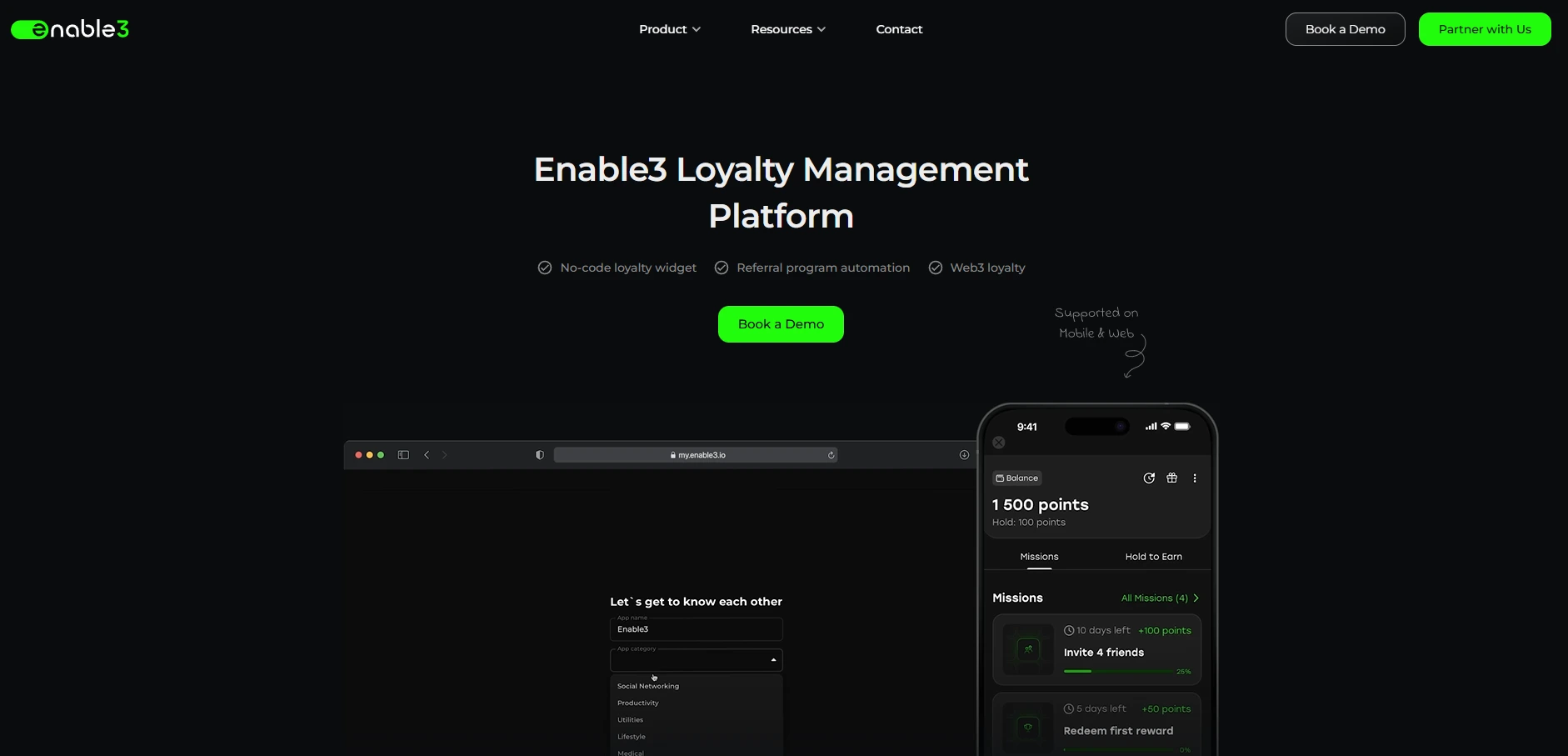
Enable3 is an API-first loyalty platform that helps brands build fully custom loyalty, reward, and engagement flows across web, mobile, and POS systems. Its modular API makes it easy to design loyalty logic that fits any business model.
Key Features:
- Flexible API Architecture: Manage events, user profiles, points, tiers, and rewards through a simple, developer-friendly API.
- Customizable Reward Logic: Reward purchases, referrals, social actions, receipt uploads, or any custom event your brand defines.
- Omnichannel and POS Integration: Works across online stores, mobile apps, CRM systems, and retail POS for consistent loyalty tracking.
- Fully Brandable Experience: Supports white-label interfaces and branded customer touchpoints.
Best Suited for:
Brands and retailers that need a flexible, developer-friendly loyalty engine capable of custom workflows and seamless POS integration.
7. PassKit
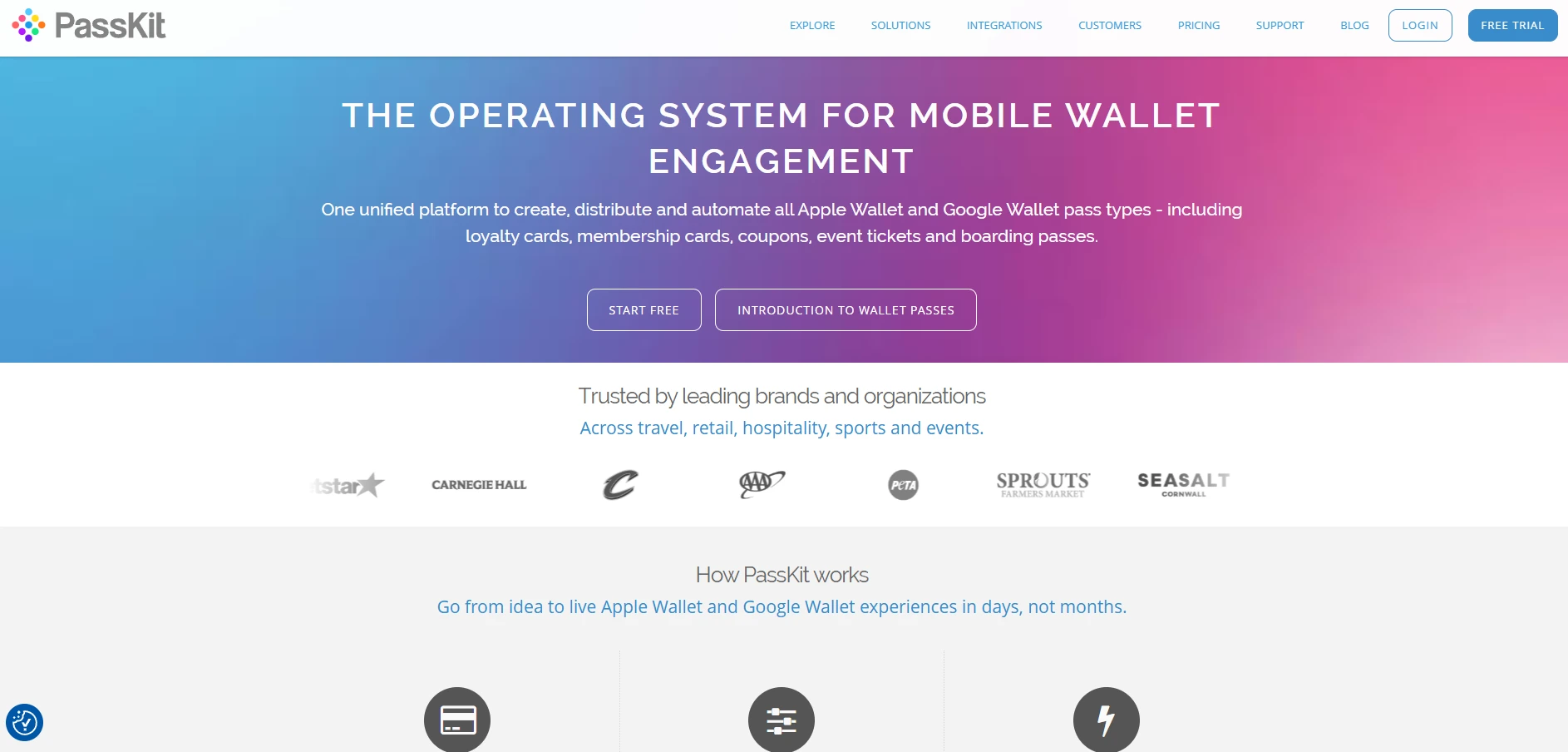
PassKit is a mobile wallet–based loyalty platform that lets brands issue digital loyalty cards, coupons, and membership passes that customers store in Apple Wallet or Google Wallet. It enables fast, low-friction loyalty interactions in-store without heavy POS development.
Key Features:
- Digital Loyalty Cards in Apple and Google Wallet: Customers add a mobile pass that updates automatically as they earn or redeem rewards.
- Easy In-Store Redemption via QR or NFC: Staff scan a QR code or tap an NFC pass to identify customers and apply rewards at checkout.
- Real-Time Pass Updates: Loyalty points, rewards, and tiers sync instantly on the customer’s wallet pass.
- Minimal POS Integration Required: Works with most POS systems that support barcode or QR scanning, making rollout simple.
Best Suited for:
Brands that want a mobile-first loyalty experience, small to mid-sized retailers, and teams looking for a fast, lightweight alternative to full loyalty APIs.
8. Voucherify
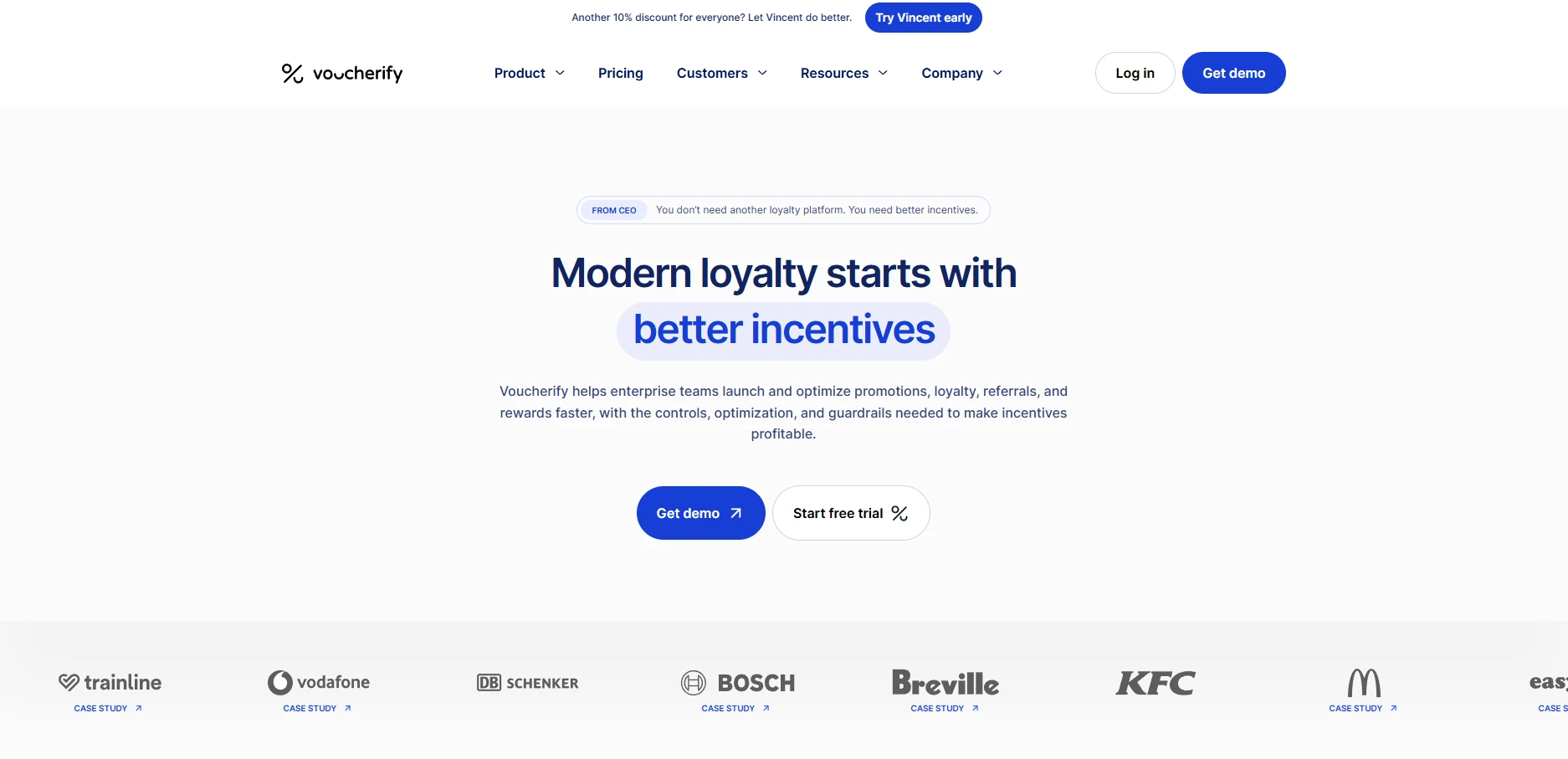
Voucherify is an API-first loyalty, promotions, and referral engine that lets brands build custom reward workflows across web, mobile, and POS. It is designed for teams that need flexible earning rules, scalable reward logic, and strong developer control.
Key Features:
- Comprehensive Reward System: Supports points, coupons, gift cards, referrals, tiered rewards, and personalized promotions through one platform.
- Flexible API Architecture: Define earning rules, redemption logic, tiers, and custom events via developer-friendly APIs.
- Works Across Online and POS Channels: Integrates with e-commerce stores, mobile apps, CRM tools, and POS systems for seamless omnichannel loyalty.
- Multiple Reward Types: Offer discounts, credits, gift cards, cashback, or custom incentives based on campaign needs.
Best Suited for:
Brands that want a highly customizable loyalty and promotions engine with strong API support and the ability to manage loyalty, referrals, and coupons in one place.
The Hidden Challenges Behind Integrating Loyalty With POS
Even with the right API selected, loyalty-POS integrations regularly run into operational and technical challenges that teams do not anticipate during planning. Understanding these challenges before you begin is what separates a smooth rollout from a costly one. Research shows that businesses with strong omnichannel customer engagement retain 89% of their customers, compared to just 33% for those with weak omnichannel approaches. The difference between those two outcomes almost always comes down to how well their systems are integrated.
- Legacy POS Systems With Limited Flexibility: Older POS systems often do not support modern APIs or real-time data sync. This forces brands to rely on workarounds like batch uploads, manual point adjustments, or custom middleware layers that add complexity and maintenance overhead.
- Data Fragmentation Across Channels: Customer data may live in separate systems including e-commerce, POS, CRM, and mobile apps, making it difficult to maintain a single unified loyalty profile without a robust integration layer connecting all of them.
- Inconsistent Customer Identification: If customers use different identifiers online and in-store, such as different email addresses, phone numbers, or loyalty IDs, the system may fail to match profiles correctly. This leads to inaccurate point totals and rewards that do not reflect the customer's actual purchase history.
- Limited Support for Returns and Adjustments: POS systems often handle returns differently across locations. If loyalty logic is not tightly integrated with the returns flow, points may fail to adjust correctly after refunds, creating balance discrepancies that erode customer trust.
- Security and Compliance Requirements: Loyalty APIs process personal data alongside purchase history, making encryption, authentication, and compliance with standards like PCI DSS or GDPR essential for any integration operating in markets where these regulations apply.
Identifying these roadblocks before integration begins helps you build a loyalty system that is accurate, secure, and genuinely omnichannel from day one. The commercial case for getting this right is significant: for a breakdown of how loyalty program pricing models affect customer engagement and long-term retention value, the guide on loyalty pricing strategy and how to apply it to your program covers the financial design decisions that determine whether a program drives revenue or just accumulates cost.
If fragmented POS and loyalty data is the challenge you are solving, Nector connects loyalty points, referrals, and reviews to your POS in real time without replacing your existing infrastructure. Book a demo to see the integration for your specific POS setup.
Best Practices to Overcome Loyalty-POS Integration Challenges
Integrating a loyalty program with your POS system becomes significantly more reliable when you follow a structured approach from the start. These practices help ensure accuracy, stable syncing, and a consistent customer experience across every channel. Each one addresses a specific failure mode that commonly appears in loyalty-POS rollouts that skip the planning phase.
1. Standardize Customer Identification Across Channels
Use a single primary identifier, such as a phone number or email address, for both online and in-store transactions. This prevents duplicate profiles from forming and ensures loyalty data stays unified regardless of which channel the customer uses. A single customer identifier is the foundation of every other omnichannel capability in your loyalty stack.
For a detailed look at how brands use that unified identity to strengthen customer relationships across every channel they operate, the guide on strengthening omnichannel customer connections through loyalty covers the customer journey mechanics and QR-based in-store redemption flow in detail.
2. Choose an API With Strong Retry Logic and Webhooks
Ensure your loyalty API supports automatic retries and event-based webhooks. This protects against failed syncs during offline moments and keeps loyalty balances accurate even when network connectivity is temporarily interrupted.
3. Map Out All POS Events Before Integration Begins
List every event that should trigger a loyalty action before writing any code: purchases, returns, redemptions, cancellations, and exchanges. Mapping this early prevents gaps and inconsistencies from appearing after you go live.
4. Use Middleware if Your POS Is Legacy or Rigid
For older systems, a middleware layer can translate POS data into modern API calls without requiring a full POS replacement. This makes loyalty-POS integration achievable for brands that cannot justify the cost of upgrading their entire in-store infrastructure.
5. Keep Data Formats and Fields Consistent
Standardize product IDs, customer fields, timestamps, and transaction codes across your systems before integration. Consistent data formats reduce errors during syncing and speed up the overall implementation significantly.
6. Start With One Store or a Test Environment
Pilot the integration in a single location or sandbox environment before rolling out across all stores. Validate point issuance, returns, and redemptions fully before exposing the system to your entire customer base.
7. Train Store Staff on Loyalty Scenarios
Even with full automation in place, staff need to know how rewards work, how to identify customers, and what to do if a sync fails temporarily. Well-trained staff protect the customer experience during edge cases that automation cannot fully anticipate.
8. Monitor Sync Health and POS Events in Real Time
Dashboards and alerts help your team detect mismatches quickly. Monitoring ensures any delays, failures, or data inconsistencies are caught and resolved before they affect customers or create loyalty balance discrepancies at scale.
9. Document Every Integration Flow Internally
Clear internal documentation speeds up troubleshooting and helps new team members understand how loyalty interacts with POS without having to reverse-engineer it from the codebase.
10. Work With Vendors Who Offer Integration Support
Choose a loyalty API provider that offers integration guidance, sample code, SDKs, and responsive developer support. This cuts implementation time significantly and gives your team a resource when edge cases arise during and after launch.
When these practices are in place, your loyalty-POS integration becomes far more reliable, scalable, and capable of delivering the consistent experience your customers expect across every channel.
Final Thoughts
Connecting your loyalty program to your POS system is one of the most effective ways to improve customer retention and deliver a genuinely consistent omnichannel experience. When points, rewards, and purchase history stay aligned across online and in-store channels, customers trust your program more and return more often.
That consistency depends entirely on using the right API for connecting loyalty programs to existing POS systems: one that syncs data in real time, unifies customer profiles, handles edge cases automatically, and removes manual work from your team.
If you want a loyalty system that connects cleanly to your POS while staying fully on brand and requiring minimal engineering overhead, Nector offers fast integration, reliable real-time syncing, and complete customization across loyalty, referrals, and reviews in one platform.
Book a demo and see exactly how the integration works for your specific POS setup and store environment.
Frequently asked questions
How does a loyalty-POS integration API work?
The API acts as a bridge between your loyalty platform and POS system. It sends and receives data about purchases, points earned, redemptions, returns, and customer profiles so rewards stay accurate in real time across every channel the customer interacts with.
Can loyalty APIs work with older POS systems?
Yes, but older POS systems often require middleware or custom connectors to bridge the gap between legacy data formats and modern API calls. Choosing a loyalty API with flexible endpoints and webhook support makes this process significantly easier and more maintainable.
What security features should a loyalty API include?
Look for encryption, token-based authentication, role-based access control, and compliance with relevant standards such as GDPR or PCI DSS depending on your operating geography and the type of customer data your program processes.
How long does it take to integrate a loyalty API with a POS system?
For modern POS systems with clean APIs, integration can take a few hours to a few days depending on your earning rules and customer identification logic. For legacy systems, the timeline extends depending on the complexity of data mapping and whether middleware is required.



.webp)