
.avif)
.avif)
Most e-commerce brands spend a substantial amount of their budget chasing new customers. Yet after a first purchase, only a few customers return. This means most brands are pouring money into a leaking bucket.
A 5% increase in repeat customer rate can boost profits by up to 25-95%. The math is simple. Getting someone to buy again costs less and generates more revenue than finding a new customer.
This guide breaks down what repeat customers are, why they matter more than you think, and 15 tactics to increase them without relying on discounts.
Key Takeaways
- Repeat buyers are your most profitable customers: they spend more, buy again faster, and cost less to retain than new customers.
- Retention beats acquisition: even a 5% increase in repeat purchases can boost profits by 25–95%.
- First impressions matter: product quality, seamless delivery, and post-purchase experience drive loyalty.
- Loyalty programs, reminders, and subscriptions work: structured incentives and low-friction reordering keep customers coming back.
- Automate to scale: tools like Nector turn repeat purchase strategies into a consistent, measurable system.
What Is a Repeat Customer?
A repeat customer is someone who comes back to buy from your business more than once, rather than making a single purchase and leaving. For example, a runner might buy shoes in January, return in April for workout clothes, and pick up socks in July. Similarly, a skincare shopper could purchase a cleanser, come back three weeks later for a moisturizer, and then set up automatic monthly delivery for both products.
The key indicator of a recurring customer is multiple purchases over time, not one-off bulk orders.
Why Repeat Customers Matter for Business Growth?
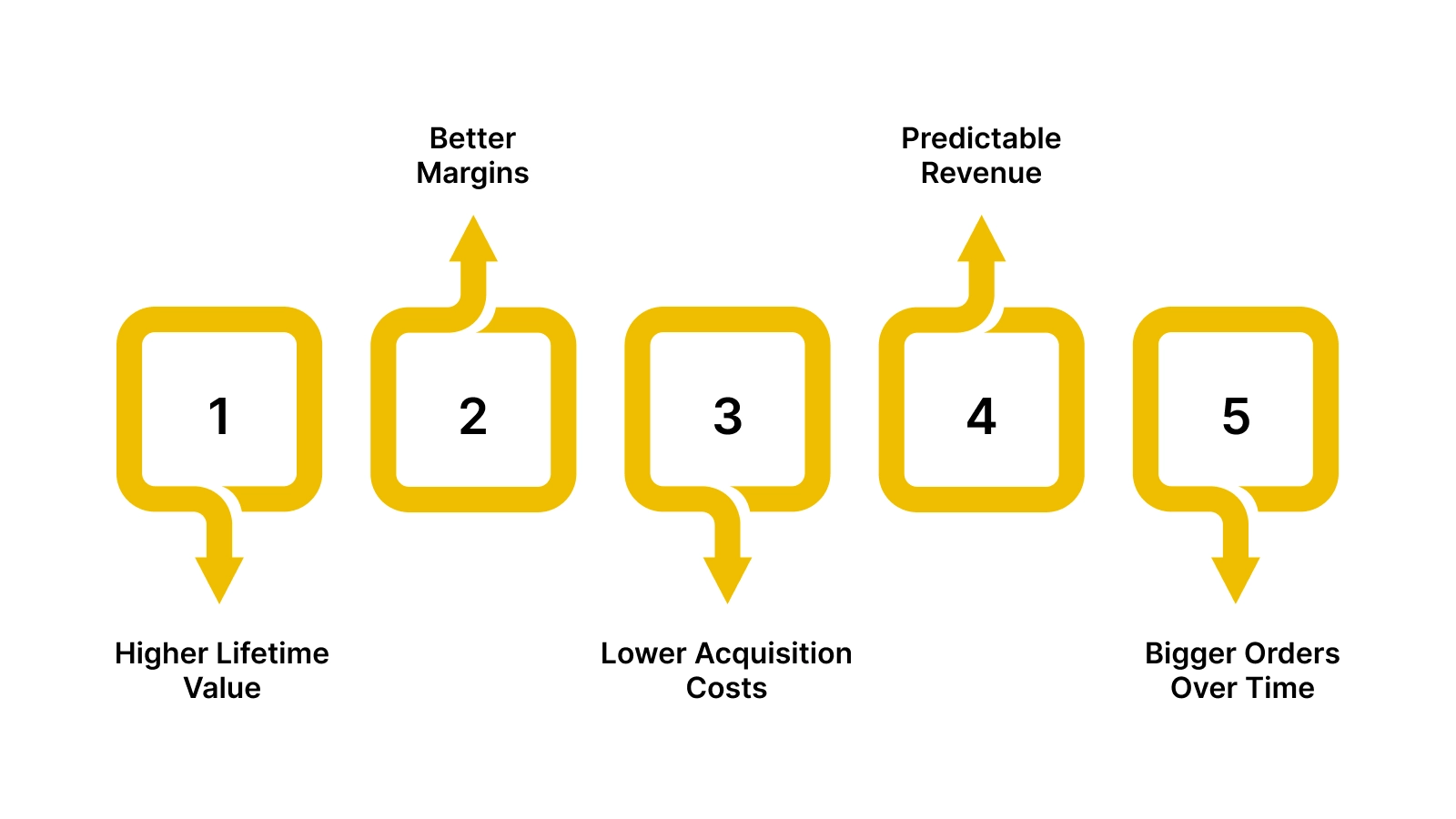
Repeat customers are the foundation of sustainable growth. They buy more often, spend more per order, and require far less marketing effort than new customers. Because they already trust your brand, you can convert, upsell, and cross-sell them at a much higher rate, which creates long-term stability for your business.
Here’s why they matter:
- Higher Lifetime Value (CLV): A shopper who returns every few months naturally contributes far more value than a one-time purchaser.
- Better Margins: Retention is significantly more profitable. Even a 5% increase in retention can boost profits, because repeat purchases cost less to acquire.
- Lower Acquisition Costs: It costs much more to acquire a new customer than to retain an existing one. Every dollar invested in loyalty and retention produces a higher ROI than cold advertising.
- Predictable Revenue: Repeat buyers create stability. Many ecommerce brands generate substantial revenue from their most loyal 5% of customers.
- Bigger Orders Over Time: Trust grows with every positive experience. In categories like beauty and wellness, repeat customers often increase average order value.
- Stronger Advocacy: Loyal customers naturally share the brands they love. Most of the repeat buyers recommend their preferred brands through word of mouth, amplifying your reach at no extra cost.
In short, repeat customers are brand advocates, and investing in strategies to retain them pays off far more than constantly chasing new customers.
Repeat Customers vs Recurring Customers vs Returning Customers: Key Differences
These terms are often used interchangeably, but each describes a distinct type of buyer. Knowing the difference helps you tailor retention strategies and maximize revenue from each group.
Knowing these distinctions helps you track loyalty more accurately, which naturally leads us to understanding how the Repeat Customer Rate (RCR) works.

Repeat Customer Rate (RCR): How to Calculate & Interpret It
Repeat Customer Rate (RCR) measures the percentage of customers who return to make additional purchases. It’s one of the most powerful indicators of loyalty, satisfaction, and long-term business health. Tracking RCR tells how effectively your business encourages ongoing engagement.
How to Calculate RCR
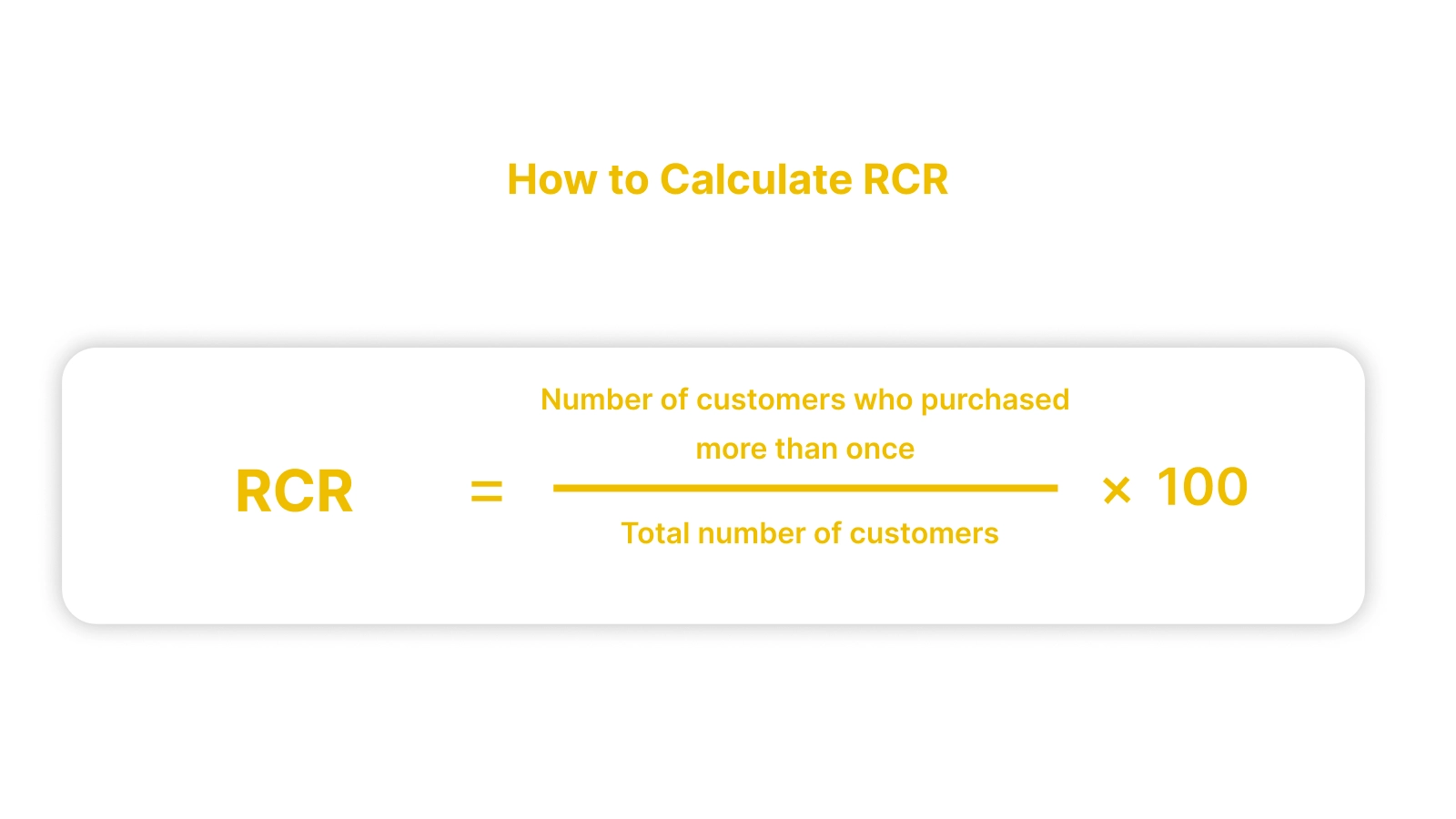
The formula is simple:
RCR = (Number of customers who purchased more than once / Total number of customers) × 100
Example: If 200 out of 1,000 customers make multiple purchases, your RCR is 20%. This shows that 1 in 5 buyers finds enough value to come back.
How to Interpret RCR
Knowing the number is only the first step. Interpreting it correctly is what gives you actionable insight:
- Compare against industry benchmarks: Different sectors have different norms. For example:
- Retail e-commerce: ~28%
- Subscription products: 40–60%
- Beauty & personal care: ~26%
Seeing your RCR in context tells you whether your retention is strong or needs improvement.
- Understand customer behavior:
- A high RCR means your product, service, or experience is compelling enough to encourage repeat purchases.
- A low RCR indicates friction in your buying experience, a weak value proposition, or post-purchase disengagement.
- Identify actionable areas:
- If you have low RCR and high first-time purchase rates, focus on post-purchase communication, loyalty incentives, or onboarding.
- If you have low RCR and low initial sales, you may need to revisit product-market fit or your acquisition targeting.
- Forecast revenue and growth: A consistent RCR allows you to predict future sales more reliably. Higher repeat rates reduce dependence on constantly acquiring new customers, improving margins and cash flow.
RCR provides clear insights into customer loyalty, operational efficiency, and revenue stability. Tracking, interpreting, and acting on your RCR gives you a roadmap to boost repeat customers.
Why Customers Return: Core Drivers of Repeat Buying Behavior

Understanding why customers come back is critical. Repeat purchases rarely happen by chance. They occur when satisfaction, trust, perceived value, convenience, and emotional connection all align.
To make this concrete for your e-commerce brand, here’s what actually triggers repeat buying and how to leverage each factor.
Consistent Quality and Customer Satisfaction
Customers are most likely to return when their first purchase meets or exceeds expectations. This includes product quality, accurate delivery, and smooth service.
To follow this, ensure that first experiences are flawless. Check product quality, packaging, and delivery. Accurate product information reduces friction and builds trust.
Perceived Value, Functional and Emotional Benefits
Repeat purchases increase when customers see both practical and emotional value in your offering. Functional benefits include product utility or reliability. Emotional benefits can be found in unboxing, personalized service, or alignment with brand values.
To build an emotional trigger, you need to deliver more than just a product. Add thoughtful touches such as personalized notes, excellent service, appealing packaging, or a sense of community. Show that your brand offers consistent value and an experience worth repeating.
Convenience and Low-Friction Experience
A smooth buying experience encourages customers to return. This includes fast checkout, predictable delivery, and easy returns.
Tip to follow: Optimize post-purchase flows. Enable subscription options or auto-reorder where relevant, make returns effortless, and remove any friction that could block a repeat purchase.
Trust, Transparency, and Service
Customers return when they trust your brand. Transparency and responsive support are key drivers, especially online, where competition is high.
It is always good to be clear about returns, communicate policies upfront, and respond promptly to issues. Building trust always encourages repeat purchases.
Habit Formation and Perceived Value Over Time
When your product becomes part of a customer’s routine, repeat purchases feel automatic.
Encourage repeat purchases early through reminders, subscription options, or reorder prompts. Make buying your product a natural, effortless part of their routine.
Loyalty Programs and Incentives
Rewarding repeat behavior strengthens customer retention and can meaningfully boost loyalty. Design loyalty programs that feel fair and valuable. Incentives should reinforce the sense of community and reward repeat behavior beyond simple discounts.
If you want a faster way to launch a branded, points-based loyalty program without engineering effort, you can book a demo with Nector to see how it works in action.
Also Read: Customer Loyalty Programs and Their Benefits
Emotional Connection, Brand Identity, and Community
Alignment with your brand’s values, identity, or community increases loyalty and reduces price sensitivity.
Tip: Communicate your brand’s story and values consistently. Engage through social proof, storytelling, and community-building initiatives. Customers who feel connected are far more likely to return.
Now that you know what triggers repeat customers, let’s look at how to apply these insights in your store.
Top 15 Tested Ways to Increase Repeat Customers
Getting customers to return requires intentional systems. The following tactics work across industries but need customization for your specific business model and customer behavior.
1. Onboard with Care to Remove Friction
Make the first purchase experience smooth and helpful.
- Show customers how to get value right away.
- For example, after a first order, send a confirmation email, follow up with a short guide on how to use the product, then a check‑in message a week or two later.
2. Follow Up with Post‑Purchase Sequencing That Feels Personal
Generic “thanks for buying” messages get lost in the noise. Instead,
- Trigger follow‑ups based on the customer's purchase.
- For example, if someone bought protein powder, send a refill reminder when they’re likely to run low.
- If they purchased an item of apparel, suggest complementary items based on their past behavior.
3. Build a Loyalty Program That Values Engagement
Give customers reasons to stay and not just when they buy, but when they engage: purchases, referrals, reviews, social shares, etc. For example:
- Allow them to earn points for leaving reviews or referring friends, which they can redeem later. Once customers start accruing value, they’re more likely to return than to shop elsewhere.
- And if you use a tool like Nector, you can launch such a program in hours, fully branded and integrated.
Also Read: Tips And Best Practices For Customer Loyalty Programs
4. Enable One‑Click Reordering for Effortless Repeat Purchases
Make it trivial for customers to reorder something they’ve already bought. The easier it is, the more likely they are to do it.
- Show a “Buy Again” button in their account dashboard or in post‑purchase emails.
- If they don’t have to re-enter details, repurchasing becomes almost automatic.
5. Send Timely Replenishment Reminders for Consumables
For consumable products, timing is everything. A gentle reminder when customers are likely running low can bring them back. For example:
- If sunscreen lasts roughly two months, send an email or SMS around the 50‑day mark. That nudge can convert a “maybe later” into a “yes, order again.”
6. Offer Proactive Customer Support
Don’t wait until a customer complains.
- Reach out when something seems off, there's a delay, or it's been a long time since their last order.
- If delivery is delayed, send an apology and a small incentive (a discount or a free sample). That reassurance shows care and dramatically increases the chance they’ll give you another shot.
7. Provide Clear Product Guidance & Support Content
If a customer isn’t sure how to use your product, they won’t return. Make it easy.
- Include a quick-start guide in the package or link to a helpful video tutorial.
- Simple, useful guidance helps customers get value, which builds trust and repeatability.
8. Offer Subscriptions or Auto-Reorder Options Where It Makes Sense
For items your customers buy regularly, like everyday essentials, skincare, supplements, or medical supplies, make repeat ordering effortless.
- Let them choose a subscription or auto-delivery with a small discount.
- Customers stick with auto-delivery because it removes the burden of remembering when to reorder.
9. Use Smart Bundles to Increase Value and Encourage Larger Orders
Bundles simplify choices and increase average order value while giving your customers real benefits. For example:
- You could offer a cleanser, moisturizer, and serum together at a small discount versus buying each separately.
- Customers perceive the value and are more likely to purchase the complete set regularly.
10. Run Win‑Back Campaigns for Lapsed Customers Before They Slip Away
Reach out as soon as you notice customers drifting, not after they’re gone.
- Email those who haven’t ordered in 1.5× their usual purchase cycle with a friendly check-in or a small incentive.
- Timely outreach can bring many back before they churn.
11. Offer Experiential or Emotional Incentives
Rewards don’t always need to be discounts. Exclusive experiences or a sense of belonging can drive loyalty more effectively.
- Give VIP access to new products, limited-edition drops, early previews, or community events.
12. Build a Community Around Your Brand for Social Engagement
Customers return more often when they feel part of a community, not just a store.
- Create spaces, such as a Facebook group or forum, where people can share tips, experiences, and feedback.
- Active engagement creates a habit, while social proof encourages repeat purchases.
13. Prioritize Converting First-Time Buyers into Repeat Buyers Quickly
The second purchase is critical; it sets the stage for future orders.
- Encourage it with a time-sensitive offer, a helpful guide, or educational content.
- A positive second experience makes subsequent purchases almost automatic.
14. Use Social Proof and UGC to Reinforce Trust & Reduce Anxiety
Genuine reviews and photos reduce hesitation.
- After a first purchase, collect customer feedback or images and feature them on product pages.
- Seeing other shoppers enjoy your products reassures buyers and increases repeat rates.
15. Streamline Checkout for Returning Customers
Make repeat purchases effortless.
- Auto-fill saved info, automatically apply discounts or reward points, and ensure the checkout process is fast and frictionless.
- When returning feels smooth and rewarding, customers are more likely to buy again.
You know acquisition is expensive. Repeat customers mean predictable revenue, higher lifetime value, and lower dependency on ads. Using the methods mentioned above helps you build a solid retention engine.
How Nector Helps in Boosting Repeat Customers?
By this point, you’ve seen how many moving parts go into driving repeat purchases. Doing all of this manually or across scattered tools slows you down, creates inconsistent customer experiences, and makes retention feel harder than it needs to be.
This is where Nector gives your team an advantage. It brings loyalty, referrals, rewards, and reviews into one system so every interaction pushes customers closer to their next purchase.
Below is a clear look at how Nector solves the exact problems that prevent brands from building strong repeat-purchase cycles.
Loyalty Programs That Build Return Behaviour
Nector lets you design points-based and tiered loyalty programs that reward purchasing, reviewing, referring, and engaging. Everything updates in real time, and customers can see their progress inside an on-site widget.
How it helps:
- You automate repeat incentives rather than rely on one-off campaigns.
- Customers stay motivated because rewards and tiers are always visible.
- Birthday rewards and milestone bonuses create timely purchase triggers.
- Higher tiers encourage customers to maintain status, increasing frequency.
You get predictable repeat revenue and loyal returning customers.
Referral Programs That Bring High-Intent Buyers
Nector’s referral system turns loyal customers into an acquisition channel. They can instantly share links via email, SMS, or WhatsApp.
Why it matters for retention:
- Referred customers reorder more often and churn less.
- Both the referrer and the friend earn rewards that pull them back to buy again.
- Referral credits add to their point balance, reinforcing your loyalty loop.
Instead of spending more on paid ads, your existing users help bring in better-quality buyers.
Review Automation That Reinforces Trust and Drives Reorders
Nector sends automated review requests at the right time after purchase and rewards customers for responding.
Here’s how it helps:
- You get more reviews without manual chasing.
- New and returning customers see strong social proof, reducing hesitation.
- Points earned through reviews pull customers into a repeat cycle.
- AI-powered summaries help your team quickly identify improvement areas
Reviews fuel trust. Trust fuels repeat purchases. To make things easier, Nector integrates with Shopify and more than 400 other tools across CRM, email, and commerce. This way, you can keep your current workflow while adding a retention layer that runs reliably in the background.
Real Brand Examples That Boosted Repeat Purchases Using Nector
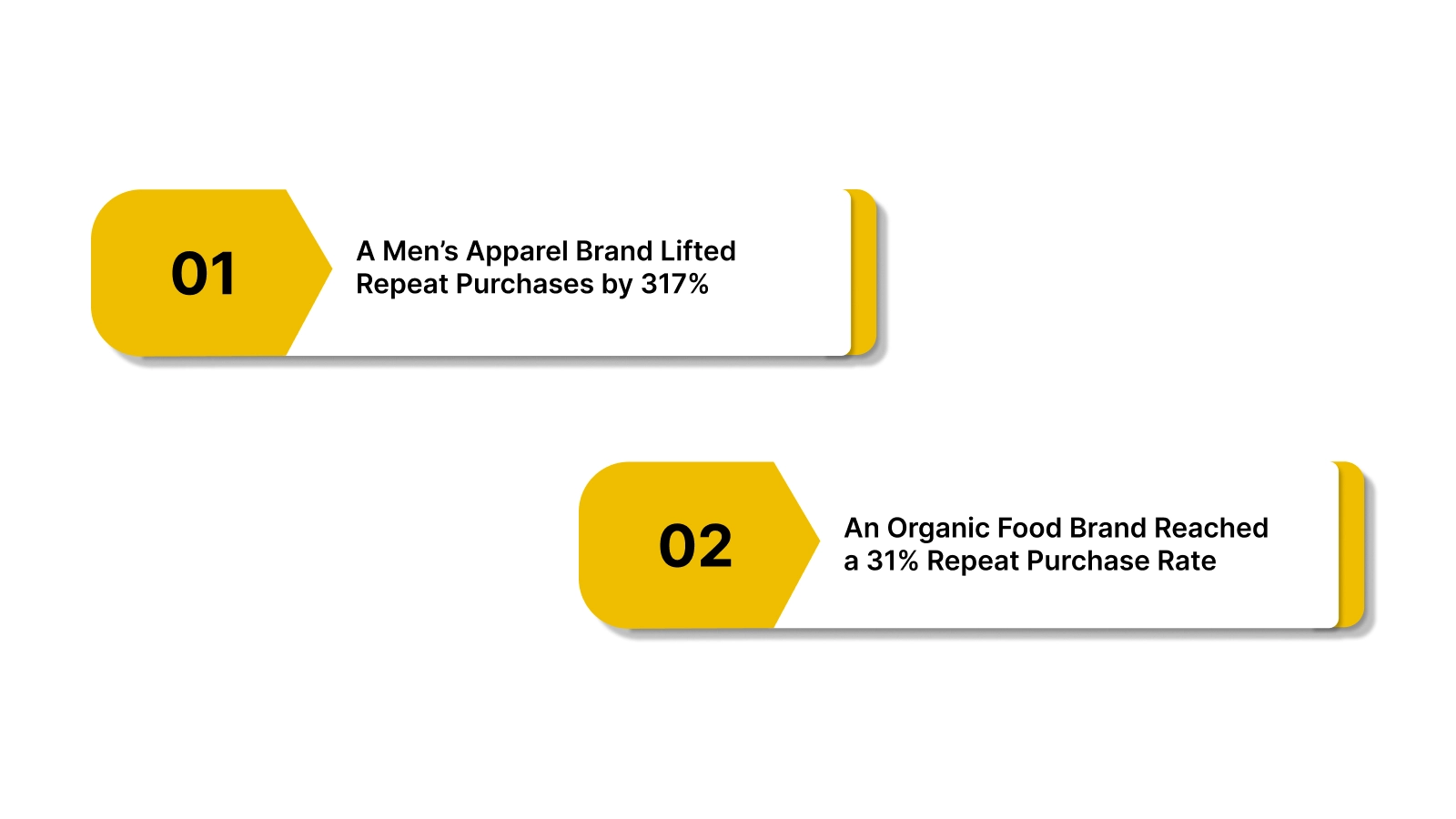
Case studies mean little unless the impact is clear. These three brands show how structured loyalty systems translate into real retention gains, higher order values, and a more predictable revenue base.
1. A Men’s Apparel Brand Lifted Repeat Purchases by 317%
A fast-growing men’s innerwear brand struggled with a common D2C problem: first-time buyers loved the product, but they didn’t always return.
Key shifts that unlocked growth:
- Rewards extended beyond purchases to reviews, referrals, and social actions.
- Progress toward benefits was always visible through on-site loyalty surfaces.
- Personal triggers, such as birthday rewards, added relevance without margin erosion.
The impact compounded over time:
- Repeat purchase rate increased to 317.3% by Year 2.
- Coin redemption rose 149.7%, signaling active engagement.
- Loyalty members increased AOV by 44%.
- Loyalty-driven orders grew from 8.4% to 12.5% of total revenue.
The result was a behavioral loop. Customers earned, redeemed, and returned with minimal reliance on discounts.
2. An Organic Food Brand Reached a 31% Repeat Purchase Rate
A well-regarded regenerative agriculture brand faced slow repeat rates despite strong values and product quality.
Most customers purchased once and never returned. The brand needed a way to build long-term relationships without relying on discounting.
What they implemented
- A coin-based rewards ecosystem using Nector.
- Points for purchases, referrals, and engagement.
- Automated reminders and personalized touchpoints.
- Data-driven insights to send timely, relevant communication.
Over time, this stabilized repeat behavior:
- 31% repeat purchase rate across the customer base.
- Nearly 7% of all orders are attributed directly to loyalty.
- Loyalty members spent 5.34% more per order.
- Nector-driven revenue grew 16.5% YoY.
The program helped the brand turn occasional buyers into steady repeat customers who valued the brand’s mission. These case studies show that repeat purchase growth is a system you build, and Nector gives you the exact tools to run that system at scale.
Final Thoughts
Repeat customers are the foundation of profitable e-commerce. The customers who return after a first purchase represent the difference between sustainable growth and constant customer replacement.
Every strategy in this guide works, but only when implemented systematically. The brands seeing 300%+ increases in repeat purchases didn't guess their way there. They built deliberate retention engines that rewarded customers for staying engaged.
If you're tired of acquisition treadmills and want retention that actually works, start with the fundamentals: Make it easy to buy again. Reward the behaviors you want to see repeated. Stay connected between purchases.
Nector handles the complexity of loyalty programs, referrals, and reviews so you can focus on the strategic decisions that differentiate your brand.
Ready to turn your one-time buyers into repeat customers? Book a demo and see how you can easily boost your return purchase rate.
Frequently asked questions
What are the 4 C's of customer loyalty?
The 4 C’s are Commitment, Consistency, Communication, and Customer Centricity, focusing on trust, engagement, and delivering value to build long-term repeat relationships.
How does a business retain repeat customers?
Businesses retain repeat customers through consistent quality, personalized experiences, loyalty programs, proactive support, convenient processes, and timely communication that encourages ongoing engagement and repeat purchases.
What does an 80% retention rate mean?
An 80% retention rate means 80 out of 100 customers continue purchasing over a period, showing strong loyalty and minimal churn within that timeframe.
What is the KPI for customer retention?
A KPI for retention measures repeat purchase rate, churn rate, customer lifetime value, and loyalty program engagement to track long-term customer loyalty success.
What are common customer retention mistakes?
Common mistakes include ignoring post-purchase engagement, inconsistent service, poor communication, lack of incentives, and failing to personalize experiences or address customer feedback promptly.


%201.webp)