
%201.webp)
.avif)
.avif)
Have you ever recommended a product or service you loved to a friend? That simple act of sharing is what makes word of mouth one of the most powerful growth drivers in business. It goes beyond just trust; referrals actually multiply.
Research shows that referred customers not only spend more but also refer new customers more than non-referred customers. One referral can set off a chain reaction, creating an entire network of loyal buyers.
Referral incentives build on this behavior by rewarding customers for spreading the word. When structured well, they don’t just attract new sign-ups; they deepen loyalty with your existing customers and turn them into long-term advocates.
In this blog, we’ll share complete insights on referral incentives that help your business grow and build stronger customer relationships.
Key Takeaways
- Referrals drive growth efficiently: Referred customers spend more than non-referred ones, making referral incentives a cost-effective way to acquire high-value customers.
- Reward what matters: Discounts, store credits, and exclusive perks encourage participation and increase repeat engagement.
- Simplicity improves participation: Easy-to-share links or codes, with clear rules, encourage more customers to join and refer.
- Tracking and optimization are essential: Measuring conversions, reward redemption, and referral-driven revenue ensures your program is effective and scalable.
- Trusted recommendations outperform ads: Word-of-mouth from loyal customers converts at higher rates, strengthening brand advocacy while lowering acquisition costs.
What Are Referral Incentives and Why Do They Matter in 2026?
Referral incentives are rewards or benefits given to customers for recommending your brand to others. They turn loyal customers into advocates, helping your business grow through word of mouth rather than costly advertising.
Here’s why referral incentives are essential:

- Cost-Effective Growth: Referrals often bring in new buyers at a lower cost than traditional marketing channels. A clothing brand might acquire new customers through referral links while spending less than on social media ads.
- Rewarding Loyalty: Customers feel valued when they earn rewards for sharing your brand, strengthening their connection. A wellness subscription could grant loyalty points to those who invite friends, encouraging repeat purchases.
- Trusted Recommendations: People trust recommendations from friends or family more than standard advertising. A home décor shop may attract new clients when existing customers post about its products on social media.
- Lower Acquisition Costs: Using your current customers to attract new ones reduces dependence on paid ads and improves overall ROI. A beauty brand could notice that referral-driven purchases cost less than running multiple campaigns.
- Brand Advocacy: Happy customers naturally promote your products, expanding your audience without additional marketing spend. A specialty food company may gain orders when customers share recipes that feature its products.
Referral incentives combine customer engagement with efficient growth, creating a win-win for both your brand and your audience.
Next, let’s see how these referral incentives directly drive customer growth.
How Referral Incentives Drive Customer Growth?
Referral incentives create a simple, rewarding loop between your brand and your customers. They encourage existing customers to bring in new ones while earning benefits themselves.
The process usually follows a few simple steps:
- Sign-Up or Share: To get started, customers receive a unique link, code, or referral option that makes sharing easy. A fashion retailer might provide a personalized link directly in the customer’s account page, ready to share with friends or on social networks.
- Action by the New Customer: Once the referral is shared, the new customer completes a purchase or another defined action. A subscription box service could credit loyalty points when the referred friend places their first order.
- Reward Delivery: After the referred action occurs, both the referrer and the new customer receive their incentives. Discounts, loyalty points, or free products are common rewards. A wellness brand may credit points instantly to both parties after a successful referral.
- Tracking and Reporting: Accurate tracking ensures rewards are applied correctly, and program success is measurable. A home décor brand could monitor referrals in real time to see which customers bring in the most new buyers.
- Scaling and Optimization: Over time, brands can adjust rewards or run limited-time bonuses to encourage ongoing sharing. A specialty food company might offer extra points during a seasonal promotion to increase referral activity.
Also Read: Customer Loyalty Programs and Their Benefits
Now that we understand the process, let’s look at real-world examples of brands that excel at referral incentives.
5 Real Brand Examples of Effective Referral Incentives
Seeing how other brands implement referral incentives can help shape your own program. Here are five successful examples:
- Rothy’s (Fashion & Accessories): Offers a “Give $20, Get $20” model where both the referrer and the referred customer receive a $20 discount. This dual incentive motivates sharing and attracts new buyers.
- MeUndies (Apparel & Lifestyle): Rewards both the referrer with a $20 credit and the new customer with 20% off their first order, encouraging repeated referrals and engagement.
- Adore Beauty (Beauty & Personal Care): Offers $20 off for both the referrer and the friend when the friend makes a qualifying purchase, creating a win-win for loyalty and new customer acquisition.
- Koala (Home Goods & Furniture): Offers $150 off for both parties when a referral completes a purchase, demonstrating how high-value incentives can drive conversions quickly.
- Dr. Squatch (Skincare & Wellness): Uses free product rewards for referrals, which improved conversion rates more than standard discounts, highlighting the impact of testing different reward types.
Next, let’s examine the key components that make a referral program successful.
6 Essential Components of a Successful Referral Incentives Program
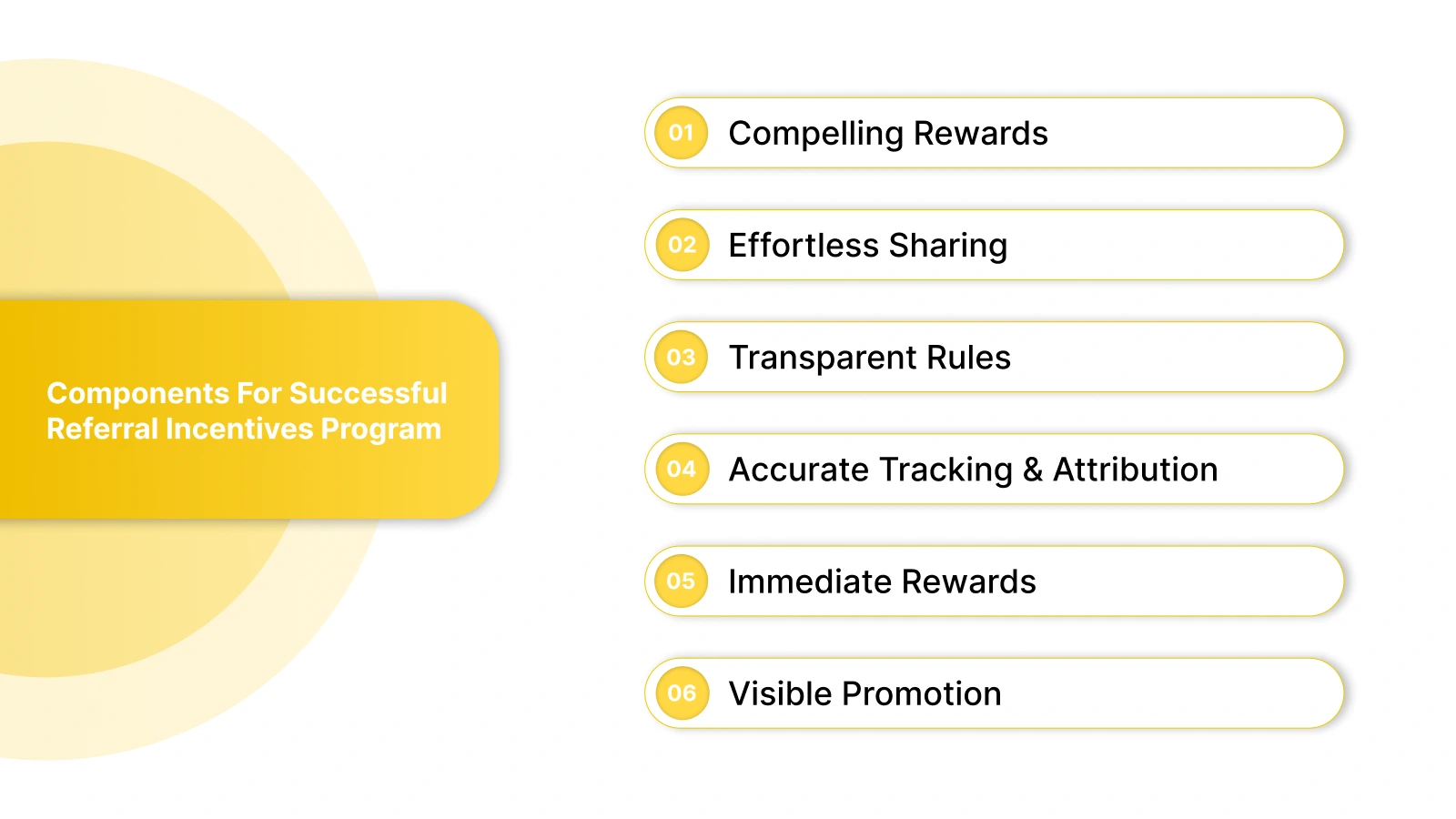
A well-designed referral incentives program turns satisfied customers into active advocates while lowering acquisition costs. To maximize impact, focus on these core components:
- Compelling Rewards: Choose incentives that truly resonate, such as meaningful discounts, loyalty points, or exclusive access, to drive participation and advocacy.
- Effortless Sharing: Make referring friends seamless with one-click links or shareable codes via email, social platforms, or messaging apps, reducing friction at every step.
- Transparent Rules: Clearly communicate how rewards are earned and redeemed to build trust and prevent confusion or frustration.
- Accurate Tracking and Attribution: Measure every referral reliably, ensuring fair reward distribution while protecting against misuse or fraud.
- Immediate Rewards: Deliver incentives as soon as referrals convert to maintain momentum and reinforce positive behavior.
- Visible Promotion: Keep the program top-of-mind through emails, banners, or push notifications to encourage continuous engagement.
These elements together create a referral program that is simple to use, trusted by customers, and capable of delivering measurable growth.
After implementing these components, your referral program is set to generate measurable growth.
How To Design a Successful Referral Incentive Program: 7 Key Steps
A referral program is more than just offering rewards; it requires thoughtful planning to ensure smooth execution and measurable results. Follow these steps to design a program that motivates customers and drives growth.
Step 1: Set Clear Goals
Start by defining what you want to achieve. Whether it’s growing your customer base, increasing sales, or improving brand awareness, having clear objectives lays the foundation for a program that aligns with your overall business strategy.
Step 2: Choose the Right Incentives
Once your goals are set, decide on rewards that truly motivate customers to participate. Discounts, free products, cash rewards, or early access to new offerings all work depending on your audience. Aligning incentives with customer preferences ensures higher engagement and better results.
Also Read: How to Design a Referral Program That Drives Repeat Purchases
Step 3: Keep the Process Simple
After choosing incentives, focus on making the referral process effortless. Providing easy-to-share links or personalized codes lets customers quickly refer friends via email, social media, or messaging apps. A simple process reduces friction and increases participation.
Step 4: Promote Your Program
A great referral program can fail if customers don’t know about it. Use multiple channels, such as your website, newsletters, and social media, to spread the word. A dedicated landing page with clear calls to action makes it easy for customers to join and start referring immediately.
Step 5: Track and Measure Success
With the program live, the next step is to monitor its performance. Track key metrics, including referral counts, conversion rates, and rewards claimed. These insights help identify what’s working and highlight areas that may need adjustment.
Step 6: Optimize and Iterate
Use the data collected to refine your program. Experiment with different incentives, messaging, and referral mechanics. Continuous improvement keeps the program effective, engaging, and aligned with customer expectations.
Step 7: Automate for Scale
As your referral program grows, managing it manually becomes difficult. Automation tools like Nector streamline tracking, reward distribution, and communication, allowing you to scale efficiently without adding extra workload.
By following these connected steps, you can design a referral program that encourages participation, rewards loyalty, and drives measurable business growth. Next, let’s explore creative strategies to improve your referral incentives program.
10 Strategies and Ideas to Maximize Referral Incentives

Implementing a referral program works best when it combines creativity with structure. Here are ten strategies and ideas to increase the volume of referrals:
- Cash-Back or Credit Rewards: Offer referrers account credit, store cash, or vouchers that can be used for future purchases. This tangible reward motivates repeated participation.
- Charity or Cause-Based Incentives: Give customers the option to donate their referral reward to a charity or social cause. This adds a meaningful dimension and can attract socially conscious customers.
- Product-Specific Rewards: Offer exclusive products, samples, or upgrades as referral incentives. This works well for brands with premium or limited-edition items, creating excitement and exclusivity.
- Milestone Rewards: Reward customers when they reach referral milestones, such as 5, 10, or 20 successful referrals. Milestones encourage ongoing engagement and make the program feel rewarding over time.
- Early Access Benefits: Allow top referrers to access new collections, beta features, or sales before the general public. Early access adds status and a sense of privilege.
- Event-Based Rewards: Incorporate rewards tied to special events, like birthdays, anniversaries, or seasonal promotions. Aligning incentives with timely moments increases participation and engagement.
- Partner or Cross-Brand Incentives: Collaborate with complementary brands to offer joint rewards. For example, referring friends could spot discounts from both your brand and a partner, expanding reach and adding value.
- Leaderboard Recognition: Highlight top referrers publicly on your website, app, or social channels. Recognition creates friendly competition and reinforces participation without extra cost.
- Limited-Time Multipliers: Offer reward multipliers during specific periods, like “Triple points for every referral this weekend.” Multipliers create urgency and boost short-term referral activity.
- VIP Community Access: Create a referral-driven VIP group that grants access to exclusive content, networking events, or community perks. This strengthens loyalty and fosters a sense of belonging among advocates.
Using a mix of these strategies and ideas can keep your referral program engaging, fresh, and effective. And Nector helps you automate referral tracking, distribute rewards, and provide analytics to scale your program efficiently.
Also Read: Referral Marketing for Local Businesses: A Complete Guide
After applying these strategies, your program becomes engaging, fresh, and effective.
Referral Incentives: Common Mistakes and Proven Best Practices
Running a referral incentives program can be highly effective for growing your customer base, but minor missteps can limit results. Understanding common pitfalls and adopting best practices ensures your program motivates customers, drives engagement, and delivers measurable growth.
Here’s a clear breakdown of what to avoid and what works best:
Once your program is ready, managing it manually can be overwhelming.
How Nector Can Help with Referral Incentives?
Managing and optimizing referral incentives pushed to customers can be tricky without the right tools. Nector simplifies automation, tracking, and scaling, making it easier to turn loyal customers into advocates through its loyalty platform.
Why Nector Excels for Referral Incentives:
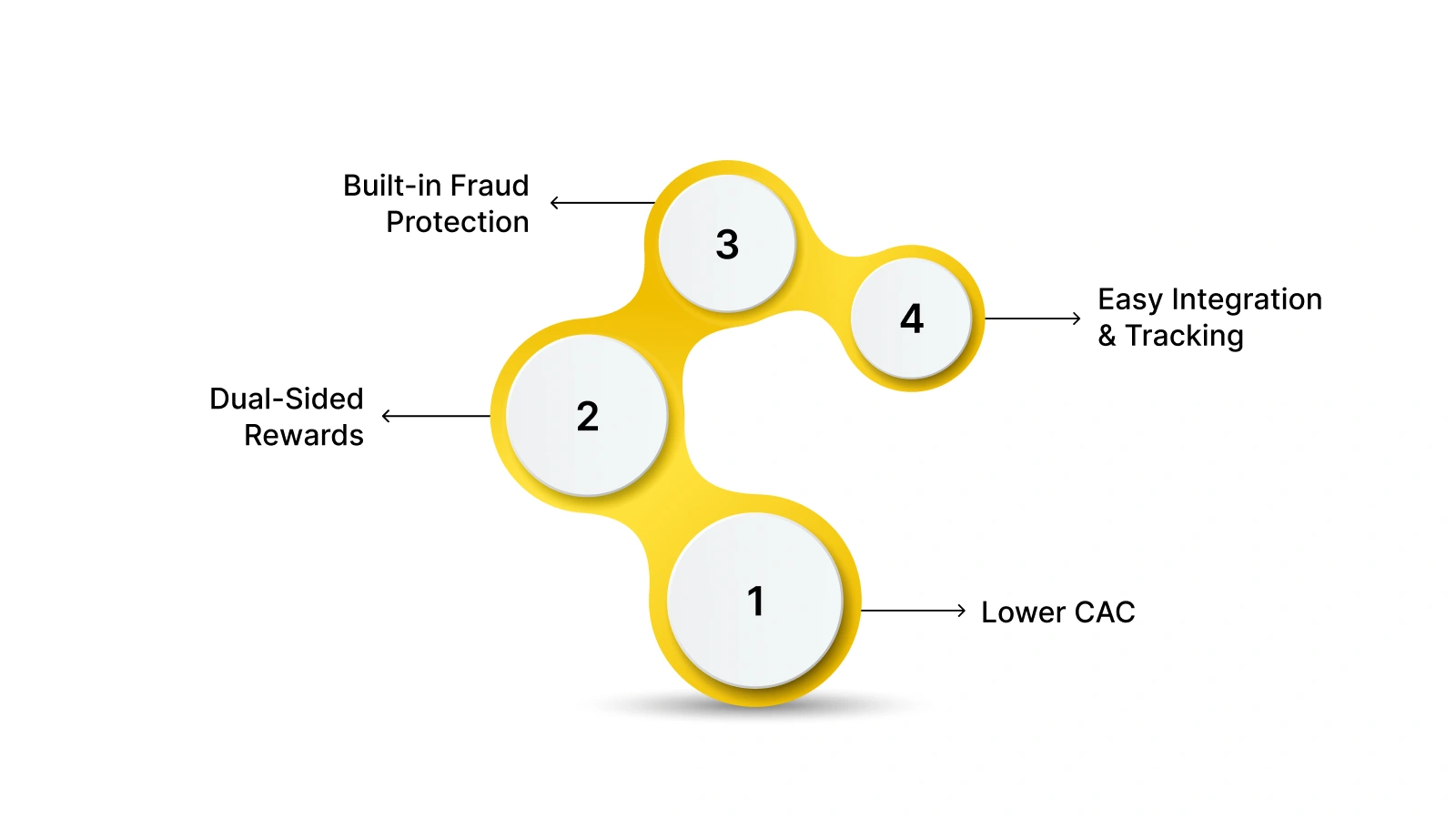
- Lower CAC: Acquire new customers more efficiently by leveraging your existing customers. Referral incentives pushed through Nector help reduce Customer Acquisition Cost while driving quality leads.
- Dual-Sided Rewards: Reward both the referrer and the new customer. Offer discounts, coupons, or loyalty points to make every referral rewarding and motivate participation.
- Built-in Fraud Protection: Prevent fake referrals and ensure that rewards are given only to genuine customers, keeping your program effective and trustworthy.
- Easy Integration & Tracking: Set up referral incentives quickly on platforms and track performance in real time, with precise analytics to optimize campaigns.
With Nector, referral incentives can be pushed to the right audience seamlessly and measured. Automate your referral programs, scale them efficiently, and drive both new customer acquisition and loyalty without the extra manual effort.
Real Results from Brands Using Nector
Brands across sectors have seen meaningful improvements after implementing Nector’s referral incentives:

- A lifestyle brand increased orders by 37.82% through automated rewards, driving more new customers.
- An organic food brand recorded a 31% repeat purchase rate and a 16.5% revenue uplift through targeted referral incentives.
- A health-nutrition brand boosted AOV by a 13.2% increase in AOV loyalty-program participation by combining referrals with repeat-purchase rewards.
- A restaurant streamlined rewards for dine-in visits, food orders, reviews, and social shares, eliminating manual program management while motivating customer advocacy.
Nector provides a referral program and fully integrated platform for points, referrals, and reviews, with ready-made integrations to primary ecommerce tools.
Final Thoughts
Referral incentives work best when they’re simple, valuable, and easy to act on. When customers clearly see what they gain by sharing your brand, participation increases and acquisition costs stay under control.
A focused referral incentive strategy turns satisfied customers into consistent advocates. Nector helps you bring in high-quality customers who convert faster and stay longer. Start small, test what resonates with your audience, and refine the rewards based on real performance.
If you’re ready to launch or improve your referral incentives, book a demo with Nector today and see how you can drive more referrals, strengthen customer loyalty, and support sustainable growth.
FAQs
What is the best incentive for a referral program?
The right incentive depends on what your customers value most. For ecommerce brands, discounts, store credits, free products, or early access to new launches usually perform well because they feel immediate and relevant.
How do I track referrals effectively?
You should use referral software that automatically tracks links, conversions, and rewards. Platforms like Nector centralize this data, making it easier to measure referral-driven revenue and participation.
How can I encourage customers to refer more people?
Tiered rewards work well here. When customers earn better rewards after multiple successful referrals, they stay motivated and see clear value in continuing to participate.
Can I run a referral program for both new and existing customers?
Yes, the most effective referral programs reward both sides. Existing customers feel appreciated for referring, while new customers get an incentive to complete their first purchase.
How do I measure the success of my referral program?
Track referral conversion rates, reward redemption, and CAC from referral traffic. Comparing referral CAC with paid channels helps you evaluate real acquisition efficiency and long-term value.

.avif)



Start Building Customer Retention That Lasts