
%201%20(1).webp)
.avif)
.avif)
Gamification in e-commerce loyalty programs is all about using visible progress, milestones, and status to guide customer behavior and make repeat purchases feel natural.
When done right, gamification changes how customers engage between purchases. In fact, loyalty programs built around personalized challenges have driven a 60% increase in engagement and a 6x higher purchase frequency among participating customers.
That outcome highlights the real value of gamification.
When customers can see momentum and understand what to do next, loyalty becomes behavioral, not transactional.
This guide breaks down what gamification in e-commerce loyalty programs really means, why it works, the core mechanics brands use to make progress motivating, and more.
At a glance:
- Gamification drives behavior by making progress visible, not by adding more rewards. Customers return when they can clearly see how close they are to unlocking the next benefit.
- Progress, status, and milestones outperform static points and discounts. Gamified systems build habit and commitment, while flat reward programs create short-term spikes.
- The second purchase is the most critical moment for gamification. Accelerating progress after the first order significantly increases long-term retention and repeat buying.
- Simple mechanics scale better than complex game layers. Clear rules, predictable progression, and visible cues outperform complicated challenges or over-designed systems.
- Gamification works best when embedded across the shopping journey. Loyalty stays active when progress is reinforced on product pages, post-purchase, checkout, and between orders, not just at redemption.
What Is Gamification in E-Commerce Loyalty?
Gamification in e-commerce loyalty is the use of game-like mechanics to motivate customer behavior within a loyalty program. It applies concepts like progress, achievement, and recognition to encourage repeat purchases, engagement, and long-term participation.
Unlike traditional loyalty programs that focus only on earning and redeeming rewards, gamification emphasizes how customers experience progress as they interact with the brand. The goal is to make loyalty feel interactive and motivating, not transactional.
Gamification vs Rewards
Rewards are the outcome. Gamification is the system that drives engagement toward that outcome.
- Rewards are what customers receive, such as discounts, store credit, or free products.
- Gamification is how customers earn those rewards through visible progress, milestones, and challenges.
A loyalty program can offer rewards without gamification. Gamification adds structure and motivation by showing customers what to do next and why it matters.
Why Gamification Works in E-Commerce Loyalty Programs
Gamification works in e-commerce loyalty because it aligns with how customers actually make decisions online. In categories with endless choice and low switching costs, loyalty is rarely about brand preference alone. It’s about momentum, habit, and perceived progress.
Here’s why gamification consistently outperforms static reward structures.
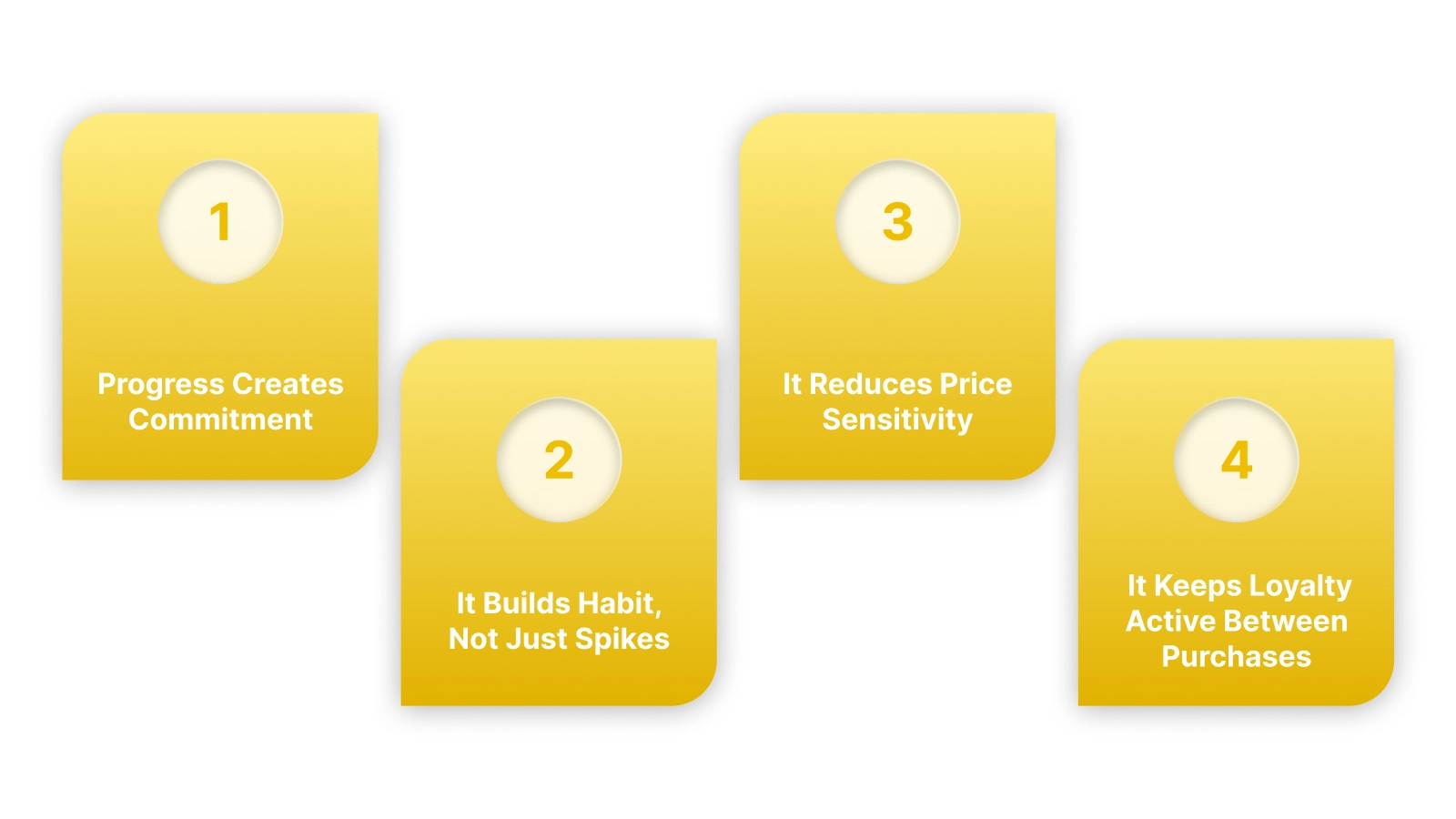
1. Progress Creates Commitment
Visible progress changes behavior. When customers can see they are close to a reward or tier upgrade, they are more likely to return and complete the journey.
Progress also creates a sense of ownership. Once customers feel invested, abandoning that progress feels like a loss, even if the reward itself is modest.
2. It Builds Habit, Not Just Spikes
Discount-led programs create short bursts of activity. Gamified programs create consistency.
By rewarding ongoing engagement, such as maintaining a tier or completing milestones, gamification encourages customers to return regularly instead of only reacting to offers.
Over time, repeat purchases become habitual rather than incentive-driven.
3. It Reduces Price Sensitivity
When loyalty is purely transactional, customers shop on price. Gamification adds emotional weight through progress, status, and recognition.
Customers who are close to unlocking benefits are less likely to switch for small savings elsewhere. Loyalty shifts from calculation to commitment.
4. It Keeps Loyalty Active Between Purchases
Most loyalty programs only matter at checkout. Gamification keeps loyalty visible even when customers are not buying.
Progress updates, tier reminders, and milestone cues keep customers engaged between orders, making the brand feel present without being intrusive.
Nector makes it easier to show customers their progress, tiers, and milestones at the moments that matter, so loyalty stays visible and motivating even when they’re not actively shopping. Book a demo to see it in action.

Gamification Elements Used in E-Commerce Loyalty Programs
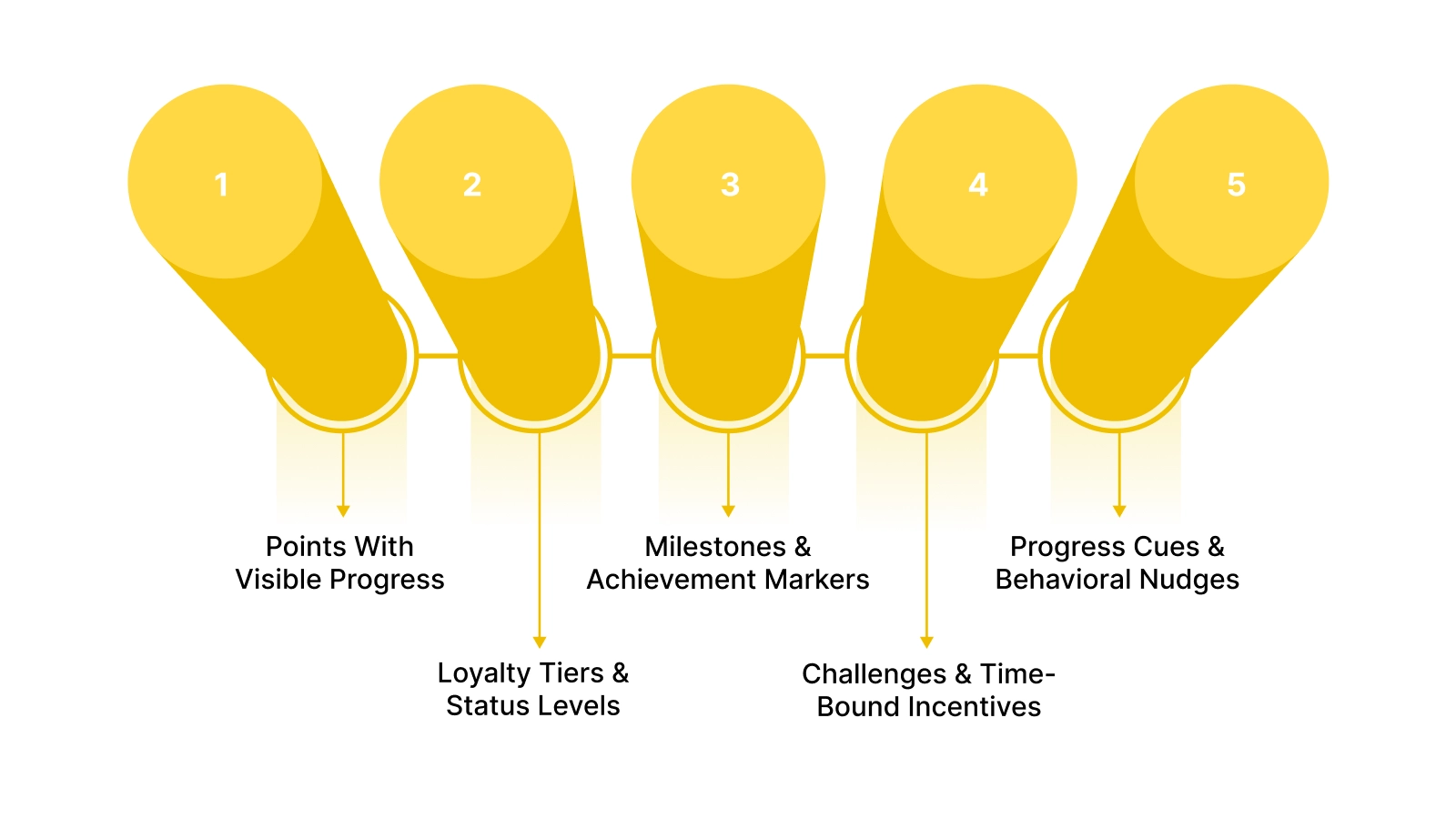
Gamification elements work only when they make the customer's progress clear and meaningful. The goal is not to add more mechanics, but to guide repeat behavior between purchases.
Below are the most commonly used gamification elements in e-commerce loyalty, explained in terms of what they change, not just what they are.
1. Points With Visible Progress
Points are the foundation of most loyalty programs, but points alone rarely drive engagement. What matters is how clearly customers can see their progress toward something valuable.
Effective implementations:
- Progress bars that show how close a customer is to a reward
- Clear messaging like “You’re 80 points away from your next benefit”
- Progress surfaced across product pages, cart, and post-purchase touchpoints
Ineffective implementations:
- Hidden point balances
- Rewards that feel too far away to reach
- Complicated earning rules that customers cannot recall
What this improves:
Repeat purchase rate, time between purchases, and reward redemption
2. Loyalty Tiers and Status Levels
Tiers work because they introduce status and continuity. Instead of every purchase feeling isolated, tiers connect orders into a longer journey.
Strong tier systems:
- Unlock benefits customers actually notice, such as early access or bonus earning
- Create motivation to maintain status, not just reach it once
- Encourage consistent purchasing rather than only high spend
Weak tier systems:
- Offer symbolic benefits with little perceived value
- Have unclear upgrade or downgrade logic
- Reset progress too frequently, breaking momentum
When tiers are designed well, customers return to protect the progress they have already earned.
What this improves:
Customer retention, purchase frequency, and long-term engagement
3. Milestones and Achievement Markers
Milestones recognize meaningful moments in the customer lifecycle. They work best when tied to actions that signal real intent.
High-impact milestone examples:
- First purchase
- Second or third order
- Successful referral
- Product review after delivery
Low-impact milestone examples:
- Logging in
- Clicking a banner
- Passive actions with little effort
Milestones reinforce progress by acknowledging effort, not just spend. This makes loyalty feel earned rather than given.
What this improves:
Second-purchase conversion, engagement depth, loyalty participation
4. Challenges and Time-Bound Incentives
Challenges add urgency, but only when they are aligned with customer behavior and timing.
Effective challenges:
- Encourage actions customers are already likely to take
- Have a clear end date and outcome
- Lead directly to visible progress or rewards
Ineffective challenges:
- Feel forced or irrelevant
- Stack on top of too many other mechanics
- Create pressure without meaningful value
Challenges should accelerate natural behavior, not introduce friction.
What this improves:
Short-term engagement, action completion, and momentum during slow periods
5. Progress Cues and Behavioral Nudges
Often overlooked, progress cues are the connective tissue of gamified loyalty programs.
These include:
- Notifications when a customer is close to a reward
- Post-purchase messages reinforcing earned progress
- Reminders that highlight the next achievable actions
Progress cues work because they reduce decision effort. Customers do not have to calculate whether returning is worth it. The system makes the value clear.
What this improves:
Return visits, reward usage, consistency of repeat behavior
Used together, these elements create a loyalty system that stays active between purchases. The most effective programs keep mechanics simple, progress visible, and outcomes aligned with real customer behavior.
Also read: Common Customer Loyalty Mistakes to Avoid for E-commerce Success
Real-World Examples of Gamification in E-Commerce Loyalty
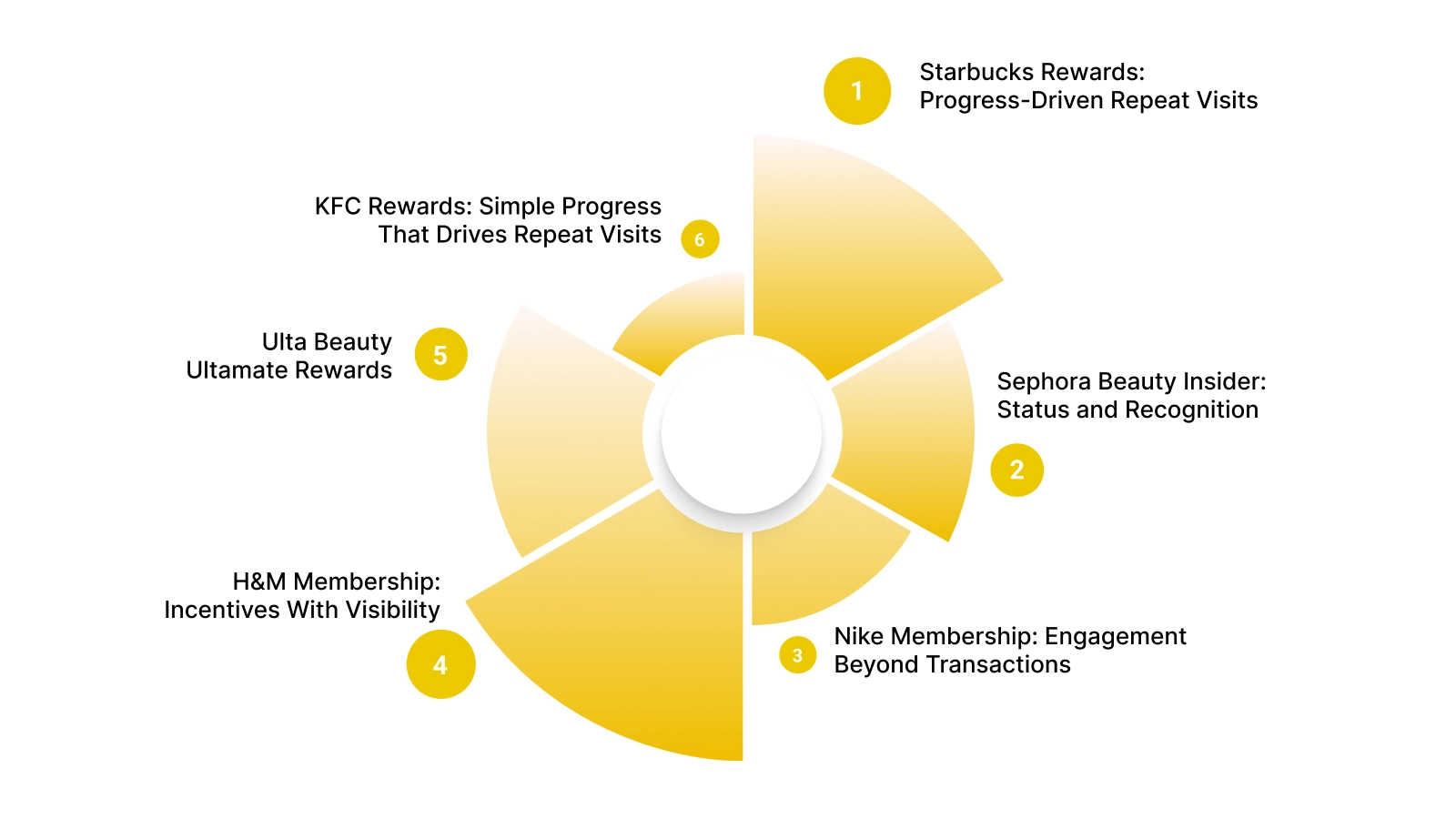
The most effective gamification in e-commerce loyalty does not look flashy. It looks intentional. These brands use progress, status, and incentives to guide repeat behavior, not to entertain customers.
Here are real-world examples of how leading brands apply gamification to drive engagement and retention.
1. Starbucks Rewards: Progress-Driven Repeat Visits
Starbucks uses a simple star-based system that makes progress highly visible. Customers earn stars for every purchase and can clearly see how close they are to redeeming a reward.
What works:
- Clear progress toward free items
- Tiered status (Green and Gold) that encourages consistency
- Occasional challenges that accelerate star earning without confusion
Why it works: Customers return to complete progress they have already started. The program reinforces habit and frequency rather than pushing discounts.
2. Sephora Beauty Insider: Status and Recognition
Sephora’s loyalty program is built around tiers that unlock experiential and emotional value, not just discounts. Members see a clear progression toward higher status levels with better benefits.
What works:
- Tiered access to exclusive products and experiences
- Recognition-based rewards that feel earned
- Strong visibility of tier status across touchpoints
Why it works: The program shifts loyalty from transactional rewards to identity and belonging, encouraging long-term engagement.
3. Nike Membership: Engagement Beyond Transactions
Nike uses gamification to reward engagement, not just purchases. Members earn benefits through app usage, content interaction, and activity participation.
What works:
- Rewards tied to behavior beyond checkout
- Progress reinforced through app and email touchpoints
- Value delivered before purchase decisions
Why it works: Customers stay connected to the brand even when they are not buying, keeping Nike top of mind until the next purchase moment.
4. H&M Membership: Incentives With Visibility
H&M combines points, tiers, and exclusive access into a loyalty program that makes value accumulation visible and easy to understand.
What works:
- Points tied to both purchases and engagement
- Clear communication around how points convert to benefits
- Occasional time-bound incentives aligned with seasonal behavior
Why it works: Customers understand the economic value of staying loyal and can see it accumulate over time.
5. Ulta Beauty Rewards: Progress Visibility and Redemption Momentum
Ulta Beauty Rewards shows how gamification works when progress is simple and tangible. Customers earn points on every purchase and can see exactly how those points convert into dollar-value rewards.
What works:
- Points translate directly into store credit
- Tier levels increase earning rates and unlock perks
- Progress is visible across online and in-store experiences
Why it works: Customers return to use the value they can already see and understand. Redemption feels achievable, which keeps loyalty active between purchases.
6. KFC Rewards: Simple Progress That Drives Repeat Visits
KFC Rewards uses a straightforward earn-and-redeem model that makes progress easy to follow. Customers earn points on orders and can quickly see when they are close to a free item.
What works:
- Simple earning logic tied directly to purchases
- Low redemption thresholds that keep rewards attainable
- Clear prompts that nudge customers to return and redeem
Why it works: The program keeps loyalty visible and achievable. Customers return to complete progress they have already started, rather than waiting for promotions or discounts.
Gamification Strategies That Scale for E-Commerce Teams
.webp)
Gamification only works when it is designed as a system, not a campaign. Scalable programs guide customers back naturally, without requiring constant manual pushes or deeper discounts.
These strategies focus on repeatable mechanics that influence behavior over time.
1. Make Progress Impossible to Miss
Gamification works only when customers can see momentum clearly. If progress is hidden or hard to interpret, loyalty becomes passive and easy to forget between purchases.
What to do:
- Surface progress at decision points: Show progress bars or “points to next reward” messaging on product pages, carts, and checkout, where customers are already deciding whether to buy.
- Reinforce progress after meaningful actions: Confirm earned progress immediately after purchase, review submission, or referral completion to create a sense of accomplishment.
- Use plain, specific language: Messages like “40 points to your next reward” perform better than generic loyalty copy because they reduce mental effort.
When progress is visible, returning feels like finishing something already started.
2. Accelerate the Second Purchase
The second order is the strongest predictor of long-term retention. Gamification should prioritize shortening the gap between the first and second purchase.
What to do:
- Introduce second-purchase incentives: Offer bonus progress or points if the second order happens within a defined window, such as 30 days.
- Reinforce value post-delivery: Once the first order is delivered, remind customers of what they have already earned and how close they are to the next benefit.
- Reduce effort to complete progress: Make the next reward feel attainable with one clear action, not multiple steps.
This reframes the second purchase as completion rather than another buying decision.
3. Reward Effort, Not Just Spend
Spend-based loyalty programs exclude many customers early in the journey. Gamification expands participation by recognizing behaviors that signal intent and future value.
What to do:
- Reward engagement actions: Assign progress to reviews, referrals, and account creation to encourage involvement beyond checkout.
- Use milestones for key moments: Acknowledge actions like a second order or first referral to reinforce positive behavior.
- Connect effort to future value: Ensure rewarded actions contribute meaningfully toward redeemable rewards or tier progression.
This keeps customers engaged even when they are not ready to buy immediately.
4. Use Tiers to Create Long-Term Momentum
Tiers are most effective when they encourage consistency. Customers should feel motivated to maintain their status, not just reach it once.
What to do:
- Design tiers around activity, not one-time spend: Reward frequency or ongoing engagement to promote sustained behavior.
- Offer benefits customers notice: Early access, bonus earning rates, or exclusive rewards work better than symbolic perks.
- Reinforce status regularly: Remind customers what their tier unlocks and what they gain by staying active.
Strong tier systems turn loyalty into something customers protect.
5. Keep Mechanics Simple and Predictable
Complexity is one of the fastest ways to kill gamification. Customers engage more when rules stay consistent and easy to remember.
What to do:
- Limit progression paths: Focus on one primary way customers earn and progress instead of stacking multiple systems.
- Keep earning and redemption logic stable: Avoid frequent changes that reset customer expectations.
- Explain value visually, not textually: Use progress bars and cues instead of lengthy explanations.
Simplicity builds trust, and trust sustains engagement.
6. Reinforce Progress With Timely Nudges
Gamification needs reinforcement, but only at moments when action feels natural. Over-messaging reduces impact.
What to do:
- Trigger nudges near completion: Notify customers when they are close to a reward or tier upgrade.
- Align messaging with behavior: Time reminders after delivery, near replenishment cycles, or after engagement actions.
- Focus on next steps: Every message should clearly indicate what action moves the customer forward.
Well-timed nudges guide behavior without feeling promotional.
Also read: 11 Customer Loyalty Strategies for Driving Repeat Purchases in 2026
How Nector Powers Gamification in E-Commerce Loyalty
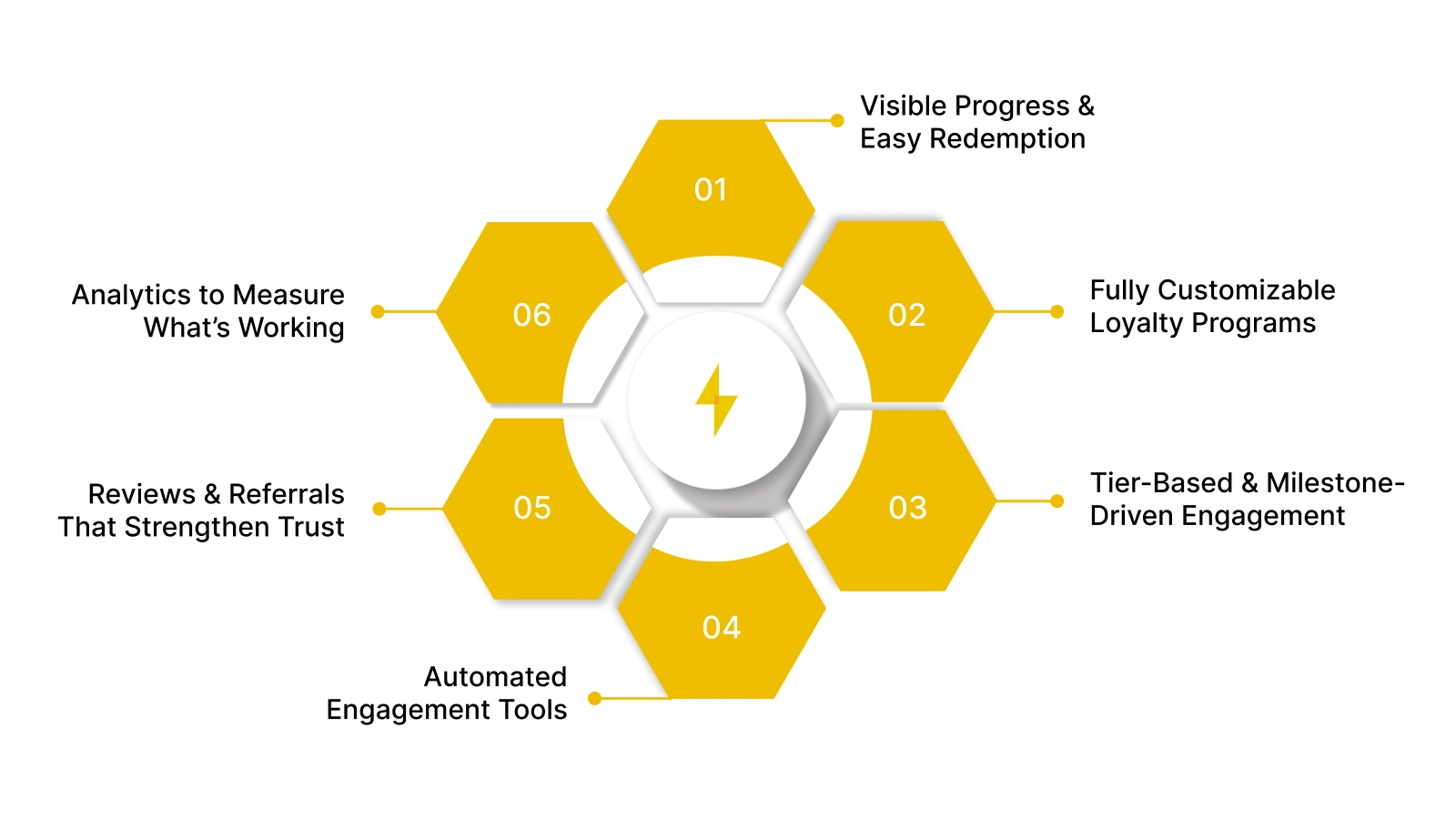
Gamification strategies fail most often at execution. Progress exists, but customers do not see it. Rewards exist, but redemption feels distant. Engagement relies on reminders instead of systems.
Nector is built to solve this gap by turning gamification into a visible, automated part of the shopping experience, not a separate campaign layer. It helps e-commerce teams run loyalty programs that guide repeat behavior naturally, without increasing operational effort.
What Nector enables for gamified loyalty:
Visible Progress and Easy Redemption
Nector makes loyalty progress clear and actionable for customers. Points and rewards can be accessed through widgets, dedicated reward pages, or directly at checkout, reducing friction between earning and redeeming.
Fully Customizable Loyalty Programs
Teams can define how customers earn and redeem rewards using flexible rules. This allows gamification to be tailored to business goals, whether that is encouraging repeat purchases, accelerating the second order, or rewarding engagement.
Tier-Based and Milestone-Driven Engagement
Nector supports tier-based loyalty structures and milestone rewards that recognize meaningful customer actions. These systems encourage consistency over time and help customers see long-term value in staying active.
Automated Engagement Tools
Nector includes automated emails and prompts that reinforce progress and nudge customers back at the right moments. These nudges are designed to support repeat purchases without relying on manual follow-ups or constant promotions.
Reviews and Referrals That Strengthen Trust
Nector combines loyalty with reviews and referrals in one platform. Reviews help reduce hesitation for repeat purchases, while referrals bring customers back to redeem earned rewards, reinforcing the loyalty loop.
Analytics to Measure What’s Working
Nector provides visibility into loyalty performance, including engagement and redemption behavior. This allows teams to understand which gamification mechanics are influencing repeat purchases and where adjustments are needed.
Nector is free to install on Shopify and is used by 1,000+ brands to run loyalty programs that are easy for customers to use and easy for teams to manage. Sign up today to see how Nector helps turn gamification into a scalable loyalty system.
Wrapping Up
Gamification in e-commerce loyalty isn’t about adding games. It’s about making loyalty feel rewarding before rewards are redeemed.
When customers can see progress, understand what to do next, and feel recognized along the way, loyalty stops being transactional and starts becoming habitual.
The brands that win with gamification aren’t the loudest. They’re the ones that make loyalty feel intuitive, motivating, and worth coming back to.
Want to see how structured gamification can improve engagement and redemption without discount dependency? Book a Demo with Nector to explore loyalty programs built for real customer behavior.
FAQs
What is gamification for customer loyalty?
Gamification for customer loyalty uses progress, milestones, and status cues to motivate repeat behavior, helping customers see momentum toward rewards and encouraging engagement between purchases rather than relying only on discounts.
How is loyalty related to gamification?
Loyalty defines the rewards customers can earn, while gamification shows progress toward those rewards, keeping loyalty visible and motivating customers to return through clear incentives, recognition, and a sense of advancement.
What are gamification techniques in e-commerce?
Gamification techniques in e-commerce include visible point progress, tiered loyalty levels, milestones for repeat actions, and timely nudges that guide customers toward their next purchase without increasing discount dependency.
What are the 3 R’s of loyalty?
The three R’s of loyalty are rewards, retention, and referrals, working together to encourage repeat purchases, build long-term customer relationships, and turn satisfied customers into advocates who drive organic growth.


%201.webp)

Start Building Customer Retention That Lasts