
.avif)
.avif)
In eCommerce, getting new customers is important, but keeping the ones you already have is even more valuable. In fact, Shopify reports a 59% increase in returning shoppers over the past two years, proving that repeat customers are the backbone of a successful, growing business.
When customers return, they not only spend more, but they also cost less to retain, making your business more profitable. In this blog, we’ll break down what Repeat Customer Rate (RCR) is, why it matters more than ever, and how you can improve it.
We’ll also explore simple, actionable strategies to increase your repeat purchases and build long-term success.
Key Takeaways
- Repeat Customer Rate is an essential metric for eCommerce. It measures how many customers make additional purchases, and is key to driving customer loyalty and increasing lifetime value.
- Focusing on repeat customers is more cost-effective than constantly acquiring new ones, as they tend to spend more and return more frequently.
- Calculating the Repeat Customer Rate requires accurate data on purchase history, customer segments, and time periods to track how many customers return to make repeat purchases.
- Repeat Customer Rate directly impacts profitability, reducing acquisition costs, increasing customer lifetime value, and improving brand loyalty.
- By using strategies like personalized loyalty programs, subscription models, and automated engagement, businesses can increase their Repeat Customer Rate and drive sustainable growth.
What is the Repeat Customer Rate (RCR) in eCommerce?
Repeat Customer Rate is an important metric for any eCommerce business. It measures the percentage of customers who return to make additional purchases within a defined period. This metric is directly tied to your business's ability to build customer loyalty and improve lifetime value (LTV).
Unlike first-time buyers, repeat customers are proven to generate higher revenue over time, making them a cornerstone of sustainable eCommerce growth. RCR serves as a reliable indicator of customer satisfaction, product quality, and overall shopping experience.
Moreover, with increased competition in the eCommerce space, businesses must prioritize turning single-time buyers into loyal, repeat customers.
Why is Repeat Customer Rate Important for eCommerce Businesses?
Focusing on RCR is the key to turning one-time buyers into loyal, high-value customers. It boosts revenue while significantly lowering the costs of acquiring new customers. Here’s why it is a must for eCommerce businesses:
1. Customer Retention Over Acquisition
Acquiring new customers is essential for growth, but it’s significantly more expensive than retaining existing ones. New customers cost five to ten times more than selling to a current customer. Repeat customers, however, offer a much higher return on investment (ROI).
By focusing on improving RCR, you can drive more revenue with fewer marketing dollars. Not only do repeat customers return more frequently, but they also tend to spend more per transaction. This makes customer retention a much more profitable strategy than solely relying on new customer acquisition.
2. Direct Impact on Profitability
Boosting your RCR also improves Customer Lifetime Value (CLV): the total revenue a customer is expected to bring over their entire relationship with your brand. As your repeat customer rate rises, so does the frequency of purchases, which directly contributes to higher CLV.
Moreover, increasing RCR reduces Customer Acquisition Cost (CAC), helping you balance your marketing spend and maximize profitability. A higher repeat rate ensures you don’t have to constantly overspend on finding new customers.
By understanding the direct link between Repeat Customer Rate and profitability, you can see why calculating RCR accurately is essential. Let’s now dive into how you can measure and track this key metric.
Also Read: How Smart Brands Are Redefining Loyalty to Drive Retention (2026 edition)
How to Calculate Repeat Customer Rate?
Calculating the Repeat Customer Rate is simple but requires accurate data on customer transactions. Here’s the Repeat purchase rate formula to note:
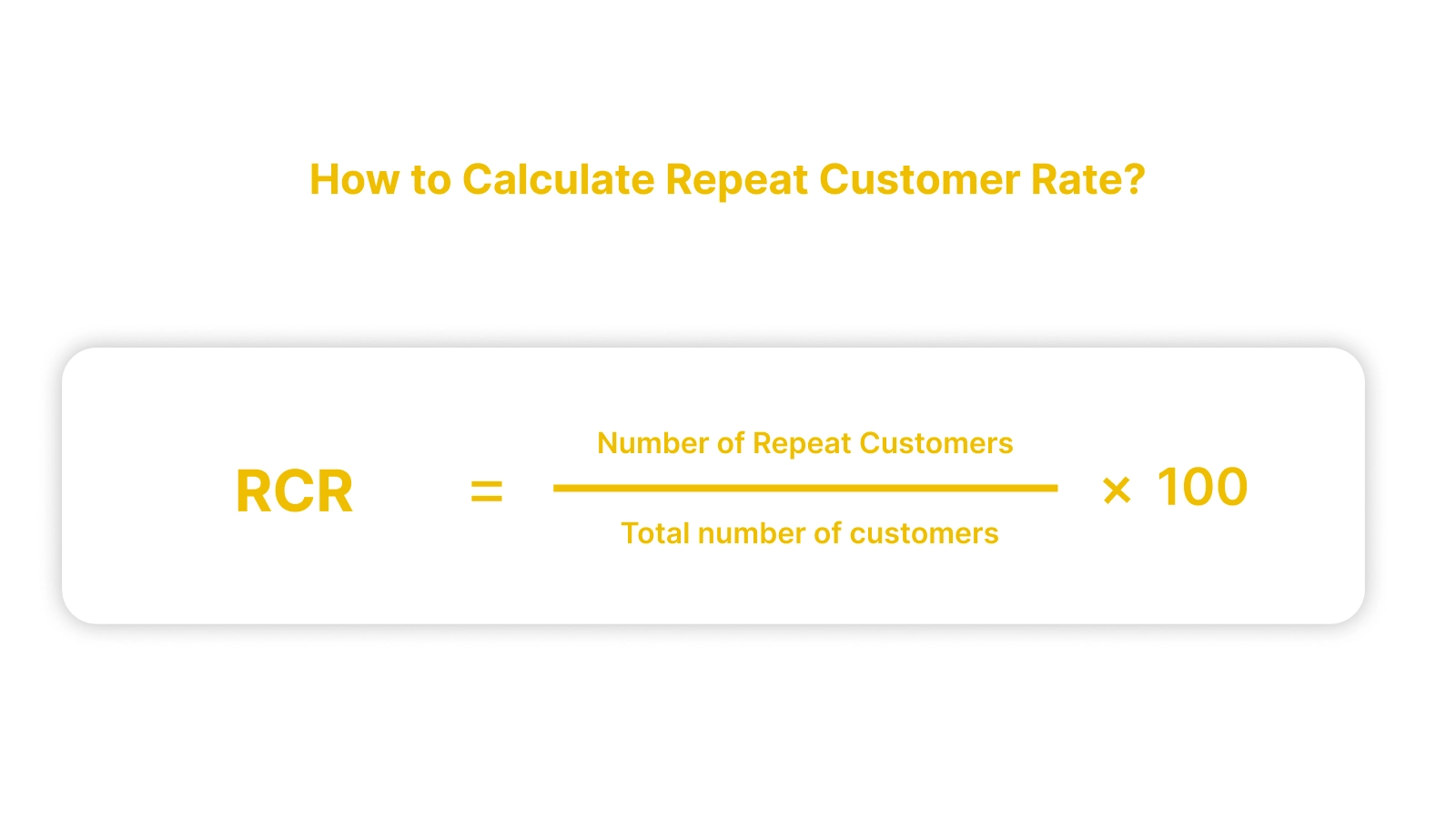
Formula:
RCR = (Number of Repeat Customers / Total Number of Customers) × 100
Data Required:
To calculate repeat purchase, you’ll need:
- Purchase History: Every transaction made by customers in a given period.
- Customer Segments: Identifying first-time buyers and repeat customers.
- Time Period: The specific timeframe during which you're measuring RCR (e.g., 30 days, 90 days).
Practical Example:
Let’s assume you have 500 customers in total for 30 days. Out of these, 150 made more than one purchase within this period. The Repeat Customer Rate would be:
RCR = (150 / 500) × 100 = 30%
This means 30% of your customers returned to make repeat purchases, indicating a relatively healthy repeat customer base. Now, let’s see how it differs from the customer retention rate.
Repeat Customer Rate vs Customer Retention Rate
Repeat Customer Rate focuses on transactions (how many customers came back to buy again), whereas Customer Retention Rate tracks the percentage of customers retained over a longer period (often a year).
The difference lies in the time frame and focus:
- RCR is often calculated for a short period (e.g., 30 days).
- CRR is a longer-term metric, typically tracking customer retention over a year.
Both are important, but RCR provides a more immediate picture of customer engagement, while CRR helps assess the long-term loyalty of your customer base.
Also Read: How to Calculate Customer Retention Rate Formula
Benchmarking: What is a Good Repeat Purchase Rate?
Understanding industry benchmarks for Repeat Customer Rate is important for assessing your business’s performance and identifying areas for improvement. Below, we provide estimated repeat customer rates by industry, along with regional insights to give you a clearer picture of what might be considered “good” in your sector.
Regional Insights:
- India: Repeat customer rates are generally lower, around 10-20%, reflecting varying customer loyalty levels and the emerging eCommerce market.
- MENA & North America: These regions typically experience higher repeat rates, ranging from 25-35%, due to more established eCommerce habits and loyalty programs.
What High/Low Repeat Rates Mean:
- High Repeat Rate: Indicates strong customer satisfaction, product fit, and brand loyalty.
- Low Repeat Rate: May suggest issues with product quality, customer experience, or the absence of effective engagement strategies like loyalty programs.
(Note: All rates are estimated and should be used as general benchmarks. Individual results will vary.)
How Does Repeat Customer Rate Vary by Industry?
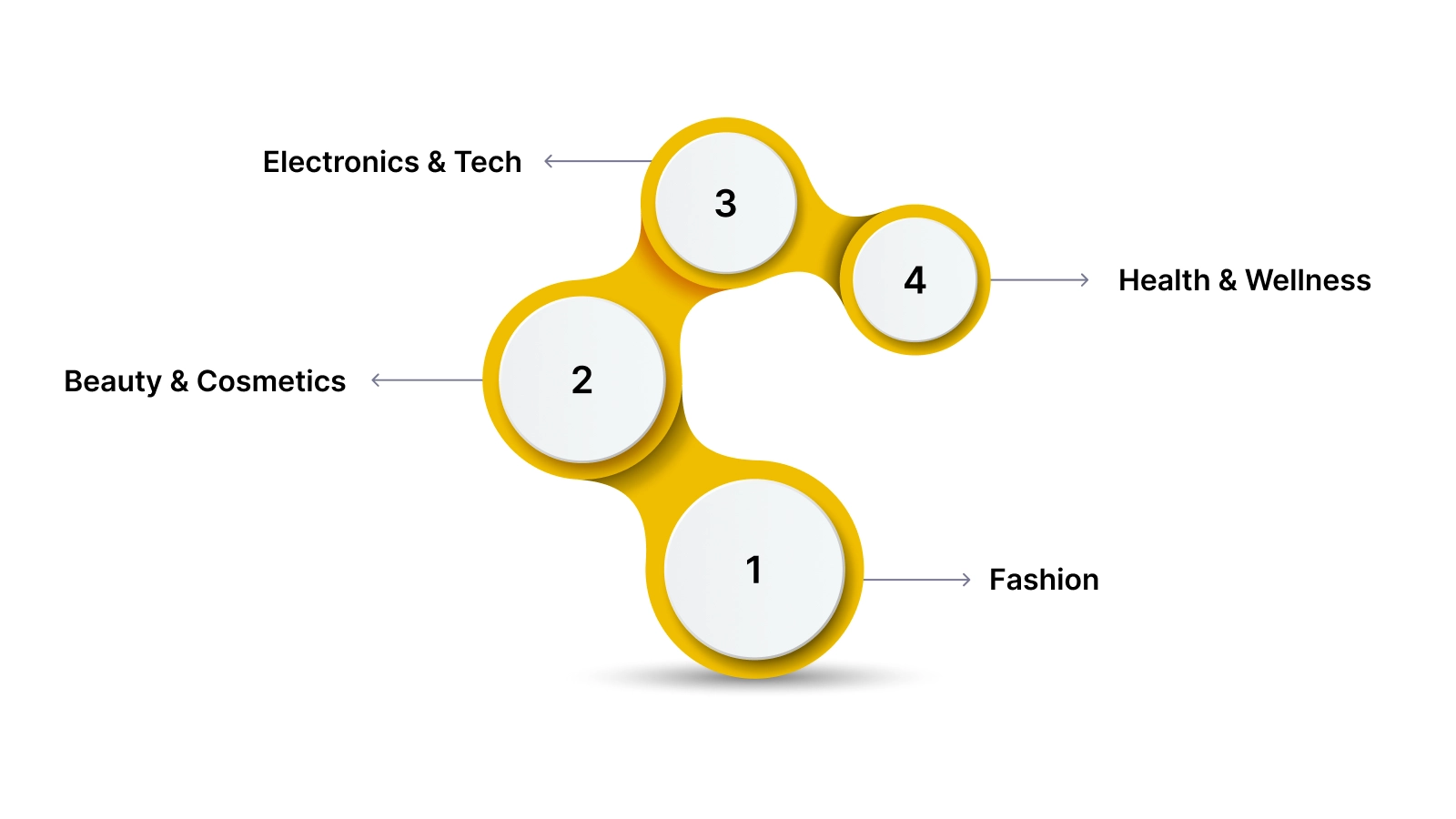
Each industry has its unique factors that influence repeat purchase behaviors. This includes:
1. Fashion
Repeat customers are essential, especially in a trend-driven market. Customers often return for new collections or seasonal items. Brands that offer exclusive early access to collections or loyalty rewards often experience higher repeat rates.
2. Beauty & Cosmetics
Subscription models and refill-based products significantly impact repeat customer rates in the beauty industry. Personalized product recommendations and subscription services (e.g., monthly deliveries) help increase the likelihood of repeat purchases.
3. Electronics & Tech
Electronics tend to have lower repeat purchase rates, as customers typically purchase less frequently. However, customer service and product longevity play important roles in encouraging customers to return for accessories, upgrades, or complementary products.
4. Health & Wellness
Supplements and personal care products are ideal for subscription-based models, driving repeat customers. Customers tend to purchase regularly, especially when they see positive results from their initial products.
Industries like fashion and beauty survive on personalization and trends, while electronics rely more on product longevity and service. Tailoring your approach to these specific dynamics will optimize your repeat customer rate.
What Factors Influence Repeat Customer Rates in eCommerce?
The factors that influence Repeat Customer Rates are diverse, but they all boil down to one core principle: ensuring your customers’ needs are met consistently. From seamless experiences to personalized touches, every detail impacts whether a customer returns:
- Customer Experience: An intuitive website, fast load times, and seamless navigation are key to retaining customers. If customers have a smooth experience, they’re more likely to return.
- Product Quality & Packaging: First impressions matter. When products meet or exceed customer expectations, the likelihood of them returning increases significantly.
- Customer Segmentation & Personalization: Data-driven segmentation and personalized recommendations based on past purchases encourage repeat behavior. For example, sending a personalized email with product recommendations can inspire customers to return.
- Subscription Models: Automated subscription models for consumables like supplements or beauty products encourage repeat purchases without requiring the customer to actively place orders.
By focusing on these key factors, you can build a strategy that not only attracts customers but also ensures they keep coming back, increasing your repeat customer rate and long-term loyalty.
Key Metrics You Should Track Along with Repeat Customer Rate
To truly understand the health of your Repeat Customer Rate, you must also track complementary metrics like Conversion Rate, AOV, CLV, and Bounce Rate. Each metric offers insights into customer behavior that drive repeat purchases.
By monitoring these key metrics alongside your Repeat Customer Rate, you can make informed decisions that refine your retention strategies. This ultimately boosts customer loyalty and increases long-term profitability.
7 Proven Ways to Increase Repeat Purchase Rate
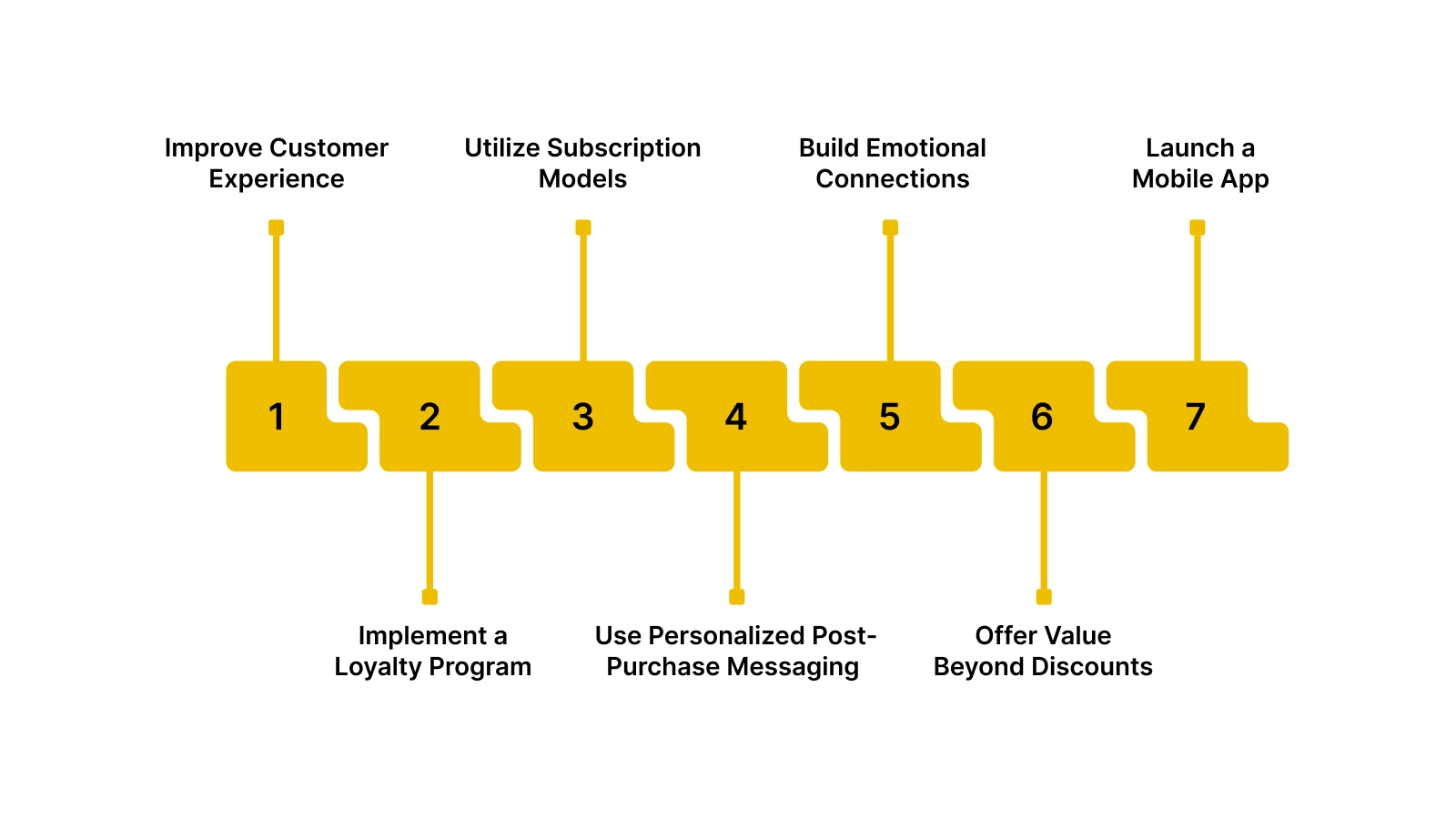
To increase your RCR, you must focus on strategies that build trust and convenience. This can be done through personalized rewards, loyalty programs, or exceptional customer experiences.
1. Improve Customer Experience
A seamless and intuitive customer experience is essential for repeat purchases. Optimizing your website’s speed, navigation, and mobile responsiveness ensures customers can easily browse, purchase, and return without frustration, driving higher RCR.
2. Implement a Loyalty Program
Offering personalized rewards, badges, and exclusive perks through platforms like Nector can significantly boost your repeat customer rate. These systems incentivize customers to return by rewarding them for their continued engagement.
3. Utilize Subscription Models
Implementing subscription models for consumables like beauty products or supplements can ensure a steady stream of repeat customers. Offering automatic reorders or recurring deliveries builds long-term loyalty by removing friction from the purchase process.
4. Use Personalized Post-Purchase Messaging
Nector’s ability to integrate with post-purchase communication tools enables personalized emails or SMS to be sent based on customer behavior, such as offering discounts, product recommendations, or loyalty rewards. This enhances the chances of repeat purchases and drives customer loyalty.

5. Build Emotional Connections
Creating a personal connection with your customers through exceptional customer service and brand storytelling builds loyalty. When customers feel valued beyond just a transaction, they are more likely to return, boosting your Repeat Customer Rate.
6. Offer Value Beyond Discounts
Nector also allows businesses to provide exclusive rewards, early access, and VIP treatment as part of their loyalty programs. This adds value beyond just offering discount programs, creating a stronger emotional connection with customers and making them more likely to return.
7. Launch a Mobile App
With the rise of mobile commerce, offering a branded mobile app can significantly enhance repeat purchases. A well-designed app with personalized features, push notifications, and easy reordering makes it convenient for customers to engage and return, boosting Repeat Customer Rates.
By implementing these targeted strategies, you can seamlessly create an environment that encourages customers to return, driving sustainable growth for your business.
How to Use Customer Feedback to Improve Your Repeat Customer Rate?
Customer reviews are a goldmine for improving your RCR. By integrating tools like Google Reviews or Judge.me, you can seamlessly collect insights, pinpoint issues, and quickly resolve them. Addressing concerns like poor product quality or slow shipping helps eliminate friction, ensuring customers return.
Beyond fixing problems, rewarding customers who leave positive reviews with loyalty points or special offers turns them into brand advocates. This proactive approach builds trust, strengthens relationships, and directly drives repeat purchases, ultimately boosting your RCR and long-term growth.
The Role of Automation in Boosting Repeat Customer Rates
Automation plays an essential role in boosting Repeat Customer Rates. By automating post-purchase emails, SMS reminders, and push notifications, you ensure customers receive timely, personalized offers, product recommendations, and reordering reminders.
This reduces manual effort while keeping your brand top of mind. Additionally, automated workflows deliver relevant messages at the right time, nurturing repeat business and driving customer loyalty.
By simplifying communication and providing continuous engagement, automation helps boost repeat purchases and improve overall RCR, leading to sustained business growth.
Also Read: Common Customer Loyalty Mistakes to Avoid for E-commerce Success
How Does Repeat Customer Rate Interact with Other Business Goals?
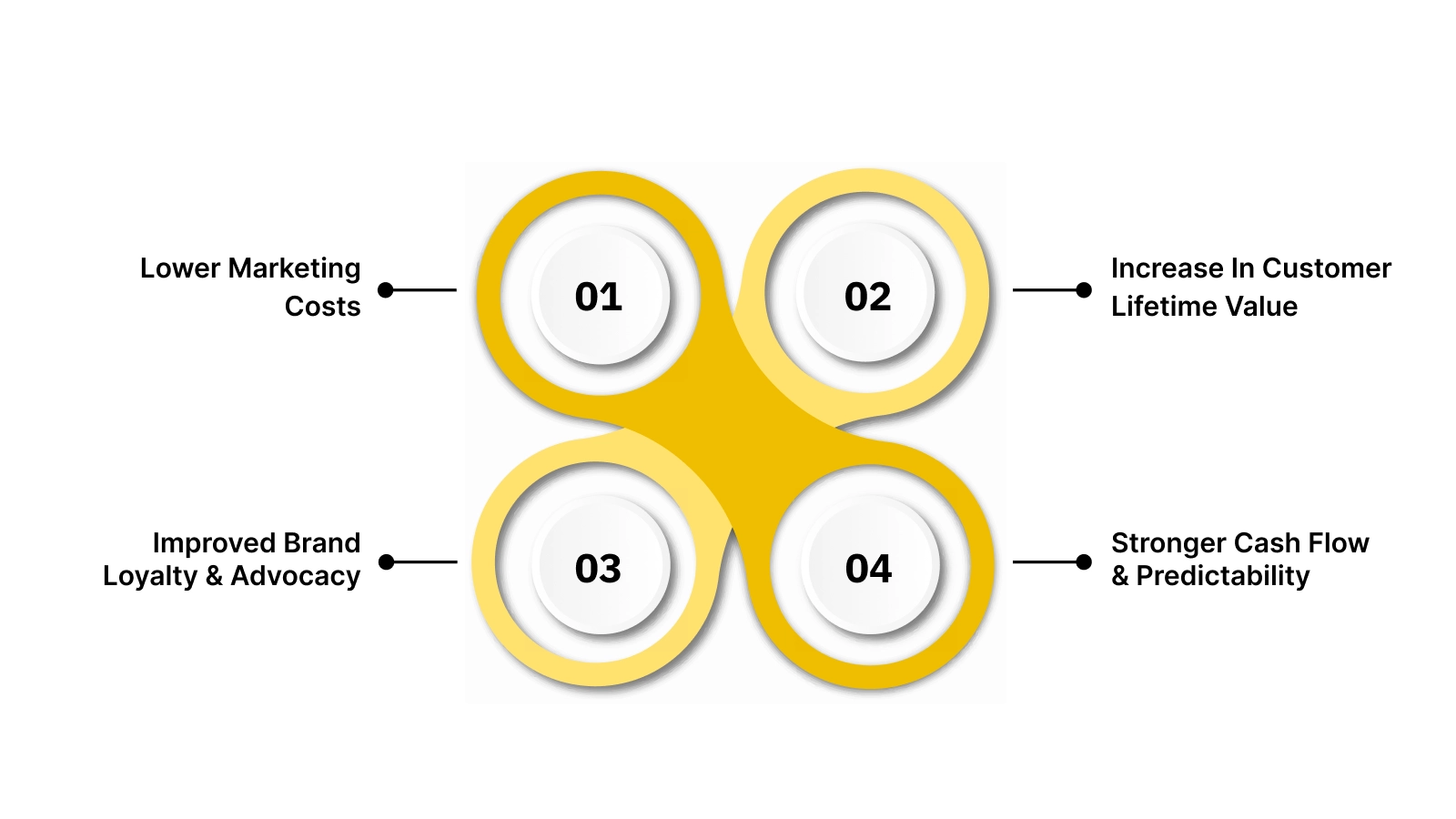
Understanding how RCR interacts with other business goals is essential for crafting a sustainable growth strategy. From reducing marketing costs to increasing CLV, RCR plays an important role in driving long-term profitability.
1. Lower Marketing Costs
Focusing on repeat customers significantly reduces Customer Acquisition Cost. Since retaining existing customers costs up to 5x less than acquiring new ones, you can allocate marketing dollars more effectively, driving higher returns on investment.
2. Increase in Customer Lifetime Value
A higher Repeat Customer Rate directly increases CLV. Customers who return for repeat purchases spend more over time. This boosts your overall revenue and profitability, making retention more cost-effective than constant acquisition.
3. Improved Brand Loyalty and Advocacy
Repeat customers are more likely to become brand advocates. They share their positive experiences with others, driving word-of-mouth marketing and organic growth. This not only improves your brand image but also leads to increased customer referrals at no extra cost.
4. Stronger Cash Flow and Predictability
When repeat customers consistently return, your business can predict revenue streams with more accuracy. Subscription models, loyalty programs, and regular purchases from existing customers create a more reliable cash flow, stabilizing financial planning and long-term growth.
By focusing on improving Repeat Customer Rate, you not only reduce acquisition costs but also boost CLV, enhance customer loyalty, and create more predictable cash flow. All of this directly contributes to stronger business performance and growth.
Boost Customer Loyalty and Increase Repeat Purchases with Nector
If you're looking to improve your Repeat Customer Rate and drive more sales, Nector can help. With customizable loyalty programs and tools that engage customers at the right moments, Nector makes it easy to build long-lasting relationships with your buyers. Here's how:
- Automated rewards: Reward repeat customers automatically, increasing their chances of returning.
- Personalized messaging: Send tailored offers and recommendations based on past purchases.
- Easy integration: Nector seamlessly works with popular platforms like Shopify to get your loyalty program up and running quickly.
Nector’s tools help you create a better customer experience while saving time and resources. With Nector, you can focus on growing your business while ensuring your customers stay loyal.
Wrapping Up
Focusing on the Repeat Customer Rate is essential for sustainable growth in eCommerce. A high RCR not only boosts customer loyalty but also directly impacts profitability by reducing acquisition costs. By adopting effective strategies such as personalized loyalty programs, seamless customer experiences, and automation, you can enhance customer retention and drive long-term success.
Nector offers a powerful, customizable loyalty solution that helps businesses boost their RCR. With features like automated rewards, targeted post-purchase messaging, and deep customer insights, Nector enables you to engage your customers meaningfully and keep them returning.
Start improving your Repeat Customer Rate today with Nector’s easy-to-integrate platform. Book a demo with us to build lasting customer relationships, increase sales, and drive consistent growth with tailored loyalty solutions.
FAQs
What's a good repeat customer rate?
A good repeat customer rate typically ranges between 25-40%, depending on the industry. Higher rates indicate strong customer loyalty and satisfaction. However, the ideal rate can vary based on business goals, customer behavior, and product type.
Is a 30% customer return rate good or bad?
A 30% customer return rate is generally considered strong in many industries, especially retail and eCommerce. It suggests a good level of customer satisfaction and engagement, but this rate may vary depending on your specific business and industry.
What to do if my repeat purchase rate drops significantly?
If your repeat purchase rate drops, assess product quality, customer service, and retention strategies. Review customer feedback, simplify processes, and consider introducing loyalty programs, personalized offers, or improved post-purchase communication to reignite repeat business.
Why are repeat customers better than new customers?
Repeat customers are more profitable because they spend more over time, require less marketing investment, and are more likely to refer others. They provide consistent revenue and demonstrate loyalty, making them key to long-term business success.




_2_11zon.avif)

Start Building Customer Retention That Lasts