
.avif)
.avif)
Most e-commerce teams invest in both a CRM and a loyalty program, yet struggle to see meaningful improvements in retention. The issue usually isn’t the tools themselves, but how disconnected they are. When loyalty activity lives outside your CRM, rewards lose context and customer communication loses timing.
Loyalty CRM integration solves this by connecting customer incentives with real behavior. It allows teams to act on what customers earn, redeem, and ignore, instead of relying on static segments or scheduled campaigns. This guide breaks down what loyalty CRM integration actually means, where it delivers impact, and how to measure whether it’s working for your retention strategy.
At a glance:
- CRMs and loyalty programs solve different retention problems. CRMs manage customer data and communication, while loyalty systems drive behavior through incentives. Using one without the other creates broken retention loops.
- Loyalty CRM integration turns rewards into actionable signals. When points earned, redemptions, tier status, and inactivity flow into the CRM, retention shifts from generic messaging to behavior-driven engagement.
- Integrated loyalty shortens the time to repeat purchase. CRM workflows triggered by loyalty milestones (points earned, rewards unlocked, tier upgrades) move customers from first to second purchase faster than scheduled campaigns.
- Targeted rewards protect margins better than blanket discounts. Loyalty data inside the CRM enables incentives to be matched to engagement and value, reducing over-discounting while improving redemption quality.
- Loyalty engagement drops before revenue does. Tracking loyalty inactivity inside CRM workflows helps teams detect silent churn early and intervene before customers stop buying altogether.
The Role of CRM and Loyalty Programs in Retention
CRMs and loyalty programs are often expected to solve the same retention problems, but they are built for very different purposes. Understanding what each system does well explains why relying on only one leads to broken retention loops.
What a CRM Does Well
CRMs are designed to manage customer data and communication at scale.
- Centralized customer data: Stores profiles, purchase history, and attributes in one place.
- Segmentation: Groups customers based on demographics, behavior, or lifecycle stage.
- Cross-channel communication: Powers email, WhatsApp, SMS, and push messaging workflows.
CRMs help teams decide who to talk to and when, but they don’t create intrinsic reasons for customers to return.
What Loyalty Systems Do Well
Loyalty platforms focus on shaping customer behavior through incentives and progression.
- Behavior tracking: Rewards actions like purchases, referrals, and reviews.
- Incentives: Uses points, rewards, and benefits to motivate repeat behavior.
- Progression mechanics: Creates momentum through milestones, tiers, and visible progress.
Loyalty systems influence why customers come back, not just how often they’re contacted.
This gap between communication and incentives is exactly where loyalty CRM integration becomes essential.
What Is Loyalty CRM Integration?
Loyalty CRM integration is the process of syncing loyalty program activity with your CRM, so customer behavior and customer data live in one system. Instead of loyalty operating as a standalone rewards layer, its signals directly inform how customers are segmented, messaged, and re-engaged.
In practice, this means loyalty actions don’t stay locked inside a loyalty dashboard. They become inputs for CRM workflows.
When integrated, loyalty platforms pass behavioral data such as points earned, rewards redeemed, tier status, referrals, and inactivity. The CRM combines this with profile and purchase data like order history, frequency, and value.
Together, this creates a complete view of who the customer is and how they are engaging.
Integration matters more than feature depth because retention breaks when systems don’t talk to each other. A loyalty program can be feature-rich and a CRM can be powerful, but without integration, rewards lack context and messages lack timing.
Loyalty CRM integration closes that gap by turning loyalty activity into actionable signals that drive more relevant retention.
Key Benefits of Integrating Loyalty With Your CRM
When loyalty and CRM systems work together, retention shifts from reactive campaigns to coordinated, behavior-driven engagement. The biggest gains show up in speed, relevance, and measurement.
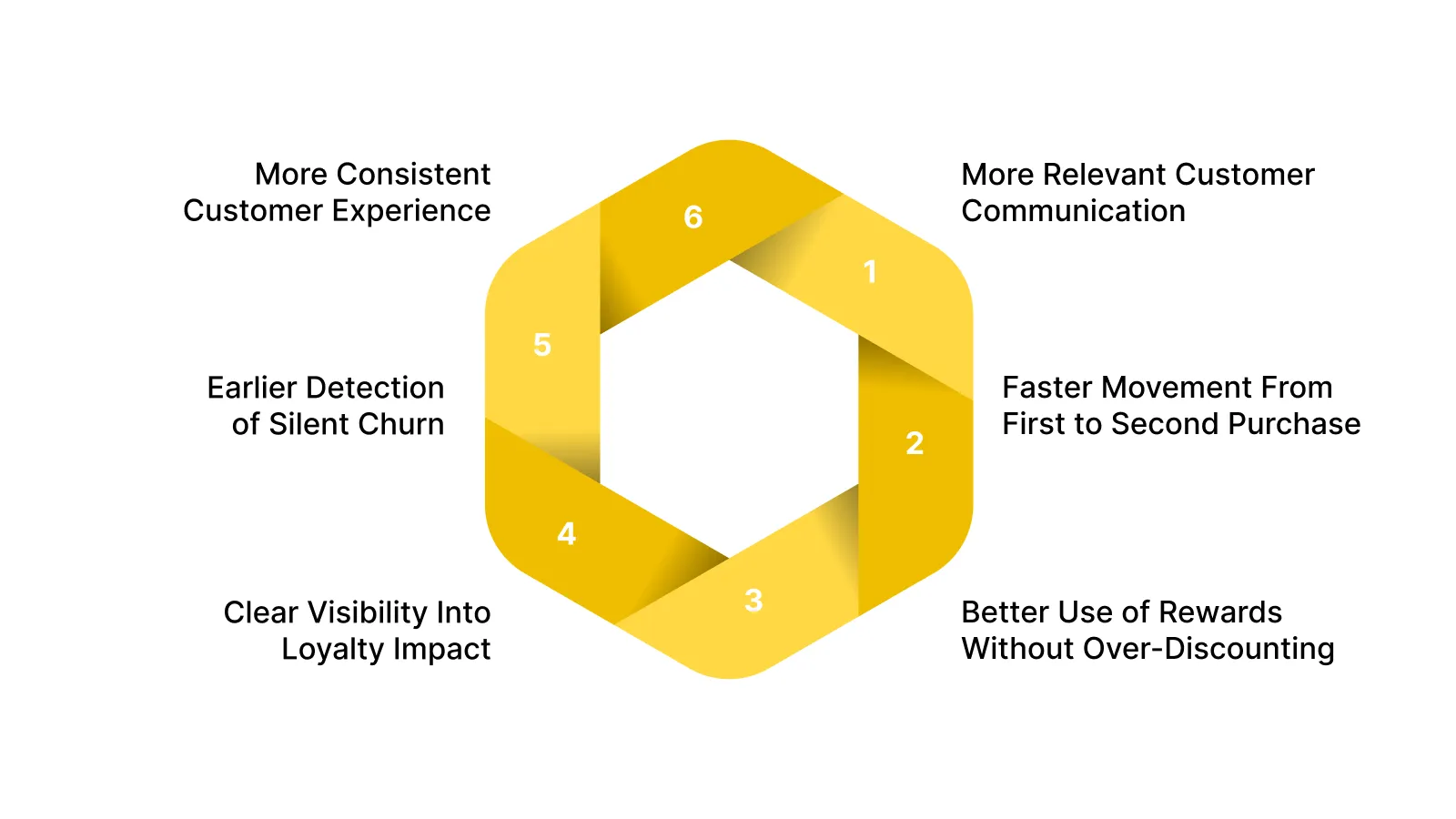
- More Relevant Customer Communication: Loyalty data adds context to CRM messaging. Customers receive messages based on what they’ve earned, redeemed, or unlocked, not generic segments.
- Faster Movement From First to Second Purchase: CRM workflows triggered by loyalty actions help nudge customers back at the right moment, shortening the gap between initial and repeat purchases.
- Better Use of Rewards Without Over-Discounting: Integration allows rewards to be targeted based on behavior and value, reducing the need for blanket discounts and protecting margins.
- Clear Visibility Into Loyalty Impact: Loyalty actions flow into CRM reporting, making it easier to see how rewards influence repeat purchases, referrals, and customer lifetime value.
- Earlier Detection of Silent Churn: When loyalty engagement drops, CRM systems can flag inactivity before customers stop buying altogether, enabling timely re-engagement.
- More Consistent Customer Experience: Customers experience loyalty as part of the brand journey, not a separate program, resulting in smoother interactions across email, WhatsApp, and on-site touchpoints.
Integration turns loyalty data into action, making repeat engagement easier to scale and measure.
Key Use Cases of Loyalty CRM Integration
When loyalty and CRM systems are connected, retention moves from static campaigns to dynamic, behavior-led workflows. The use cases below show where integration creates the most immediate and measurable impact.
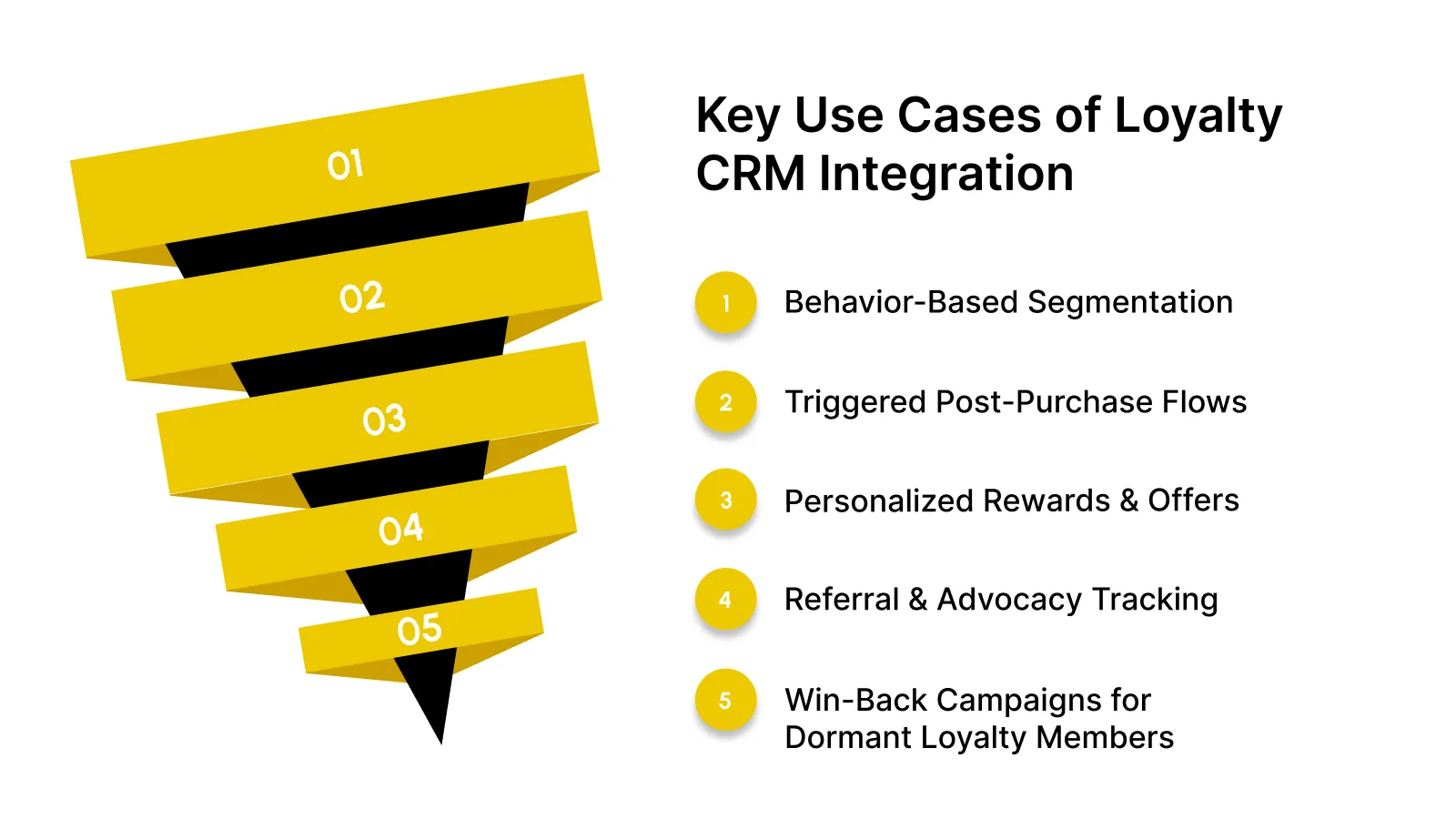
1. Behavior-Based Segmentation
Loyalty data adds a behavioral layer to CRM segmentation, going beyond demographics or purchase history.
- Segment customers by points earned, points redeemed, and tier status
- Identify inactive loyalty members who haven’t engaged within a defined window
- Separate high-intent members from low-engagement signups
This allows CRM campaigns to target customers based on how they engage with loyalty, not just who they are.
2. Triggered Post-Purchase Flows
Integration enables CRM messages to respond to loyalty actions instead of fixed timelines.
- Send messages when customers earn points, unlock rewards, or reach milestones
- Trigger follow-ups after delivery, first redemption, or tier upgrades
- Reinforce progress immediately after meaningful actions
These flows help nudge customers back when motivation is highest, shortening the path to the next purchase.
3. Personalized Rewards and Offers
CRM context helps loyalty rewards feel relevant instead of repetitive.
- Match rewards to customer value, purchase frequency, or lifecycle stage
- Avoid blanket discounts by offering incentives tied to behavior
- Adjust rewards dynamically based on engagement patterns
This improves redemption quality while protecting margins.
4. Referral and Advocacy Tracking
Integrated systems make referrals part of the broader retention journey.
- Track which customers refer others and how often they convert
- Monitor reward issuance and redemption within CRM journeys
- Identify advocates with higher repeat rates and lifetime value
Referrals stop being a one-off channel and become a repeat engagement loop.
Also read: How to Build an Easy Referral Program in 2026
5. Win-Back Campaigns for Dormant Loyalty Members
Loyalty signals help surface churn risk earlier than revenue metrics alone.
- Identify members who are enrolled but not earning or redeeming
- Trigger re-engagement flows before customers stop purchasing entirely
- Tailor win-back messaging based on past loyalty behavior
This allows teams to intervene early, when recovery is still possible.
Nector helps brands capture loyalty actions like points earned, redemptions, referrals, and reviews, and activate them through automated engagement and integrations across their existing stack. This makes it easier to move from static loyalty programs to behavior-led retention workflows.

How to Make the Most of Loyalty CRM Integration
Loyalty CRM integration works best when it’s treated as an operating system for retention, not a data sync. The principles below show how to turn loyalty signals into actions that actually move repeat behavior.
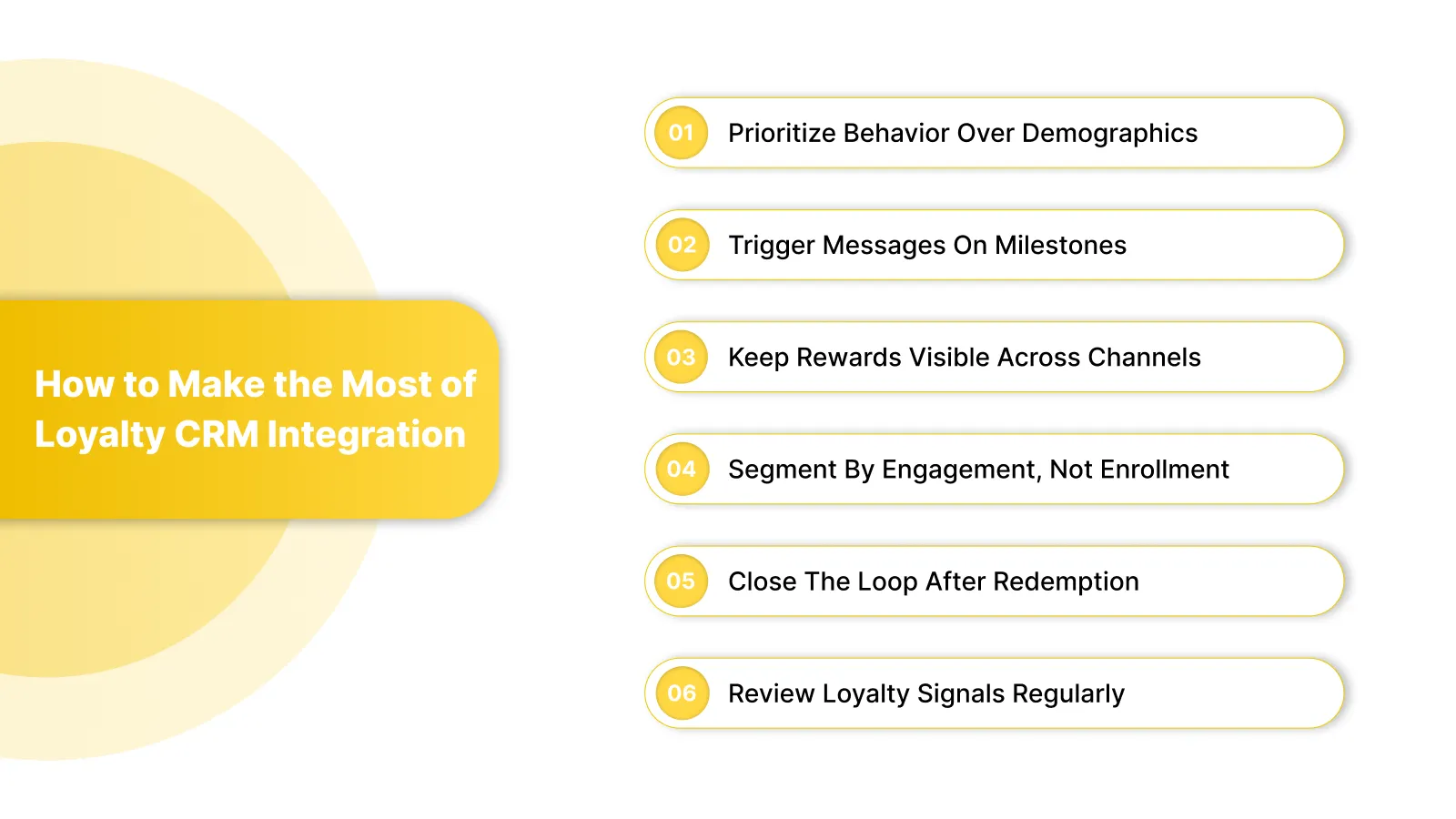
1. Prioritize Behavior Over Demographics
Customer behavior is a stronger indicator of intent than static profile data. Loyalty actions show what customers are doing right now, not who they were when they signed up.
Here’s how to apply this in practice:
- Segment by loyalty actions: Group customers based on points earned, redeemed, tier movement, or inactivity rather than age or location.
- Use engagement thresholds: Define what “active” and “at-risk” mean using recent loyalty activity.
- Layer behavior on top of CRM data: Combine loyalty signals with purchase history for sharper targeting.
What you get: More accurate segmentation and campaigns that respond to intent, not assumptions.
2. Trigger Messages on Milestones, Not Schedules
Scheduled campaigns often miss the moment when customers are most likely to act. Loyalty milestones create natural engagement points.
To operationalize this:
- Use reward unlocks as triggers: Send messages when customers earn enough points for a reward.
- Activate tier-based communication: Trigger CRM flows when customers move up or stall within a tier.
- Align timing with delivery and usage: Reinforce loyalty progress right after the product experience.
What you get: Higher conversion from CRM messages without increasing message volume.
3. Keep Rewards Visible Across Channels
Loyalty loses impact when customers forget what they’ve earned. CRM should reinforce loyalty progress, not operate independently of it.
To make rewards visible:
- Reference points and progress in messages: Include current balance or next milestone in emails and WhatsApp updates.
- Link communication to action: Direct customers to where they can redeem or progress further.
- Maintain consistency across touchpoints: Ensure loyalty context is present on-site and off-site.
What you get: Clear motivation to return, with fewer abandoned or unused rewards.
4. Segment by Engagement, Not Enrollment
Enrollment alone doesn’t indicate loyalty. Many customers join a loyalty program once and then quietly disengage, which makes enrollment-based segmentation misleading. Loyalty CRM integration allows teams to distinguish between customers who are actively participating and those who are simply enrolled.
To segment effectively:
- Identify dormant loyalty members: Flag customers who haven’t earned or redeemed points within a defined time window.
- Create engagement-based cohorts: Separate active redeemers, earn-only members, and completely inactive users.
- Tailor messaging by cohort: Adjust tone, incentive strength, and cadence based on how engaged each group actually is.
What you get: More relevant messaging and fewer wasted incentives on low-intent users.
5. Close the Loop After Redemption
Redemption is often treated as the end of the loyalty journey, but it’s actually a high-intent moment. When customers redeem rewards, they’re demonstrating engagement and trust, making it the ideal time to guide them toward the next action.
To close the loop:
- Trigger post-redemption follow-ups: Prompt customers with what they can do next to start earning again.
- Reinforce remaining value: Highlight leftover points or progress toward the next milestone to maintain momentum.
- Guide toward repeat behavior: Use CRM messages to nudge a follow-up purchase, referral, or review.
What you get: Redemptions become momentum builders instead of dead ends, increasing repeat purchase frequency.
6. Review Loyalty Signals Regularly
Loyalty data often shows signs of disengagement before revenue metrics change, but only if teams actively review it. Without regular monitoring, loyalty churn remains invisible until customers stop buying altogether.
To stay ahead of churn:
- Track engagement trends weekly: Monitor drops in earning, redemption, or tier movement.
- Compare cohorts over time: Evaluate how new loyalty members perform against older cohorts.
- Adjust workflows based on signals: Refine thresholds, timing, and incentive structures when engagement starts to soften.
What you get: Earlier visibility into churn risk and the ability to course-correct before revenue is affected.
Implementation is only the first step. The real test of loyalty CRM integration is whether it delivers measurable impact.
Also read: A Practical Guide to Effective Customer Retention Management
How to Tell If Loyalty CRM Integration Is Actually Working
Loyalty CRM integration only works if it changes customer behavior. These metrics help you understand whether loyalty data is being used effectively inside CRM workflows and whether it’s translating into stronger retention.
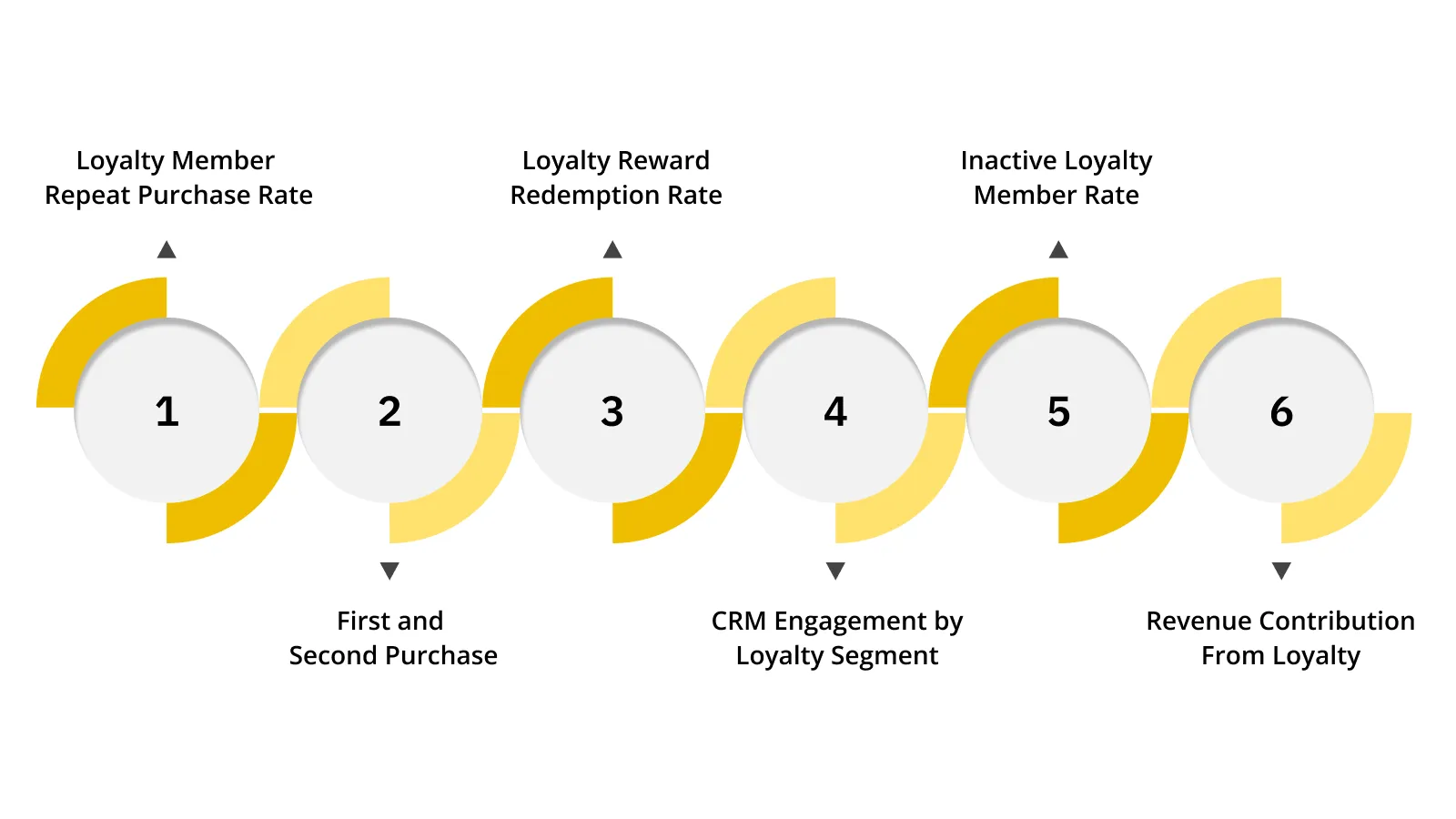
1. Loyalty Member Repeat Purchase Rate
This measures how often loyalty members return compared to non-members.
- What to track: Repeat purchase rate segmented by loyalty status
- Why it matters: Shows whether loyalty is influencing buying behavior, not just enrollment
- What improvement looks like: Loyalty members consistently outperform non-members
2. Time Between First and Second Purchase
This metric indicates how quickly customers return after their initial order.
- What to track: Average days from first to second purchase for loyalty members
- Why it matters: Shorter gaps signal effective post-purchase and milestone-based CRM flows
- What improvement looks like: Reduced time-to-second-purchase after integration
3. Loyalty Reward Redemption Rate
Redemption rate reflects whether rewards are visible, valuable, and timely.
- What to track: Percentage of earned rewards that are redeemed
- Why it matters: Low redemption often signals poor visibility or misaligned incentives
- What improvement looks like: Healthy redemption without heavy discounting
4. CRM Engagement by Loyalty Segment
This shows whether loyalty-based segmentation is improving message relevance.
- What to track: Open, click, or response rates segmented by loyalty activity
- Why it matters: Confirms that behavior-driven segmentation outperforms generic lists
- What improvement looks like: Higher engagement from loyalty-triggered campaigns
5. Inactive Loyalty Member Rate
This measures how many enrolled members stop engaging with the program.
- What to track: Members who haven’t earned or redeemed within a defined period
- Why it matters: Highlights silent loyalty churn before revenue drops
- What improvement looks like: Fewer dormant members over time
6. Revenue Contribution From Loyalty Members
This metric connects loyalty engagement directly to business impact.
- What to track: Percentage of total revenue from loyalty members
- Why it matters: Shows whether loyalty CRM integration is driving meaningful growth
- What improvement looks like: Increasing revenue share from returning customers
No single KPI tells the full story. Improvements in repeat purchase rate, time-to-second-purchase, and redemption rate indicate that loyalty signals are being used effectively inside CRM workflows. If engagement metrics improve first, revenue gains typically follow.
When these KPIs move in sync, loyalty CRM integration becomes a measurable retention system rather than a background feature.
How Nector Helps Build Retention-Ready Loyalty Programs
Nector is built to help e-commerce teams drive repeat purchases through structured, behavior-led loyalty programs. It focuses on turning everyday customer actions into visible progress, meaningful rewards, and consistent reasons to return, while making loyalty data available for broader retention workflows.
Instead of operating as a standalone rewards layer, Nector helps loyalty become an active part of your retention system.
Key Features:
- Automatic loyalty enrollment: Every registered customer becomes a loyalty member by default, ensuring no engagement data is lost.
- Behavior-based loyalty tracking: Capture points earned, rewards redeemed, tier movement, referrals, and inactivity as actionable signals.
- Fully customizable loyalty programs: Design white-labeled rewards, earning rules, and VIP tiers that match your brand and margins.
- Visible rewards across the journey: Show points and benefits on product pages, checkout, and thank-you pages to reinforce progress.
- Redeem points at checkout: Let customers use points like currency, creating high-intent moments for repeat purchases.
- Smart VIP tiers and reward logic: Automate tier upgrades, bonus campaigns, and coin expiry to keep engagement moving without manual work.
- Integrations: Sync loyalty activity with email, WhatsApp, CRM, checkout, and analytics tools to support coordinated retention efforts.
By combining loyalty mechanics with usable engagement data, Nector helps teams move from one-off rewards to repeatable retention outcomes. Sign up to see how Nector fits into your stack.
Wrapping Up
Loyalty CRM integration works when loyalty stops being a standalone program and starts feeding real customer behavior into your retention strategy. When CRM workflows respond to what customers earn, redeem, and progress toward, repeat purchases become easier to trigger and easier to measure.
The brands that get this right don’t rely on more campaigns or deeper discounts. They build systems where loyalty incentives, communication, and timing reinforce each other.
With a retention-first loyalty platform like Nector, teams can turn loyalty engagement into repeat sales while keeping CRM workflows relevant and connected. Booking a demo to get started.
FAQs
What is loyalty in CRM?
Loyalty in CRM refers to using customer data and engagement signals to retain customers through personalized communication, targeted incentives, and timely follow-ups that encourage repeat purchases.
What is a CRM loyalty program?
A CRM loyalty program connects loyalty rewards and customer behavior with CRM workflows, allowing points, tiers, and engagement data to drive segmentation, messaging, and retention campaigns.
What is loyalty integration?
Loyalty integration is the process of syncing loyalty program activity with CRM and marketing tools so rewards, engagement signals, and customer behavior inform retention workflows automatically.
What are the 4 types of loyalty programs?
The four common types are points-based programs, tier-based programs, paid or VIP programs, and value-based programs that reward customers through shared values or social impact.




.webp)

Start Building Customer Retention That Lasts