
.jpg)
.avif)
.avif)
When you manage a small e-commerce team, deciding whether to build a points-based or tiered loyalty program can feel overwhelming.
You might wonder: which will actually drive repeat purchases without adding workload? The stakes are high; online retailers see an average repeat customer rate of just 28.2%.
One model might work better when you’re focusing on frequent, low-cost orders; the other might make sense as your brand grows.
In this post, you’ll learn how to compare the features of points-based and tiered loyalty programs, tailored for founder-led stores and growing e-commerce brands.
You’ll also receive a practical checklist and implementation guide to choose and roll out the right system with minimal team effort.
Key Takeaways
- The right loyalty model depends on customer behaviour, order frequency, and team capacity. Points-based programs suit frequent, low-value purchases, while tiered programs support higher AOV and long-term engagement.
- Points-based programs offer quick wins and a simple setup for small teams and founder-led stores. They work best when customers purchase often and prefer immediate rewards.
- Tiered programs encourage progression, exclusivity, and consistent high-value spending. They help growing brands identify and reward top customers more effectively.
- Clear rules, visible progress, and automated communication are essential for both models. This ensures customers stay engaged without adding workload to your team.
Loyalty Program Models: A Quick Overview
A loyalty program encourages customers to return by offering rewards for specific actions. In e-commerce, the two most common models are points-based and tiered. Both aim to increase repeat purchases, yet they motivate customers in different ways.
Points-based programs reward customers with points for every purchase or interaction. Tiered programs group customers into levels based on their activity or spending and unlock better rewards as they progress.
The core difference lies in how each model drives motivation. One focuses on frequent earning and redemption. The other builds long-term status and exclusivity.
Many small teams assume that points-based programs are always easier or that tiered programs require a large staff. These are common misconceptions. With the right tool, both models can be simple to run.
If you want a loyalty program that is simple to manage and powerful enough to scale, Nector automates points, tiers, and communication for you.
Create your loyalty experience today and turn more first-time customers into long-term buyers.

What a Points-Based Loyalty Program Is
A points-based program rewards customers every time they complete an action. These actions often include:
- making a purchase
- creating an account
- writing a review
- referring a friend
- engaging on social channels
Customers collect points and redeem them for rewards. This creates a clear cycle: earn → save → redeem → return.
Key Features That Shape the Customer Experience
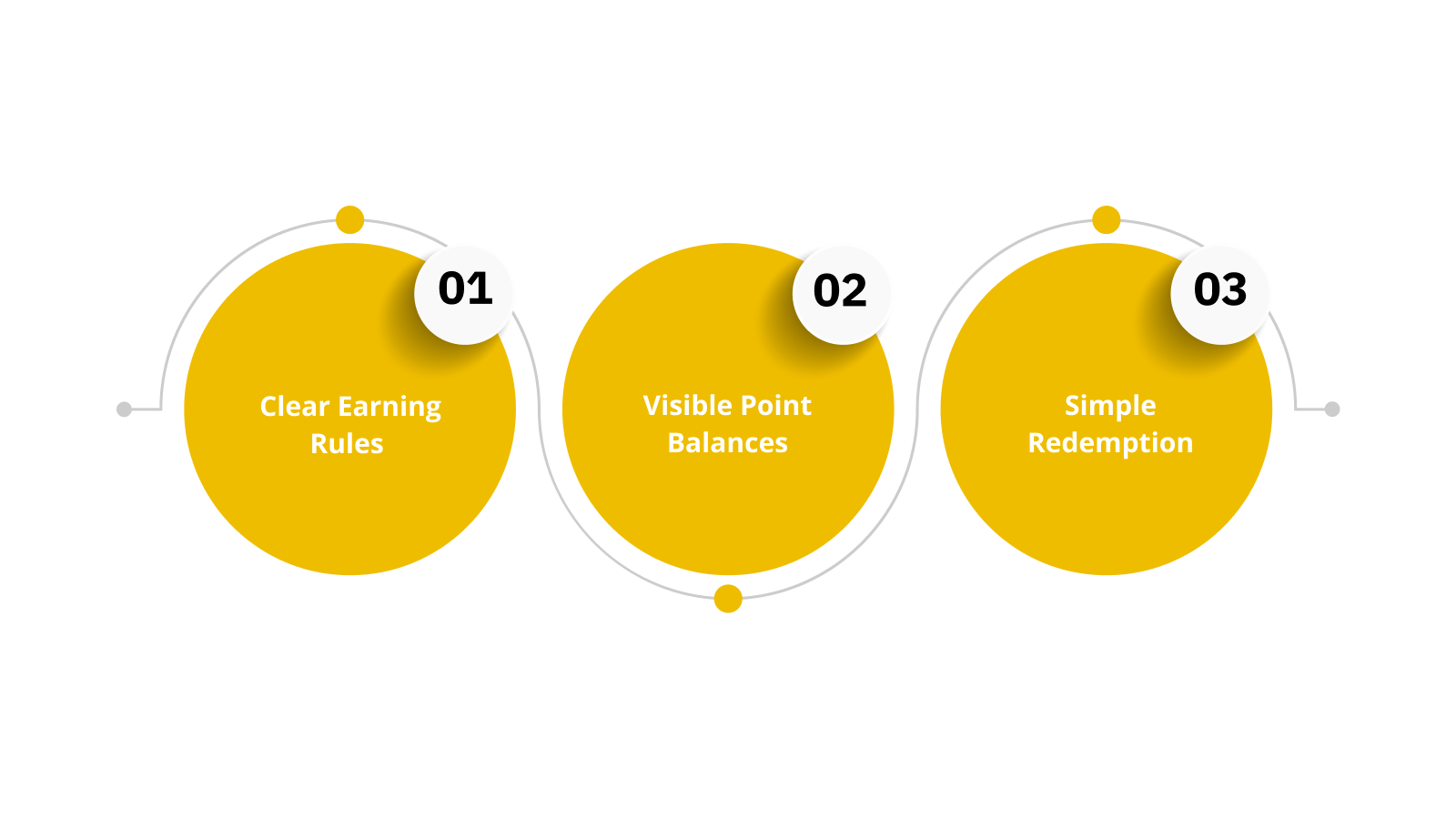
Points-based programs work well when the core features are simple and easy to follow. The most important ones include:
1. Clear Earning Rules
Customers should always know how many points they earn per rupee or dollar spent. Bonus earning rules work well for:
- first orders
- birthdays
- seasonal events
- high-margin products
2. Visible Point Balances
A visible balance encourages repeat visits. Customers are more likely to return when they see they are close to a reward.
3. Simple Redemption
Redemption should take only a few clicks. Customers should be able to use points on:
- discounts
- free items
- exclusive offers
A slow or confusing redemption process reduces activity, even when the program looks attractive.
Benefits for Small Teams and Founder-Led Stores
Points-based programs deliver value because they are easy to understand. Customers do not need long explanations. They know the logic quickly: spend more to earn more.
They fit well for brands with frequent, lower-value orders. Categories like personal care, pet supplies, and packaged food often see stronger engagement with points because customers often purchase them.
Small teams also value points-based programs because the setup is quick. Rules are straightforward, and automation reduces manual tasks. This allows founders to run a loyalty program even without a dedicated retention manager.
Challenges to Consider
Not every situation fits a points-based model. The main challenges include:
- Delayed gratification. If rewards take too long to unlock, customers may lose interest.
- Low perceived value. Customers must feel that the points they earn are meaningful.
- Lack of communication. If reminders are not automated, customers forget their balances.
Automation solves most of these issues. Brands can send reminders through email, WhatsApp, or SMS without adding work for the team. Solutions like Nector integrate with e-commerce platforms, messaging tools, and customer systems to automate these touchpoints, helping teams maintain consistent communication while keeping loyalty programs easy to manage at scale.
Who Should Choose a Points-Based Program
A points-based model is ideal for:
- early-stage brands
- founder-led stores
- teams with limited resources
- brands with regular purchase cycles
- stores where customers enjoy quick wins
It works especially well as a starting point. Many brands introduce points first and add tiers later as order volume increases.
Also Read: Loyalty Points Program: How It Works
What is a Tiered Loyalty Program?
What is a Tiered Loyalty Program?
A tiered loyalty program groups customers into different levels based on their activity or spending. Each level offers better rewards than the previous one. The idea is simple. The more the customer engages, the higher they move and the more value they receive.
Tier names usually follow a clear structure, such as Silver, Gold, or Platinum. Some brands use names that match their products or theme. What matters is that customers understand how to progress.
Key Features That Influence Engagement
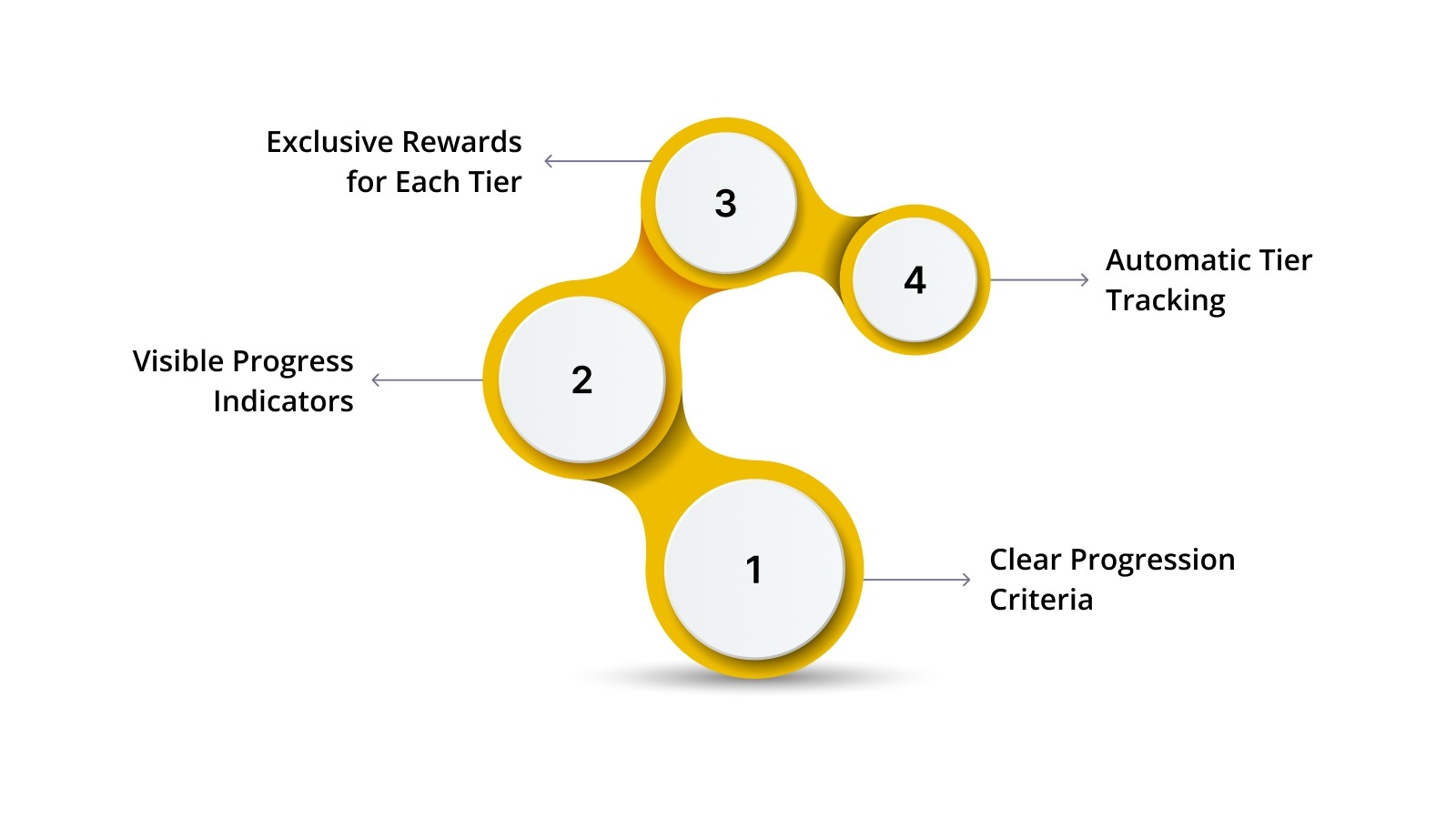
A tiered program creates motivation through status, recognition, and visible progress. The most effective programs include these core features:
1. Clear Progression Criteria
Customers should know exactly how to move up. This can be based on:
- amount spent
- number of orders
- points earned
- engagement actions
2. Visible Progress Indicators
Progress bars and badges help customers see how close they are to the next tier. This creates motivation to complete one more order or action.
3. Exclusive Rewards for Each Tier
Higher tiers often give access to:
- better discounts
- early access to sales
- free shipping
- exclusive product drops
- bonus points
This keeps high-value customers engaged for longer periods.
4. Automatic Tier Tracking
Customers should not need to ask how far they have progressed. The system should update its tier automatically as they complete actions.
Benefits for Growing E-Commerce Brands
Tiered programs work well when a brand wants long-term engagement. Customers enjoy visible recognition and a sense of progression. When they reach a new tier, they often increase their spend to maintain their status.
Growing brands benefit from this model because it encourages:
- higher average order value
- repeat purchases
- customer retention over longer timeframes
A well-designed tiered system also helps identify top customers. This gives teams better control when planning exclusive drops, high-value offers, or early access events.
Challenges to Consider
Tiered programs can be misunderstood if rules are unclear. Customers may feel stuck if tier levels are too hard to reach. This often happens when thresholds do not match real buying behaviour.
Other challenges include:
- Complexity in setup if the tool does not support automation
- The risk of lower-tier customers losing interest
- Difficulty keeping track of upgrades without the right system
Most of these challenges are avoidable with clear communication and a tool that updates tiers automatically.
Who Should Choose a Tiered Loyalty Program
A tiered program is a strong choice for:
- Brands with steady order volume
- stores that want to reward high-value customers
- teams ready to offer exclusive benefits
- categories with moderate to high purchase value
- brands aiming to increase AOV and long-term commitment
It suits growth-stage brands that want a structured approach to differentiation and customer recognition.
Now that we have explored how tiered programs work, we can compare them with points-based programs and see how both models differ across key features.
Also Read: Boost Post-Purchase Loyalty Strategies
Points-Based vs Tiered Programs
A points-based program and a tiered program work well in different situations. The best way to choose is to compare how each model performs across the features that matter most to e-commerce brands. The table below highlights these differences simply and practically.
How Small Teams Should Use
Small teams often need a program that runs smoothly without manual work. Points-based programs suit this need early on because the setup is simple and customers understand the value quickly.
As order volume increases, a tiered model offers more room for growth. It creates strong motivation for customers who want to unlock higher rewards.
Points-based programs also help brands with fast purchase cycles, such as personal care, grooming, food, and pet supplies. Tiered programs work well for categories where customers spend more per order or enjoy exclusivity, such as fashion, beauty or wellness.
Why Some Brands Combine Both
A hybrid model combines points with tiers. Customers earn points for every action and move through tiers based on their activity.
This gives them two ways to stay engaged. Many growing brands prefer this model when they want to balance quick wins with long-term progression. Small teams can also run hybrid programs easily if the tool manages points and tiers in one place.
With the core differences now clear, the next step is understanding how to choose the right model, avoid common mistakes, and assess your store’s needs with a simple checklist.
Also Read: Loyalty vs. Referral Programs: What's the Difference and Which One Should You Use?
Choosing the Right Model: Mistakes to Avoid + Practical Checklist
Selecting the right loyalty model becomes easier when you know the common mistakes brands make. These mistakes often reduce engagement and lead to low redemption or slow tier progression.
A clear checklist can help you avoid these issues and choose a structure that matches your customers and store operations.
Common Mistakes Brands Should Avoid
1. Setting thresholds that do not match real buying behaviour
Some stores place tier levels too high or require too many points for a reward. Customers then lose motivation because the next milestone feels out of reach.
2. Choosing points-based programs only because they seem easy
Many teams assume points are always simpler. This is true only when the earning and redemption rules are well-designed.
3. Launching a tiered program without visible progress indicators
If customers cannot see how far they have progressed, they are less likely to work toward the next level.
4. Creating too many rules
Overly detailed conditions confuse customers. The program should be simple enough to understand in seconds.
5. Not automating communication
A loyalty program becomes less effective when customers are not reminded of their points, rewards, or tier status. Automated messages help maintain engagement without manual work.
6. Ignoring customer data
A program designed without understanding order frequency, purchase value, or customer segments often fails to deliver results.
Also Read: Common Customer Loyalty Mistakes to Avoid for E-commerce Success
A Practical Checklist to Guide Your Decision
Use this checklist to decide whether a points-based or tiered model fits your store.
Customer Behaviour
- How often do customers purchase?
- Do customers buy small, frequent items or fewer, higher-value items?
Order Value
- Is your AOV stable?
- Do you want customers to increase their AOV?
Team Capacity
- Can your team manage a detailed tier structure?
- Do you need a model that runs with minimal manual oversight?
Program Goals
- Do you want quick engagement through frequent rewards?
- Or do you want long-term loyalty through status and progression?
Brand Stage
- Early-stage or founder-led stores usually benefit from points first.
- Growth-stage brands often benefit from tiered programs.
Customer Motivation
- Do your customers respond well to quick wins?
- Or do they enjoy exclusive access, recognition, and status?
Reading the Signals
If your store has frequent orders and you want simple engagement, a points-based program is the better fit.
If your store has rising order values and a growing customer base, a tiered program encourages customers to spend more and stay longer.
Once you know which model suits your store, the next step is to implement it with minimal effort. The following section explains how to launch your chosen program smoothly, even with a small team.
Also Read: Do Loyalty Programs Deliver? Comparing Promises vs. Customer Experiences
6 Practical Steps to Launch a Loyalty Program with Minimal Resources
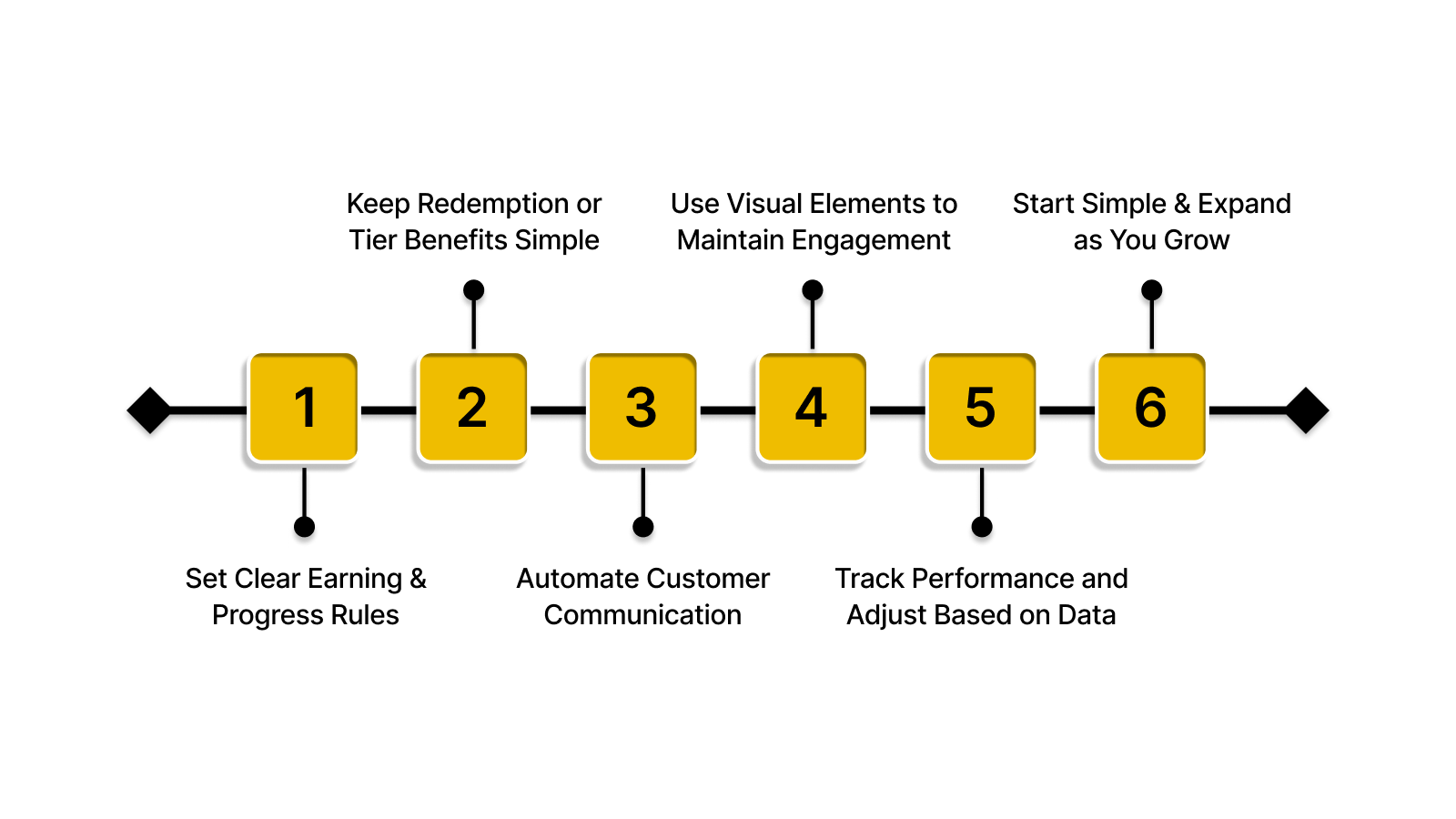
Implementing a loyalty program does not have to be complex. Small teams can launch and manage a strong program when the setup is clear, the rules are simple, and automation handles repetitive tasks.
The process becomes even easier when your loyalty tool manages points, tiers, rewards, and communication in one place.
Step 1: Set Clear Earning and Progress Rules
Start by defining how customers earn points or move through tiers. The rules should match real buying behaviour. Examples include:
- points per rupee or dollar spent
- bonus points for reviews or referrals
- tier progression based on total orders or lifetime spend
Clear rules reduce confusion and help customers understand the value from the first visit.
Step 2: Keep Redemption or Tier Benefits Simple
Customers engage more when rewards feel within reach. For a points-based program, limit the number of redemption options and ensure the steps are easy. For a tiered program, keep each level clear and limit the total number of tiers.
A leading food and wellness brand saw higher redemption activity after simplifying its rules. Loyalty members contributed more than one-third of total orders and increased their average order value by double digits.
Step 3: Automate Customer Communication
Customers often forget point balances or do not notice when they reach a new tier. Automated messages solve this issue without adding work for your team. Use automated WhatsApp, SMS, or email notifications for:
- points earned
- points expiring
- tier upgrades
- reward reminders
- redemption prompts
Automation keeps your program active even when your team is busy.
Step 4: Use Visual Elements to Maintain Engagement
Visible points, progress bars, and tier badges make loyalty programs easier to follow. They show customers how close they are to the next reward or tier. These small visual cues create steady motivation and reduce drop-off.
A growing organic brand in the United States improved repeat purchase rates after adding clear status indicators and personalised rewards.
The brand saw more than 31% of customers buying again through loyalty-driven incentives.
Step 5: Track Performance and Adjust Based on Data
Monitor key metrics such as:
- redemption rate
- repeat purchase rate
- tier upgrade rate
- loyalty actions influence revenue
These signals show what is working and what needs adjustment. Small tweaks in earning rules, reward placement, or communication timing often deliver great improvement.
Step 6: Start Simple and Expand as You Grow
Many brands begin with a points-based structure because it requires fewer decisions and is easier to communicate.
As the brand grows and customer segments become clearer, adding tiers creates more reasons for customers to stay engaged. This approach gives small teams flexibility while keeping the program scalable.
Final Thoughts
Choosing the right loyalty model shapes how customers engage with your store. A points-based program gives customers quick wins and works well when you want simple, frequent engagement.
A tiered program motivates long-term commitment and encourages higher spending as customers progress through levels. The best choice depends on your goals, purchase patterns, and team capacity.
What matters most is that your program stays easy to manage and offers clear value to customers. With the right setup, loyalty becomes a reliable source of repeat purchases and higher lifetime value.
Turn Your Loyalty Strategy Into a Scalable Growth Engine
Choosing between points-based and tiered programs is only the starting point. Long-term success depends on how easily you can manage rewards, motivate advocacy, and maintain consistent engagement as your customer base expands.
Nector enables brands to run points-based, tiered, or hybrid loyalty programs from a single system, while also supporting referrals that convert satisfied customers into acquisition channels and review programs that strengthen trust through authentic social proof. With automation handling earning rules, tier progression, and communication, teams can focus less on operational effort and more on building lasting customer relationships.
Start your 14-day free trial to see how Nector helps you launch, manage, and scale loyalty programs with confidence.
FAQs
Can I switch from a points-based program to a tiered program later?
Yes. Many brands start with points because the setup is simple. As the brand grows and customer groups become clearer, they shift to a tiered model. The important part is choosing a tool that supports both structures without requiring a rebuild.
Do customers prefer earning points or moving through tiers?
Customer preference depends on product type and buying frequency. Frequent shoppers like quick points and easy redemptions. Customers in higher-value categories enjoy status-based rewards and early access. Testing both models on a small segment can help you understand what motivates your audience.
How do I know if my rewards are attractive enough?
Your rewards are effective when customers redeem consistently. A healthy redemption rate signals clear value. If redemption is low, the issue is often unclear rules or rewards that feel too expensive. Simple and attainable rewards usually drive better activity.
What is the biggest mistake small teams make when launching loyalty programs?
Many teams choose a model without checking their purchase data. For example, launching a tiered program when the store has low order frequency leads to slow progression and low engagement. Reviewing AOV and purchase cycles before selecting a model prevents this issue.
Can hybrid loyalty programs confuse customers?
Hybrid programs (points + tiers) work well when the rules are simple. Confusion happens only when earning conditions, tier levels, or rewards are overly detailed. When the tool manages visibility and communicates updates automatically, hybrid programs remain easy to follow.

Related Blogs
%201%20(1).webp)

%201.webp)


Start Building Customer Retention That Lasts