
.avif)
.avif)
Customer acquisition has never been more expensive, which is why leading brands are investing in loyalty tools that influence long-term behavior.
Customers themselves confirm this. 66% say rewards change how they spend, which means the right loyalty tool can directly shift purchase frequency and retention.
Brand loyalty tools help you operationalize this at scale by rewarding customers, personalizing journeys, and building relationships that grow more valuable over time.
In this guide, we break down the best brand loyalty tools that help modern brands create lasting, high-value customer loyalty.
At a glance:
- Brand loyalty tools go beyond basic rewards by combining points, tiers, referrals, reviews, and personalization to strengthen both emotional and behavioral loyalty.
- The best tools automate retention, awarding points instantly, syncing customer activity across channels, and personalizing offers based on real purchase behavior.
- Omnichannel loyalty is essential, allowing customers to earn and redeem rewards seamlessly across online stores, retail POS, apps, and WhatsApp.
- Analytics drive better decisions, with insights into repeat purchase rate, LTV, redemption rate, churn, and tier progression helping brands fine-tune their loyalty strategy.
- Choosing the right tool impacts revenue directly, as strong loyalty platforms increase repeat purchases, deepen engagement, and significantly improve long-term customer value.
What Are Brand Loyalty Tools?
Brand loyalty tools are platforms that help businesses retain customers by rewarding behavior, personalizing experiences, and encouraging repeat purchases.
They automate the entire loyalty flow, from earning and redeeming points to syncing customer activity across online and offline channels.
Unlike simple rewards apps, brand loyalty tools unify loyalty, referrals, reviews, segmentation, and omnichannel data. This helps brands build long-term emotional loyalty, not just transactional repeat orders.
For modern e-commerce and retail teams, these tools power points, tiers, referrals, lifecycle triggers, and personalized offers while integrating seamlessly with email, WhatsApp, CRM, and POS systems.
Put simply, loyalty tools strengthen relationships and turn customers into consistent repeat buyers.
Core Capabilities That Make a Loyalty Tool Truly Effective
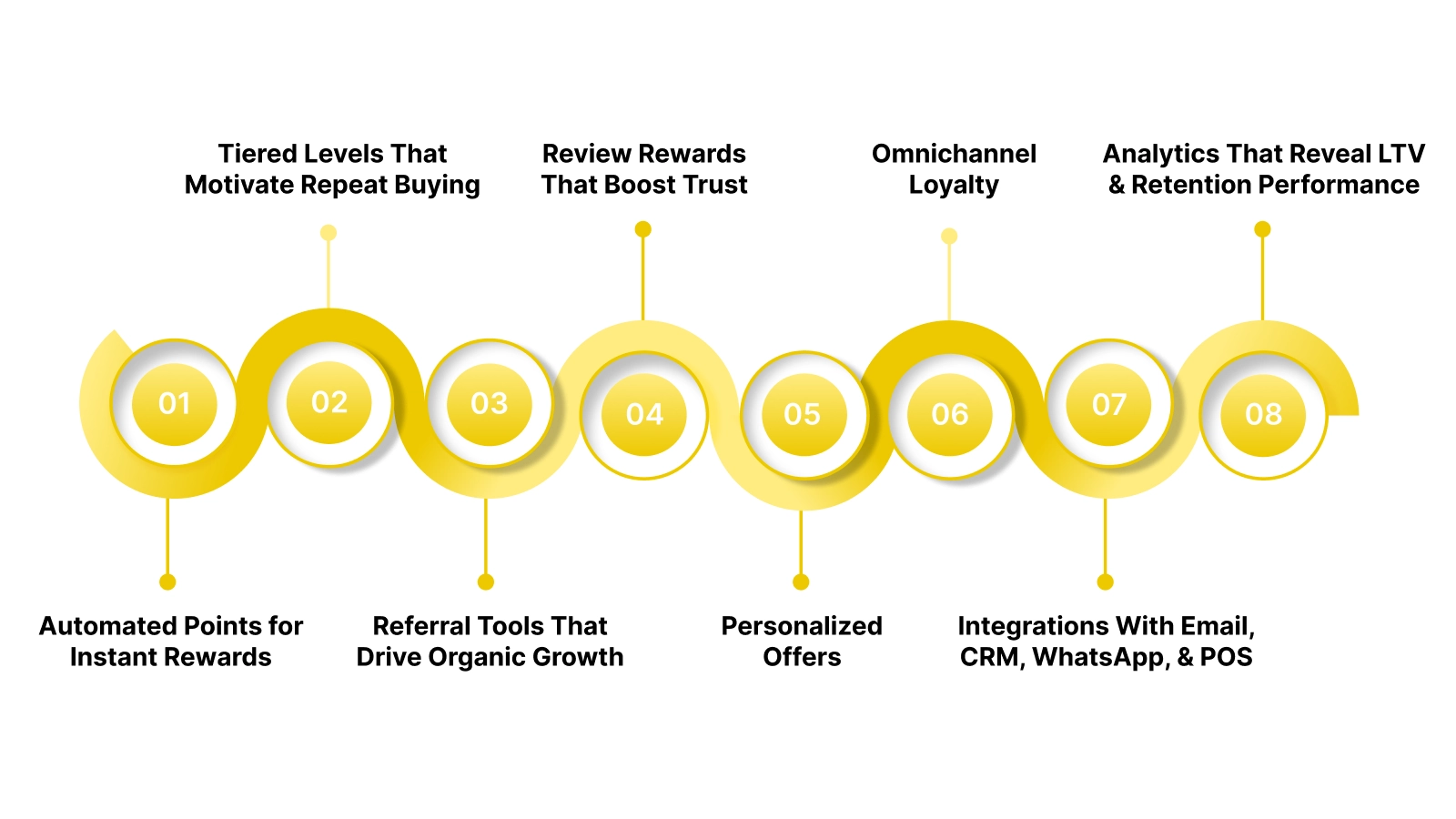
The right platform should not only reward customers but also automate retention, personalize experiences, and connect every touchpoint across your brand. Below are the core capabilities that separate high-performing loyalty tools from basic rewards apps
1. Automated Points for Instant Rewards
Your loyalty tool should award points automatically for purchases, signups, birthdays, referrals, and engagement actions. Automation removes manual work and ensures customers see rewards instantly.
2. Tiered Levels That Motivate Repeat Buying
Tiered programs (Silver, Gold, VIP) motivate customers to climb levels. Visible progress bars and milestone perks increase repeat purchases and long-term engagement.
3. Referral Tools That Drive Organic Growth
A built-in referral system turns existing customers into brand advocates. Two-sided rewards (for both referrer and friend) consistently deliver higher participation and higher-quality referrals.
4. Review Rewards That Boost Trust
Tools that reward customers for leaving reviews, photos, or videos help brands build trust and increase conversion rates while improving product credibility.
5. Personalized Offers Based on Customer Behavior
The tool should tailor offers based on behavior, purchase patterns, and lifecycle stage. Personalized rewards and targeted messaging significantly reduce churn.
6. Omnichannel Loyalty Across All Shopping Channels
Whether the customer buys online, in a retail store, or through a mobile app, the loyalty system should track points and rewards in real time across every channel.
7. Integrations With Email, CRM, WhatsApp, and POS
Strong integrations ensure loyalty actions sync across marketing platforms. This enables automated campaigns, personalized reminders, and seamless reward redemption.
8. Analytics That Reveal LTV and Retention Performance
Your tool must provide clear insights into points issued, rewards redeemed, referral performance, repeat purchase rate, and customer lifetime value. Data is essential for optimizing retention.
Also read: Customer Lifetime Value in SaaS: How to Calculate and Grow
Now that you know what makes a loyalty tool effective, here are the top platforms that deliver these features reliably.
The Best Brand Loyalty Tools for Your Business
Choosing the right loyalty tool comes down to one question: which platform can actually increase repeat purchases without adding work for your team?
Below is a curated list of high-impact loyalty tools that support points, tiers, referrals, personalization, and omnichannel journeys.
1. Nector
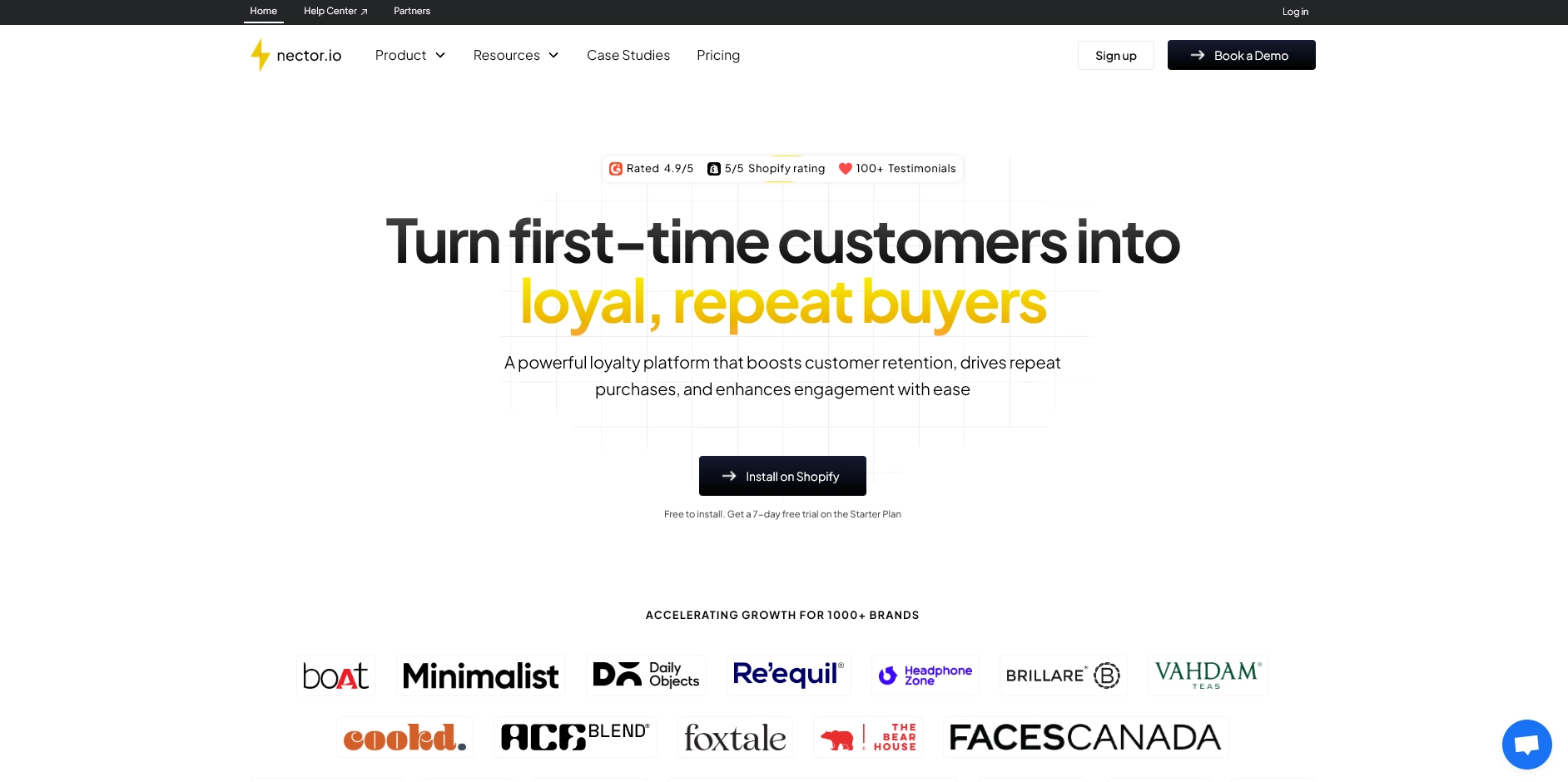
Nector is a fully customizable loyalty, referral, and reviews platform built for D2C and omnichannel brands that want to increase repeat purchases without adding operational load. It automatically converts every customer into a loyalty member, syncs activity across your storefront and POS, and delivers a fully branded rewards experience.
Key Features:
- Fully Customizable Loyalty Program: Create an on-brand loyalty experience with tailored points, VIP tiers, badges, and reward structures that match your store’s identity.
- Real-Time Earning and Redemption: Sync customer activity instantly and let shoppers redeem points like cash at checkout for a smooth, frictionless experience.
- Personalized Rewards Across the Journey: Show relevant points, offers, and rich rewards based on customer behavior, order history, lifecycle stage, and engagement signals.
- Dedicated Rewards Page and Onsite Visibility: Highlight rewards on PDPs, checkout, and thank-you pages, and give customers a full view of their points and perks through a branded rewards page.
- 40+ Built-In Retention Tools: Access campaign bonuses, smart coin expiry, anonymous visitor tracking, store credit refunds, VIP automation, and more without needing custom development.
Ideal For:
Founder-led e-commerce stores, growing D2C brands, omnichannel retailers, and agencies managing multiple clients who need a powerful, white-labeled loyalty system that drives repeat revenue effortlessly.

2. Yotpo
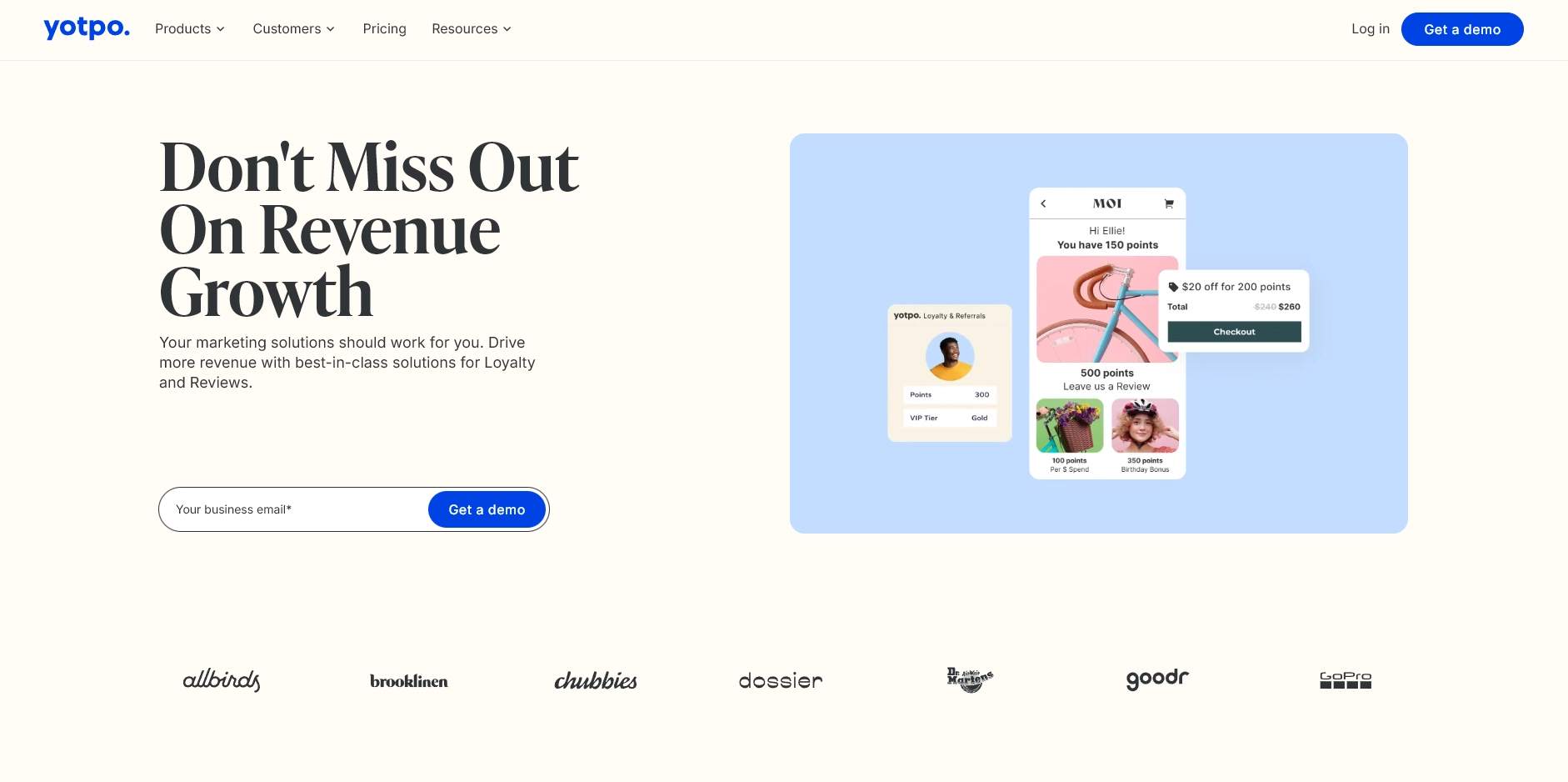
Yotpo is a loyalty and reviews platform built for fast-growing e-commerce brands. It bundles loyalty, referrals, reviews, and SMS in one ecosystem, making it easy to manage customer engagement and retention from a single dashboard.
Key Features:
- All-in-One Engagement Suite: Combine loyalty, referrals, reviews, and SMS for unified customer journeys.
- Flexible Points and Tier Programs: Reward customers for purchases, reviews, social actions, and milestones.
- Strong Shopify Integration: Sync customer activity, orders, tiers, and rewards directly with Shopify.
- Personalized Rewards and Offers: Target segments based on LTV, behavior, or lifecycle stage.
Ideal For:
Mid-sized and enterprise e-commerce brands, especially those already using Yotpo reviews or SMS, and want a unified loyalty stack.
3. Marsello
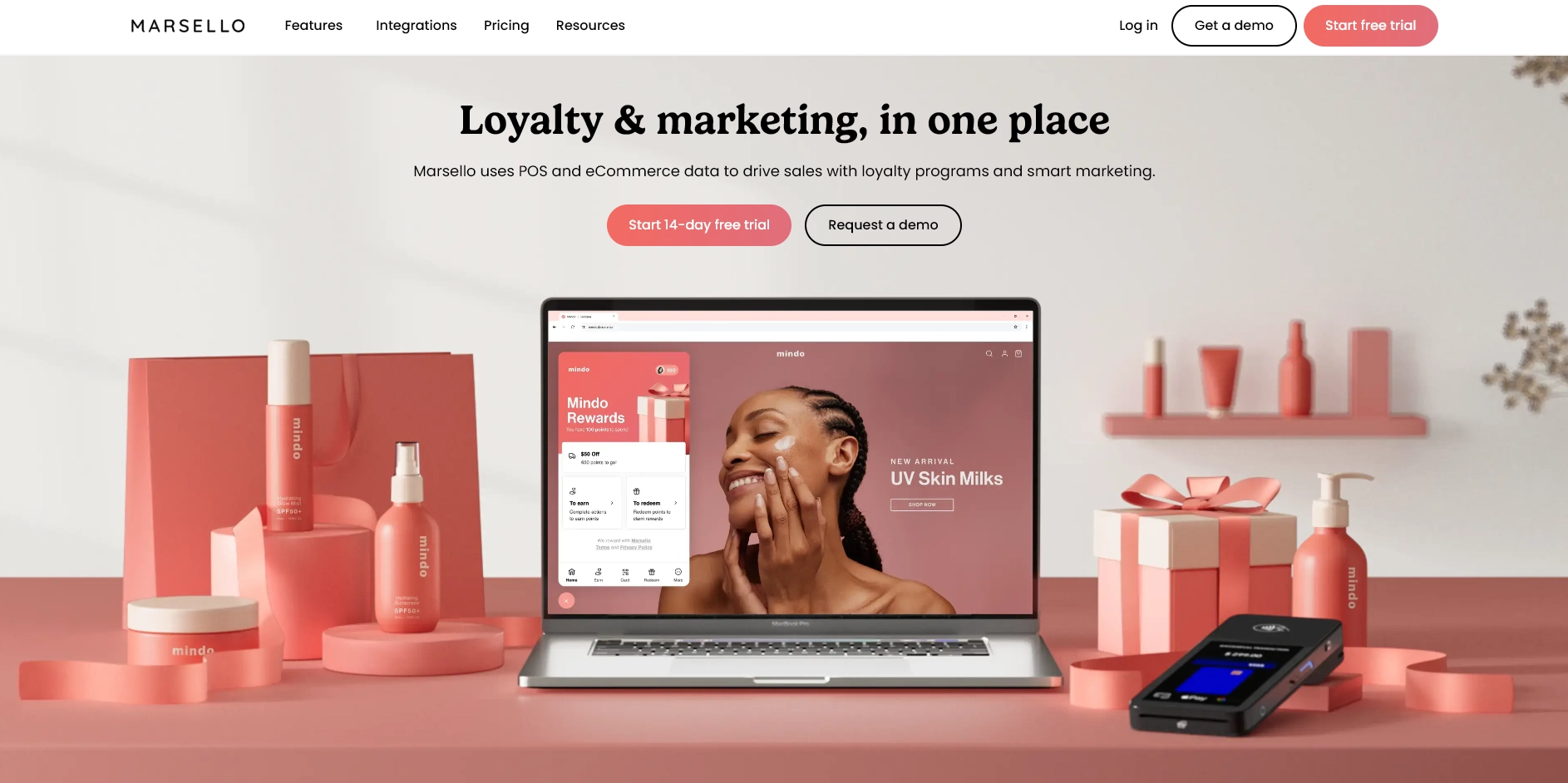
Marsello is an omnichannel loyalty and marketing tool that unifies in-store and online data. It combines loyalty, email, and SMS automation to help retailers run consistent retention campaigns across every channel.
Key Features:
- Omnichannel Loyalty Across POS and Online: Sync customer activity from in-store POS and online stores to track all purchases in one profile.
- Points, Rewards, and Tiers: Run cross-channel loyalty programs with earning, redemption, and tier upgrades.
- Email and SMS Automation: Send win-back flows, post-purchase journeys, and personalized offers based on behavior.
- Customer Segmentation: Identify VIPs, at-risk customers, and high-value shoppers using real-time data.
Ideal For:
Brick-and-mortar retailers, omnichannel stores, and brands that want loyalty + marketing automation in one platform.
4. Antavo
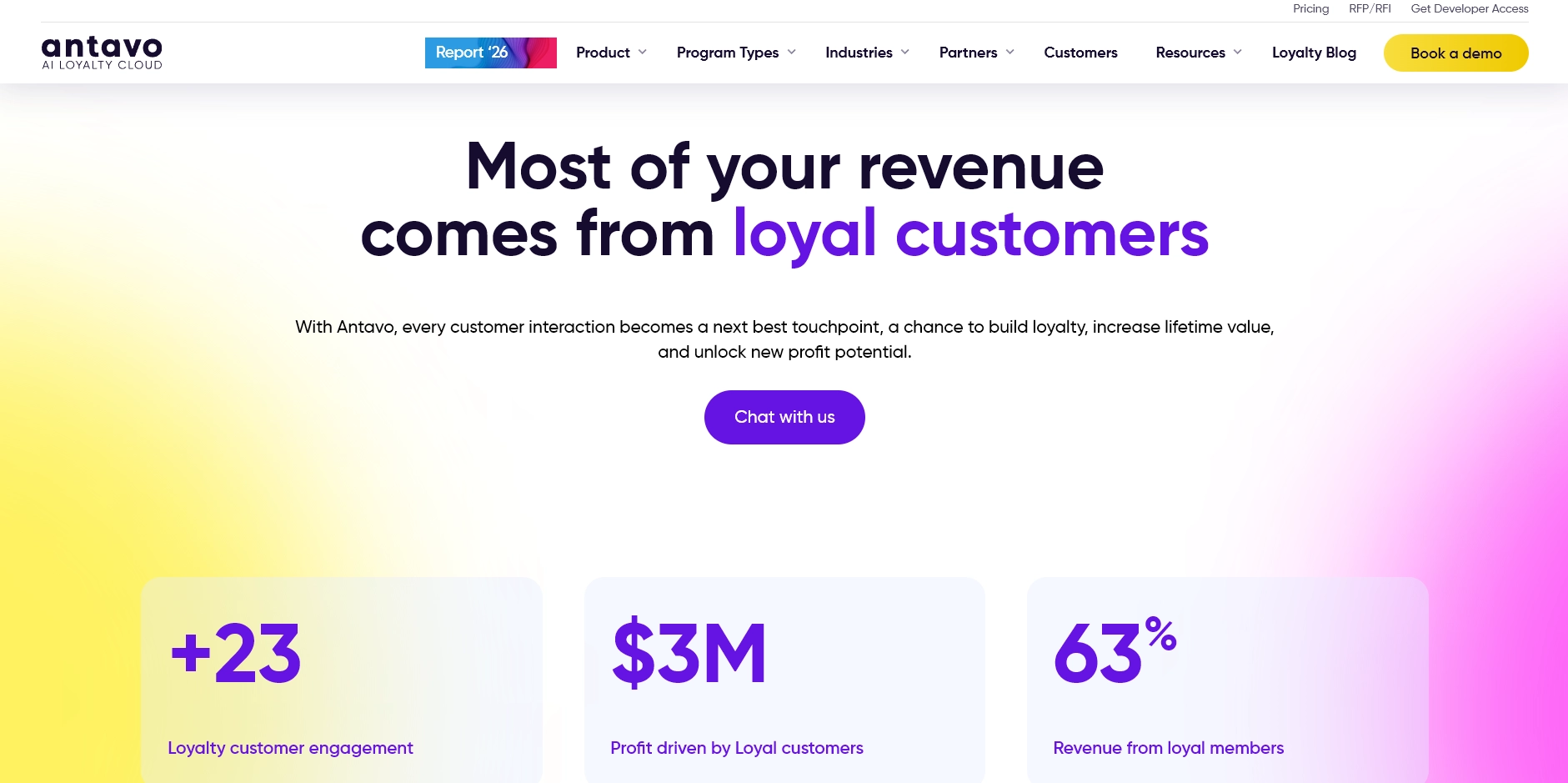
Antavo is an enterprise loyalty platform offering fully customizable programs with gamification, tiers, and omnichannel support. It is built for large brands that require advanced loyalty logic across web, app, and in-store environments.
Key Features:
- Gamification and Engagement Tools: Add badges, challenges, and mission-based rewards to deepen loyalty.
- Omnichannel Loyalty: Connect web, mobile apps, POS systems, and CRM platforms for a unified view.
- Receipt Scanning and Card Linking: Capture offline purchases through receipts or payment cards.
- Modular, API-Driven Setup: Build custom workflows and loyalty logic tailored to your brand’s ecosystem.
Ideal For:
Large retailers, enterprise brands, and omnichannel businesses that need a fully customizable, global-scale loyalty solution.
5. Smile.io
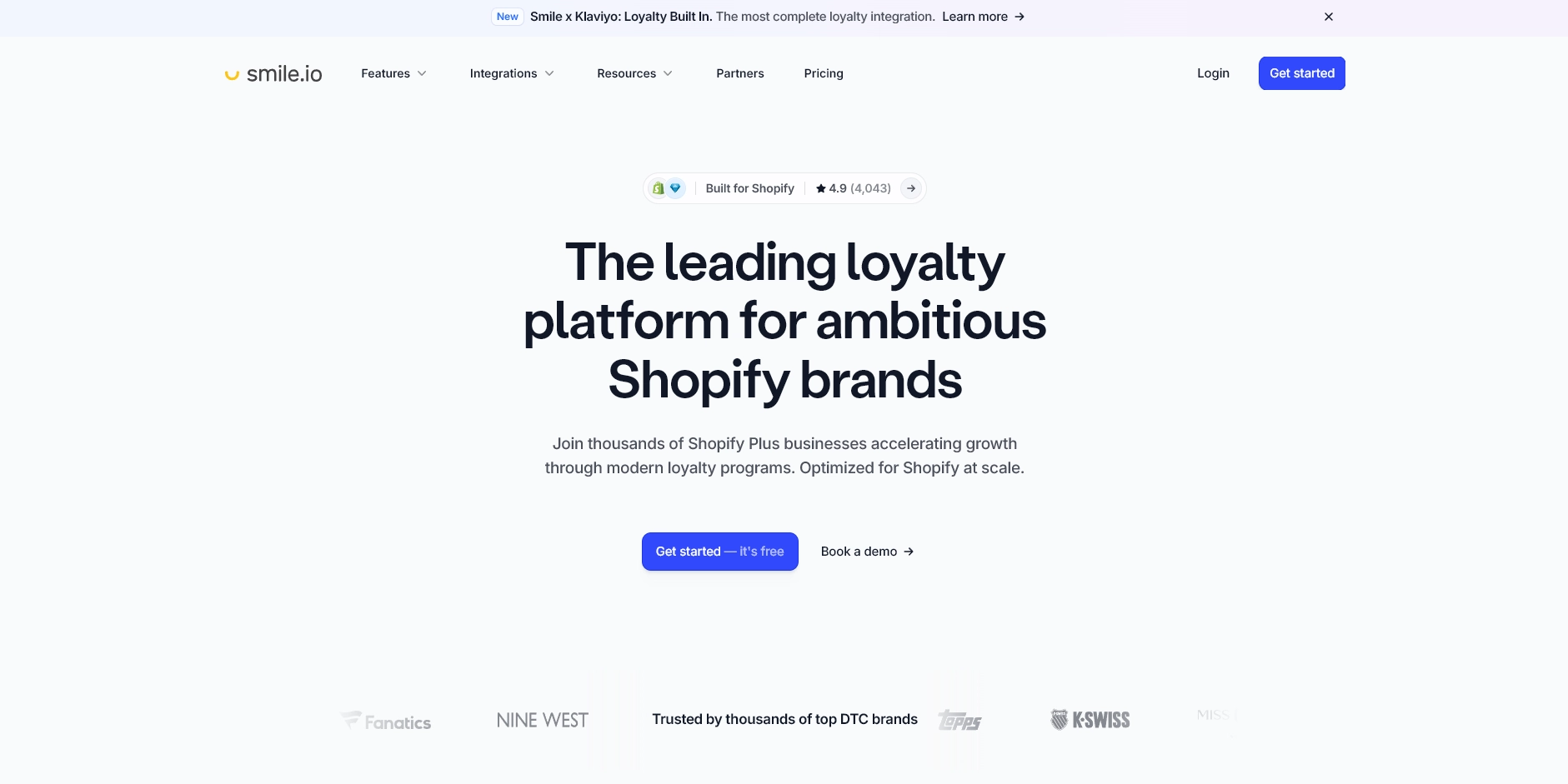
Smile.io is a simple, plug-and-play loyalty tool for small and mid-sized e-commerce brands. It offers easy points, referrals, and VIP tiers with fast setup and ready-made widgets.
Key Features:
- Easy Points and Rewards Setup: Reward purchases, sign-ups, birthdays, and social actions within minutes.
- Simple Referral Program: Give customers referral links to share through social media, email, or messaging.
- VIP Tier Support: Create basic VIP tiers with perks that encourage repeat engagement.
- Onsite Widgets and Pop-Ups: Display rewards, points, referrals, and VIP progress directly on your storefront.
Ideal For:
Small e-commerce stores and early-stage brands looking for a simple, no-code loyalty program focused on points, referrals, and basic tiers.
6. Open Loyalty
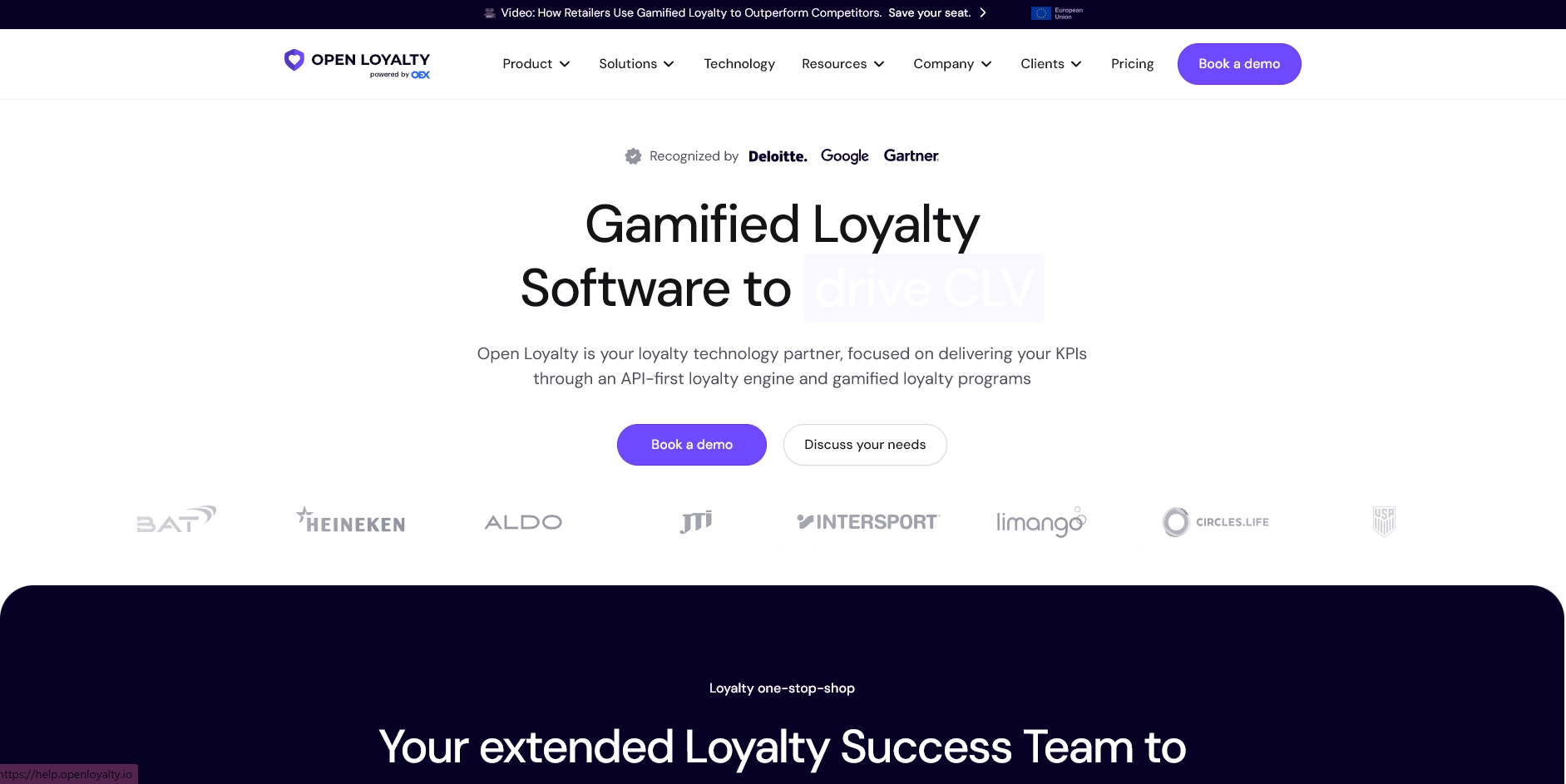
Open Loyalty is an API-first loyalty engine built for brands that want complete control over how their loyalty experience works and looks. Instead of relying on prebuilt widgets, it lets teams design custom loyalty workflows across apps, websites, and POS systems.
Key Features:
- API-First and Modular: Build custom points, tiers, wallets, and reward logic into any system.
- Omnichannel Support: Trigger loyalty events from web, mobile apps, physical stores, and POS systems.
- Gamification Options: Add challenges, badges, and custom milestones to deepen engagement.
- Flexible Reward Logic: Reward any action, such as purchases, referrals, app activity, or custom triggers.
Ideal For:
Enterprise brands and omnichannel retailers with in-house developers who need a fully customizable loyalty architecture.
7. Rise.ai
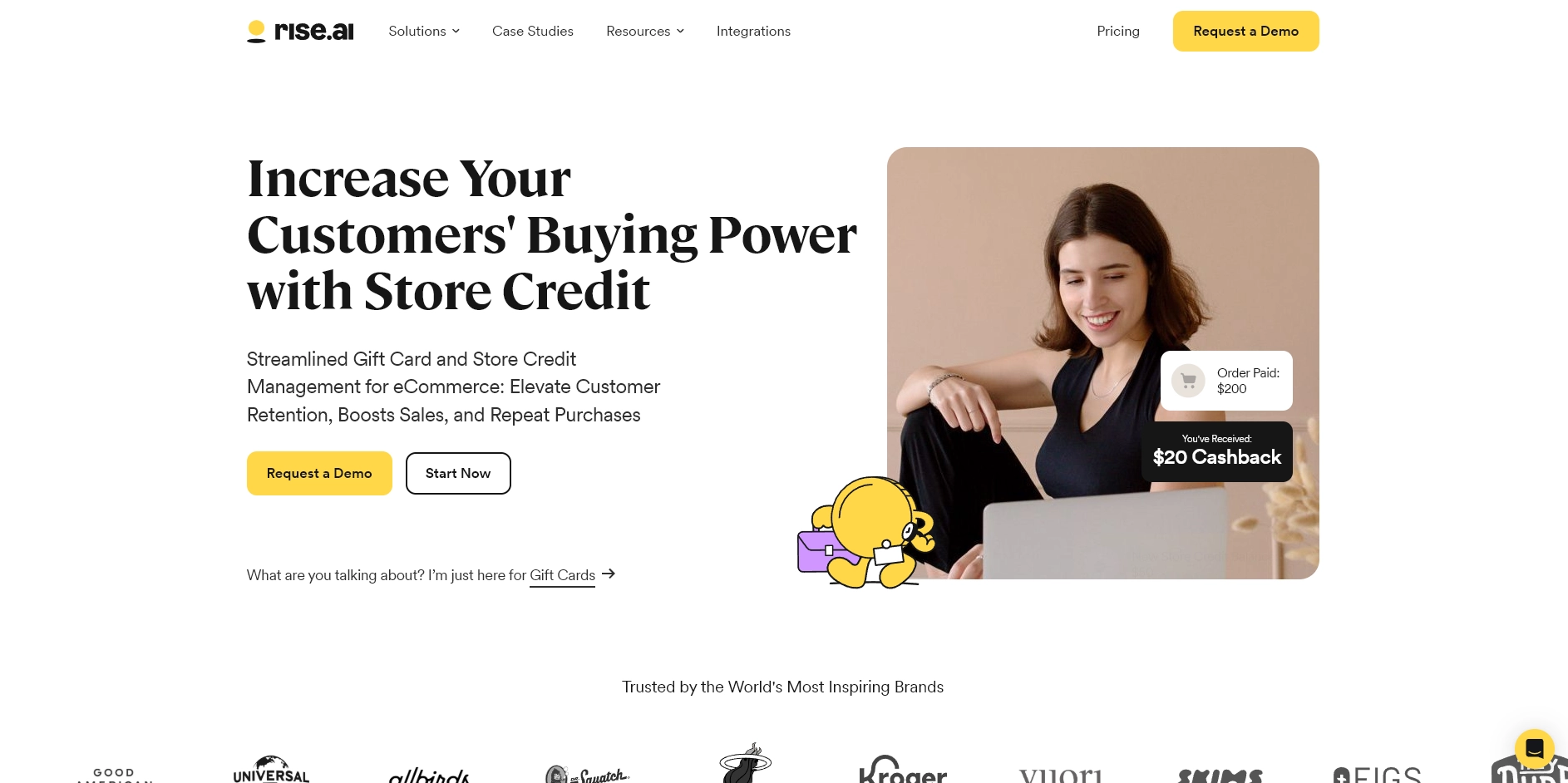
Rise.ai is a store credit–based loyalty and gift card solution that helps Shopify brands drive repeat purchases. Instead of traditional points, it focuses on branded credits, automated rewards, and gifting workflows.
Key Features:
- Store Credit Loyalty System: Replace traditional points with branded credits for stronger retention.
- Gift Card and Wallet System: Enable customers to store and spend credit easily across channels.
- Automated Workflows: Send credits for first purchases, birthdays, referrals, or win-back moments.
- Omnichannel Support: Apply store credit across online and offline purchases for a unified experience.
Ideal For:
Shopify brands that prefer store credit–based loyalty, brands focusing on gifting, and teams seeking a simple yet effective retention lever.
8. LoyaltyLion
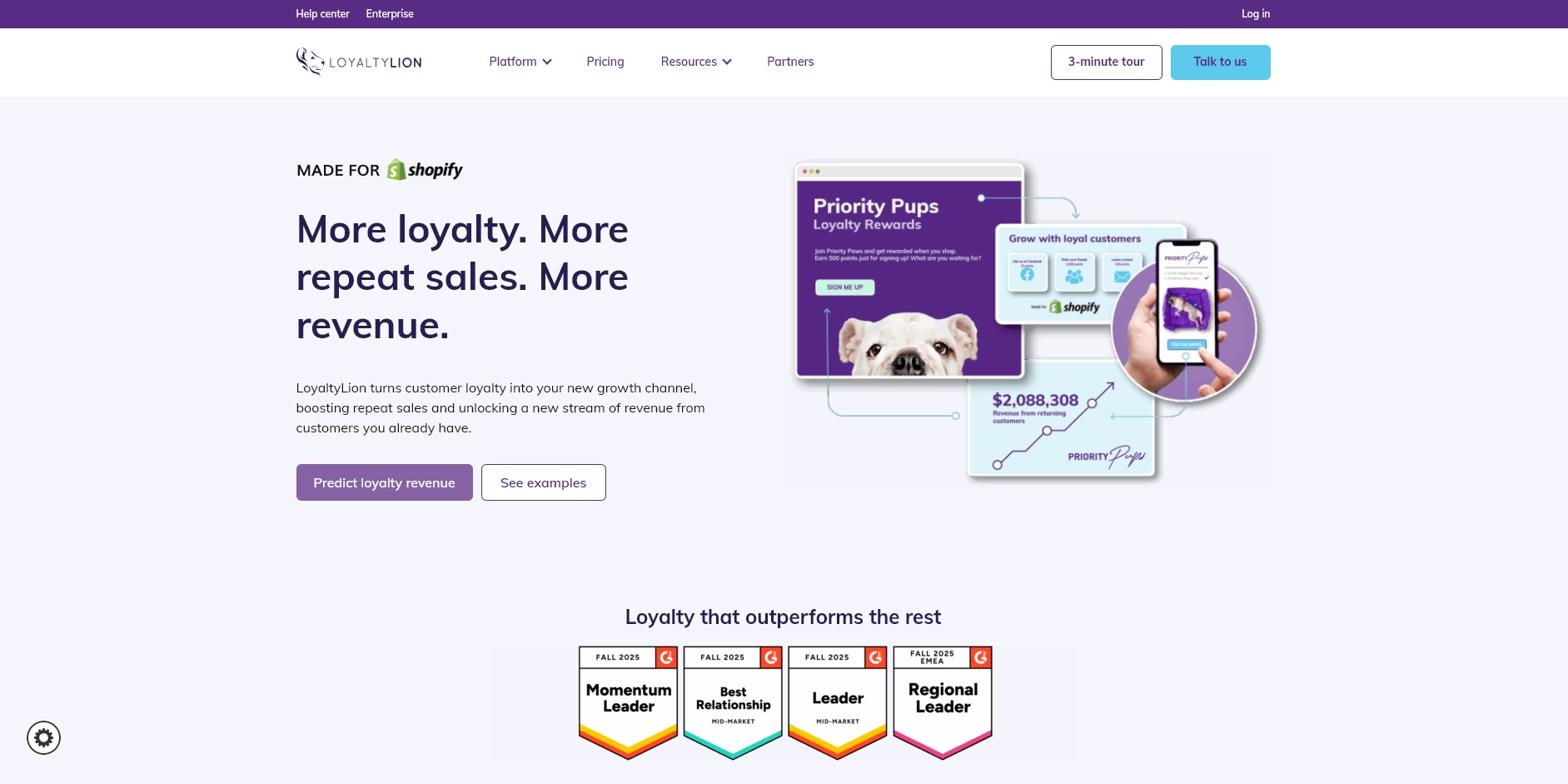
LoyaltyLion is a loyalty platform for Shopify brands that want customizable points, tiers, and personalized onsite experiences. Its strong segmentation and analytics help teams improve repeat purchase rates with targeted incentives.
Key Features:
- Advanced Points and Tier Programs: Reward purchases, social actions, birthdays, and engagement events.
- Deep Personalization: Show onsite reminders, nudges, and dynamic messages based on customer behavior.
- Customer Insights and Segmentation: Identify top spenders, at-risk customers, and high-LTV segments.
- Onsite Widgets and Loyalty Blocks: Display points, benefits, and VIP progress across PDPs, carts, and dashboards.
Ideal For:
Growth-stage D2C brands and Shopify Plus stores that want deeper personalization without heavy development work.
9. Stamped.io
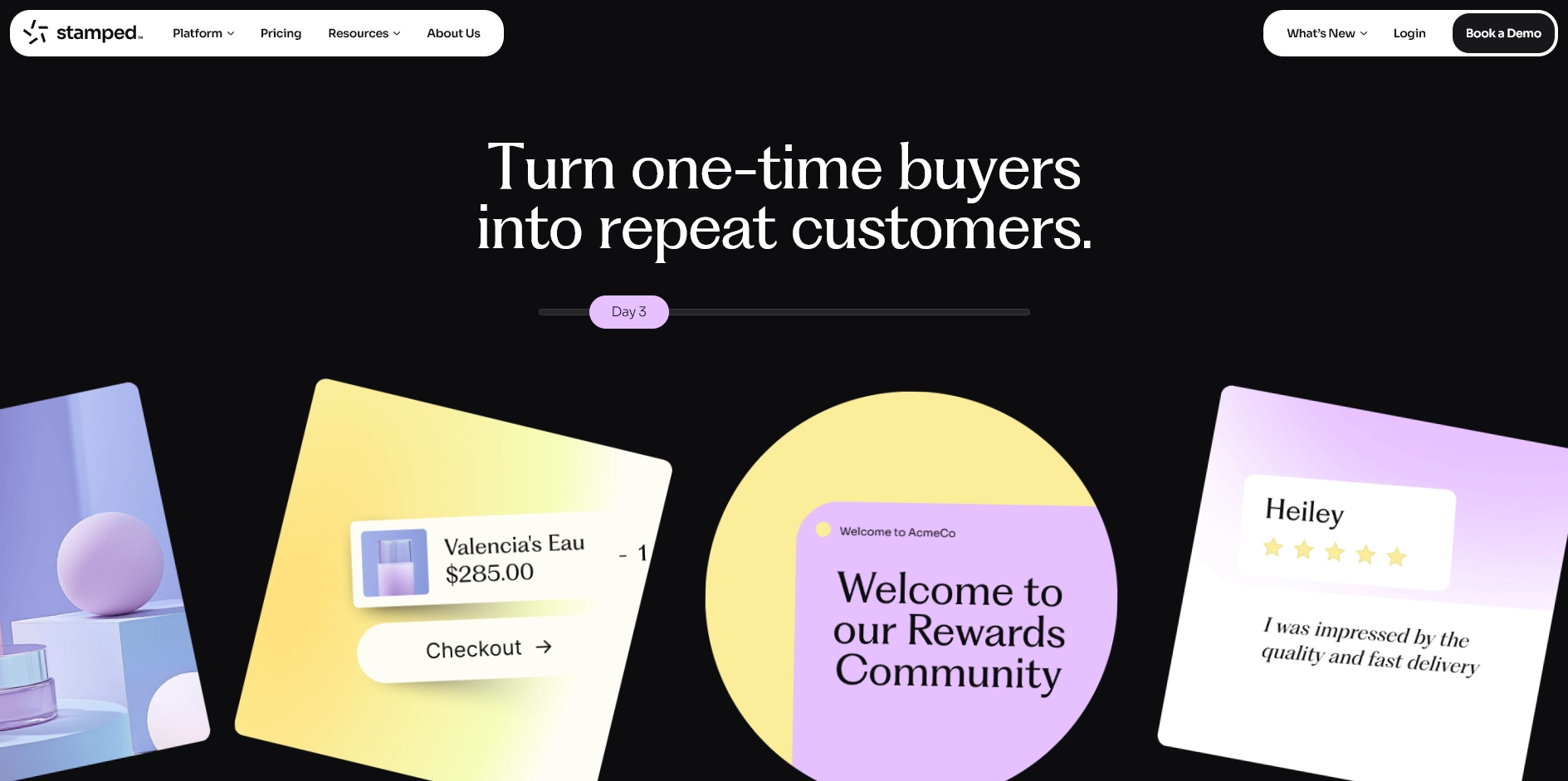
Stamped.io is a combined reviews and loyalty platform that helps e-commerce brands boost trust and repeat purchases. It unifies reviews, points, tiers, referrals, and reward incentives in one system that integrates directly into your storefront.
Key Features:
- Unified Reviews and Loyalty: Manage reviews, ratings, UGC, and loyalty rewards in one platform to strengthen trust and retention.
- Points and Reward Automation: Reward purchases, sign-ups, social actions, and reviews with customizable earning and redemption rules.
- Tiered VIP Program: Create tier levels with exclusive benefits that motivate customers to spend more and stay engaged.
- Referral Tools: Run refer-a-friend programs with incentives for both referrers and new customers.
Ideal For:
E-commerce brands that want a combined reviews + loyalty solution and prefer a simple, integrated way to drive trust, social proof, and repeat purchases.
10. Talon.One
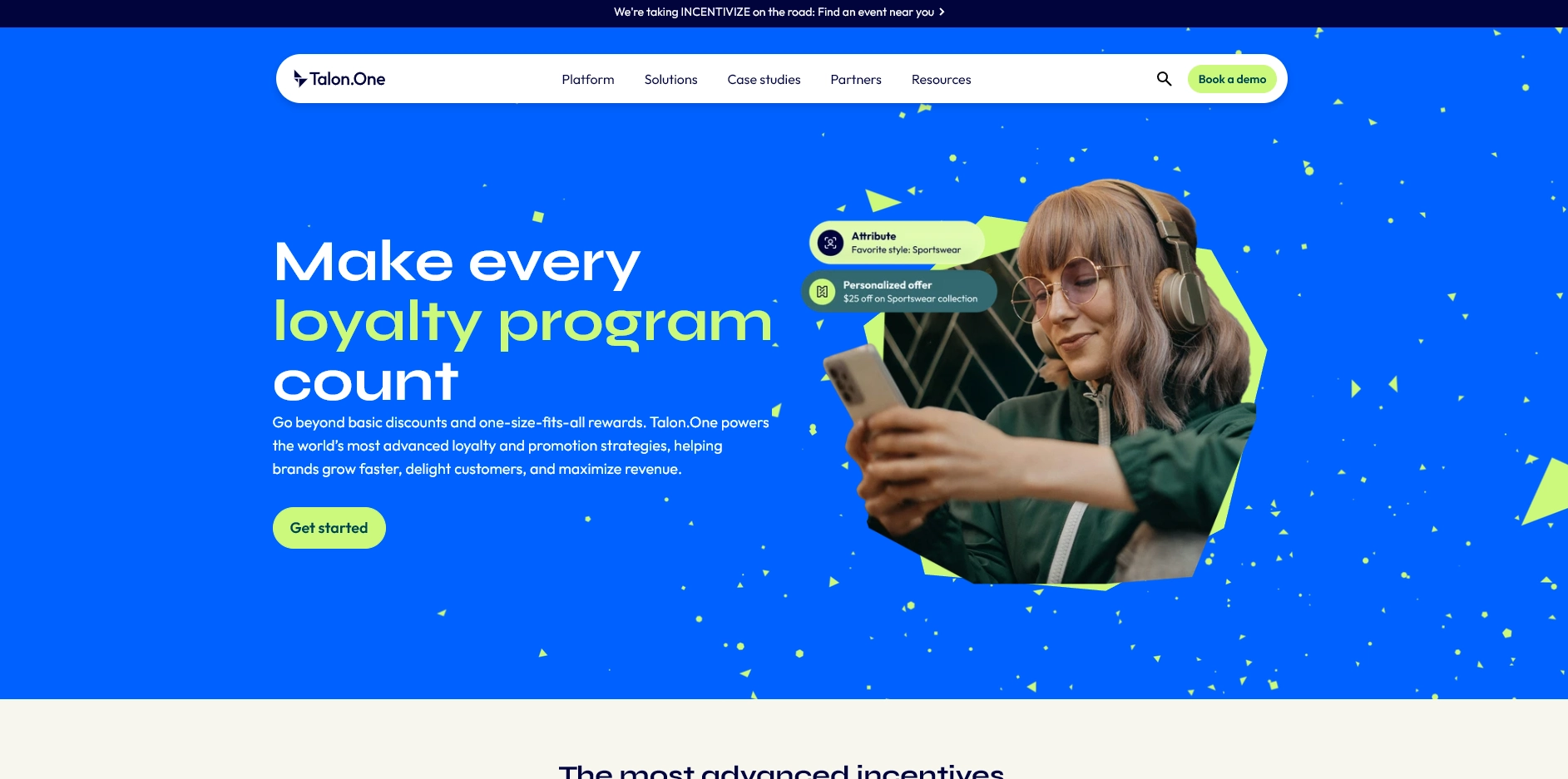
Talon.One is an enterprise loyalty and promotions engine built for brands that need full control over reward logic. Its rule-based system lets teams create highly customized loyalty workflows across web, mobile, and POS.
Key Features:
- Advanced Rule Engine: Create custom earning and redemption rules based on behavior, cart data, location, and customer attributes.
- Omnichannel Loyalty Activation: Trigger rewards from web, mobile apps, in-store POS systems, and CRM tools.
- Support for Multiple Reward Types: Points, credits, coupons, bundles, tiers, and personalized offers.
- Strong Fraud and Abuse Controls: Monitor activity patterns and prevent misuse across campaigns and loyalty actions.
Ideal For:
Enterprise brands and marketplaces that need highly flexible, rule-based loyalty and promotions that go beyond simple points and tiers.
A loyalty tool unlocks its real power only when paired with the right approach. These strategies help you turn features into meaningful customer behavior shifts.
Strategies to Improve Brand Loyalty Using the Right Tools
Brand loyalty tools are most effective when paired with the right strategies. Instead of treating loyalty as a points program, brands should use their tools to build habits, emotional connection, and consistent value.
Here are practical, proven strategies that work across e-commerce and retail:
1. Reward High-Intent Actions, Not Just Purchases
Use your loyalty tool to reward reviews, referrals, social engagement, subscriptions, and UGC. These actions deepen involvement and build long-term affinity.
2. Personalize Rewards Based on Customer Behavior
Segment customers by lifecycle stage (new, active, at-risk, VIP) and use your tool’s automation to deliver targeted offers that match their purchase patterns.
3. Build Tiered Experiences That Inspire Progress
Use tiered loyalty systems to create momentum. Higher tiers should unlock exclusive perks, early access, faster support, or special rewards — not just bigger discounts.
4. Make Rewards Visible Across the Entire Journey
Show points, potential rewards, and VIP progress on PDPs, cart, checkout, and account pages. Visibility drives motivation and boosts repeat purchases.
5. Combine Loyalty With Referrals and Reviews
Run an integrated system where customers earn loyalty rewards for referring friends, leaving reviews, or sharing content. This compounds trust and acquisition.
6. Strengthen Omnichannel Loyalty
Use POS–loyalty integrations to let customers earn and redeem rewards online and offline. Consistency across channels improves satisfaction and frequency.
7. Use Store Credits or Wallets for Better Retention
Store credits are one of the most effective loyalty levers because they turn refunds into future revenue.
They also influence behavior. 68% of customers purchase again after receiving store credit, making it a proven retention driver.
8. Run Limited-Time Reward Campaigns
Seasonal multipliers, product launch bonuses, or expiry-based push campaigns drive urgency and spike engagement without eroding margins.
9. Track Loyalty Analytics to Spot Drop-Off Points
Use loyalty tool dashboards to monitor engagement, reward usage, tier progression, and purchase frequency. Data-driven tweaks dramatically improve program performance.
10. Make Customer Support Part of the Loyalty Experience
Use your loyalty tool’s CRM or tagging integration to prioritize VIP tickets, add surprise-and-delight moments, or resolve issues faster.
Strategy alone isn’t enough. You need proof it’s working. Here’s how to measure it.
Also read: Why Customer Loyalty Is Important for Your Business?
How to Know If Your Brand Loyalty Tool Is Working
A loyalty tool should show measurable impact. The easiest way to evaluate performance is by tracking whether customers are buying more often, spending more, and staying loyal over time.
These are the KPIs that matter most:
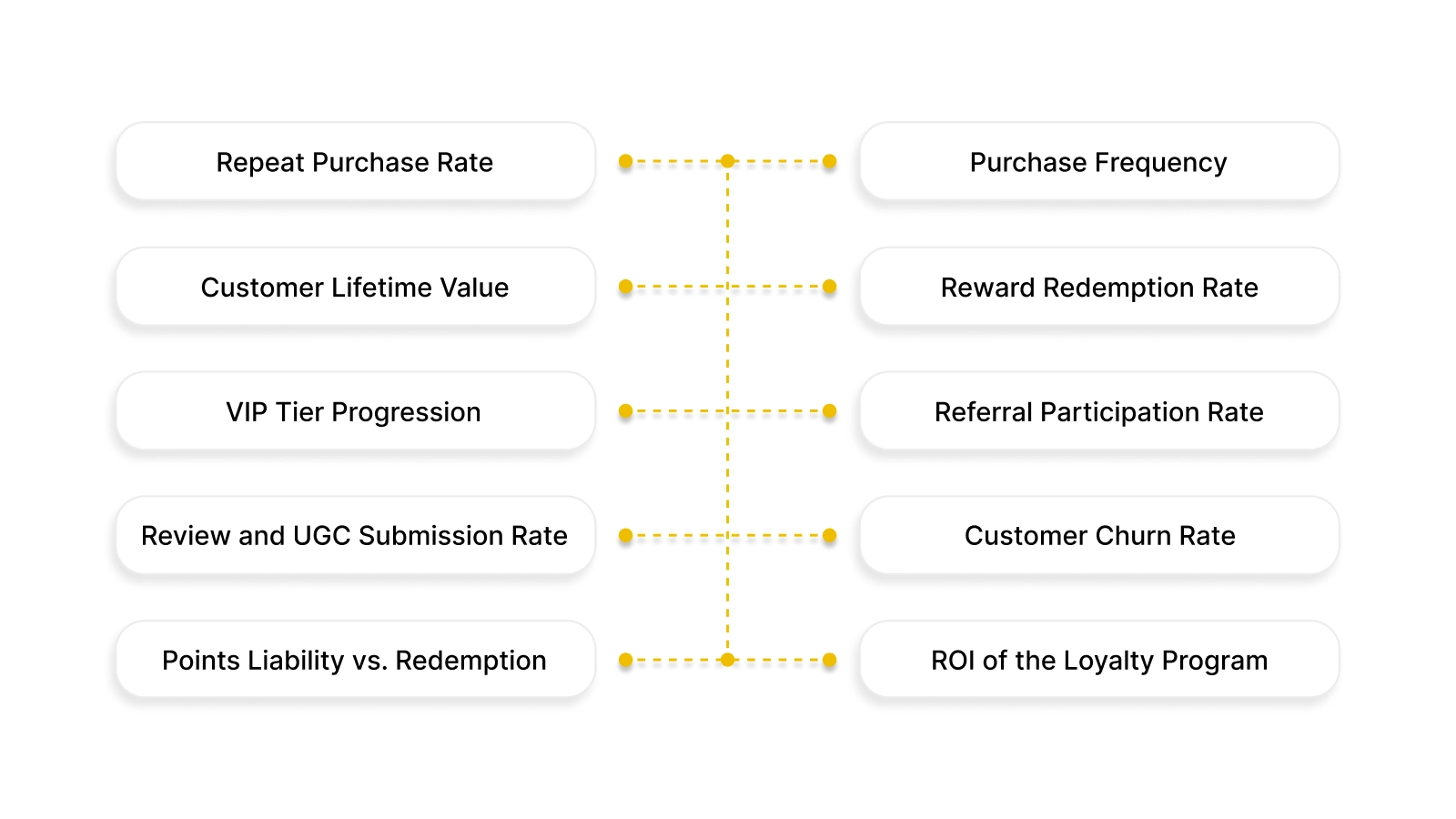
1. Repeat Purchase Rate (RPR)
Measures how many customers buy again.
What to look for: A steady month-over-month increase after launching or optimizing your loyalty program.
2. Purchase Frequency
Tracks how often customers return within a specific period.
Strong signal: Customers are buying more often and shrinking the time between orders.
3. Customer Lifetime Value (CLV)
Shows the total revenue generated by a customer over their journey.
Indicator of success: CLV increases as customers earn more points, redeem rewards, and move up tiers.
4. Reward Redemption Rate
Measures whether customers are engaging with your loyalty rewards.
Healthy benchmark: 20–40 percent redemption for well-designed programs. Low rates signal irrelevant or hard-to-use rewards.
5. VIP Tier Progression
Shows how many customers are moving into higher tiers.
Why it matters: Progression means customers feel motivated by your tier structure and are increasing their spend to unlock perks.
6. Referral Participation Rate
If your tool includes referrals, track how many users share their link.
Good sign: Referral activity grows without aggressive pushes, showing genuine advocacy.
7. Review and UGC Submission Rate
Measures how often customers leave reviews or upload UGC through your loyalty incentives.
Indicator: Higher review volume strengthens trust and supports organic conversion.
8. Customer Churn Rate
Shows how many active customers become inactive over time.
Goal: A steady decline in churn after launching your loyalty system.
9. Points Liability vs. Redemption
Tracks how many points are issued versus redeemed.
Healthy balance: High redemption means customers are engaged; uncontrolled liability means rewards are too easy to earn or hard to use.
10. ROI of the Loyalty Program
Compare the cost of rewards vs. revenue generated from loyalty-driven purchases.
Indicator of a winning tool: Positive ROI within the first 60–120 days.
When these metrics trend upward, it is a clear sign your loyalty tool is driving real retention, stronger repeat sales, and long-term customer value.
Wrapping Up
Building lasting brand loyalty is no longer about discounts or one-off campaigns. It comes from using the right tools that automate engagement, personalize every touchpoint, and reward customer behavior consistently across channels.
Whether you are running an e-commerce brand, a retail chain, or an omnichannel business, the right loyalty platform becomes the engine behind higher repeat purchases, stronger customer relationships, and long-term revenue growth.
If you are looking for a loyalty tool that is powerful, customizable, and built to scale, Nector offers everything you need: points, tiers, referrals, reviews, personalization, and POS integration in one platform.
Book a demo with Nector and start building loyalty that lasts.
FAQs
What are the 3 R's of loyalty?
The 3 R's stand for Retention, Rewards, and Referrals. A strong loyalty strategy keeps customers coming back, incentivizes repeat actions, and turns loyal buyers into advocates who bring in new customers.
What are the 4 stages of loyalty?
The four key stages are Awareness, Engagement, Commitment, and Advocacy. Customers first discover your brand, start interacting with it, develop trust through repeated value, and eventually recommend it to others.
What are 2–3 ways a brand has increased your loyalty?
Examples include offering personalized rewards, delivering consistently great customer service, providing early access or VIP perks, maintaining fast and transparent communication, and creating seamless online and offline shopping experiences.
How do loyalty tools help reduce customer churn?
They automate rewards, personalize offers, and keep customers engaged across channels. This builds consistent touchpoints that encourage repeat purchases and prevent customers from drifting to competitors.




Start Building Customer Retention That Lasts