
%201.webp)
.avif)
.avif)
Walk into any successful online store today, and you’ll notice something interesting: customers don’t just buy, they bring other customers with them. A shared link here, a recommendation there and suddenly, growth isn’t coming only from ads.
Referral programs take this everyday behavior and turn it into a repeatable way to acquire customers who already trust the brand. In fact, 89% of people say they trust recommendations from people they know more than any other source, which is exactly why referrals convert faster and feel more natural than paid ads.
As referrals become a bigger part of how brands grow, the real challenge is choosing a referral program that brings in quality customers without making things complicated. In this blog, we will explore the top 8 referral programs for customer acquisition in 2026.
Key Takeaways
- Referrals consistently outperform paid channels by converting existing customer trust into high-intent, faster-converting new customers across ecommerce, SaaS, and subscription models.
- Tools such as Nector and Yotpo stand out by combining referrals with loyalty, ensuring newly acquired customers enter long-term engagement loops instead of churning after the first purchase.
- Platforms like ReferralCandy, GrowSurf, and Tapfiliate simplify customer acquisition by automating referral tracking, reward attribution, and integrations with ecommerce and CRM systems.
- Advanced solutions such as Friendbuy and Extole focus on fraud prevention, controlled incentives, and conversion-based rewards to protect acquisition efficiency as programs scale.
- Choosing the right referral tool directly impacts acquisition quality, cost control, and retention, making platform capabilities as important as the referral strategy itself.
Why Referrals Win When Ads Stop Working?
Referrals convert trust into growth by turning customers into acquisition channels. It delivers higher intent leads, faster conversions, and lower acquisition costs than paid ads across SaaS, ecommerce, and subscription businesses.
Here’s why referral-led acquisition consistently outperforms traditional growth channels in 2026:
- Higher-quality customers from day one: Referred users arrive pre-sold. For example, a Friendbuy-powered ecommerce brand may see referred customers convert 2–3× faster than cold traffic.
- Lower CAC with compounding returns: Once launched, referral programs reduce dependency on rising ad costs. A single advocate can drive multiple acquisitions without incremental spend.
- Stronger retention and lifetime value: Referred customers typically mirror the behavior of the referrer, leading to better repeat purchase rates and longer retention cycles.
- Built-in trust at scale: Word-of-mouth bypasses skepticism. Platforms like Nector can turn everyday customers into credible brand ambassadors automatically.
- Faster market penetration: Referrals boost entry into new segments by using existing customer networks instead of starting from zero.
Now that we’ve established why referrals outperform paid acquisition, the next step is understanding what separates high-performing referral programs from basic setups.
Also Read: Ultimate Guide to Omnichannel Loyalty Programs for 2026
5 Things Every Referral Program Needs to Bring in Real Customers
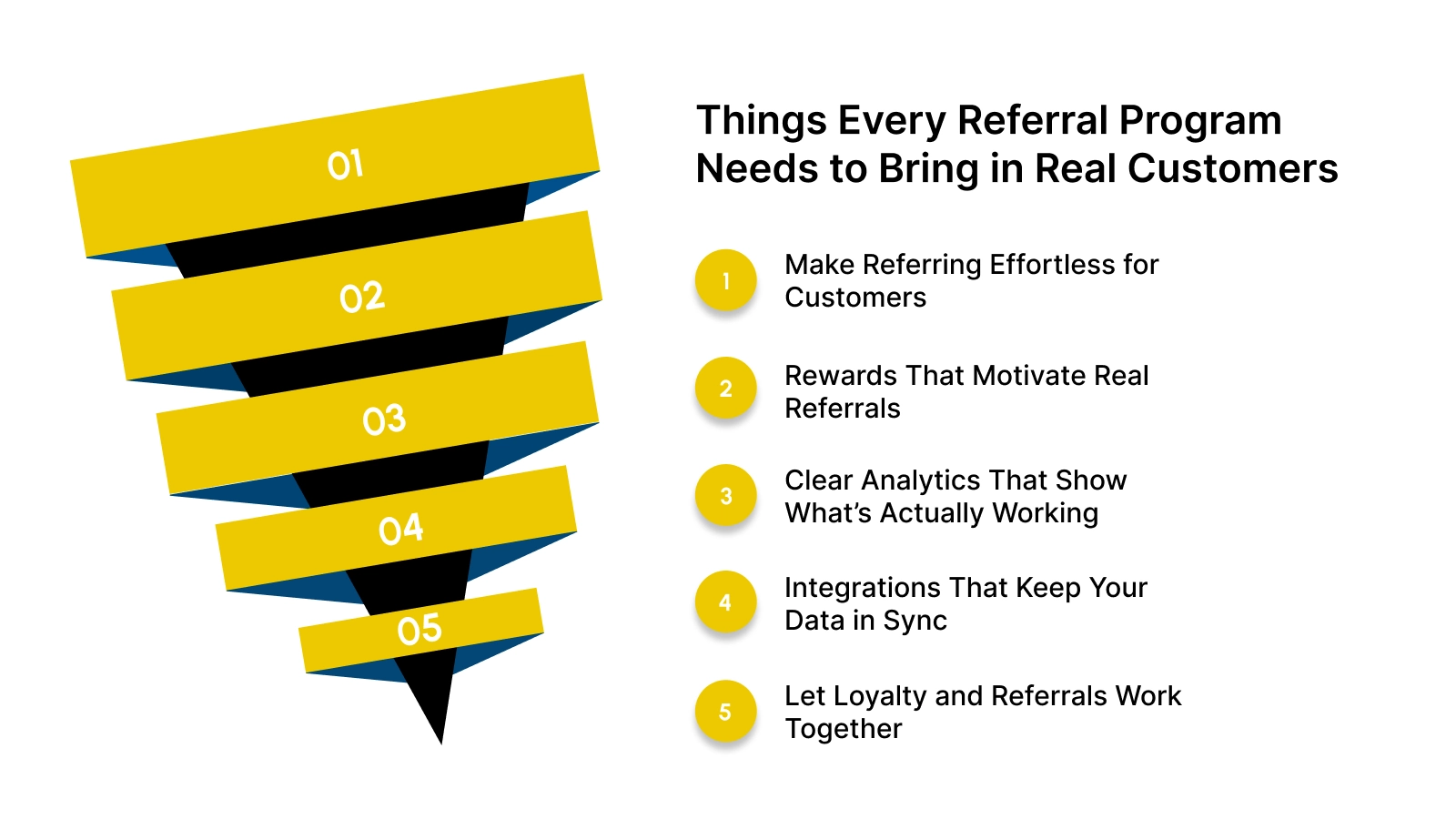
Not all referral programs are built for customer acquisition. The platforms that win focus on reducing friction, motivating advocates, and capturing measurable growth signals. Below are the non-negotiable features that separate acquisition-first referral programs from vanity setups.
1. Make Referring Effortless for Customers
High-performing referral programs remove effort entirely. One-click sharing, auto-generated referral links, prefilled messages, and real-time reward tracking ensure customers can refer instantly across email, WhatsApp, SMS, or social channels without logging in or learning new steps.
2. Rewards That Motivate Real Referrals
Acquisition-focused programs use incentives tied to actual conversions, not clicks. Double-sided rewards, milestone-based bonuses, and store credit outperform flat discounts because they motivate repeat referrals. Additionally, it also ensures rewards trigger only after a successful new-customer action.
3. Clear Analytics That Show What’s Actually Working
Strong referral tools track acquisition metrics end-to-end, including referral-to-purchase rate, cost per referred customer, fraud prevention, and LTV comparisons. This allows teams to identify top advocates, optimize incentives, and scale what drives profitable customer growth.
4. Integrations That Keep Your Data (and Rewards) in Sync
Referral programs must sync seamlessly with CRM and ecommerce systems like Shopify, Stripe, and HubSpot. This ensures accurate attribution, automated reward fulfillment, customer segmentation, and consistent data flow without manual intervention or reporting gaps.
5. Let Loyalty and Referrals Work Together
The best programs combine loyalty and referrals to compound acquisition. Existing customers earn more by referring repeatedly, while new customers enter loyalty loops immediately. This increases retention, repeat purchases, and the likelihood that they become future advocates themselves.
Once these foundational features are clear, the logical next question is which platforms actually deliver them in practice, especially for ecommerce brands focused on scalable customer acquisition.
Top 8 Referral Programs for Customer Acquisition in 2026
As paid acquisition costs rise and trust in ads declines, referrals drive higher-quality customers. In this section, we’ll break down the top referral programs helping ecommerce brands acquire verified, high-intent customers efficiently in 2026.
1. Nector
.webp)
Nector combines loyalty, referral, and engagement features into one platform so ecommerce brands can both acquire new customers and retain them. It’s especially useful for DTC, subscription, and lifestyle ecommerce brands that want to grow sustainably with word‑of‑mouth while keeping customers coming back through reward mechanics and tier perks.
Key Features of Nector:
- Referral Automation: Set up referral campaigns quickly and trigger them based on purchase or engagement events with minimal manual setup.
- Reward Flexibility: Reward both referrers and referred users with coupons, discounts, or points that can drive purchases and advocacy.
- Loyalty Integration: Seamlessly tie referred users into the loyalty experience so they are more likely to make repeat purchases.
- Acquisition Analytics: Track referrals, conversions, top-performing advocates, and program ROI to optimize campaigns.
Pricing: 7-day free trial available; paid plans start at $49/month for small businesses.

2. Friendbuy
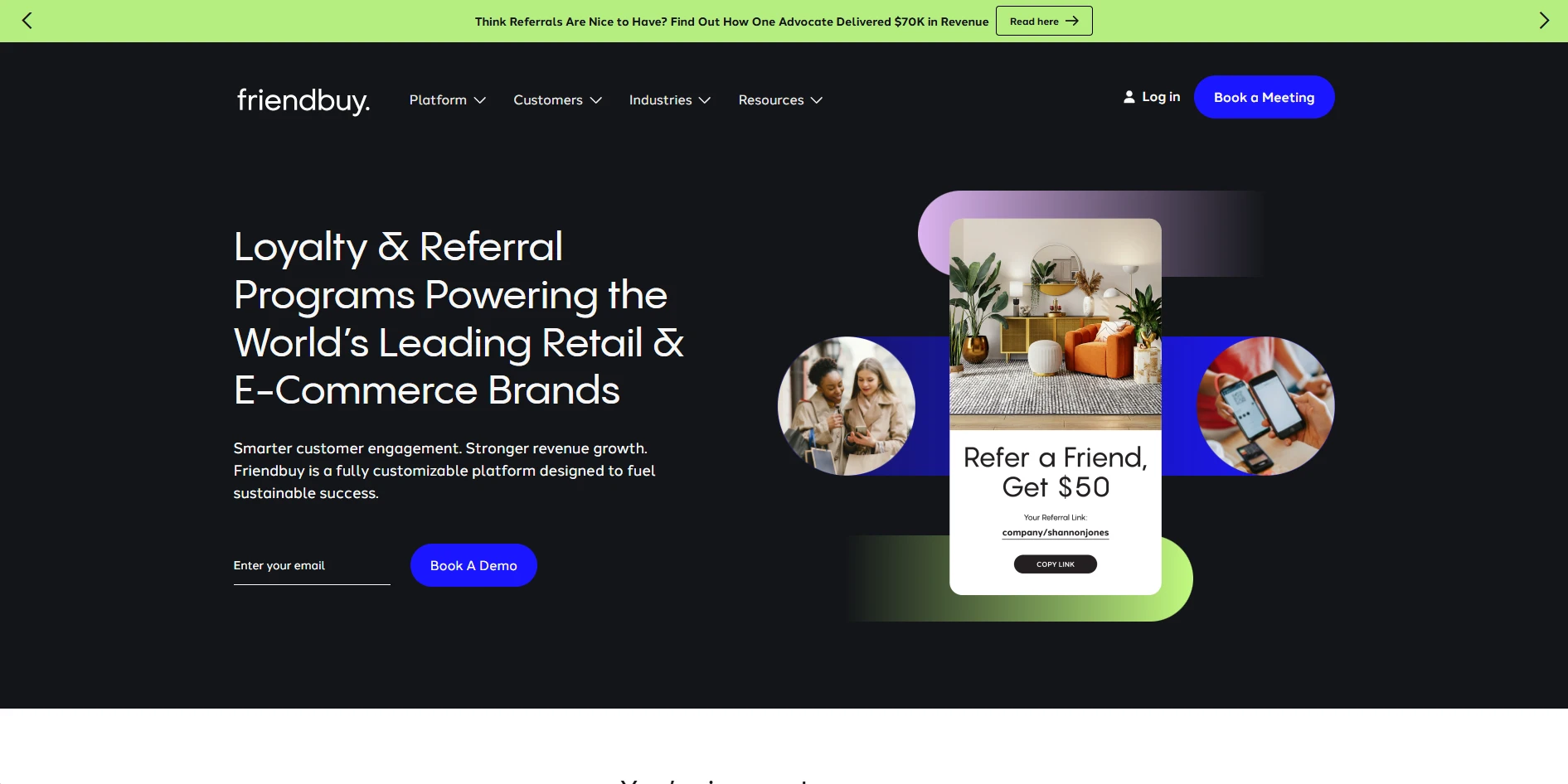
Friendbuy is a customizable referral and advocacy platform built to help ecommerce brands scale customer acquisition reliably and measurably. It’s best for brands that want flexible referral experiences, deeper campaign control, and advanced measurement, especially those looking to lower cost per acquisition and track real referral ROI as programs grow.
Key Features of Friendbuy:
- Custom Referral Journeys: Design referral flows and incentives that match specific acquisition goals and audience segments.
- Fraud & Abuse Controls: Built‑in checks help prevent self‑referrals and abusive patterns, preserving acquisition quality and budget.
- Reward Attribution: Rewards trigger only after verified conversions (not just clicks), helping you maintain accurate CAC and performance tracking.
- Performance Analytics: Track conversions, advocate activity, share rates, and customer acquisition results so you can optimize campaigns over time.
Pricing: Custom Pricing
3. ReferralCandy
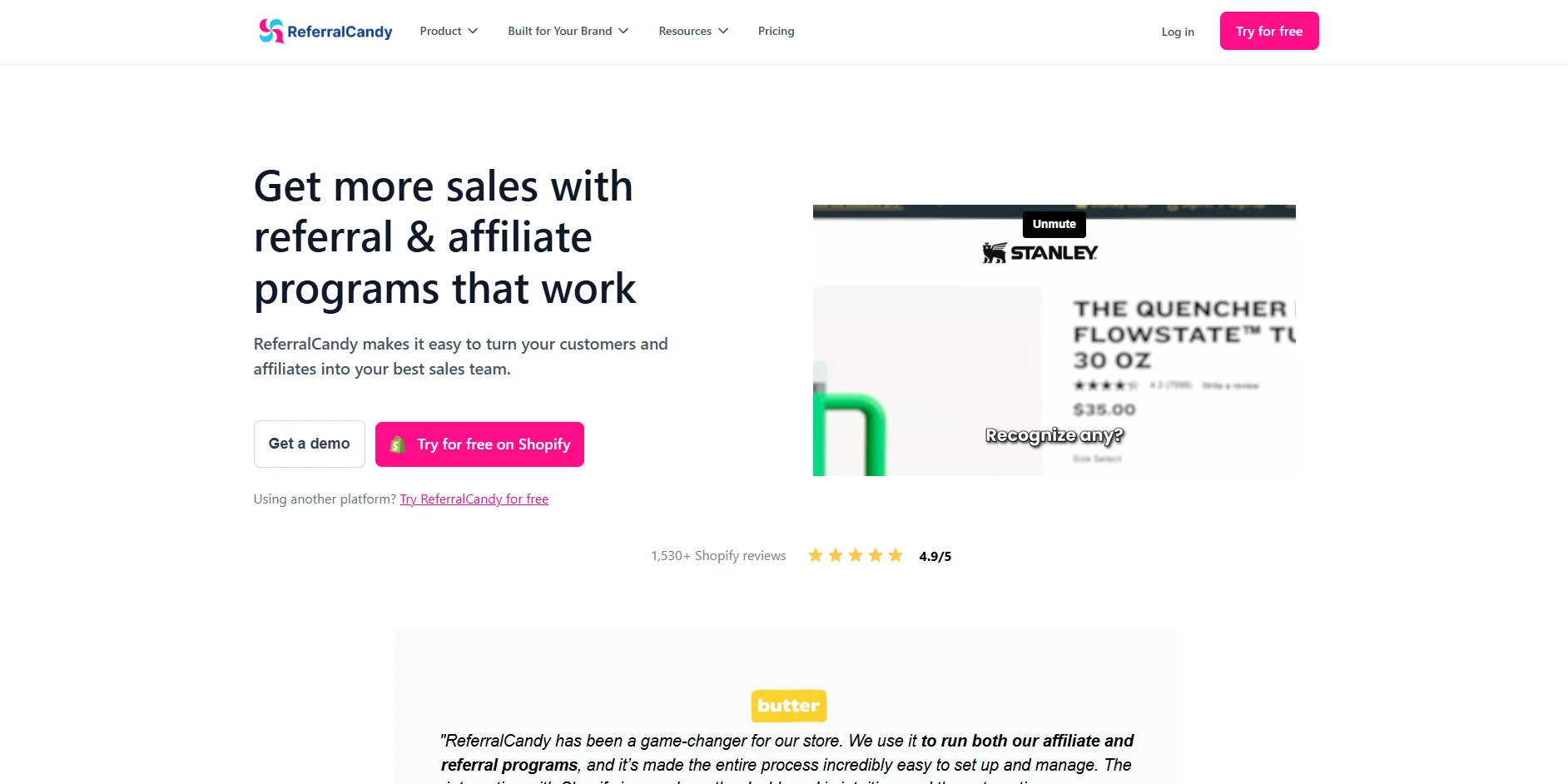
ReferralCandy is a referral marketing tool built for ecommerce stores that want a simple, hands‑off way to acquire new customers through referrals. It’s especially useful for small to mid‑sized ecommerce brands that want automated referral campaigns without the overhead of complex setup. It is ideal if your team doesn’t have dedicated growth or engineering resources.
Key Features of Referral Candy:
- Automated Referral Campaigns: Set up once and run continuous referral programs that convert without daily manual work.
- Flexible Reward Options: Choose from cash rewards, discount codes, or store credit based on what motivates your customers most.
- Referral Tracking: See who referred whom, track conversions, and monitor reward status across campaigns.
- Ecommerce Integrations: Connect easily with Shopify and other ecommerce platforms so referral campaigns sync with your store events and orders.
Pricing: Plans start at $39/month, with a 7-day free trial available on a higher-tier pack.
4. Yotpo
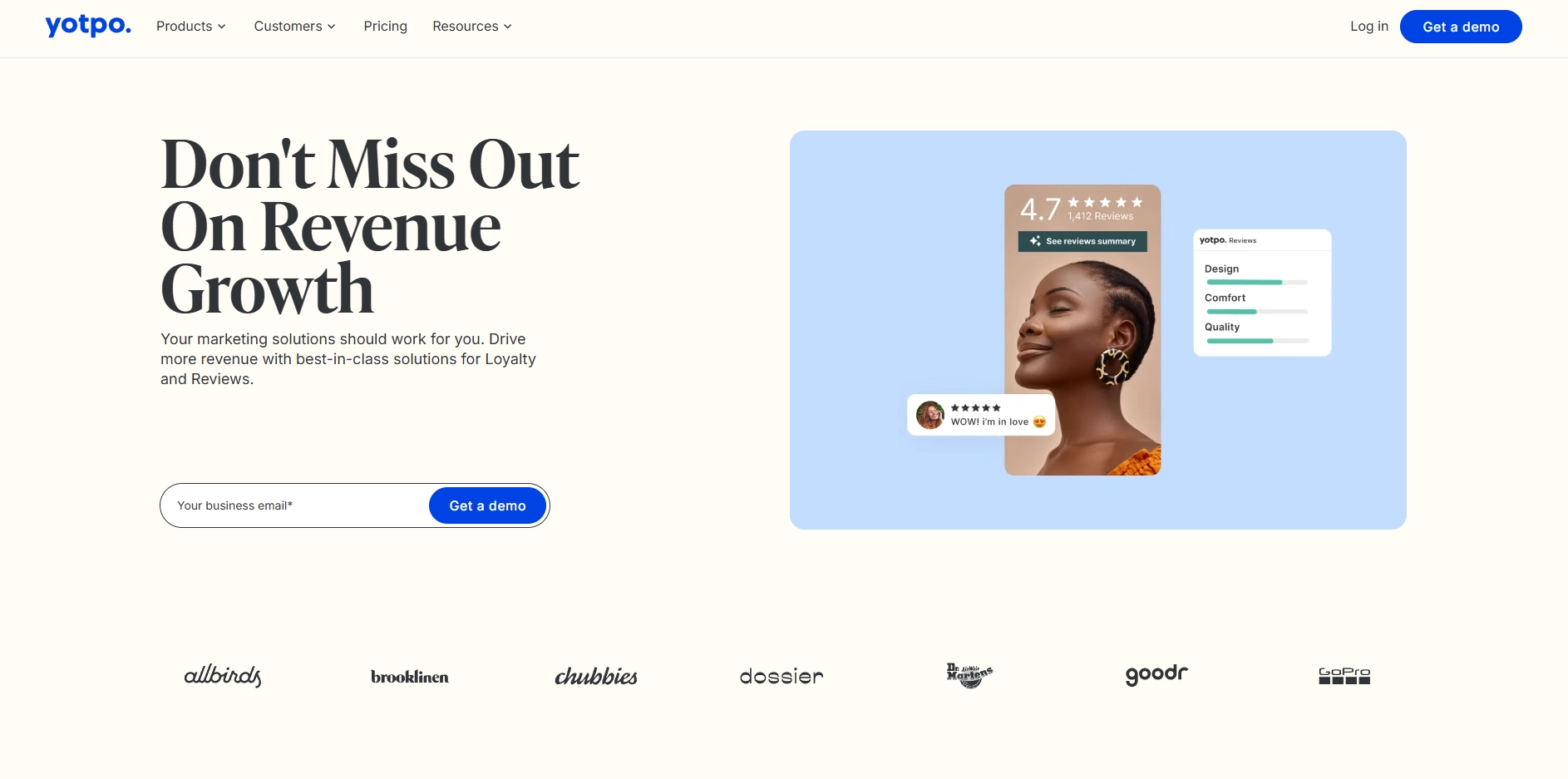
Yotpo is an all‑in‑one ecommerce marketing platform that combines referrals, loyalty, reviews, and customer engagement into a single suite. Its referral capabilities are especially useful for brands that want not just new customers, but social proof and user‑generated content linked to acquisition efforts. This platform is a good fit for mid‑sized to larger DTC and retail ecommerce brands with multi‑channel acquisition strategies.
Key Features of Yotpo:
- Referral and Loyalty Integration: Tie referral campaigns to your loyalty system so new customers earn rewards and stay engaged beyond the first purchase.
- Social Sharing Options: Make it easy for customers to share referral links via email, social platforms, and messaging, helping referrals spread naturally where your audience already engages.
- Reward‑Based Advocacy: Built‑in mechanics encourage sharing by rewarding both referrers and referred customers, increasing first‑order conversion rates.
- Analytics and Reporting: See referral participation, conversion rates, and acquisition performance alongside other engagement metrics (reviews, loyalty behavior) to improve strategy over time.
Pricing: Plans start at $79/month.
5. GrowSurf
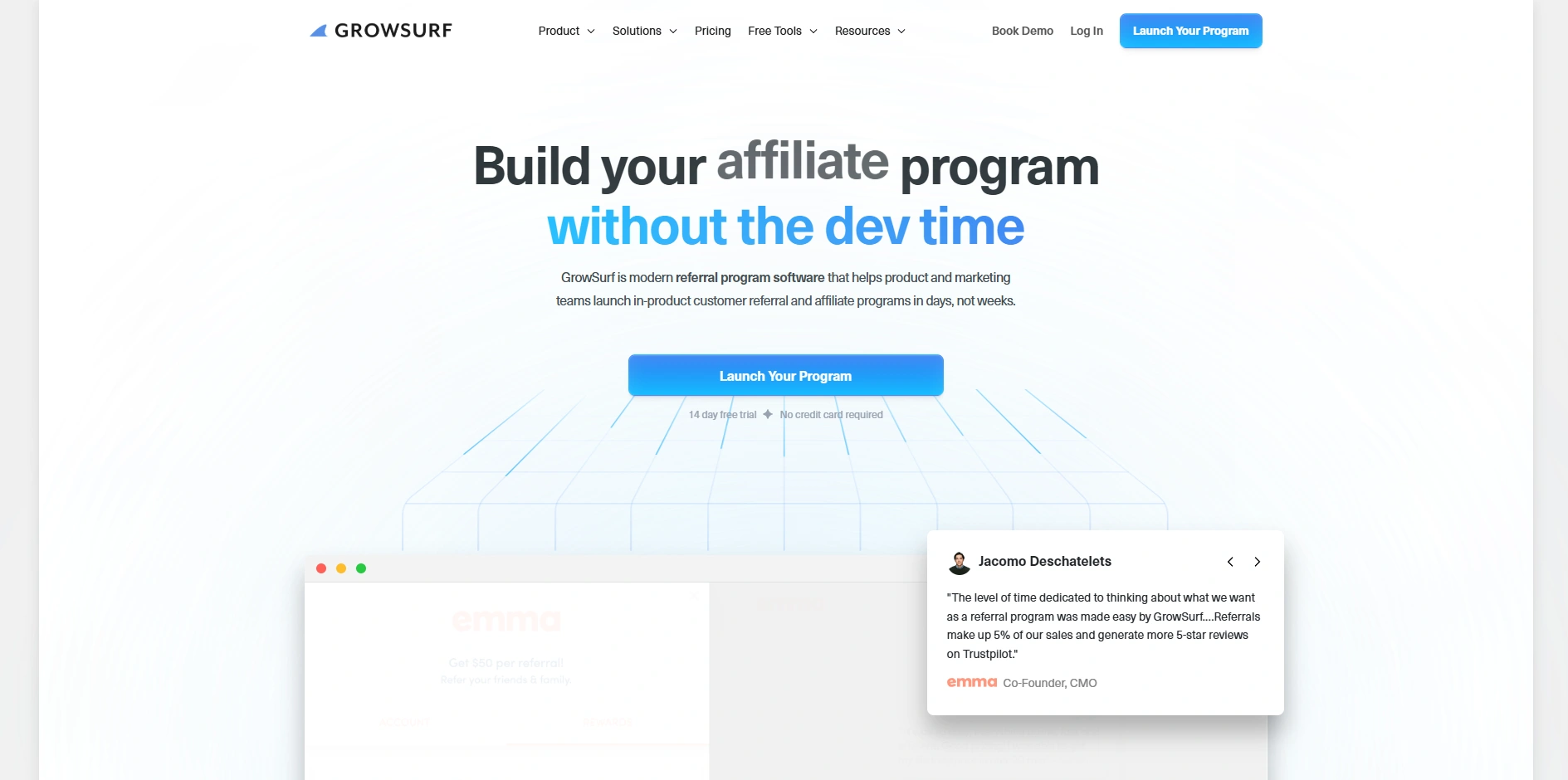
GrowSurf is a referral marketing platform built for SaaS and ecommerce brands that want a structured, trackable way to acquire customers through referrals. It’s especially useful for teams that care about accurate attribution and automated rewards without paying for broader loyalty or engagement features they don’t need.
Key Features of GrowSurf:
- Referral Link Generation: Create unique, trackable referral links so you can clearly see which referrers bring in new customers.
- Reward Automation: Automatically issue rewards only after specific acquisition conditions are met (e.g., first purchase, subscription signup).
- Attribution Tracking: Follow a referred user from the first link click all the way through conversion, giving you reliable data on which referrals actually turn into customers.
- Platform Integrations: Connect with tools like Stripe, HubSpot, and ecommerce platforms so referral data flows into your existing acquisition workflows.
Pricing: Plans start at $125 /mo
6. Tapfiliate
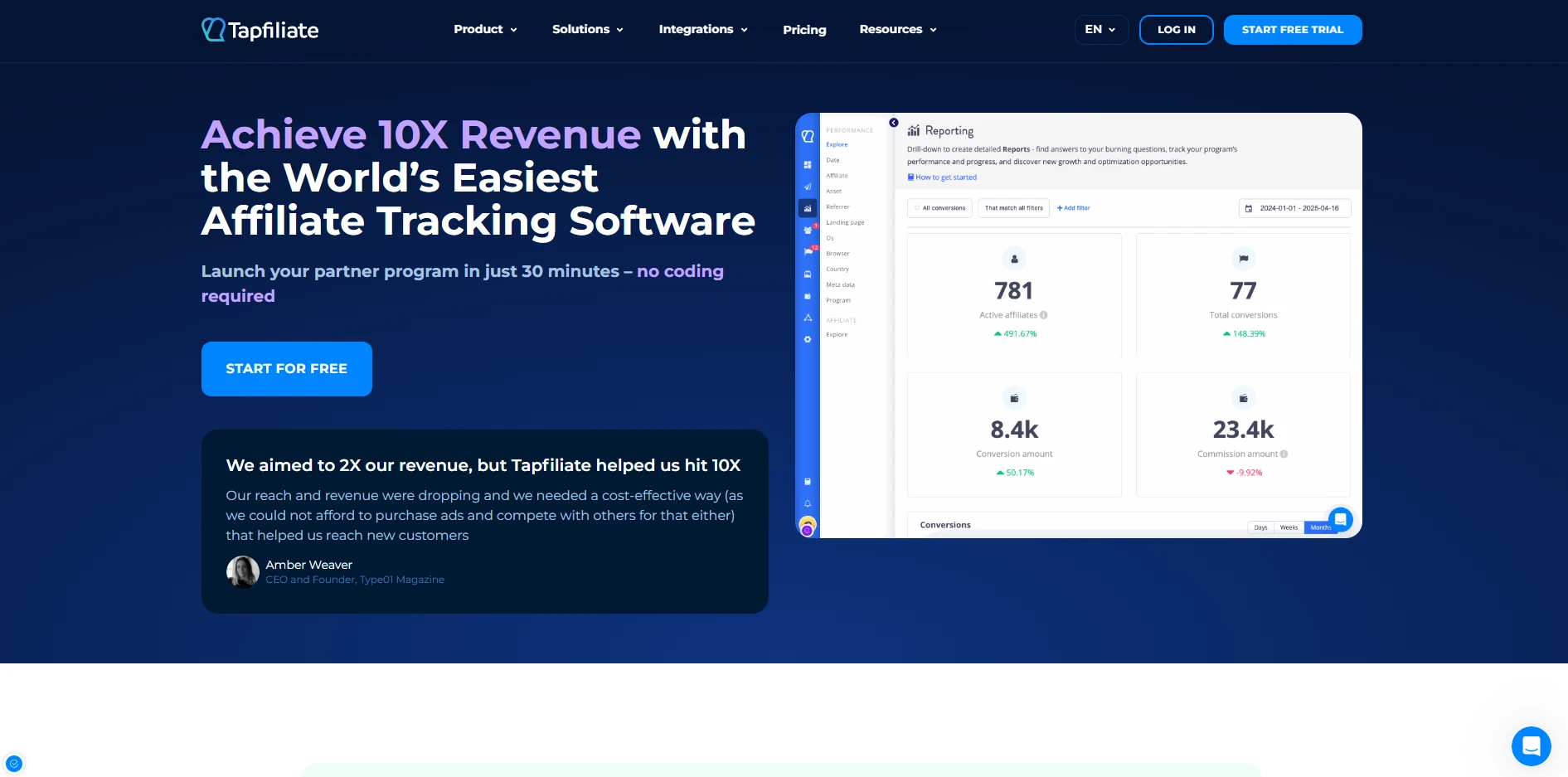
Tapfiliate is an affiliate and referral tracking platform that helps ecommerce and SaaS brands acquire customers through measurable partner and referral programs. It’s especially useful for growth teams that want accurate attribution, flexible reward logic, and clear performance data without mixing in unrelated loyalty or engagement features.
Key Features of Tapfiliate:
- Affiliate & Referral Tracking: Track both affiliate partners and customer referrals across all acquisition channels so you know exactly which sources bring in new customers.
- Commission Management: Set up percentage‑based or fixed rewards tied to actual conversions, making it easier to scale partner‑led acquisition.
- Multi‑Channel Attribution: Attribute referral and affiliate conversions across websites, checkout flows, and custom domains for accurate performance reporting.
- Platform Integrations: Connect with ecommerce platforms, payment tools, and marketing stacks so referral and partner acquisition data flows into your existing reporting.
Pricing: Plans start at $74/month with a 7-day free trial.
7. Referral Rock
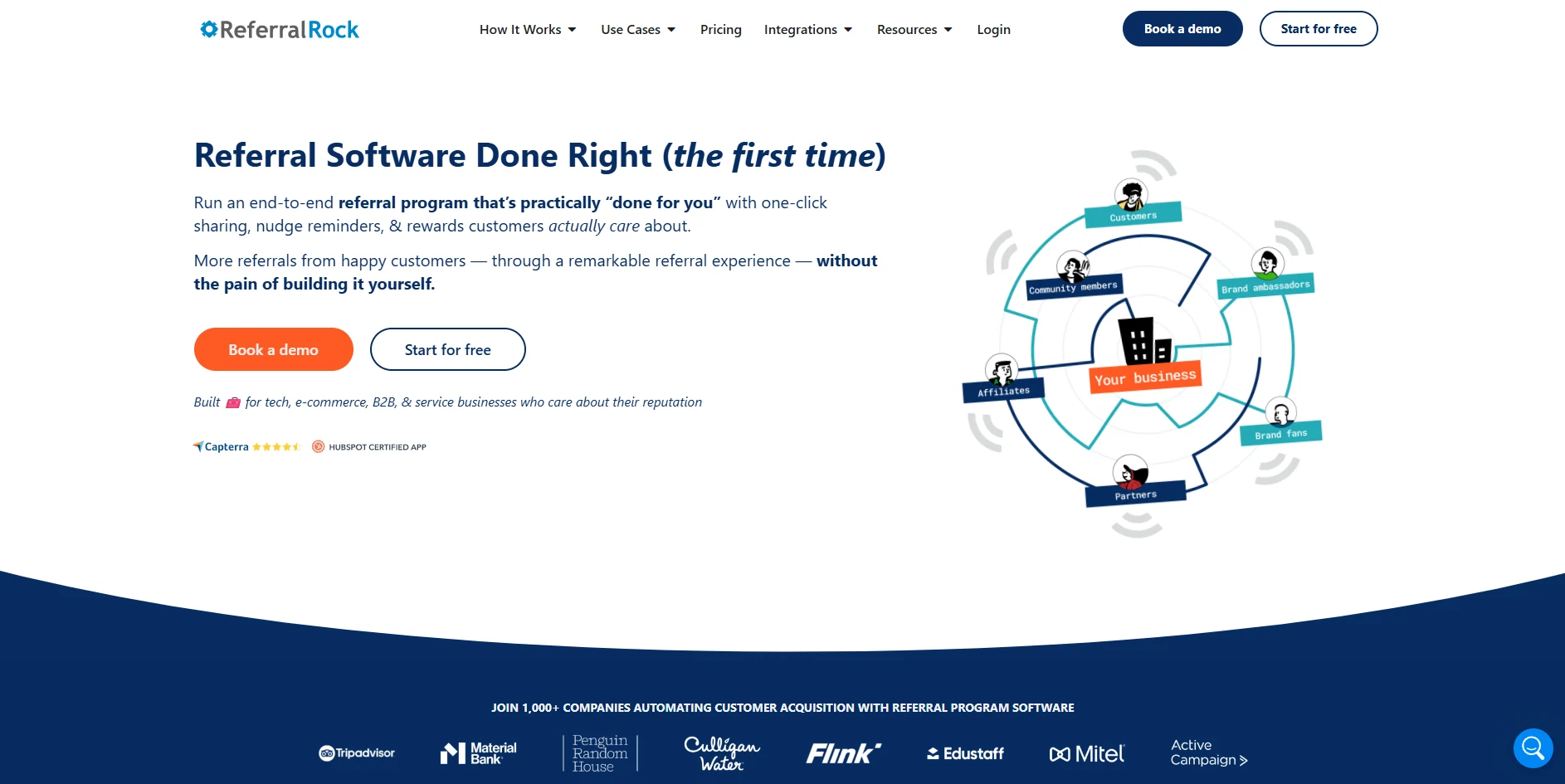
Referral Rock is a referral software platform designed for businesses that want to turn customers into a predictable acquisition engine. It’s ideal for brands looking to automate referrals, manage campaigns efficiently, and track results without complex setups. It is helpful, especially for small to mid-sized ecommerce and subscription businesses.
Key Features of Referral Rock:
- Referral Program Management: Launch and manage referral campaigns built specifically to acquire new, high-quality customers.
- Automated Reward Distribution: Issue rewards automatically after verified referral conversions, protecting your acquisition budget.
- Referral Tracking: Monitor who referred whom, track conversions, and see which advocates deliver the most value.
- Analytics Dashboard: Get program-level insights on participation, referral conversions, and acquisition ROI to optimize campaigns over time.
Pricing: Plans start at $175/month
8. Extole
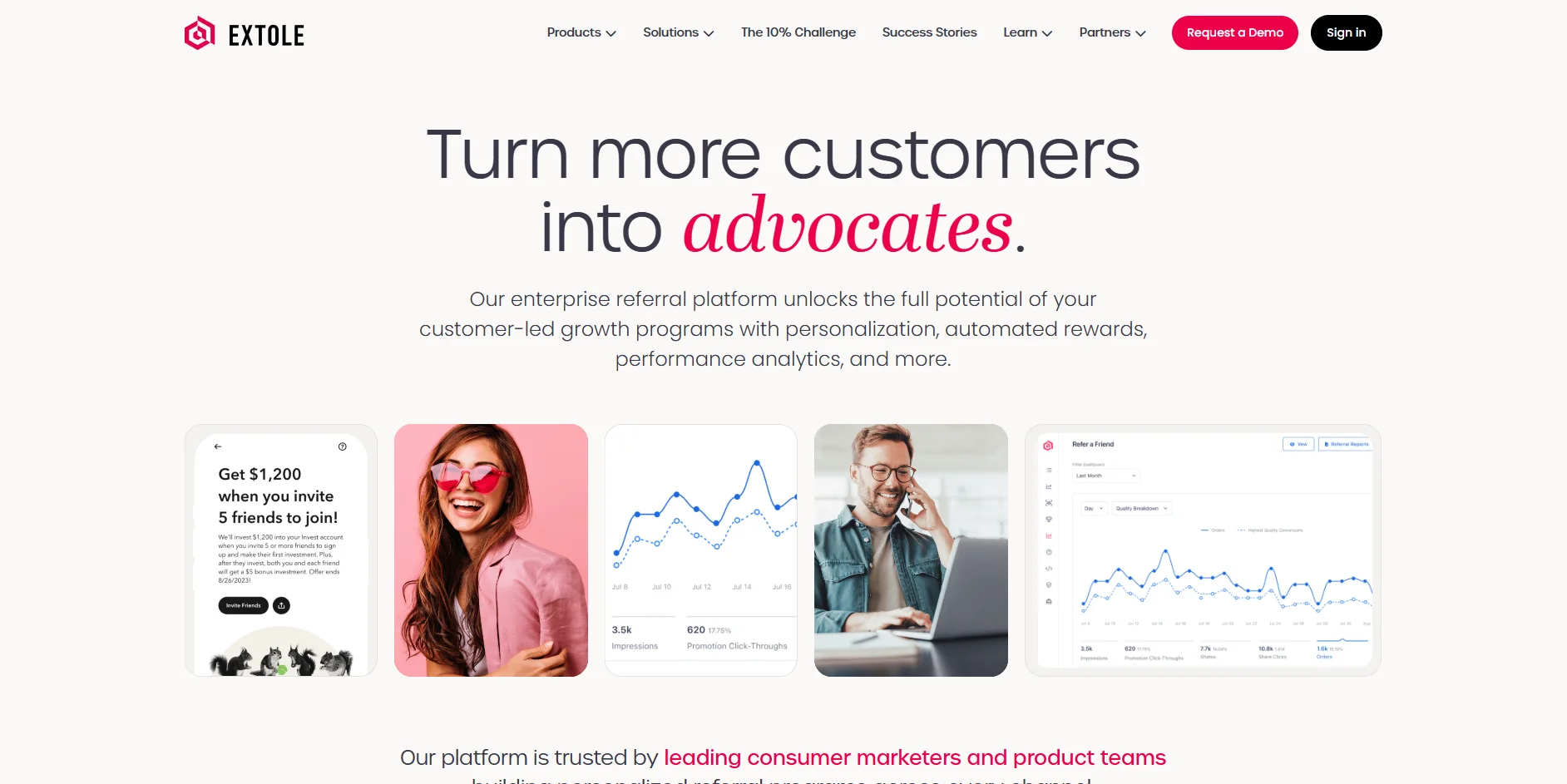
Extole is an enterprise referral and advocacy platform built for brands that want to acquire customers at scale through referral programs. It’s best for large ecommerce, SaaS, and enterprise teams that need advanced controls, multi-channel campaigns, and detailed analytics to maximize acquisition efficiency.
Key Features of Extole:
- Enterprise Referral Campaigns: Run high-volume referral campaigns across web, mobile, email, and apps with personalized flows.
- Fraud and Abuse Controls: Apply rules-based detection and reward logic to prevent low-quality or invalid referrals.
- Testing and Optimization: Experiment with offers, segments, and campaign elements to improve conversion performance.
- Advanced Reporting: Analyze referral-driven acquisition across advocates, segments, and channels to measure ROI.
Pricing: Custom pricing
Having reviewed the leading referral platforms, it’s equally important to explore how brands can activate these tools using acquisition-focused referral strategies.
Also Read: What Is a Repeat Buyer? 10 Strategies That Create Loyal Customers
6 Referral Ideas That Turn Customers Into Your Acquisition Channel
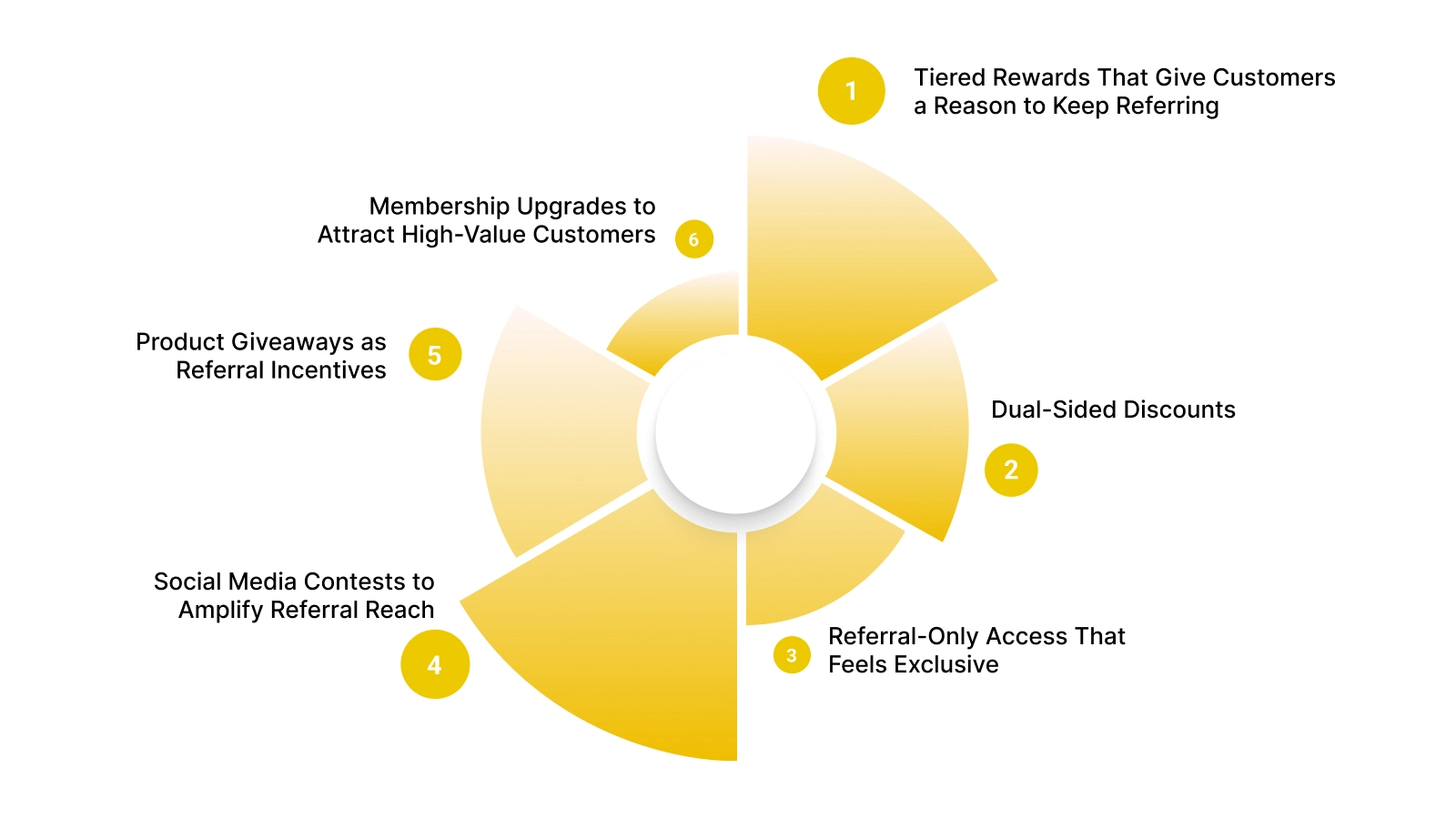
Referral strategies perform best when tailored to US customers’ shopping habits, digital behavior, and incentives. Below are actionable, US-centric approaches for ecommerce brands:
1. Tiered Rewards That Give Customers a Reason to Keep Referring
One-off rewards rarely build momentum. Tiered referrals work because they tap into progress and payoff. For example, a DTC apparel brand might offer $10 for the first successful referral, $25 after three, and a limited-edition product after five. The reward ladder keeps customers referring instead of stopping after one share.
2. Dual-Sided Discounts: A Win-Win for Customers and Referrers
Dual-sided referral incentives are extremely effective in the US market, where customers expect immediate benefits. A skincare DTC brand may provide $15 store credit to referrers and 20% off to referred friends, boosting both acquisition and first-order conversions.
3. Referral-Only Access That Feels Exclusive
Not every referral needs a coupon. Some brands drive higher intent by offering referral-only perks like early access to a product drop or a limited bundle available only through a referral link. This works especially well for electronics and high-consideration products where exclusivity matters.
4. Social Media Contests to Amplify Referral Reach
American consumers engage heavily on Instagram, TikTok, and Facebook. A home décor brand could run a referral challenge where each completed referral enters participants into a monthly $500 gift card giveaway, turning social shares into measurable acquisitions.
5. Product Giveaways as Referral Incentives
Physical giveaways work well for buyers seeking tangible value. For instance, a beauty brand could reward advocates with a deluxe sample kit once their friends complete their first purchase. This reduces CAC while showcasing top-selling products to new users.
6. Membership Upgrades to Attract High-Value Customers
For subscription or premium brands, referrals can unlock upgrades instead of discounts. A fitness platform might offer a free one-month premium upgrade when a referred friend signs up for an annual plan. This filters for high-intent customers and drives better long-term value.
Even the strongest referral ideas fail without execution. The next section breaks down how to structure, launch, and manage a referral program built specifically for consistent customer acquisition.
How to Set Up a Referral Program That Works for Customer Acquisition?
A referral program only drives real growth if it’s structured around measurable goals, strategic incentives, and multi-channel promotion. Here’s a step-by-step approach to building an acquisition-first program that delivers results for US ecommerce brands:

1. Defining Your Referral Program’s Goals and KPIs
Clearly define acquisition targets, such as new-customer conversions, referral-to-purchase rate, cost per referred acquisition, and advocate participation levels. Establish benchmarks for each metric to track progress and make data-driven adjustments that continuously improve program performance.
2. Choosing the Right Incentives to Attract Quality Referrals
Select rewards that motivate both advocates and new customers to complete purchases. Focus on incentives that balance cost-efficiency with appeal, ensuring that rewards encourage meaningful engagement and high-quality acquisition rather than superficial participation.
3. Promoting Your Referral Program Across Channels
Utilize multiple channels, including email, SMS, mobile apps, and social media, to drive program awareness. Ensure messaging is consistent, visually prominent, and strategically timed to reach customers when they are most likely to refer and convert new users.
4. Track Metrics for Successful Referral Programs
Continuously monitor key performance indicators such as participation rate, referral conversions, average order value of referred users, and retention of new customers. Use platform analytics to segment top advocates, identify high-performing channels, and optimize campaigns for scalable acquisition.
When goals, incentives, promotion, and tracking align, referral programs stop being side campaigns and become predictable, controllable acquisition systems built for long-term ecommerce growth.
Also Read: Loyalty CRM Integration Explained: Use Cases, Metrics, and Best Practices
Wrapping Up
Referral programs are a major part of customer acquisition in 2026, enabling ecommerce brands to attract high-intent buyers, lower acquisition costs, and increase repeat purchase rates. Programs that combine frictionless sharing, targeted incentives, and real-time performance tracking consistently outperform generic campaigns easily.
Nector encourages brands to implement these strategies seamlessly. Its automated workflows, CRM and ecommerce integrations, and customizable reward structures ensure referral campaigns are scalable, measurable, and consistently drive quality acquisitions. By turning customers into advocates, brands can maintain a steady pipeline of engaged new users without additional operational overhead.
Boost your acquisition strategy today by booking a demo with us and converting loyal customers into a growth engine.
FAQs
What makes a referral program effective for customer acquisition?
An effective referral program reduces friction, motivates advocates with meaningful rewards, tracks conversions accurately, and integrates with CRM and ecommerce systems. It consistently attracts high-quality, engaged new customers at lower acquisition costs.
How can I align my referral program with my business goals?
Define clear objectives, such as new-customer growth, repeat purchase rate, or LTV. Choose rewards, channels, and tracking metrics that directly support these goals, ensuring the program drives measurable business impact.
What are the common pitfalls to avoid in referral programs?
Avoid generic incentives, complex sharing processes, poor tracking, and over-reliance on low-quality traffic. Ensure rewards motivate real conversions and your program scales without increasing operational burden.
How do I measure the ROI of my referral program?
Track referral participation, conversion-to-purchase rates, CAC, and LTV of referred customers. Compare program costs against revenue generated to evaluate effectiveness and optimize for profitable, scalable acquisition.

Related Blogs



Start Building Customer Retention That Lasts