

.avif)
.avif)
Most customer loyalty marketing solutions look good on paper. Points are earned. Discounts are redeemed. Engagement metrics go up. Yet months later, customer lifetime value barely moves, and margins quietly take the hit.
That’s because many loyalty programs reward activity, not behavior. A discount might trigger a purchase, but it rarely changes how often customers return or how long they stay loyal. In fact, overusing incentives can train customers to wait for deals, shrinking long-term value instead of growing it.
Real CLV growth happens only when loyalty systems influence behavior over time, repeat frequency, progression, and commitment, not one-off redemptions.
In this guide, we’ll break down customer loyalty marketing solutions based on the value they create across a customer’s lifetime.
Quick Take:
- Behavior beats generosity – Loyalty programs grow CLV when they guide repeat actions, not when they offer bigger rewards.
- Tiers create momentum – Visible progress and status drive more repeat purchases than flat discounts.
- Points need discipline – Clear value and easy redemption increase frequency without eroding margins.
- Discounts weaken loyalty – Cashback-heavy programs boost short-term sales but reduce long-term value.
Execution matters most – Structured, automated loyalty marketing solutions compound CLV over time.
What Does “Best Value” Mean in a Loyalty Program?
Picture this: two customers place the same first order. One gets a flat 15% discount code. The other sees a progress bar showing they’re one purchase away from unlocking better rewards. Weeks later, only one of them comes back. The difference isn’t generosity, it’s how the value was structured.
“Best value” in customer loyalty marketing solutions isn’t about giving more. It’s about creating reasons to return.
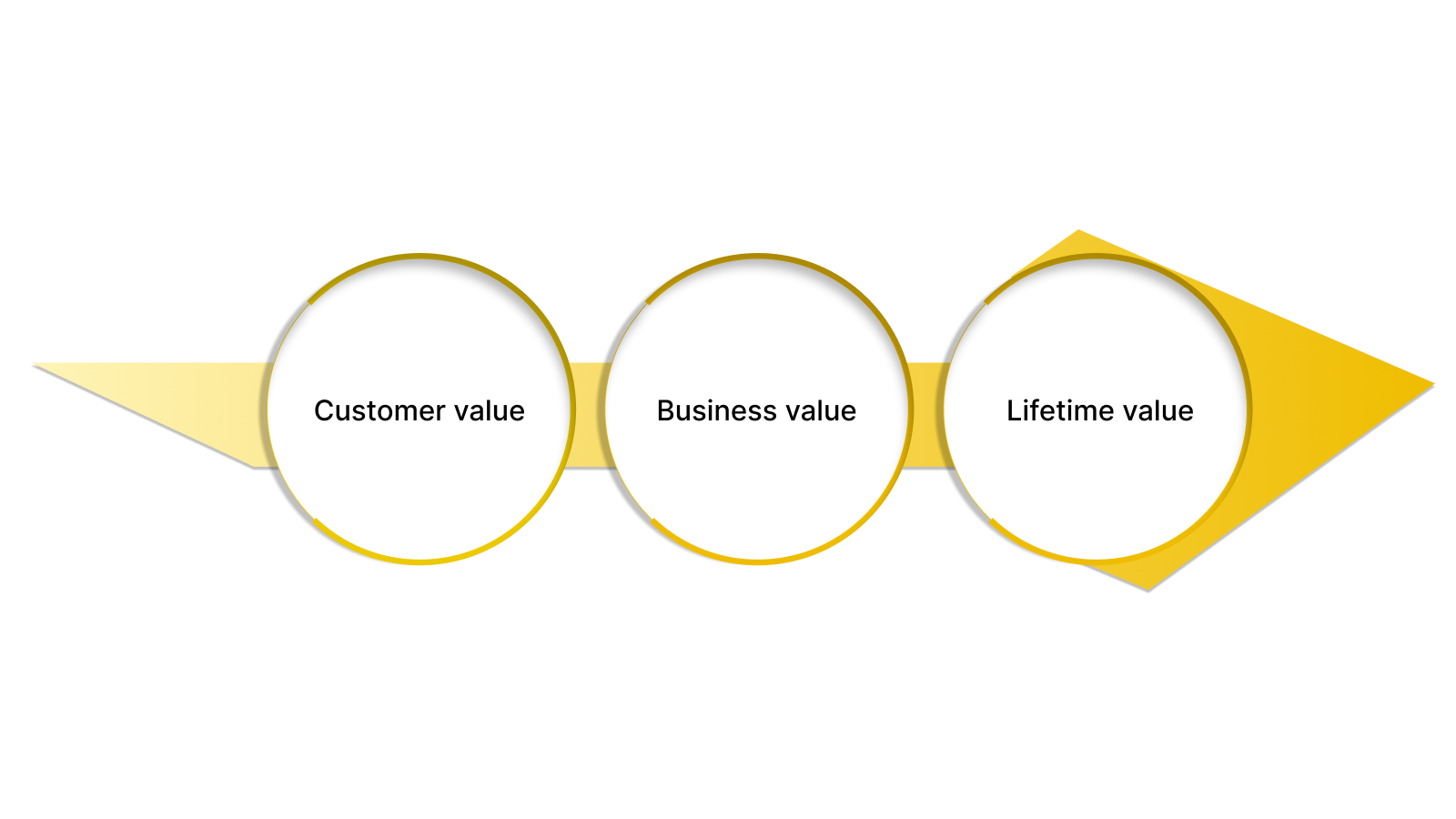
Here’s how to evaluate value correctly, through three lenses that actually matter.
1. Customer value
Customers judge loyalty by fairness and momentum. They want to feel that effort is rewarded, progress is visible, and benefits aren’t arbitrary. Programs that show clear progress or status outperform those that rely on surprise discounts, because customers understand what they’re working toward.
2. Business value
From your side, value shows up as repeat rate and purchase frequency—without margin erosion. Loyalty works when rewards nudge the next action, not when they simply reduce today’s price. Sustainable programs protect margins while still influencing behavior.
3. Lifetime value
True value compounds. A strong program increases how often customers return and how long they stay engaged. One-time redemptions don’t move CLV. Repeatable, behavior-led incentives do.
Once value is defined correctly, the next step is understanding how loyalty programs actually move customer lifetime value in practice.
How Loyalty Programs Actually Increase Customer Lifetime Value
A customer buys once, likes the product, and disappears. You bring them back with a discount, but now they only return when there’s an offer. The store looks “busy,” yet customer lifetime value stays flat because nothing about the customer’s behavior changed, only the price did.
Customer loyalty marketing solutions increase CLV only when they reshape repeat behavior over time. The mechanics are simple, but the execution needs to be deliberate.
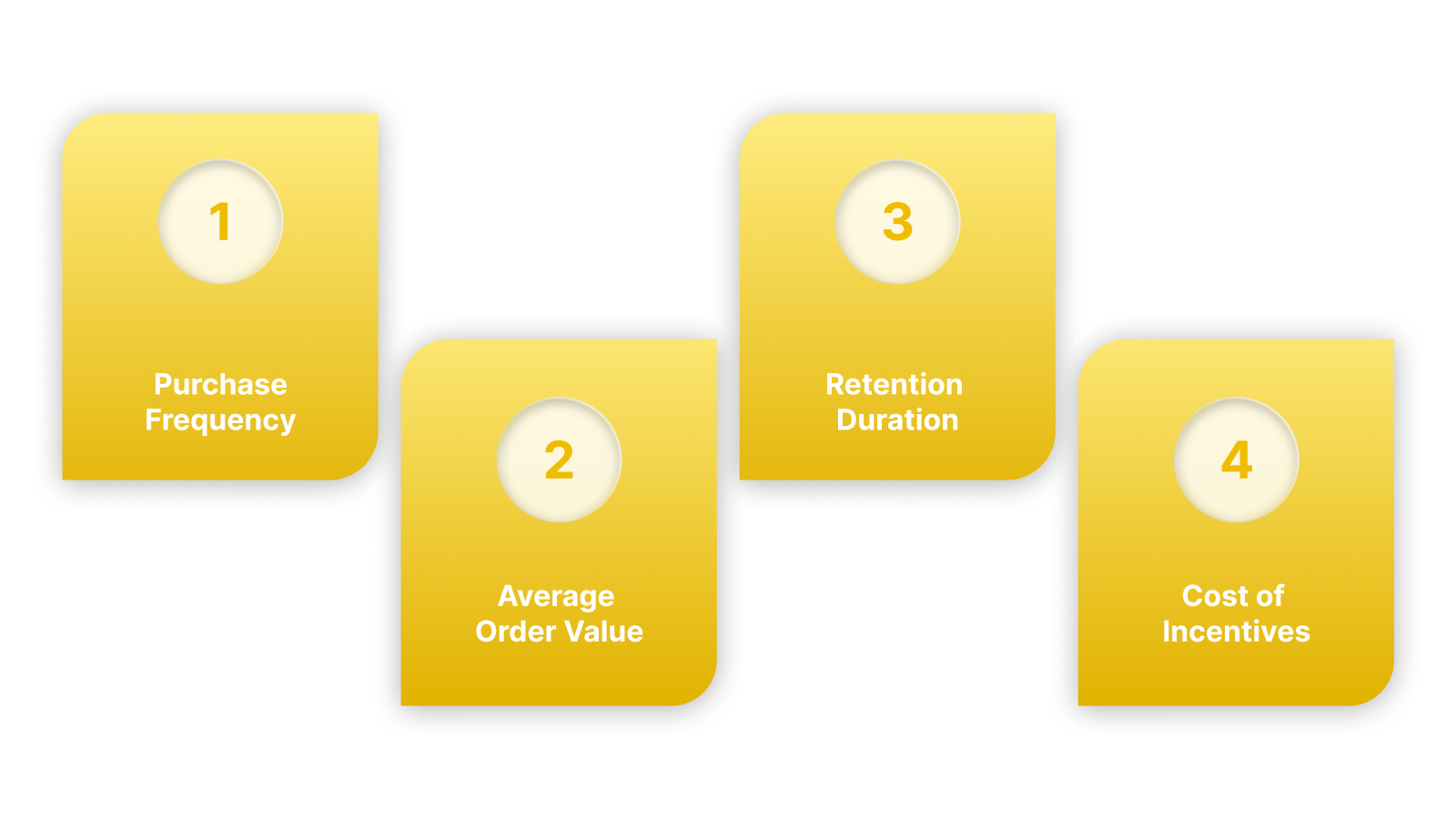
1) Purchase frequency
Frequency is the fastest way to grow CLV because it compounds. If you can shorten the gap between purchases, you increase revenue without increasing acquisition spend.
How loyalty increases frequency
- Second-purchase acceleration: A structured nudge after order #1 (points reminder + clear next reward) reduces “one-and-done” behavior.
- Habit loops: Reward actions that occur between purchases (reviews, referrals, profile completion) so customers stay connected even when they’re not shopping.
- Inactivity windows: Trigger incentives before the customer goes cold (e.g., “you haven’t reordered in 30 days” beats “we miss you after 90”).
- Reorder timing: In replenishment categories, frequency improves when loyalty aligns with the product lifecycle (skincare, supplements, personal care).
What to avoid: Blanket coupons that train customers to wait for discounts instead of returning naturally.
2) Average order value (AOV)
AOV is the lever most brands chase with discounts, often the wrong way. The goal is not “spend more because it’s cheaper,” but “spend more because the next step feels worth it.”
How loyalty lifts AOV without margin damage
- Spend-to-unlock thresholds: “Spend $15 more to unlock free shipping or a reward” works because it’s goal-based, not discount-based.
- Tier multipliers: Higher tiers earn faster points, nudging bigger baskets without needing a one-time coupon.
- Smart reward choices: Offer rewards that protect margins, store credit, free gifts with high perceived value, or member-only bundles.
- Progress visibility: A visible milestone (“You’re 80% to Gold”) pushes customers to top up carts to close the gap.
What to avoid: Automatic percentage discounts on every order. They lift AOV temporarily but reduce contribution margin long-term.
3) Retention duration
This is where loyalty becomes a system, not a tactic. Retention duration increases when customers feel they’re building something with your brand: status, perks, progress, identity, not just collecting points.
How loyalty extends retention duration
- Status and identity: Tier names, VIP perks, and early access create belonging, not just savings.
- Switching cost: Leaving means losing progress toward the next tier or reward, which is a stronger deterrent than “10% off today.”
- Member-only experiences: Early launches, limited drops, or priority support keep customers engaged beyond purchases.
- Ongoing reasons to return: Points expiry, tier renewal windows, and milestone reminders create steady touchpoints that don’t feel like spam.
What to avoid: Hidden programs where customers don’t know what they’ve earned or what’s next. If they can’t see the value, they won’t stay.
4) Cost of incentives
CLV isn’t “revenue per customer.” It’s profit over time. Loyalty increases CLV only when reward cost is controlled and tied to future behavior, not just past spend.
How to keep incentives sustainable
- Reward future actions: Prioritize “next order” triggers, tier progression, and review/referral loops over retroactive rewards.
- Use expiry intentionally: Expiry isn’t a trick, it’s a behavior driver. It creates urgency and brings customers back before churn.
- Delay rewards when needed: If returns/cancellations are common, delayed reward allocation protects you from paying out prematurely.
- Segment reward generosity: Your best customers don’t need constant discounts; they need recognition and clarity. Save higher-value rewards for churn-risk or milestone moments.
What to avoid: Same reward rules for everyone. That’s how incentive costs balloon while CLV stays unchanged.
Also Read: 2025 DTC Trends: How Shopify Brands Can Stay Ahead with Loyalty and Retention
With the mechanics clear, the next step is comparing different loyalty program types by how much they actually move customer lifetime value.
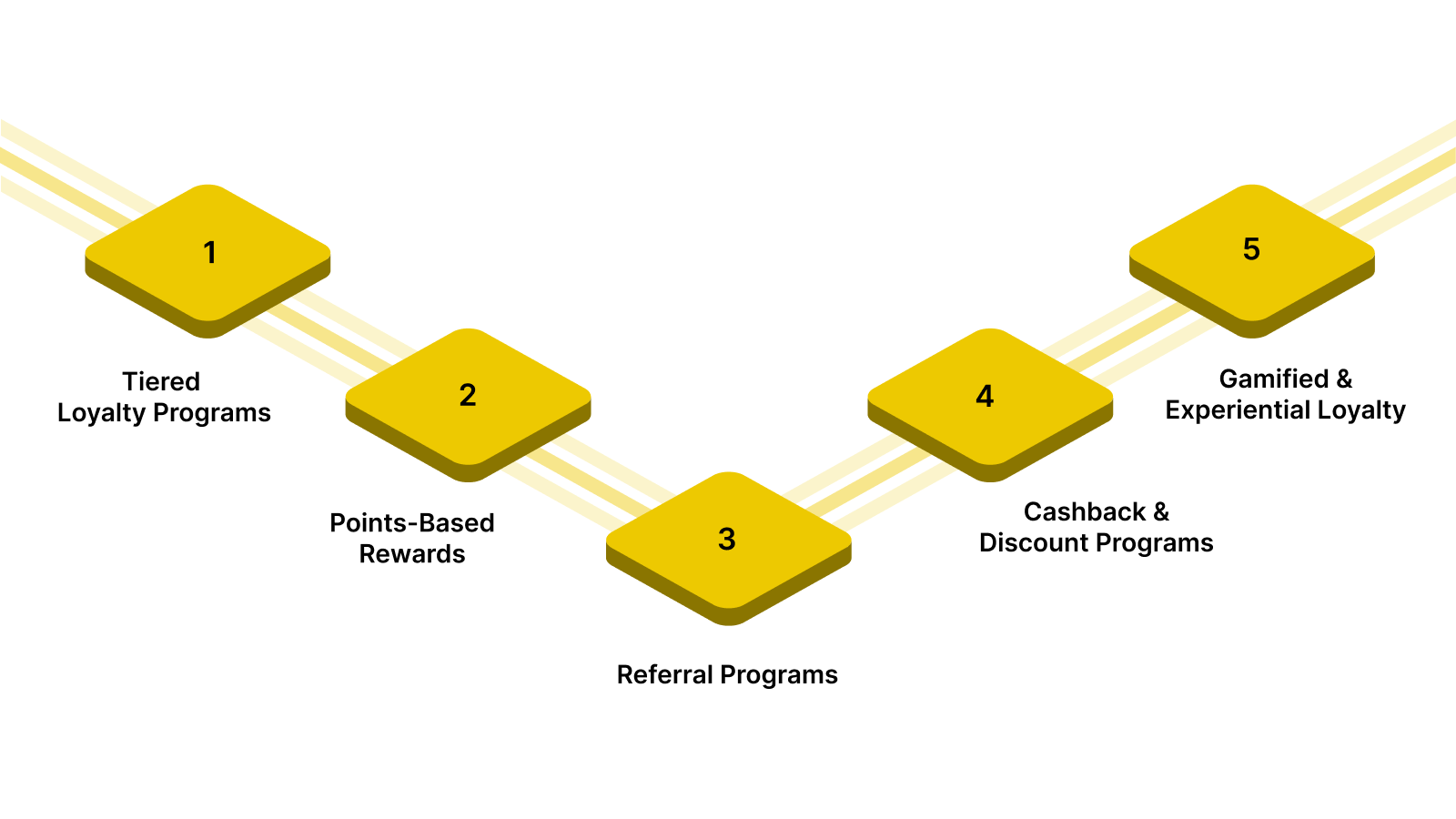
Loyalty Program Types Ranked by CLV Impact
Not all loyalty programs are built to grow customer lifetime value. Some create activity, others create dependency on discounts, and only a few reliably change long-term buying behavior. The difference comes down to what the program is designed to optimize: short-term engagement or sustained repeat value.
In this section, we’ll rank common loyalty program types based on their real CLV impact.
The ranking isn’t about popularity or ease of setup. It’s based on how effectively each model increases purchase frequency, extends retention duration, and controls incentive costs over time.
Tiered Loyalty Programs (Highest CLV Impact)
Tiered loyalty programs work because they don’t just reward purchases—they create momentum. Customers aren’t buying for points alone; they’re buying to move forward.
Think of it as replacing “What do I get today?” with “How close am I to the next level?”
Why tiers pull customers back (again and again)
- Progress is visible: Seeing “80% to Gold” is more motivating than earning abstract points
- Status sticks: Once customers reach a tier, leaving feels like losing something earned
- Behavior changes naturally: Customers don’t wait for discounts—they buy to advance
This is why tiers shorten the gap between purchases without constant promotions.
When tiers beat flat rewards (quick check)
Tiered programs outperform simple points when:
- Customers buy more than once per year
- You want repeat behavior, not just redemptions
- Margins can’t support frequent discounts
Flat rewards answer “What did I earn?”
Tiers answer “What’s next?”
That shift is what compounds CLV.
Where most tiered programs go wrong
- Too many tiers with fuzzy benefits
- Progress that’s hidden or hard to track
- Rewards that feel symbolic instead of meaningful
- Tiers based only on spend, not engagement
Points-Based Rewards (Moderate CLV Impact)
Points-based programs work when the goal is habit formation, not loyalty theater. They’re easy to understand, quick to launch, and effective at nudging customers back, if they’re designed with discipline.
Where points work best
- High-frequency categories: consumables, beauty, wellness, food
- Clear earn logic: spend → points → visible value
- Short gaps between purchases: points feel relevant, not forgotten
When customers can earn and redeem within a few orders, points create rhythm.
When points quietly lose power
- Points feel abstract with no clear cash value
- Redemption thresholds are too high
- Rewards don’t scale with loyalty or spend
- Customers earn points but never use them
If customers check out without thinking about their balance, the system stops influencing behavior.
Why expiration and redemption rules matter more than points
Expiration isn’t about pressure, it’s about memory.
- Soft expiry brings customers back before churn sets in
- Clear redemption paths reduce “I’ll use it later” behavior
- Low-friction redemption turns points into action, not liability
Referral Programs (CLV Multiplier, Not a Core Driver)
Referral programs don’t build lifetime value on their own, but they amplify it when loyalty already exists. Customers don’t refer because of incentives first. They refer because they trust the brand enough to attach their name to it.
That’s why referrals work best as a second layer, not a foundation.
Where referrals create real CLV lift
- Higher-quality customers: referred users convert and repeat more
- Lower acquisition cost: rewards cost less than paid ads
- Faster trust curve: social proof replaces hesitation
Referrals don’t increase frequency, they increase the value of the customers you already retain.
When referral programs stall
- Customers are asked to refer before experiencing value
- Rewards feel one-sided or unclear
- Referral status is invisible after sharing
- Delays between referral and reward kill momentum
If the loop isn’t tight, referrals turn into forgotten links.
Designing referrals that actually compound CLV
- Trigger referrals after satisfaction signals (second order, review, tier unlock)
- Reward both sides immediately when possible
- Keep progress visible (“Your friend is one purchase away”)
- Tie rewards to future purchases, not one-time payouts
Cashback & Discount Programs (Short-Term, Low CLV)
Cashback and discount-driven loyalty programs feel effective because they generate instant response. The problem is that they train customers to wait, not return. Over time, purchases become conditional on incentives instead of habit.
These programs lift revenue now, but rarely extend lifetime value.
Where cashback works
- Price-sensitive audiences with low brand attachment
- Clearance, overstock, or seasonal inventory
- First-order conversion or reactivation bursts
Used selectively, cashback can unblock decisions. Used continuously, it resets price expectations.
Why cashback weakens CLV over time
- Customers anchor on discounted prices
- Repeat purchases drop without incentives
- Margins erode while frequency stays flat
- Loyalty becomes transactional, not behavioral
Once customers expect cash back, removing it feels like a loss—even if value stays the same.
Gamified & Experiential Loyalty (CLV Accelerator)
Gamified and experiential programs work because they reward participation, not just spending. Instead of chasing discounts, customers chase progress, access, or recognition.
When done right, these programs strengthen emotional loyalty, the hardest CLV lever to replicate.
Why experiential rewards change behavior
- Customers engage more often, even without buying
- Status and exclusivity replace price sensitivity
- Non-monetary rewards protect margins
- Loyalty feels earned, not bought
Progress bars, badges, early access, and VIP moments create stickiness that discounts never do.
When gamification actually boosts CLV
- Combined with tiers or points (not standalone)
- Rewards unlock future value, not instant discounts
- Experiences feel scarce or earned
- Progress is visible and continuously reinforced
Also Read: Perks Loyalty Program: A Complete Guide for E-Commerce Brands
With the impact of each loyalty model clear, the focus now shifts to how you design a program that grows lifetime value without quietly eroding margins.
Implementing a High-CLV Loyalty Program Without Margin Erosion
You launch a loyalty program to increase repeat purchases. Orders go up, but so do discounts, redemptions, and support tickets. Three months in, revenue looks fine, but margins are thinner, and customers now wait for rewards before buying. The program worked, just not the way you intended.
This happens when loyalty is designed around giving instead of guiding behavior.
A high-CLV loyalty program doesn’t rely on bigger rewards. It relies on timing, visibility, and structure. Below is a practical way to implement one without turning loyalty into a cost center.
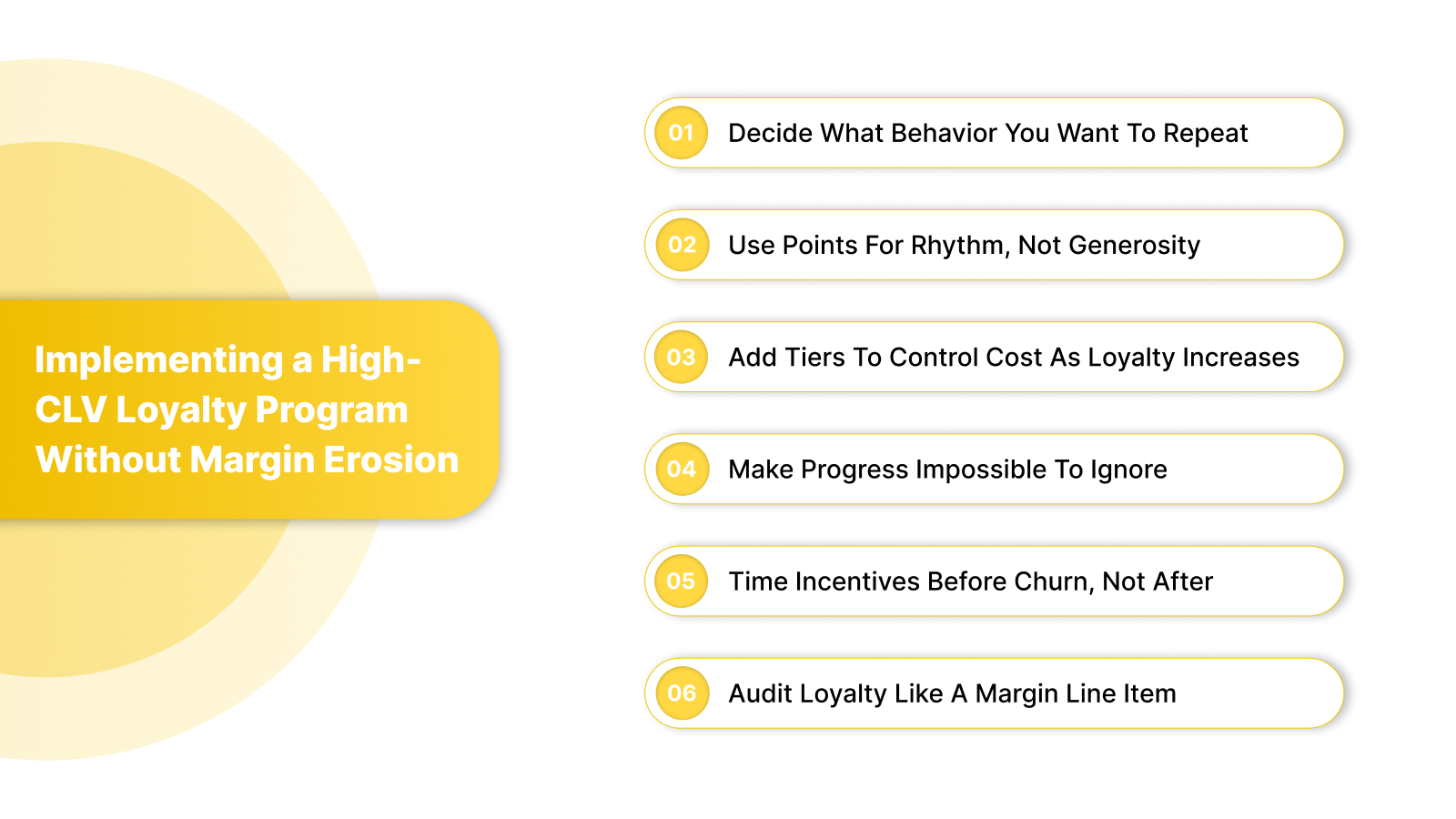
Step 1: Decide what behavior you want to repeat
Before setting rewards, define the action you want more of.
- Second purchase within 30–45 days
- Higher purchase frequency, not higher discounts
- Engagement signals (reviews, referrals, account creation)
If a reward doesn’t move future behavior, it doesn’t belong in the program.
Step 2: Use points for rhythm, not generosity
Points should create a steady buying cadence, not a race to redemption.
- Keep earn rates predictable
- Set redemption thresholds customers can reach in 2–3 orders
- Avoid one-order “cash out” loops
Points work best when they shorten the time to the next purchase.
Step 3: Add tiers to control cost as loyalty increases
Tiers let you reward your best customers without over-incentivizing everyone.
- Entry tier: basic earn rate, visible progress
- Mid tiers: better value, not bigger discounts
- Top tier: access, early drops, priority—not price cuts
This shifts rewards toward customers who already protect your margins.
Step 4: Make progress impossible to ignore
If customers can’t see progress, they won’t chase it.
- Show tier progress on site and in emails
- Surface points at checkout and post-purchase
- Trigger nudges at 70–90% completion, not after inactivity
Visibility reduces the need for blanket promotions.
Step 5: Time incentives before churn, not after
The cheapest retention moment is before the customer disengages.
- Nudge before points expire
- Reward just before a second-order drop-off window
- Use limited-time bonuses to create urgency without permanent discounts
Preventing churn costs less than reversing it.
Step 6: Audit loyalty like a margin line item
Track loyalty the same way you track discounts.
If loyalty increases frequency while holding margin steady, it’s doing its job.
Once the structure is clear, the final challenge is running these loyalty mechanics consistently without adding operational overhead.
How Nector Helps You Run a High-CLV Loyalty Program in Practice
High-CLV loyalty programs often fail not because the strategy is wrong, but because execution breaks at scale. Points don’t sync across tools. Tier progress isn’t visible everywhere. Rewards get delayed. Teams end up managing loyalty manually, or not at all.
Nector is built to remove that friction by turning loyalty into a connected, automated system rather than a set of disconnected features.
Nector supports high-CLV loyalty execution through three core layers:
What this means in day-to-day operations
- Loyalty programs that stay in sync across ecommerce, customer profiles, and messaging tools
- Real-time loyalty events (points earned, tier progress, redemptions) that power segmentation and automation
- Referral and review workflows that trigger automatically after purchases, not manual follow-ups
- Tier progress and reward visibility that customers actually understand and respond to
- Analytics that show how loyalty impacts repeat rate, redemption behavior, and revenue
- Integrations with ecommerce, CRM, messaging, and analytics tools from a single dashboard
Instead of asking your team to remember when to nudge, reward, or follow up, Nector makes those decisions event-driven and consistent.
Conclusion
Customer lifetime value doesn’t grow just because customer loyalty marketing solutions exist. It grows when those solutions consistently shape repeat behavior over time, so customers understand what they’re working toward and why staying loyal actually pays off.
The brands that win on CLV aren’t the ones offering the biggest rewards. They’re the ones running loyalty as a system: structured, visible, and timed to customer behavior rather than promotions. When loyalty execution breaks, value leaks through discounts, missed follow-ups, and forgotten progress.
Nector helps close that gap by turning loyalty into an automated, connected layer across points, tiers, referrals, and reviews.
If you’re looking to build a loyalty program that drives repeat purchases without sacrificing margins, book a demo with Nector and see how high-CLV loyalty runs in practice.
FAQs
How do customer loyalty marketing solutions actually increase customer lifetime value?
Customer loyalty marketing solutions increase lifetime value by changing repeat behavior over time—shortening the gap between purchases, increasing frequency, and reducing dependence on discounts instead of just driving one-off engagement.
When do customer loyalty marketing solutions start showing real results?
Most brands see early signals like faster second purchases within 30–60 days. Measurable CLV growth usually appears after consistent execution over 3–6 months, not from short-term campaigns.
Can customer loyalty marketing solutions hurt margins if used incorrectly?
Yes. Solutions built around aggressive discounts or easy redemptions often spike short-term revenue but erode margins and train customers to wait for incentives instead of buying naturally.
What should you measure to know if your loyalty marketing solution is working?
Beyond redemptions, track repeat purchase rate, time between orders, tier progression, and CLV by segment. If customers return sooner without deeper discounts, the solution is doing its job.
Are customer loyalty marketing solutions only useful for large or mature brands?
No. Even early-stage brands benefit if the solution is structured correctly. Clear progress, visible rewards, and behavior-based incentives matter more than program complexity or company size.



%201.webp)

Start Building Customer Retention That Lasts