






.avif)
.avif)
Acquiring a new customer can cost your brand five times more than keeping an existing one. As a founder, without a clear reason for customers to return and a structured way for them to get loyalty points, they often leave after one purchase, trapping you in a costly acquisition cycle.
You can break this cycle by strategically rewarding every interaction, not just the checkout. By designing a clear program for how to get loyalty points, you turn rewards into a powerful growth currency.
This guide provides the frameworks and automated workflows you need to build a program that scales your retention, moving from transactional sales to a community of loyal advocates who drive predictable revenue.
Quick Look
- Incentivize actions beyond the checkout page to build a community and increase your overall brand visibility on various social media platforms.
- Acquiring a new customer can cost your brand five times more than keeping an existing one.
- Use VIP multipliers to reward your most frequent and loyal shoppers with higher earning potential compared to your standard customer base.
- Assign clear monetary values to points to avoid confusing your customers and ensure they understand the exact worth of their rewards.
- Automate review requests to build social proof while rewarding brand engagement and helping your store rank higher in search engine results.
- Track your redemption rates to ensure your rewards actually drive sales rather than just sitting in a customer’s inactive digital wallet.
Why Earning Loyalty Points Matters for Your Business
Building a points system is not just about giving away discounts but rather creating a sustainable environment where customers feel valued. Most ecommerce brands focus solely on acquisition while ignoring the massive revenue potential hidden within their current customer base and past buyers.
You must understand these core reasons why building a point-based system is critical for your modern ecommerce growth strategy:
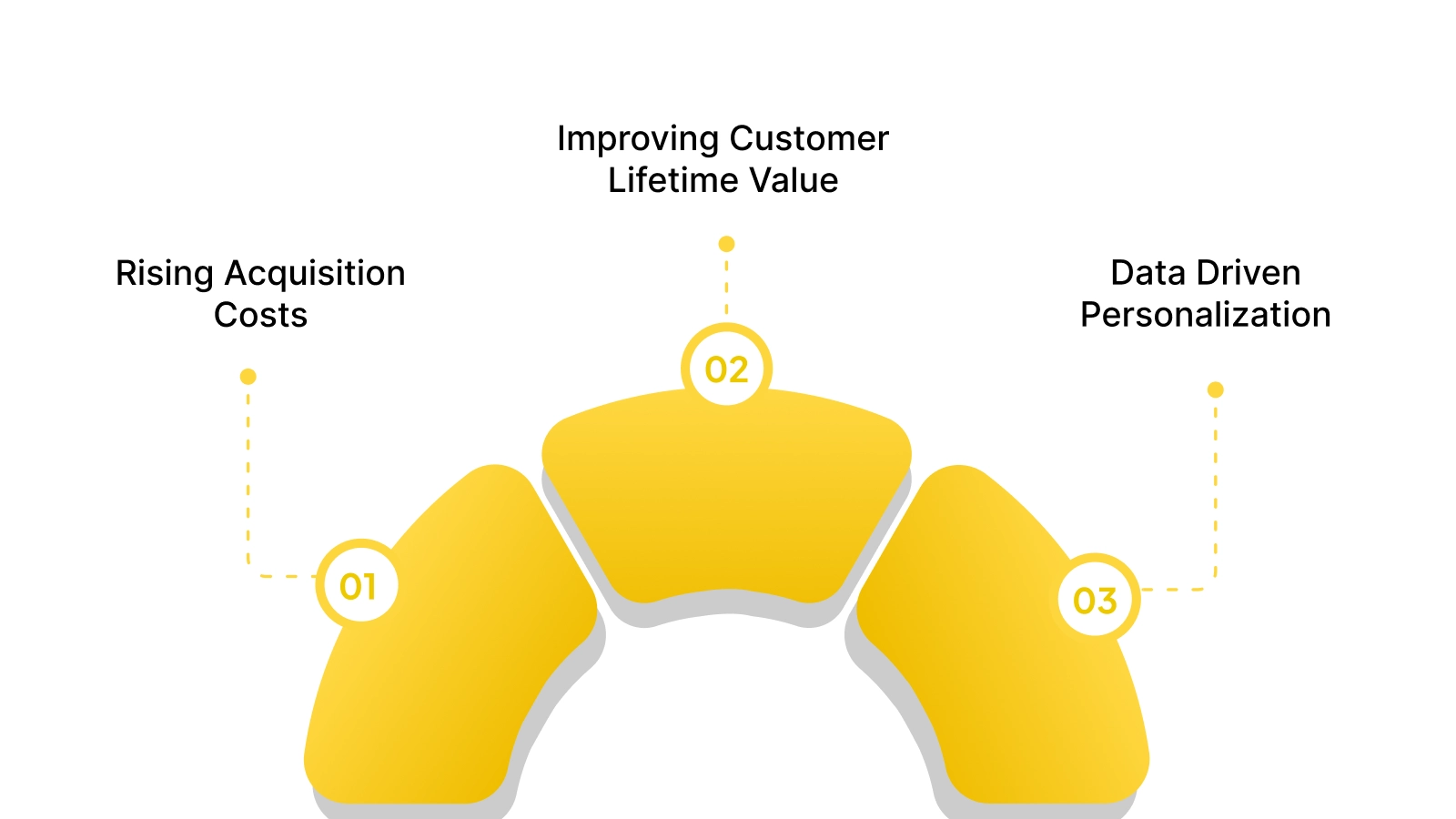
1. Rising Acquisition Costs
You cannot rely on expensive social media ads alone when your current customers can provide a much higher return on investment. This is especially true as 71% of consumers now expect personalized interactions, and 76% become frustrated when companies fail to deliver them. Generic marketing won't cut it.
2. Improving Customer Lifetime Value
When you provide clear paths for earning rewards, you encourage customers to choose your brand over competitors for their next scheduled purchase. Increasing your retention rate by just five percent can lead to a profit increase of over twenty-five percent for your business.
3. Data Driven Personalization
Point systems allow you to track specific customer behaviors and preferences, which helps you create highly targeted marketing campaigns for different segments. You can use these insights to offer rewards that your customers actually want instead of guessing what might drive their next order.
Implementing a diverse range of earning activities will transform your store from a one-time shop into a destination that customers visit frequently.

Also read: Powerful Customer Retention Strategies You Need to Know
How to Get Loyalty Points: 7 Easy Ways for Your Customers
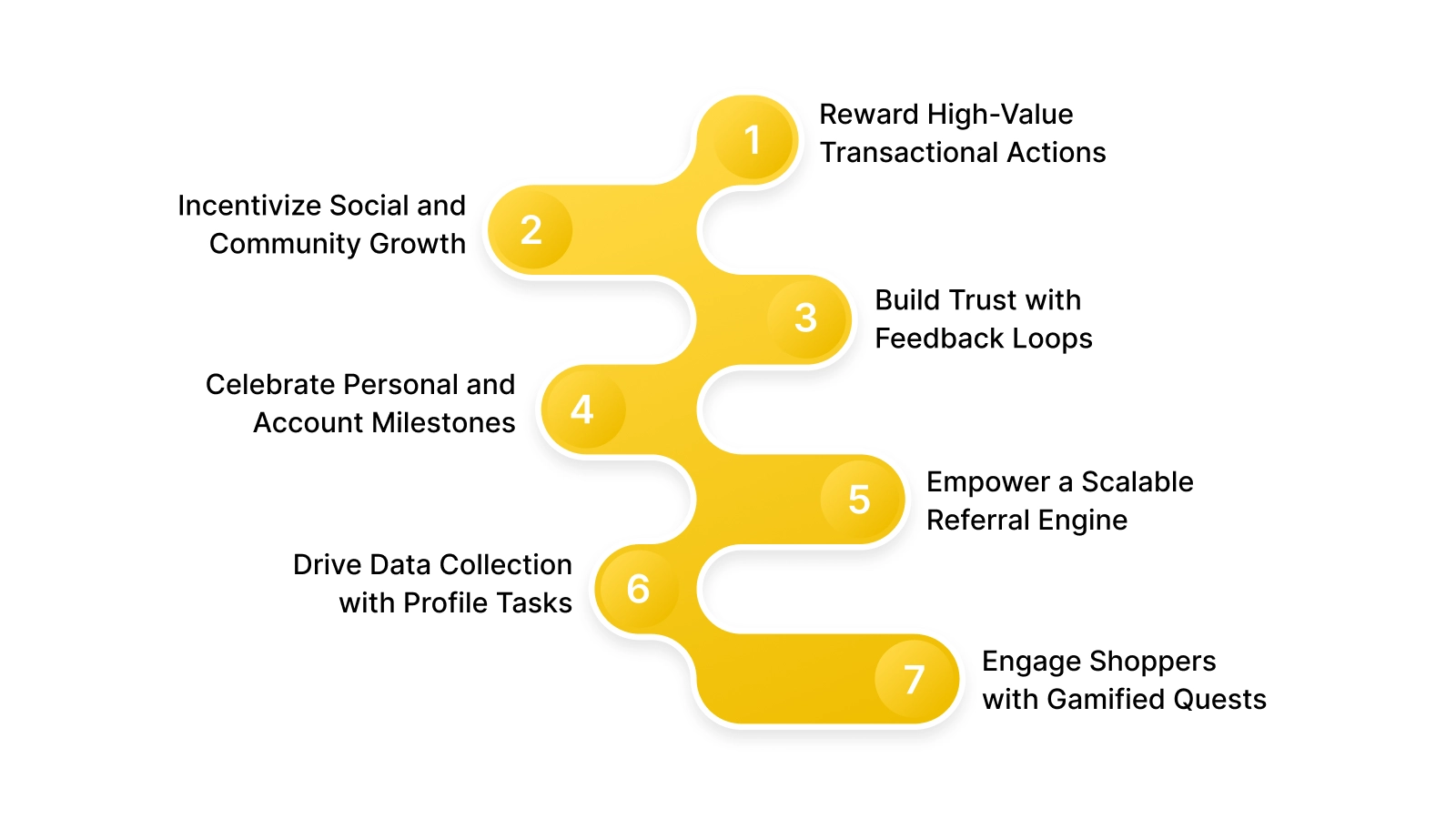
You should offer multiple ways for shoppers to engage with your brand so they can accumulate rewards even between their major purchase cycles. Use these specific methods to ensure your customers know exactly how to get loyalty points through various interactions with your online store:
1. Reward High-Value Transactional Actions
Standard point earnings build a baseline of value that rewards every dollar spent in your store to ensure customers feel immediate gratification.
You can use multipliers to incentivize larger orders or push specific product categories that carry higher profit margins for your business.
Use these steps to optimize your transactional point system:
- Define your base earning rate, such as 1 point for every $1 spent, to keep the math simple for your shoppers.
- Create a VIP multiplier for your top-tier customers to allow them to earn 1.5x or 2x points on every dollar.
- Launch "Double Point" weekends during slow sales periods to drive a surge in order volume without deep discounting.
- Display the potential points a customer will earn directly on the product page to increase the perceived value of the item.
2. Incentivize Social and Community Growth
Rewarding social media interactions helps you build an organic marketing engine that expands your brand's visibility across different platforms at a low cost.
When customers follow your accounts or share your content, they are providing your store with valuable social signals that attract new potential buyers.
Follow these steps to reward social engagement:
- Link your loyalty dashboard to your Instagram and Facebook business pages to track follows and shares automatically.
- Offer a one-time point bonus for customers who join your private community group or subscribe to your YouTube channel.
- Create a monthly challenge where customers earn points for tagging your brand in their personal stories or reels.
- Ensure your points are credited instantly to provide immediate positive reinforcement for the customer's social support.
3. Build Trust with Feedback Loops
Authentic reviews are essential for building trust with new visitors and improving your store's overall conversion rate over the long term.
By rewarding customers for their time and effort in writing reviews, you generate a steady stream of fresh content for your product pages.
Implement these steps to scale your review collection:
- Set up an automated trigger that sends a review request email five to seven days after a customer receives their order.
- Offer 50 points for a standard text review and 100 points for reviews that include a high-quality photo or video.
- Integrate Nector’s review system with Google Reviews to ensure your feedback is synchronized across all platforms.
- Reward customers who answer community questions on your product pages to build a helpful and interactive shopping environment.
4. Celebrate Personal and Account Milestones
Personalized rewards for birthdays or account anniversaries create an emotional connection that makes your brand feel more human and attentive to individual customers.
These milestones provide a natural reason to reach out to your audience with a positive message and a reason to shop. Use these steps to automate milestone rewards:
- Include a birthday field in your account sign-up form and offer a small point bonus as a welcome gift.
- Schedule an automated email to deliver birthday points exactly on the customer's special day to encourage a celebratory purchase.
- Reward customers on the one-year anniversary of their first order to acknowledge their long-term commitment to your brand.
- Send a "Surprise and Delight" point bonus to customers who haven't shopped in six months to win them back effectively.
Also read: Successful Loyalty Program Examples and Benefits for 2025
5. Empower a Scalable Referral Engine
Referrals are one of the most cost-effective ways to acquire new customers because people trust recommendations from their friends and family more than ads.
A dual-sided reward system ensures that both the advocate and the new shopper feel incentivized to complete the transaction.
Follow these steps to launch your referral program:
- Create a dedicated referral landing page where customers can find their unique sharing link and track their successful invites.
- Offer a significant point bonus to the referrer only after the referee completes their first purchase to prevent program abuse.
- Provide the new customer with an immediate discount or bonus points to lower the barrier for their first order.
6. Drive Data Collection with Profile Tasks
Gathering specific customer data allows you to personalize your marketing campaigns and improve the relevance of your product recommendations for every shopper.
Customers are often willing to share their preferences if they receive a tangible reward for their transparency and time. Use these steps to gamify your data collection:
- Create a short quiz or survey that asks about the customer's specific skin type, style preferences, or size.
- Reward 50 points for every completed section of the profile to encourage users to provide as much detail as possible.
- Use the gathered data to trigger personalized email flows that mention products specifically suited to the customer's unique profile.
- Update the reward rules periodically to ask new questions that help you refine your seasonal inventory or product development.
7. Engage Shoppers with Gamified Quests
Gamification adds an element of fun to the shopping experience by turning routine actions into a series of achievable challenges and rewards.
When customers see progress bars or badges, they feel a psychological drive to complete the set and reach the next level.
Implement these steps to gamify your loyalty program:
- Design a "New Member Quest" that rewards points for completing a series of actions, like signing up and following social pages.
- Display a visual progress bar in the customer's account dashboard to show how many points they need for their next reward.
- Create limited-time "Badge Challenges" that reward extra points for making three purchases within a single calendar month.
- Offer exclusive early access to new product launches for customers who reach your highest loyalty tier through consistent engagement.
Clear communication of these earning methods will ensure your customers remain active and motivated to participate in your brand's loyalty program.
Also Read: Review Incentive Program Risks, Challenges, and Smarter Alternatives
Stop tracking loyalty points on spreadsheets. Manually managing 7 different earning rules is a full-time job you don't have time for. Nector automates everything from social follows to birthday rewards so you can focus on scaling your brand. Book a demo to see how Nector automates your rewards.
How to Calculate Every Loyalty Point Value
You must ensure that your point values are easy for customers to calculate while remaining profitable for your business over the long term. Use this specific framework to determine how to get loyalty points and spend them without hurting your overall profit margins or store revenue.
The Earn to Burn Formula
Calculate your point value by deciding how much a single point is worth in actual currency relative to your average product cost. A standard approach is setting 100 points to equal one dollar, which provides a clear and understandable value for your average shopper.
Margin Safe Math
Review your product margins to ensure that the discounts you offer through loyalty points do not lead to a net loss on orders. You should calculate the maximum discount you can afford while still covering your shipping, packaging, and original manufacturing costs for every item.
Establishing a solid mathematical foundation for your rewards program prevents financial surprises and ensures your retention strategy remains sustainable for years.
Also read: What Is Loyalty Management? Benefits & Tips for D2C Brands in 2025
Implementation Workflow to Get Your Concept to Live in 14 Days
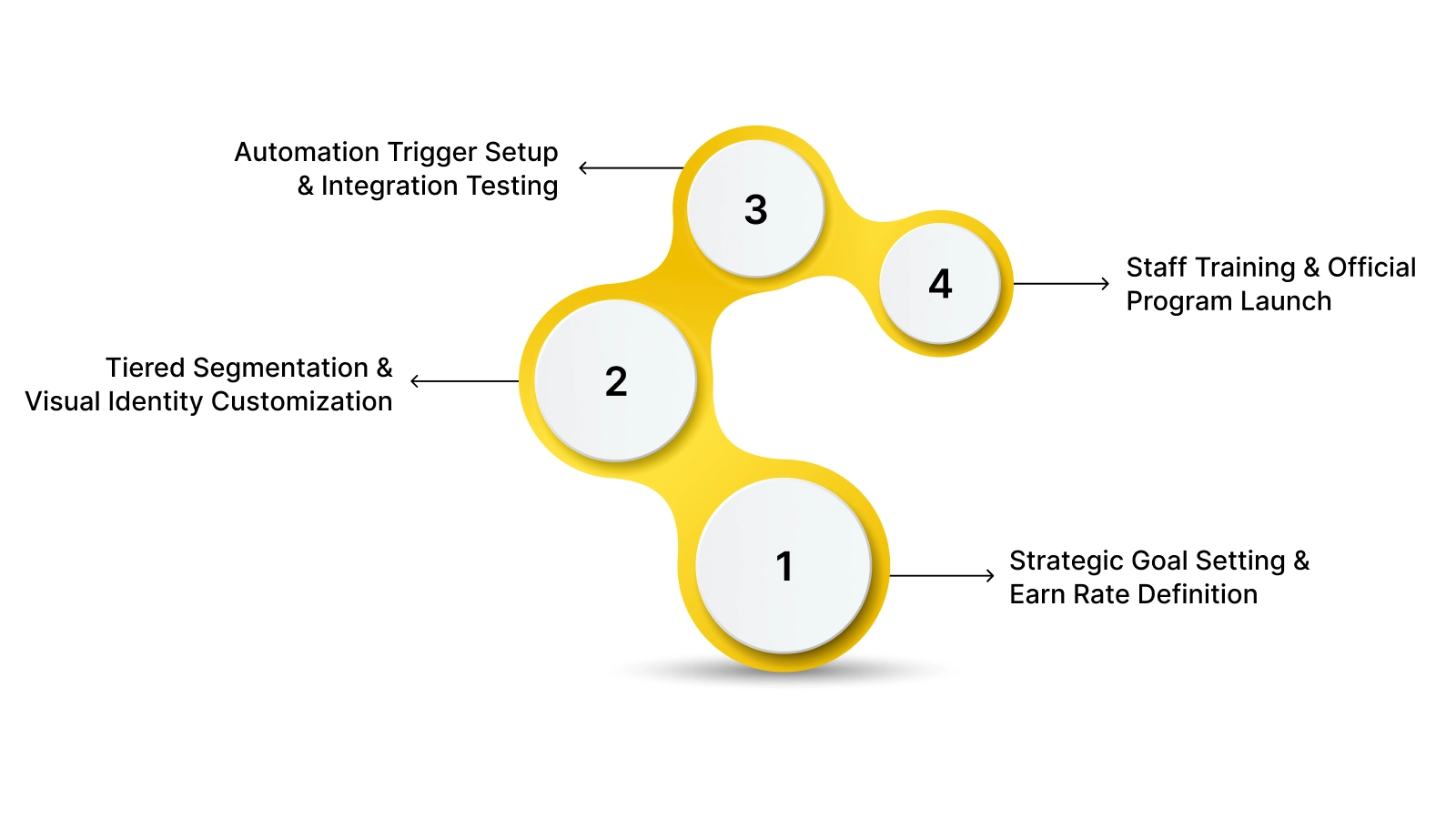
You can launch a professional loyalty program quickly by following a structured workflow that focuses on your most important business goals and outcomes. Use this timeline to move from the initial planning phase to a fully automated system that rewards your customers without manual effort.
Phase 1: Strategic Goal Setting and Earn Rate Definition
You must determine the primary objective of your loyalty program, whether you want to increase your average order value or collect more customer reviews.
Defining your "earn-to-burn" ratio during this initial phase prevents financial errors and ensures that your rewards remain attractive to your target audience.
You should establish these clear parameters before you begin the technical setup within your chosen loyalty platform:
- Select a primary KPI such as increasing repeat purchase rates by fifteen percent over the next six months.
- Calculate your maximum allowable discount per order to ensure your rewards do not compromise your core profit margins.
- Decide on a simple point value, like 100 points equaling one dollar, to make the rewards easy for shoppers to understand.
- Audit your existing customer data to identify your most frequent shoppers who will become the first members of your program.
- Draft your program’s terms and conditions to clarify point expiration rules and any specific product exclusions for your store.
Phase 2: Tiered Segmentation and Visual Identity Customization
Creating different membership levels encourages customers to spend more to reach exclusive benefits and higher earning multipliers for their future orders.
You should customize the look and feel of your loyalty widgets to match your brand's existing color palette and typography for a cohesive experience.
This phase focuses on the psychological elements of your program that make customers feel like they are part of an elite club:
- Name your tiers according to your brand’s personality, such as "Explorer," "Advocate," and "VIP" to drive emotional engagement.
- Design custom icons or badges for each tier to provide a visual sense of achievement for your most loyal shoppers.
- Set specific spending thresholds for each level to ensure your top-tier rewards are reserved for your highest-value customers.
- Update your website’s navigation and footer links to include a dedicated rewards page that explains the benefits of every tier.
- Configure your email templates with your brand’s logos and colors to ensure all automated notifications look professional and familiar.
Phase 3: Automation Trigger Setup and Integration Testing
Automated workflows ensure that your program runs smoothly in the background without requiring daily manual intervention from your busy customer service team.
You must test the integration between your loyalty platform, your email marketing tool, and your review management software to ensure data syncs correctly.
This final technical phase ensures that every customer action triggers the appropriate reward and notification according to your pre-defined rules:
- Sync Nector with your email service provider, like to automate "Points Earned" and "Reward Available" notification sequences.
- Enable automated review requests that offer points as an incentive for customers to share their feedback after receiving an order.
- Test the referral link generation process to ensure that both the advocate and their friend receive the correct rewards instantly.
- Set up a "Points Expiry" email trigger to remind inactive customers to return and use their balance before it disappears.
- Perform a dummy checkout using a test account to verify that points are correctly applied and deducted from the total.
Phase 4: Staff Training and Official Program Launch
Your team should understand how the loyalty program works so they can effectively answer customer questions and resolve any potential point discrepancies.
A soft launch to your most loyal customers allows you to gather initial feedback and fix any minor bugs before the public announcement.
Once you are confident in the system, you can announce the program across all your marketing channels to maximize initial sign-ups:
- Create a simple internal cheat sheet for your support team that explains how to manually adjust point balances if necessary.
- Send a "Pre-Launch" email to your top ten percent of customers to give them early access to the new rewards system.
- Announce the program launch via a dedicated Instagram story and a homepage banner to capture the attention of all visitors.
- Monitor your dashboard daily during the first week to track initial sign-up rates and identify any friction points in the process.
- Gather feedback from your first group of users to determine if any earning rules or reward values need minor adjustments.
Example: A leading skincare brand used this 14-day workflow to launch an automated review and tiered points system that increased their total reviews.
By focusing on automated "Points for Reviews," they significantly improved their search engine visibility and built massive social proof without increasing their team’s daily workload.
Following this structured workflow allows you to build a sophisticated loyalty experience that scales alongside your business as you acquire more customers.
Also read: Why Customer Loyalty Is Important for Your Business?
Get your loyalty program live in half the time. Why spend 14 days guessing when you can have an expert walk you through the setup? Book a personalized demo and let’s build your retention engine together.
Common Pitfalls: Why Most Point Systems Fail
Many loyalty programs fail because they are too difficult for the average customer to understand or find on your ecommerce website pages. You must avoid these common mistakes to ensure your program remains a valuable asset for your brand rather than a source of frustration.
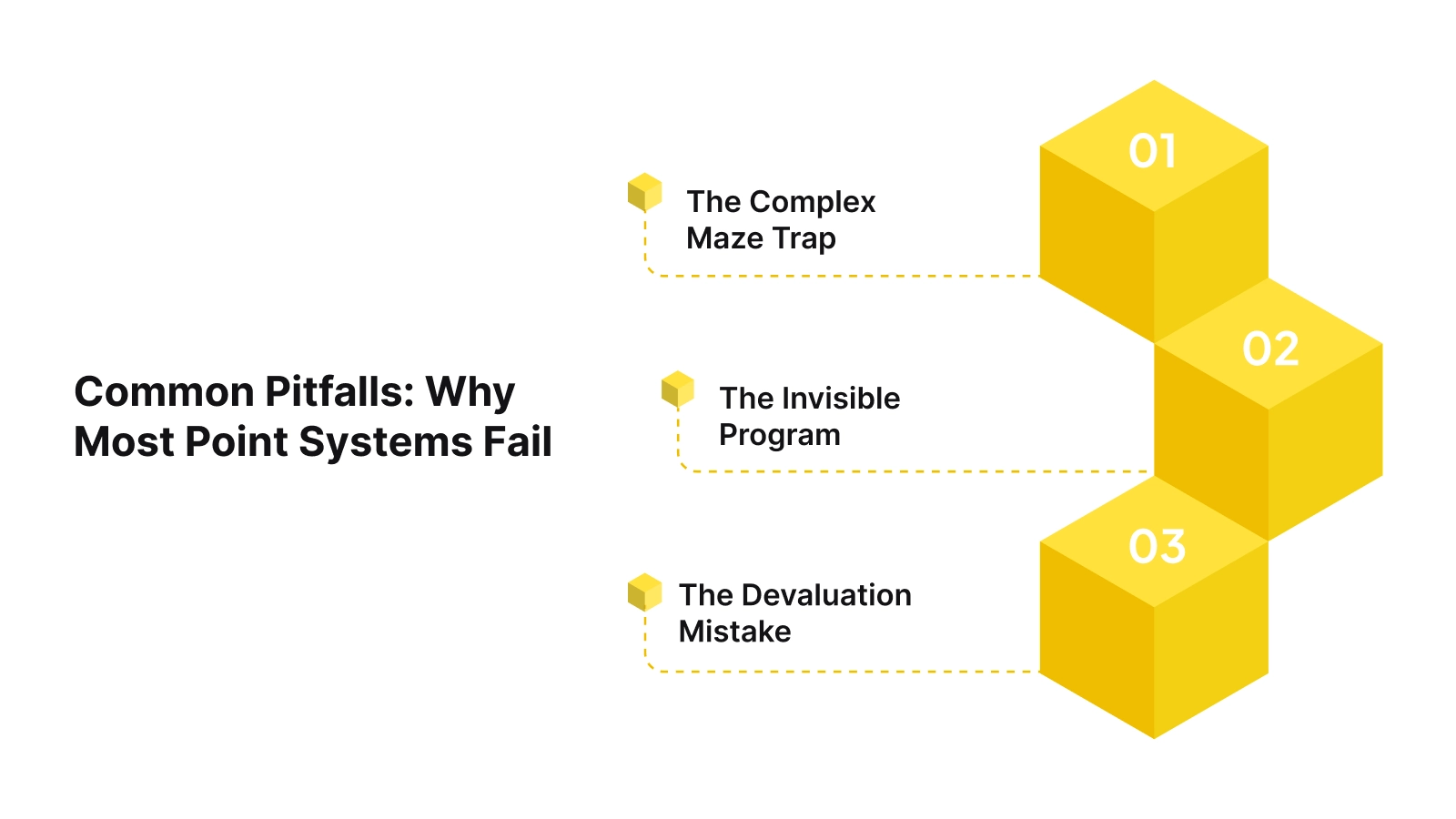
1. The Complex Maze Trap
If your redemption process requires too many steps or has confusing rules, your customers will likely abandon their points and your brand.
Tip: Keep your redemption process visible on the checkout page so customers can apply their points with one simple and quick click.
2. The Invisible Program
Failing to mention your loyalty program on your homepage or product pages means that new visitors will never know the benefits of joining.
Tip: Add a "Rewards" button to your main navigation menu and include point-earning potential on every single individual product page.
3. The Devaluation Mistake
Changing your point values suddenly without informing your customers can lead to a significant loss of trust and a high customer churn rate.
Tip: Provide at least thirty days of notice before making changes and allow your best customers to keep their current point values.
Anticipating these challenges allows you to build a more resilient program that consistently delivers value to both your business and your shoppers.
3 KPIs to Measure Success Easily
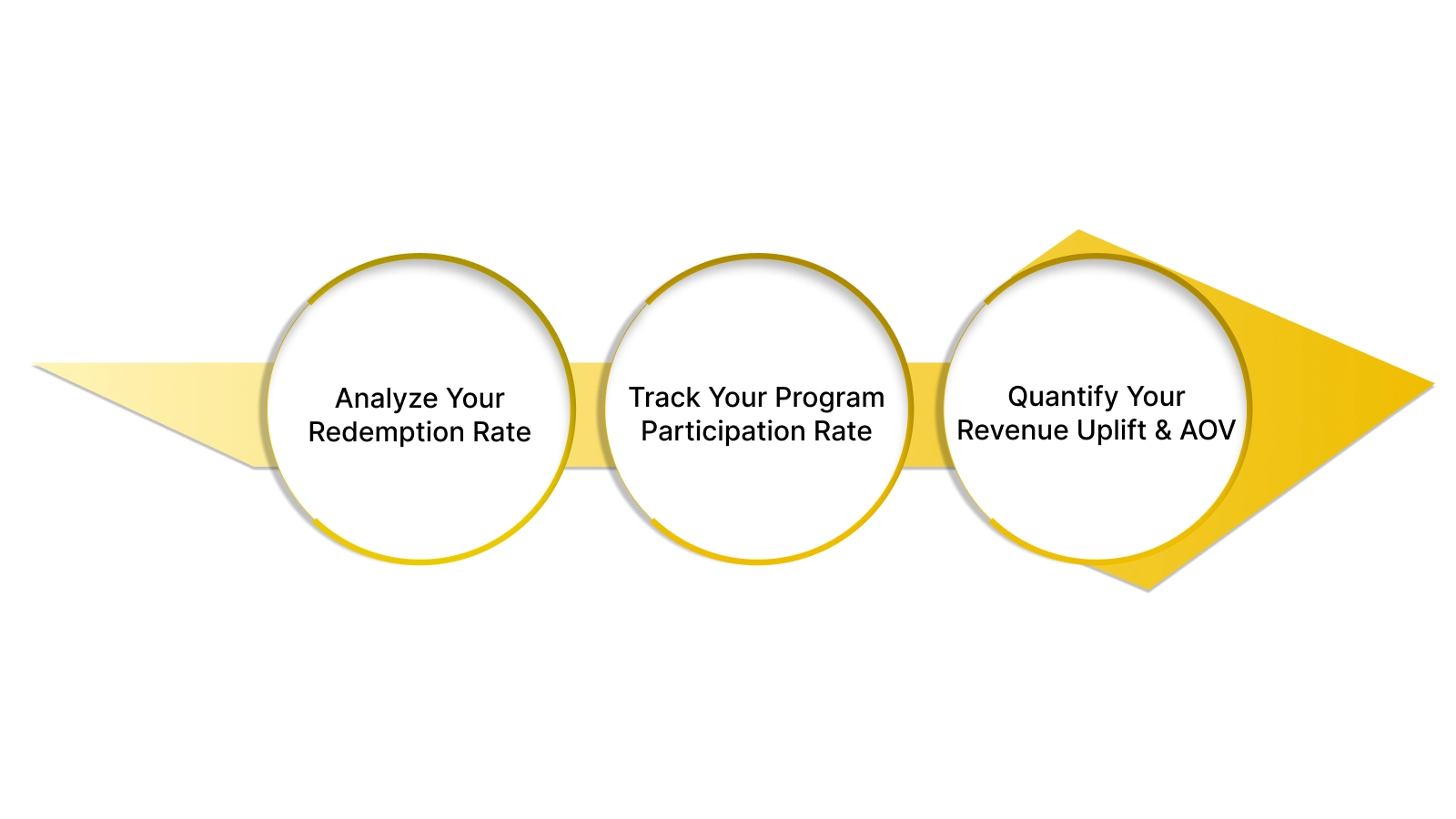
You need to track specific metrics to understand if your loyalty program is actually improving your bottom line and driving customer retention. Use these three key performance indicators to measure your progress and make informed decisions about your future reward structures and earning rules.
1. Analyze Your Redemption Rate (RR)
This metric tells you if your customers find your rewards valuable enough to actually use them during their checkout process on your store. A low redemption rate often suggests that your rewards are either too difficult to earn or not desirable enough to motivate a repeat purchase.
How to measure:
- Access your loyalty dashboard to find the total number of points redeemed within a specific thirty-day or ninety-day window.
- Divide the total number of points redeemed by the total number of points issued to customers during that same period.
- Multiply the result by 100 to get a percentage that represents your program's overall "Burn Rate" or active usage.
- Compare this percentage against industry benchmarks, which typically range between twenty and thirty percent for successful ecommerce brands.
- Identify if specific rewards like "Free Shipping" have a higher redemption frequency than standard percentage discounts.
- Segment the data by customer tier to see if your high-value shoppers are redeeming points more frequently than new members.
2. Track Your Program Participation Rate
A high participation rate indicates that your program is attractive and that your marketing efforts are effectively reaching your target customer audience. This KPI helps you understand if your program is visible enough on your website and if the sign-up process is frictionless for new visitors.
How to measure:
- Identify the total number of unique customers who have made a purchase on your store within the last twelve months.
- Calculate the number of those customers who have officially enrolled in your loyalty program and earned at least one point.
- Divide the number of enrolled loyalty members by your total customer count to find your current participation percentage.
- Monitor how many new members join your program immediately after seeing your homepage banner or post-purchase thank you page.
- Check your "Account Creation" conversion rate to see if the promise of loyalty points is successfully driving new sign-ups.
- Analyze which marketing channels, such as email or Instagram, are bringing in the highest number of new program participants.
3. Quantify Your Revenue Uplift and AOV
Comparing the average order value of loyalty members against non-members helps you quantify the direct financial impact of your rewards program. This measurement is crucial for proving the return on investment of your retention efforts to your internal team or stakeholders.
How to measure:
- Calculate the Average Order Value (AOV) for customers who are active members of your loyalty program over a six-month period.
- Calculate the AOV for customers who have not joined the program or do not engage with your rewards system.
- Subtract the average spending of non-members from the average spending of your loyalty members to find the individual revenue lift.
- Multiply this lift by your total number of loyalty members to estimate the total additional revenue generated by the program.
- Compare the purchase frequency of members versus non-members to see if loyalty points are successfully shortening the time between orders.
- Review your total profit margins after accounting for the cost of redeemed points to ensure your revenue uplift remains healthy.
Consistently monitoring these metrics will help you refine your strategy and ensure you are providing the best possible experience for your customers.
Also read: Successful Loyalty Program Examples and Benefits for 2025
Turn Your One-Time Buyers into Lifelong Fans with Nector
Managing a manual loyalty program can quickly become an operational nightmare that takes your focus away from growing your core ecommerce business. You need a solution that automates the complex parts of retention while allowing you to maintain full control over your brand's unique style.
Nector provides a comprehensive platform that handles everything from point allocation and tiered rewards to automated review requests and referral tracking in one place. By integrating Nector into your store, you can offer a sophisticated loyalty experience that feels like it was built by a large enterprise team.
- Points and Tiers: Create customizable reward structures that motivate customers to reach higher levels of brand loyalty and spend more over time.
- Automated Reviews: Collect high-quality social proof by automatically rewarding customers who share their experiences and photos on your specific product pages.
- Referral Tracking: Expand your reach through a secure referral system that rewards your fans for introducing their friends to your unique product line.
- Advanced Analytics: Use detailed reports to understand customer behavior and optimize your rewards for the highest possible return on your marketing investment.
Garden Center Loyalty Program Success
Pandy's Garden Center used Nector's loyalty program across channels. It drove 12.58% of orders from members. The setup hit a 27.19% redemption rate on rewards. Repeat purchases reached 36.52%. Customers turned points into buys and shared referrals often. Results show steady engagement from gardeners who return.
Omnichannel Loyalty Program Results
Plum built an omnichannel loyalty program with Nector in three months. Members made up 39.66% of total orders. Referrals completed at 11.59%. The system links online and offline actions well. It spurred repeat buys from skincare shoppers. Loyalty now pulls a clear revenue share.
Our platform helps you build deeper relationships with your customers by ensuring they are always rewarded for their engagement and continued brand loyalty.
Conclusion
Building a successful loyalty program is about more than just giving away points for purchases; it is about creating a comprehensive engagement strategy. By offering multiple ways to earn, calculating fair values, and tracking the right metrics, you can turn casual shoppers into dedicated brand advocates.
If you want to boost your repeat purchases without adding to your daily workload, Nector provides the automated tools you need to succeed. Our platform integrates with several tools to ensure your loyalty, referral, and review programs work together to drive your business growth.
Book a demo today with Nector to see how easily you can transform your customer retention and increase your store's total revenue.
Frequently asked questions
What is the fastest way for a customer to earn loyalty points?
The fastest way is typically through a combination of a first purchase and a non-purchase action. Many programs offer a generous "welcome bonus" for joining (e.g., 100 points) plus points for an initial purchase and a follow-up action like a review or social follow, allowing a customer to earn a first reward quickly.
Can loyalty points expire, and is that a good practice?
Points can expire, but policies vary. Short expiry periods (under 90 days) often frustrate customers. A better practice is a long rolling expiry (e.g., points expire after 12-24 months of inactivity) or no expiry at all for active members. This encourages long-term engagement without creating anxiety.
How many points should I give for a product review?
A good benchmark is to offer a reward worth 5-10% of the product's value. If a product is $50, a reward of 250-500 points (if 100 points = $1) is compelling. Consider tiering it: more points for a detailed review with photos or video.
Is it better to offer points or immediate discounts?
They serve different purposes. Immediate discounts drive a first purchase. Points build long-term loyalty and increase customer lifetime value (LTV). The most effective strategy is often to use discounts for acquisition and a points program for retention.
What's the biggest mistake brands make with point programs?
The biggest mistake is making the redemption process difficult or unclear. If customers cannot easily see how to use their points or if the steps are cumbersome, they will disengage. Ensuring one-click redemption at checkout and a clear rewards page is critical.



.webp)