





%201.webp)
.avif)
.avif)
Do you know that eCommerce sales hit $1.19 trillion in 2024? With numbers this massive, you’d expect brands to convert visitors with ease; yet most still struggle to turn traffic into actual sales. More people are shopping online than ever, but getting them to click “Buy” is becoming harder, not easier.
Achieving a higher conversion rate is now essential for turning visitors into loyal customers and maximizing revenue. And the gap isn’t due to lack of traffic; it’s often small friction points across the buyer journey that stop shoppers from completing a purchase.
In this blog, we’ll break down the latest ecommerce conversion rate benchmarks, the factors shaping them, and practical strategies you can use to boost performance in 2026. Let’s make every visitor count.
Key Takeaways
- Ecommerce conversion rates vary widely by industry and region, with the Americas leading at 3.14% and Food & Beverage at 6.02%.
- A strong conversion rate can be achieved through personalization, a frictionless checkout, and optimized site speed, directly impacting user behavior and satisfaction.
- Benchmarking against industry standards and setting realistic goals helps track performance and identify areas for improvement.
- Regular abandoned cart recovery, personalized rewards, and automated review requests can significantly enhance conversion rates.
- Tools like Nector can help businesses drive higher conversions with personalized loyalty programs, data-driven insights, and seamless referral systems.
What is an Ecommerce Conversion Rate?
An ecommerce conversion rate measures how efficiently your store turns traffic into completed outcomes by tying user sessions to verified actions. At its core, it reflects the proportion of visitors who progress through key funnel stages and complete a defined goal, most commonly a purchase.
Unlike surface-level traffic metrics, the conversion rate directly indicates how well your product pages, pricing, checkout flow, and trust signals work together to remove friction at the moment of decision.
From an operational standpoint, ecommerce conversion rate is best understood as a diagnostic performance metric rather than just a sales ratio. For example, if two stores receive similar volumes of comparable traffic but convert at 3% and 1.5%, the gap is typically driven by checkout latency, payment flexibility, mobile usability, or post–add-to-cart friction rather than traffic quality alone.
This makes conversion rate a critical benchmark for identifying bottlenecks across the buyer journey and evaluating whether site optimizations are translating into real revenue impact.
Also Read: 9 Successful Loyalty Program Examples to learn from in 2025
How to Calculate Your Ecommerce Conversion Rate?
To calculate your ecommerce conversion rate accurately, it's essential to track both total visitors and conversions. Here’s what you need to do:
Step 1: Track Total Visitors
Start by tracking the total number of visitors to your site, whether they’re new or returning. Use tools like Google Analytics or Shopify to monitor both unique and repeat visitors.
Step 2: Track Conversions
A conversion could be anything from a purchase to a lead capture (like email sign-ups or product inquiries). Ensure that you track all potential conversion points across your site, from product pages to checkout.
Step 3: Now, Calculate
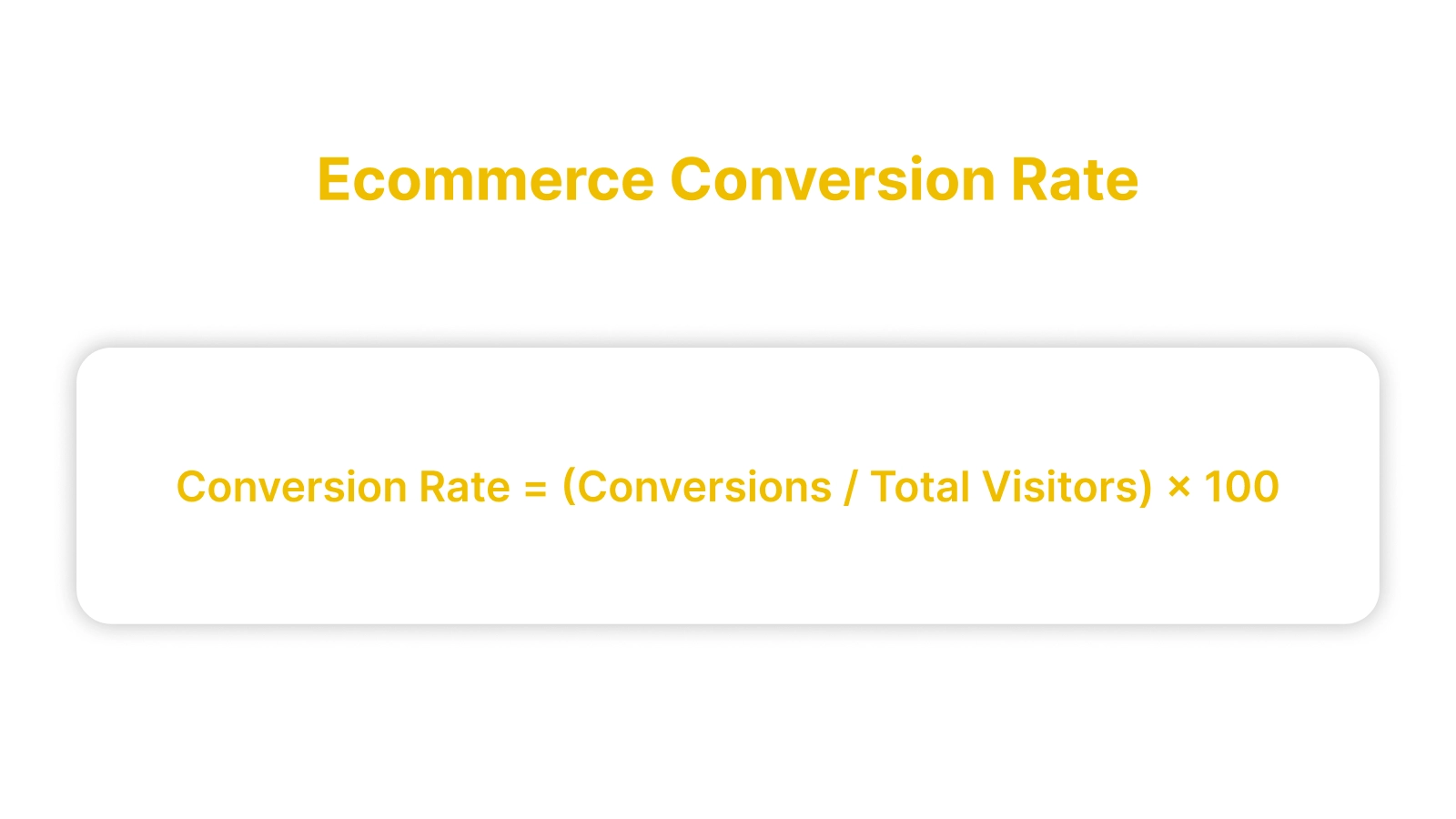
Simply apply the conversion rate formula:
Conversion Rate = (Conversions / Total Visitors) × 100
For example, if you had 10,000 visitors in a month and 200 conversions (purchases), your conversion rate would be: (200 / 10,000) × 100 = 2%
By calculating your conversion rate regularly, you’ll gain actionable insights into your store’s performance. This will help you identify areas for improvement and set realistic goals to drive higher sales. Now let's have a look at ecommerce conversion rate benchmarks.

2025 Ecommerce Conversion Rate Statistics & Benchmarks
In 2025, the Americas region stands out with a strong conversion rate of 3.14%, setting the benchmark for other regions. This highlights the region’s solid ecommerce performance, making it a key point of reference for global comparisons.
As we examine conversion rates by region, we can see how performance varies across the globe. Here’s a closer look at the regional benchmarks:
Ecommerce Conversion Rate Benchmarks by Region
These conversion rates also vary greatly depending on the product category, with sectors like Food & Beverage and Beauty & Personal Care leading in ecommerce performance.
Ecommerce Conversion Rate Benchmarks by Industry for November 2025
These benchmarks reveal key trends across both regions and industries in 2025, offering valuable insights into which sectors are performing well.
Understanding these differences can also help tailor your strategies for improving your ecommerce conversion rates in 2026. Up next, let's check out how these rates are measured.
How are Ecommerce Conversion Rates Measured Accurately?
To truly understand your ecommerce store’s performance, it’s important to track and measure conversion rates across different aspects of your website. Here’s how you can do it:
Tools You Need to Track Ecommerce Conversions Effectively
Tools like Google Analytics, Shopify, and Hotjar are commonly used to measure ecommerce conversion rates. These platforms help track various metrics like:
- Bounce Rates: The percentage of visitors who leave your website without taking any action.
- Checkout Abandonment: The rate at which visitors abandon their shopping cart before completing a purchase.
- Overall Conversion Performance: The effectiveness of your website in turning visitors into paying customers.
The mentioned tools also allow you to see detailed reports on user behavior. Let's now learn what to measure through these tools.
Key Metrics to Measure Ecommerce Conversion Rates
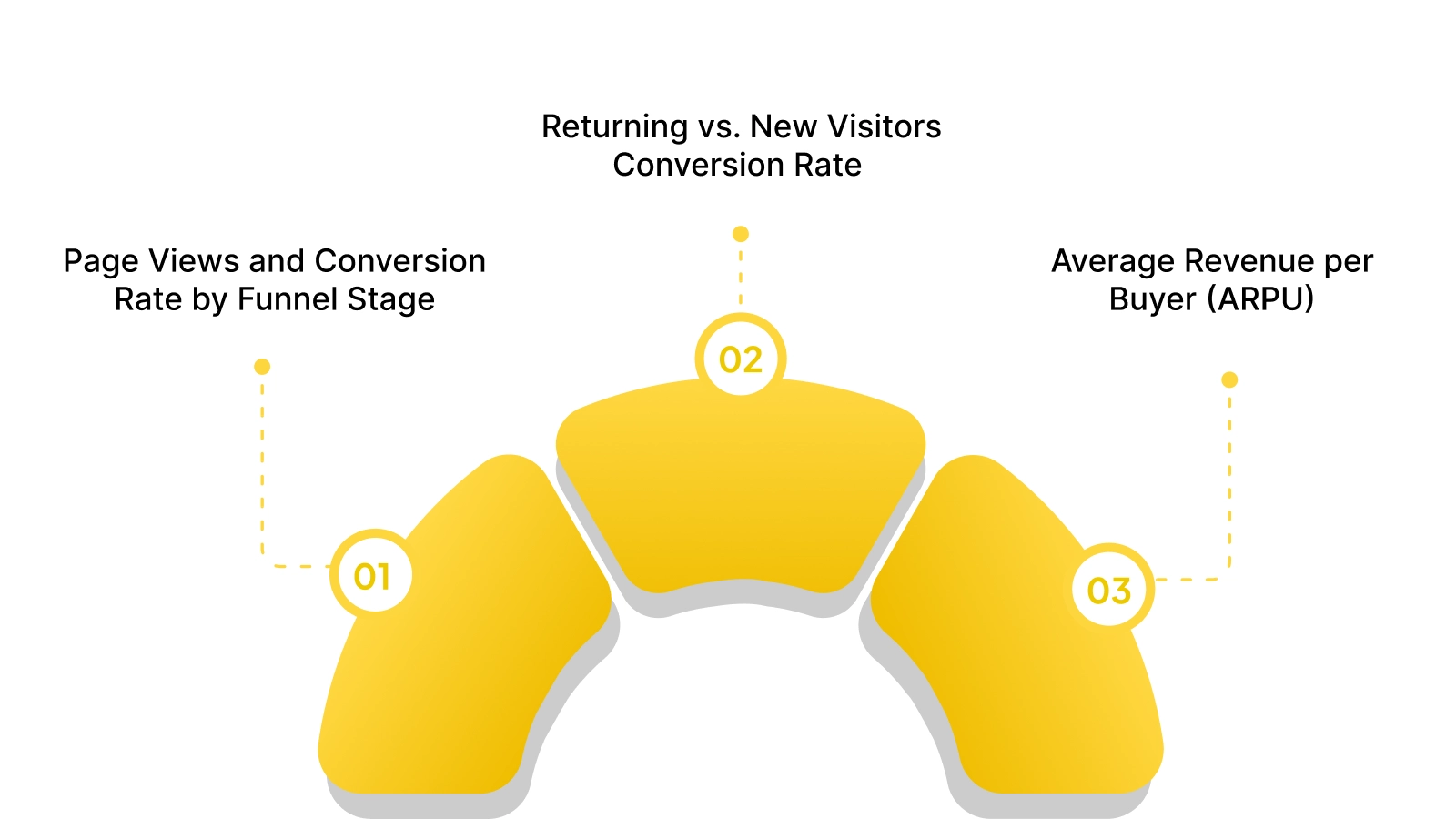
To effectively optimize your ecommerce conversion rate, it's also important to measure key metrics that track customer behavior, identify friction points, and highlight opportunities for growth.
1. Page Views and Conversion Rate by Funnel Stage
Measuring conversion rates at different stages of the sales funnel gives you a clearer picture of your customers' journey. At the top of the funnel, you may have a high volume of visitors, but only a small percentage might convert. Tracking how many visitors move from awareness to consideration to purchase can help you pinpoint where to improve.
2. Returning vs. New Visitors Conversion Rate
New visitors may have a lower conversion rate compared to returning customers. Understanding these differences helps you allocate resources better. For example, returning customers are more likely to convert, so you should focus efforts on nurturing those who have already made a purchase or engaged with your brand.
3. Average Revenue per Buyer (ARPU)
ARPU is another important metric, as it measures the average amount each customer spends on your website. Increasing ARPU is often a key strategy for improving overall conversion rates.
With your metrics in place, let’s see how often you should measure your ecommerce conversion rates.
How Often Should You Measure Your Ecommerce Conversion Rate?
Tracking your ecommerce conversion rate regularly helps you understand what’s truly happening across your store. To keep your analysis consistent and meaningful, here’s a simple review cycle you can follow:
- Weekly check-ins: Look for sudden drops or spikes. These can signal technical issues, pricing errors, or problems with specific pages.
- Monthly improvements: Review your top pages, product categories, and ongoing offers. Use this time to test small changes like new layouts, reviews, or discount formats.
- Quarterly or yearly planning: Analyze long-term trends and make bigger decisions: site redesigns, updated messaging, or planning for major sales seasons.
- After every major campaign: Compare your results with past campaigns to see what boosted conversions and what needs refinement for next time.
Keeping a consistent review routine helps you spot patterns early, improve your customer journey, and make smarter decisions that lead to better conversions over time. Now, the next move is understanding the factors that drive your conversion rates.
Also Read: Creating Customer Loyalty: Why It Matters for Brands
3 Factors Influencing Ecommerce Conversion Rate Benchmarks
Several factors play a role in influencing conversion rate benchmarks for ecommerce stores. Understanding the factors below helps you better assess your store's performance and make necessary adjustments:
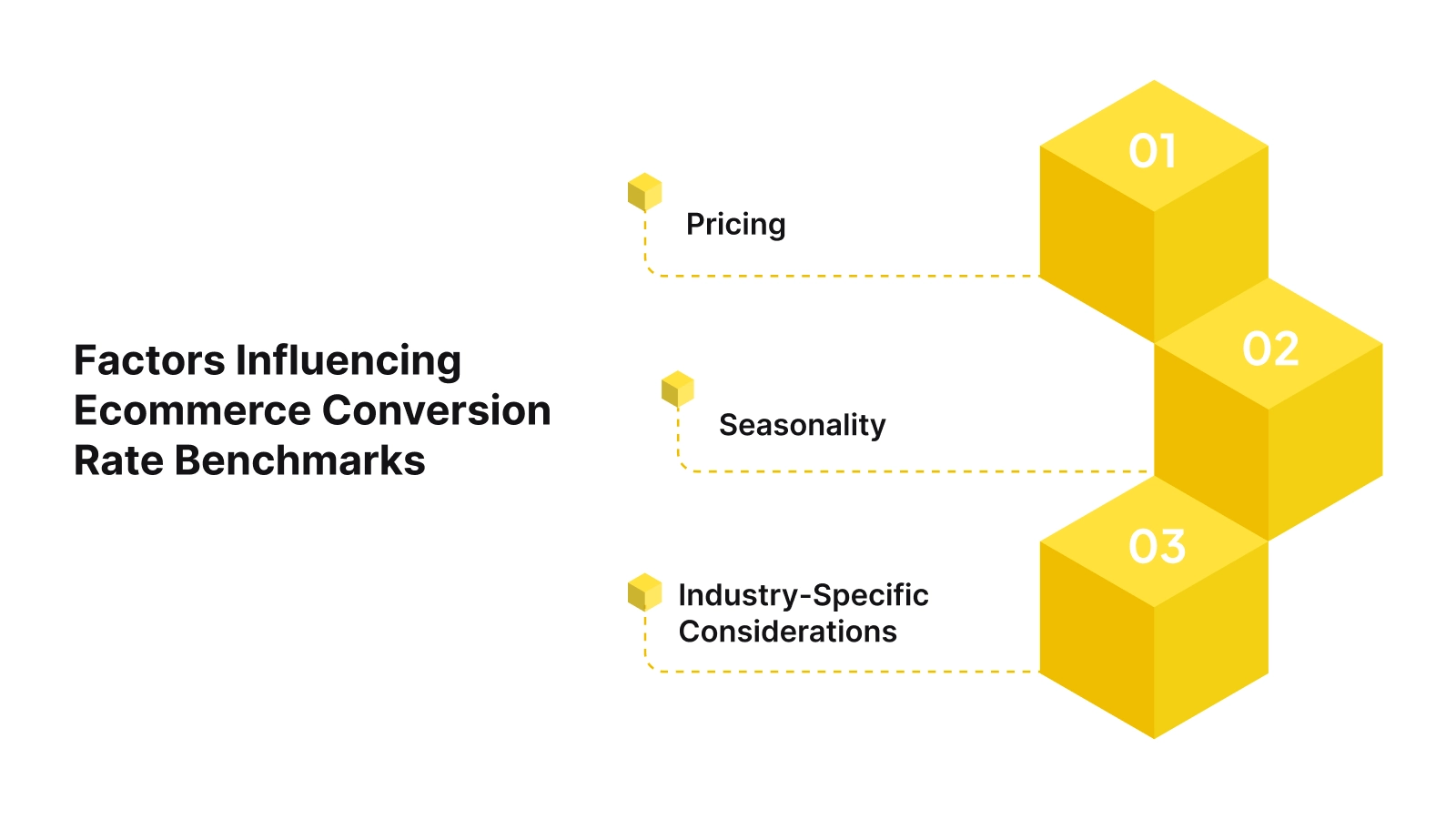
1. Pricing
Your product pricing directly impacts conversion rates. For instance, if your product is priced higher than competitors', customers may abandon their carts if they feel your pricing isn't competitive enough. Offering customer discounts or sales can temporarily boost your conversion rate, but you should ensure that your pricing strategy aligns with customer expectations in your market.
2. Seasonality
Ecommerce conversion rates fluctuate during peak seasons like Black Friday and holidays. During these times, customers are more likely to make impulse purchases, which can temporarily increase conversion rates. However, these spikes are often short-term. It’s important to consider seasonality when evaluating conversion rates over a year and plan accordingly.
3. Industry-Specific Considerations
Certain product categories naturally have lower conversion rates due to high consumer consideration. Luxury goods, for example, have longer sales cycles because customers typically do more research before purchasing. On the other hand, everyday products like groceries or personal care items tend to have higher conversion rates.
These insights help explain why conversion rates vary. Up next are proven strategies to push beyond industry benchmarks in 2025–26.
How to Beat Conversion Rate Benchmarks in 2025-26?
To outperform the average conversion rate benchmarks for 2025-26, here are a few proven strategies:
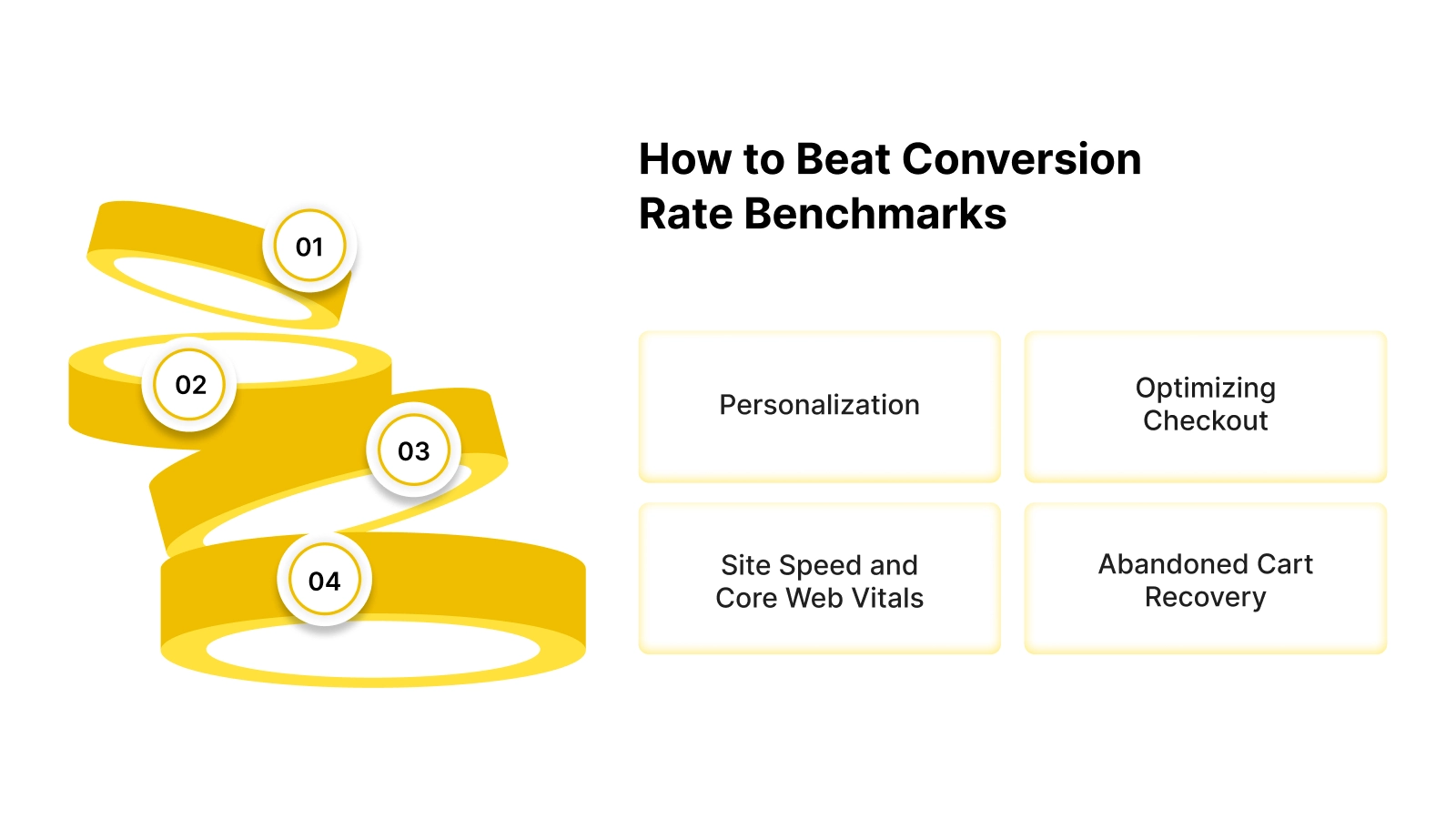
1. Personalization
AI-driven personalization helps you deliver tailored experiences to visitors based on their browsing history or previous purchases. For example, Amazon personalizes product recommendations to users based on past behavior, significantly increasing conversions. Personalized recommendations make customers feel valued and increase the likelihood of them making a purchase.
For your ecommerce store, you can create personalized loyalty programs by Nector that reward customers for their actions, such as repeat purchases and referrals. Personalized content can also extend to discounts and offers. If you know a visitor abandoned their cart, sending a personalized email with a discount can encourage them to complete the purchase.
2. Optimizing Checkout
A frictionless checkout is essential for higher conversions. Simplifying checkout forms, reducing the number of fields required, and offering multiple payment options (including Apple Pay, Google Pay, or PayPal) can drastically improve conversion rates.
Additionally, make sure to offer guest checkout options, as requiring customers to create an account can often lead to cart abandonment.
3. Site Speed and Core Web Vitals
Google’s Core Web Vitals directly affect ecommerce conversion rates. A slow-loading page can lead to higher bounce rates and fewer purchases.
Thus, aim for fast loading times (under 3 seconds) and optimize your website’s performance by compressing images, using a content delivery network (CDN), and minimizing scripts. Google’s PageSpeed Insights is a good tool to monitor and improve your site speed and Core Web Vitals.
4. Abandoned Cart Recovery
One of the most effective strategies for improving conversions is abandoned cart recovery. Sending automated emails to users who have left items in their cart without checking out is a proven tactic.
Offering a limited-time discount or free shipping in these emails can further increase the likelihood of conversions.
By implementing these strategies, you can start beating conversion rate and see a significant improvement in your store’s performance. Now, let’s take a closer look at how your ecommerce conversion rates compare to industry standards.
Evaluating Your Ecommerce Conversion Rate Against Benchmarks
To understand your ecommerce conversion rates clearly, you need to see how they stack up against your industry, region, and device trends. Here’s how to break it down.
1. Assess Your Performance
Compare your conversion rate against industry benchmarks for your niche. If you’re in the fashion industry, you may expect a conversion rate around 2.5%–3%. If you’re underperforming, it could be an indicator that certain aspects of your site need to be optimized.
2. Set Realistic Goals
Don’t try to achieve a 5% conversion rate if your industry typically operates around 2%–3%. Set goals that are both ambitious and achievable based on the benchmarks of your industry, your region, and the devices customers use to shop.
3. Focus on Next Steps for Improvement
If you’re falling short of your target conversion rate, focus on areas like:
- Personalizing the shopping experience for your visitors
- Improving site speed and mobile optimization
- Refining the checkout process to eliminate friction points
By comparing your performance to industry benchmarks and setting achievable goals, you can significantly improve your conversion rates. Now, let's explore how Nector can help with optimizing your ecommerce performance even further.
Also Read: Seamless E-commerce Experience: Integrating Nector.io with Shopify
Why Nector Is the Best Choice for Ecommerce Conversion Rate Optimization?
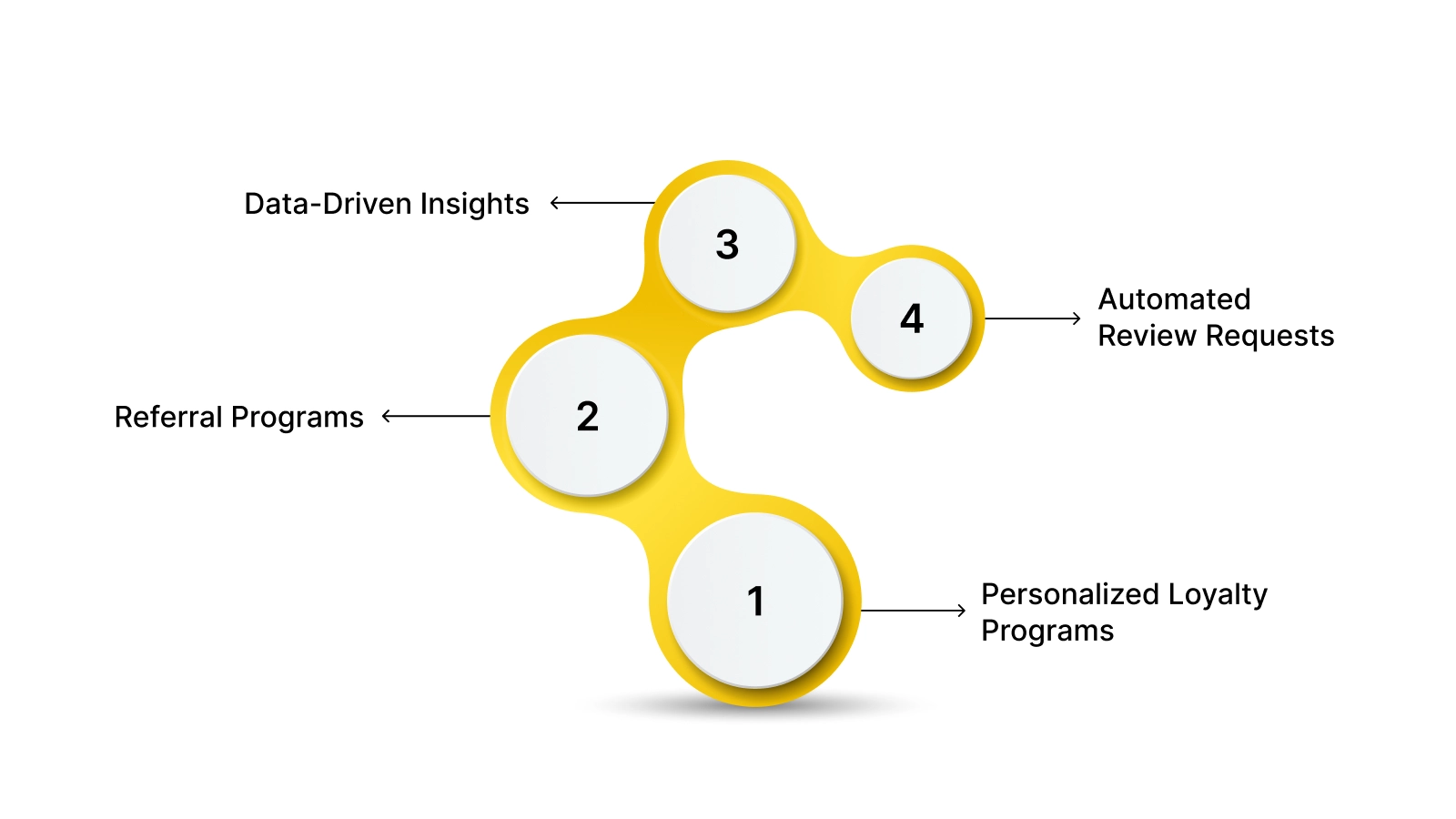
Nector is the ideal solution for improving your ecommerce conversion rates. We help businesses turn visitors into loyal customers with tools designed to maximize engagement and drive repeat purchases; two key factors for increasing conversions.
Here’s how Nector can help:
- Personalized Loyalty Programs: Reward customers based on their actions, encouraging repeat purchases and creating loyalty.
- Referral Programs: Motivate existing customers to refer new shoppers, bringing in higher-intent traffic.
- Automated Review Requests: Collect genuine product reviews, building trust and boosting conversion rates.
- Data-Driven Insights: Track customer behavior and adjust strategies with powerful analytics to optimize conversion rates.
With Nector, you’ll enhance customer engagement and improve your store’s conversion rates without complex setups or additional team members.
Wrapping Up
Tracking your ecommerce conversion rate against industry benchmarks is the first step toward understanding your store’s performance. With the right data, you can pinpoint areas for improvement, set realistic goals, and ensure your efforts align with industry standards. By continuously optimizing your website and conversion strategy, you'll set your store on the path to success.
Nector offers the tools you need to drive higher conversions, from personalized loyalty programs to automated referral and review systems. With Nector, you can easily enhance customer engagement, reduce cart abandonment, and build trust; all of which contribute to better conversion rates and long-term business growth.
Ready to beat ecommerce conversion rate benchmarks with personalized loyalty and referral programs? Start your free trial today with Nector.
Frequently asked questions
What is a good conversion rate for ecommerce?
A good ecommerce conversion rate typically ranges between 2% to 3%. High-performing stores can exceed 5%, but it depends on the industry and product type.
What is considered a bad conversion rate?
A bad conversion rate is generally below 1%, signaling issues like poor website user experience, irrelevant traffic, or ineffective marketing strategies. Such rates need immediate optimization.
What are common conversion rate mistakes?
Common mistakes include not measuring by funnel stage, ignoring mobile optimization, a lack of trust signals, and complicated checkout processes. These factors increase friction and reduce conversions, requiring improvements.
Why do online stores have lower conversion rates than retail stores?
Online stores often face lower conversion rates due to factors like a lack of in-person interaction, shipping costs, and limited product experience. Overcoming these barriers requires better user experience and trust-building strategies.


%201.webp)