






.avif)
.avif)
Acquiring new customers is one of the biggest challenges for e-commerce brands, yet it’s essential for growth. Studies show that referred customers are not only more likely to convert but also have a 16% higher lifetime value than those acquired through traditional marketing channels.
The key is creating a referral program that motivates your existing customers to share your brand while attracting high-quality new customers. With the right incentives, strategy, and tools, referral programs can become a scalable and cost-effective growth engine.
In this guide, we’ll walk you through how to use referral programs for customer acquisition, including program structures, reward models, and strategies to engage both your current and potential customers.
Key Takeaways
- Retaining existing customers costs five times less than acquiring new ones, making loyalty a highly cost-effective strategy.
- Referral programs are an effective way to turn your current customers into active brand advocates who bring in new, high-quality leads.
- The main benefits of referral programs include lower customer acquisition costs, increased trust, higher repeat purchase rates, and stronger overall engagement.
- To run a successful referral program, start by defining clear goals, understanding your audience, setting up accurate tracking, choosing appealing rewards, and optimizing your program continuously.
- Platforms like Nector can automate the referral process, provide real-time performance tracking, and help you implement how to use referral programs for customer acquisition efficiently for maximum results.
What Is a Referral Program?
A referral program is a structured way to acquire new customers through recommendations from existing ones. Instead of relying only on paid marketing, businesses encourage customers to share their brand with friends, family, or colleagues in exchange for a reward.
Customers participate by sharing a referral link or code. When the referred person completes a qualifying action, such as making a first purchase, the referrer, the new customer, or both receive an incentive.
These rewards may include discounts, store credits, cashback, or exclusive perks. In a well-designed referral program, each referral delivers clear value for both the customer and the business.
Now that we understand what a referral program is, it’s important to explore why referral programs are critical for your business.
Why Referral Programs Are Important: 8 Key Benefits
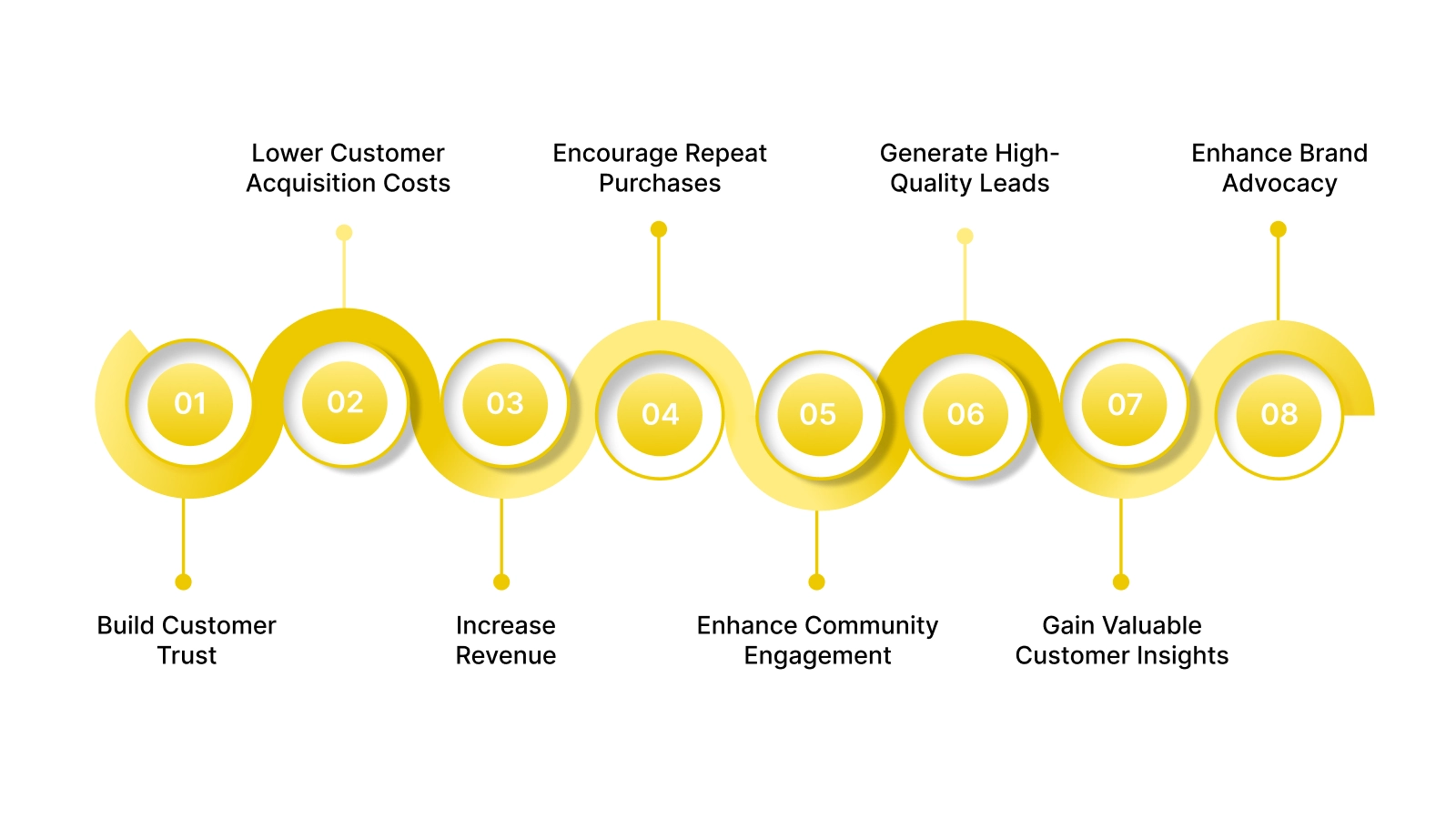
Referral programs do more than attract new customers; they strengthen loyalty, increase engagement, and improve revenue. A well-executed referral program can transform satisfied customers into active brand advocates.
Here are eight key benefits of implementing a referral program:
- Build Customer Trust: Recommendations from friends or family carry far more credibility than ads or online review management. Referred customers often start with a higher level of trust, leading to stronger engagement and loyalty.
- Lower Customer Acquisition Costs: Referral programs reduce the need for expensive advertising. The main investment is in rewards for referrers and referees, making referrals one of the most cost-effective customer acquisition strategies.
- Increase Revenue: By encouraging both existing and new customers to make purchases, referral programs help grow your revenue without heavy reliance on paid advertising. Referrals create a loop of continuous sales and engagement.
- Encourage Repeat Purchases: Referral programs reward existing customers for sharing your brand, which encourages them to return and make repeat purchases. This ongoing engagement strengthens loyalty over time.
- Strengthen Community and Engagement: By rewarding customers for sharing and interacting, businesses foster a sense of community. Active brand advocates are more likely to participate in promotions, provide feedback, and engage with your content.
- Generate High-Quality Leads: Referred customers are often more likely to convert because they come with pre-existing trust and a positive perception of your brand. This increases the likelihood of repeat business and long-term loyalty.
- Gain Valuable Customer Insights: Tracking referral activity helps you understand which customers are most influential. These insights allow businesses to identify patterns in customer behavior and tailor future marketing efforts effectively.
- Enhance Brand Advocacy: Referral programs motivate loyal customers to promote your brand actively. This organic advocacy amplifies brand awareness and drives engagement beyond what traditional marketing campaigns can achieve.
Also read: What to Look for in a Customer Engagement Solution (2025)
With these benefits in mind, the next step is to examine the different types of referral programs businesses commonly use.
How Referral Programs Operate: From Sharing to Conversion
Running a successful referral program is more about systems and processes than just rewards. It connects your products, customer interactions, and tracking tools to create a smooth flow of advocacy and acquisition.
Here’s how it typically operates:
- Generate Unique Referral Links or Codes: Each customer receives a personalized link, like a shopper sharing a link to a new skincare kit with friends.
- Track Engagement Automatically: When a friend signs up or makes a purchase using that link, the system records the action instantly.
- Reward Both Parties Promptly: Rewards are delivered to the referrer and the new customer, such as giving store credit for a completed purchase.
- Encourage Continuous Sharing: New customers can join the program, creating a cycle in which a fashion shopper refers friends, who then refer their own networks.
- Use Data for Insights: Track patterns to spot top advocates, like identifying customers who generate multiple referrals per month.
- Ensure a Seamless Experience: Keep the process effortless so someone buying a wellness product can share it with friends in just a few clicks.
Knowing this, you can now focus on how to use referral programs for customer acquisition in a structured, step-by-step manner.
How to Implement a Referral Program: A Step-by-Step Guide for Consistent Growth
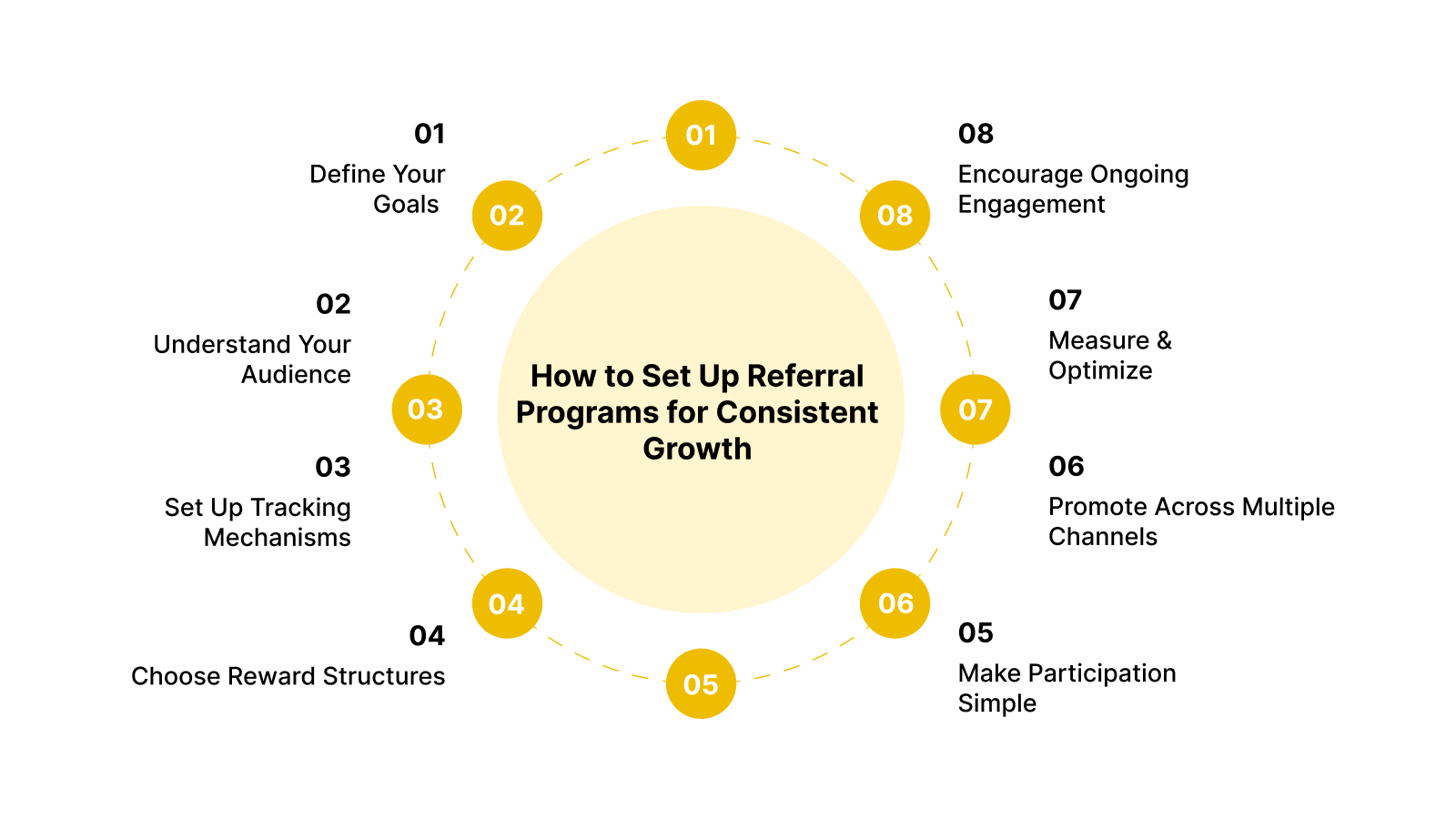
What’s the secret to a referral program that consistently attracts new customers? More importantly, what are successful brands doing that you can start applying today?
To find out, here’s a detailed 8-step guide to using referral programs to grow your customer base.
Step 1: Define Your Goals
Start by asking what you want your referral program to achieve. Do you want to increase the number of new customers, improve repeat purchases, grow your newsletter list, or enhance social engagement?
Clear goals help you structure the program, select the right rewards, and track measurable outcomes such as conversion rate, customer acquisition cost, and referral-generated revenue.
Step 2: Understand Your Audience
Next, identify who you want to reach. Are your top referrers frequent buyers, occasional shoppers, or brand advocates?
Determine what motivates them to share: a discount, free product, store credit, or exclusive access. Understanding your audience ensures your program appeals to those most likely to participate.
Step 3: Set Up Tracking Mechanisms
A referral program only works if you can accurately track referrals. Using Nector’s referral program can simplify tracking by monitoring who is sharing links or codes and who is completing purchases. This ensures rewards are applied correctly and provides clear insights into the program’s effectiveness.
Tracking ensures customers get rewarded and helps you measure the program’s effectiveness in acquiring new customers.
Step 4: Choose Reward Structures
Decide what rewards your participants will receive for referrals. These should be appealing enough to encourage action but also sustainable for your business.
You can offer discounts, loyalty points, free products, upgrades, or branded merchandise. Rewarding both the referrer and the new customer often increases participation.
Step 5: Make Participation Simple
Clarity is key. Explain how customers can join, what actions earn rewards, and how they can redeem them. Simple, transparent rules remove friction and make it easier for customers to participate and share with their network.
Step 6: Promote Across Multiple Channels
To maximize reach, meet your customers where they already engage. Use social media posts, email campaigns, website banners, blog posts, live chat, and customer service interactions. More visibility across channels increases sign-ups and referral activity.
Step 7: Measure and Optimize
Regularly track performance metrics, such as new customers acquired, referrals generated, and reward redemption rates.
Use this data to adjust incentives, messaging, promotion, referral strategies. Continuous optimization ensures your referral program remains effective over time.
Step 8: Encourage Ongoing Engagement
Keep momentum by offering bonus rewards, tiered incentives, or seasonal campaigns. Recognize top referrers to motivate continued participation.
A well-maintained referral program creates a community of active advocates who consistently introduce new customers to your brand.
Also Read: Tips And Best Practices For Customer Loyalty Programs
After setting up the program, choosing the right type of referral program is critical for success.
5 Types of Referral Programs to Improve Customer Acquisition
Referral programs can be one of your most powerful tools to acquire new customers through loyalty programs. The success of your program depends on picking the right structure that fits your brand, audience, and business goals.
While every referral program aims to encourage sharing and reward advocacy, the way you design it can make all the difference.
Let’s explore the main types and how you can use them effectively.
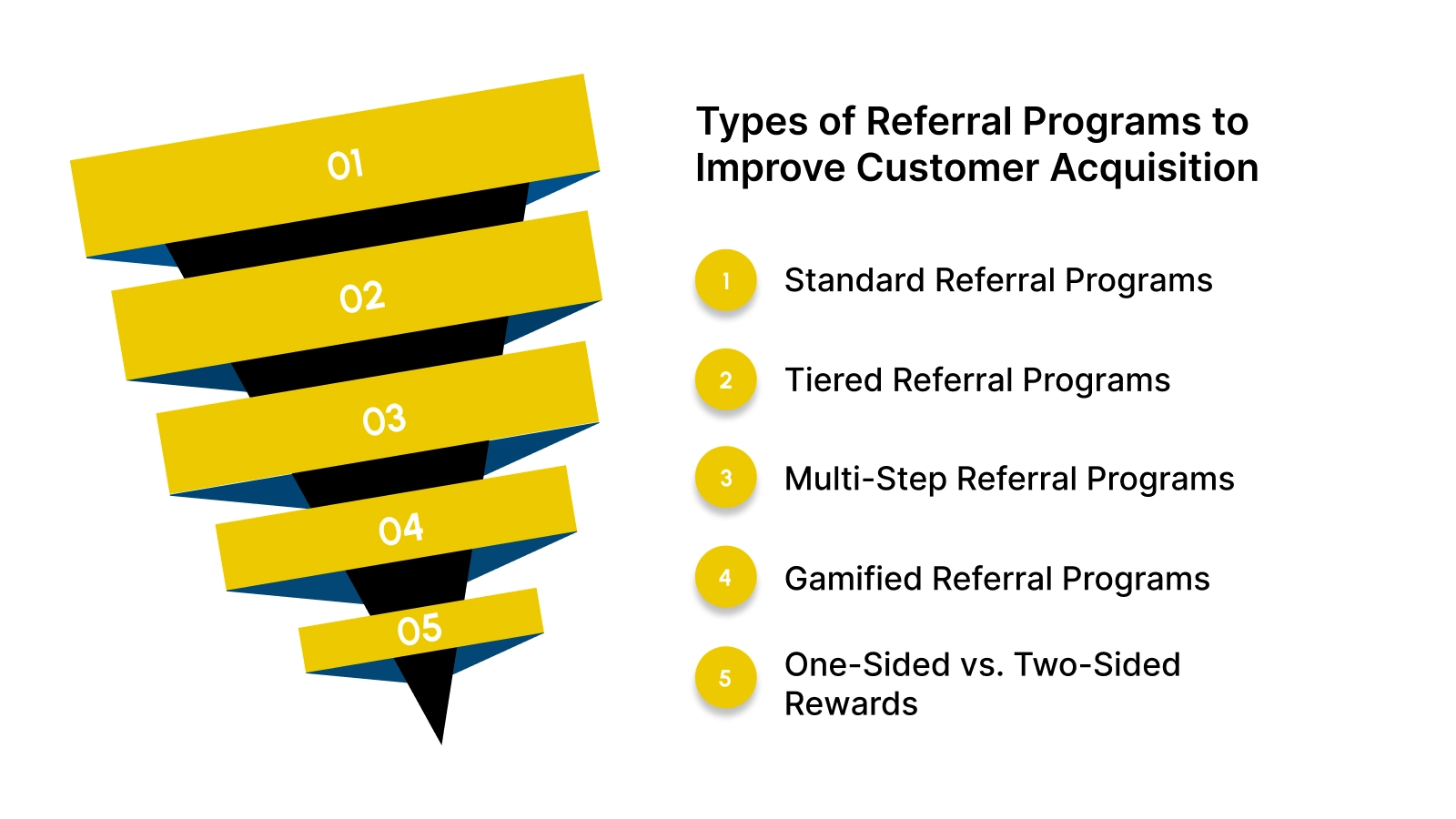
1. Standard Referral Programs
A standard referral program keeps things simple and easy for both you and your customers. Each referral earns a fixed reward, making it clear and straightforward to participate.
Example: You could offer $10 in store credit to your customer whenever a referred friend completes their first purchase.
This approach works best if you want a no-fuss program that’s simple to track and easy for your customers to understand.
2. Tiered Referral Programs
Tiered referral programs give your customers more reasons to keep referring. The more referrals they make, the bigger the rewards they earn.
Example: You might give $10 for the first five referrals, and then increase the reward to $25 for each additional referral.
This structure encourages repeat sharing and keeps your most engaged advocates motivated to bring in more friends.
3. Multi-Step Referral Programs
If you want to guide your customers’ referrals through multiple stages, a multi-step program is ideal. Rewards are distributed across several milestones, keeping participants engaged throughout the process.
Example: You could reward $10 when a referred friend schedules a demo, another $10 when they attend a workshop, and $25 when they make their first purchase.
This approach works particularly well when your sales journey has multiple touchpoints or milestones that you want your advocates to drive.
4. Gamified Referral Programs
Gamified referral programs make referring fun and competitive. You can reward the top performers over a set period, adding excitement and urgency to your program.
Example: During a holiday campaign, you might give exclusive prizes to the three customers who refer the most friends.
Gamification works best when you want to create buzz, drive high engagement, and encourage friendly competition among your customers.
5. One-Sided vs. Two-Sided Rewards
Referral programs can also differ based on who receives the reward:
- One-Sided Referral Programs: Only the existing customer or the referral recipient gets a reward. For example, you give your customer $10 when their friend signs up, but the friend receives nothing.
- Two-Sided Referral Programs: Both the referrer and the new customer receive a reward, creating a “win-win” for everyone. For instance, both the referring customer and their friend get $10 once the friend completes their first purchase.
Two-sided programs tend to get more engagement because everyone benefits, making your referral program more attractive to participate in.
Also read: Maximize Customer Retention with Advanced Technologies
With the structure defined, it’s time to align the program with your brand and operational goals.

How to Pick the Right Referral Program for Your Brand?
When setting up your referral program, keep these points in mind:
- Know your audience: What motivates them? Discounts, freebies, early access, or status rewards?
- Choose the right structure: Decide between standard, tiered, multi-step, or gamified programs based on your business goals.
- Balance rewards and cost: Make sure the incentives are enticing but sustainable for your bottom line.
- Use automation and analytics: Track referrals, automate rewards, and measure performance to keep improving.
By designing the right referral program, you can turn satisfied customers into loyal advocates, acquire better-quality leads at lower costs, and create a program that keeps growing on its own.
7 Common Referral Program Challenges and How to Address Them
Referral programs can be a strong customer acquisition channel, but results depend on how well common obstacles are addressed. Many brands struggle not because referrals don’t work, but because the program lacks visibility, clarity, or the right incentive structure.
Before improving performance, it helps to identify where referral programs fall short and which practices address those gaps. The table below outlines key aspects, common challenges, and best practices for driving consistent customer acquisition.
With these challenges addressed, you can design a program that runs efficiently and keeps both customers and your business satisfied.
How Nector Powers Referral-Led Customer Acquisition?
Nector simplifies referral programs by automating the entire journey from sharing referral links to rewarding successful conversions. You can incentivize referrals for multiple actions, such as signups, first purchases, repeat orders, or high-value conversions, not just basic referrals.
With automated tracking, real-time visibility into referral performance, and instant reward issuance, your team avoids manual validation and follow-ups. Since the referral experience is fully white-labeled and quick to integrate, even small teams can run effective acquisition programs without additional overhead.
What You Get with Nector’s Referral Program:
- End-to-End Referral Tracking: Capture every referral accurately from share to conversion.
- Two-Sided Incentives: Reward both the referrer and the new customer to increase participation.
- Custom Reward Rules: Offer discounts, store credit, cashback, or free products based on your goals.
- Built-In Fraud Controls: Prevent self-referrals and misuse with smart validation rules.
- Easy Sharing Options: Enable referrals via email, WhatsApp, social platforms, and unique links.
- Live Performance Insights: Track conversions, referral revenue, and acquisition costs in real time.
- Instant Checkout Redemption: Let customers apply referral rewards seamlessly at checkout.
Proven Impact of Referral Programs Built with Nector
Brands across ecommerce, D2C, food, and health categories have used Nector to acquire high-intent customers more efficiently. Here’s what real businesses have achieved:
- A D2C brand saw over one-third of new customers coming through referrals after launching Nector’s referral workflows.
- An organic-products brand reported a 28% higher conversion rate from referred users, along with stronger repeat purchase behavior.
- A health and wellness brand reduced its customer acquisition cost by 19% by shifting focus from paid ads to referrals.
- A restaurant chain rewarded referrals for dine-ins, online orders, and app signups, driving new visits without increasing marketing spend.
High acquisition costs don’t have to slow growth. Nector brings referrals, rewards, and performance tracking into one connected platform with ready-to-use integrations.
Start your free 7-day trial today and see how referral programs can become a reliable customer acquisition channel.
Final Thoughts
A referral program should make customer acquisition easier, not more complicated. Nector simplifies how to use referral programs for customer acquisition by automating rewards, tracking referrals accurately, and bringing everything into one central dashboard.
With features like automated referral tracking, customizable incentives, fraud prevention, and real-time performance insights, you can acquire new customers without manual follow-ups or guesswork.
By rewarding your existing customers for sharing your brand, you create a steady acquisition channel built on trust.
Book a demo with Nector to see how referral programs can turn everyday recommendations into consistent, long-term customer growth.
Frequently asked questions
How do referral programs help with customer acquisition?
Referral programs turn your existing customers into promoters. When people recommend your brand to friends or colleagues, the trust factor is already high, which makes new customers more likely to convert and stay longer.
What type of incentive works best in a referral program?
The best incentive is one your customers genuinely value. This could be discounts, store credits, cashback, free products, or exclusive access. The reward should feel worthwhile but still make sense for your acquisition costs.
Should rewards be given to the referrer, the new customer, or both?
Offering rewards to both usually works better. The referrer feels appreciated, and the new customer gets a reason to try your brand. This shared benefit increases participation and improves conversion rates.
How can I make my referral program easy for customers to use?
Keep the process simple. Use one-click sharing links, clear instructions, and minimal steps to claim rewards. If customers need too much effort to refer, participation will drop quickly.
How do I track whether my referral program is successful?
Track metrics like referral sign-ups, conversion rates, cost per acquisition, and repeat purchases from referred customers. Reviewing these regularly helps you see what’s working and where changes are needed.


%201.webp)