
%201.webp)
.avif)
.avif)
Customer retention is one of the hardest challenges for e-commerce businesses, yet it’s critical to long-term success. Acquiring a new customer can cost five times more than retaining an existing one. With increasing competition and rising customer expectations, many brands are turning to rewards programs to build lasting relationships.
The challenge, however, lies in creating a program that’s both engaging and scalable.
In this blog, we’ll learn how to create a point system for rewards that boosts and drives repeat purchases. We’ll also explore how understanding your audience, especially for brands in the beauty, fashion, wellness, and home décor sectors, is key.
Key Takeaways
- Retaining customers costs 5 times less than acquiring new ones.
- Types of point reward systems include membership loyalty programs, employee recognition systems, and point-based customer loyalty programs.
- The benefits of point systems are enhanced loyalty, increased engagement, personalized experiences, and team collaboration.
- Some of the key steps of the point reward system are defining goals, understanding your audience, and adjusting the system based on performance data.
- Companies that implement regular employee recognition can see a 45% reduction in turnover within two years.
What is a Point System for Rewards?
A point system for rewards is a structured way to incentivize customer behavior through a points-based program. Customers earn points for taking specific actions, such as making purchases, referring friends, or leaving product reviews.
These points accumulate over time and can be redeemed for rewards, such as discounts, free products, or exclusive perks. In a well-designed system, each point represents a tangible benefit for the customer.
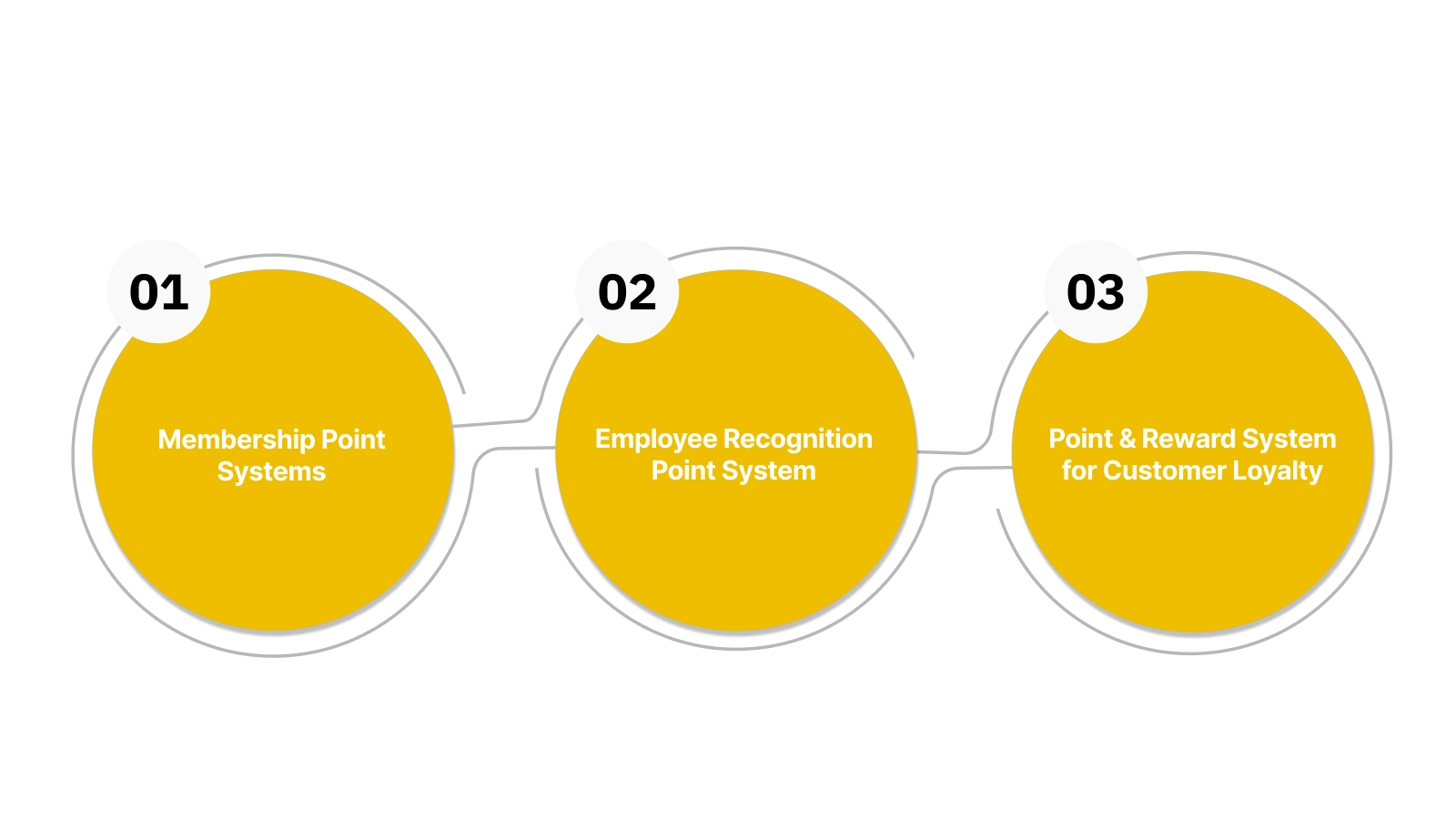
3 Types of Point Reward Systems
Point reward systems can be customized to suit various business models, from enhancing customer loyalty to recognizing employee achievements. Below are the main types of point reward systems:
1. Membership Point Systems: Membership point systems are commonly used by businesses that want to incentivize customer loyalty over time.
Example: A beauty brand might offer a membership program where customers earn 1 point for every $1 spent. As members accumulate points, they get rewards such as free samples, discounts, or early access to new products.
2. Employee Recognition Point System: Employee recognition systems reward staff members for reaching performance milestones, achieving goals, or contributing to team success.
Example: A company might set up an employee recognition point system where employees earn points for meeting sales targets. After accumulating 500 points, an employee might redeem them for a $50 gift card or an extra vacation day.
3. Point & Reward System for Customer Loyalty: Point and reward systems for customer loyalty are designed to encourage repeat purchases and long-term engagement. Customers earn points for making purchases, referring friends, leaving reviews, or engaging with social media.
Example: A fashion retailer brand may offer bonus points for referrals or writing reviews, encouraging customers to spread the word.
Having examined the types of point reward systems, the next logical step is to understand their tangible value. A strategically implemented system can yield significant returns.
Also Read: Effective Tiered Reward Levels and Benefits Guide
6 Benefits of a Point System for Rewards
Move beyond simple discounts. A strategic point system is a powerful tool for boosting motivation and building stronger relationships.
For both customers and employees, the right program can be transformative. Here are six key benefits:
- Enhanced Customer Loyalty: Rewarding repeat business is one of the most effective ways to strengthen customer relationships. When customers know they will earn rewards for their continued purchases or engagement, they are more likely to stay loyal to your brand.
- Engagement: As customers earn points, they become more involved with your brand. The gamified nature of earning points motivates customers to interact more frequently. This ongoing interaction creates a deeper connection with the brand.
- Personalized Experience: A point system can be customized to fit customer preferences and behaviors, which makes the rewards feel more relevant and personalized. For instance, high-spending customers can be offered exclusive rewards or VIP status.
- Recognition: A point system provides a visible acknowledgment of employees' efforts and achievements. Employees who received regular recognition were 45% less likely to switch organizations within two years.
- Motivation: As employees see their progress in real-time, they are driven to complete tasks, reach milestones, and contribute to the company’s success. This helps employees feel more engaged.
- Team Collaboration: Rewarding group efforts or team-based achievements helps promote collaboration within the workforce. Teams are encouraged to cooperate and share knowledge, which leads to improved performance.
These benefits highlight how a point system for rewards can contribute to your business. The next step is to explore how you can build such a system and effectively implement it.
Read Also: Maximizing Growth with CLV: A Strategic Loyalty Approach
How to Create a Rewards Point System: A Step-by-Step Guide
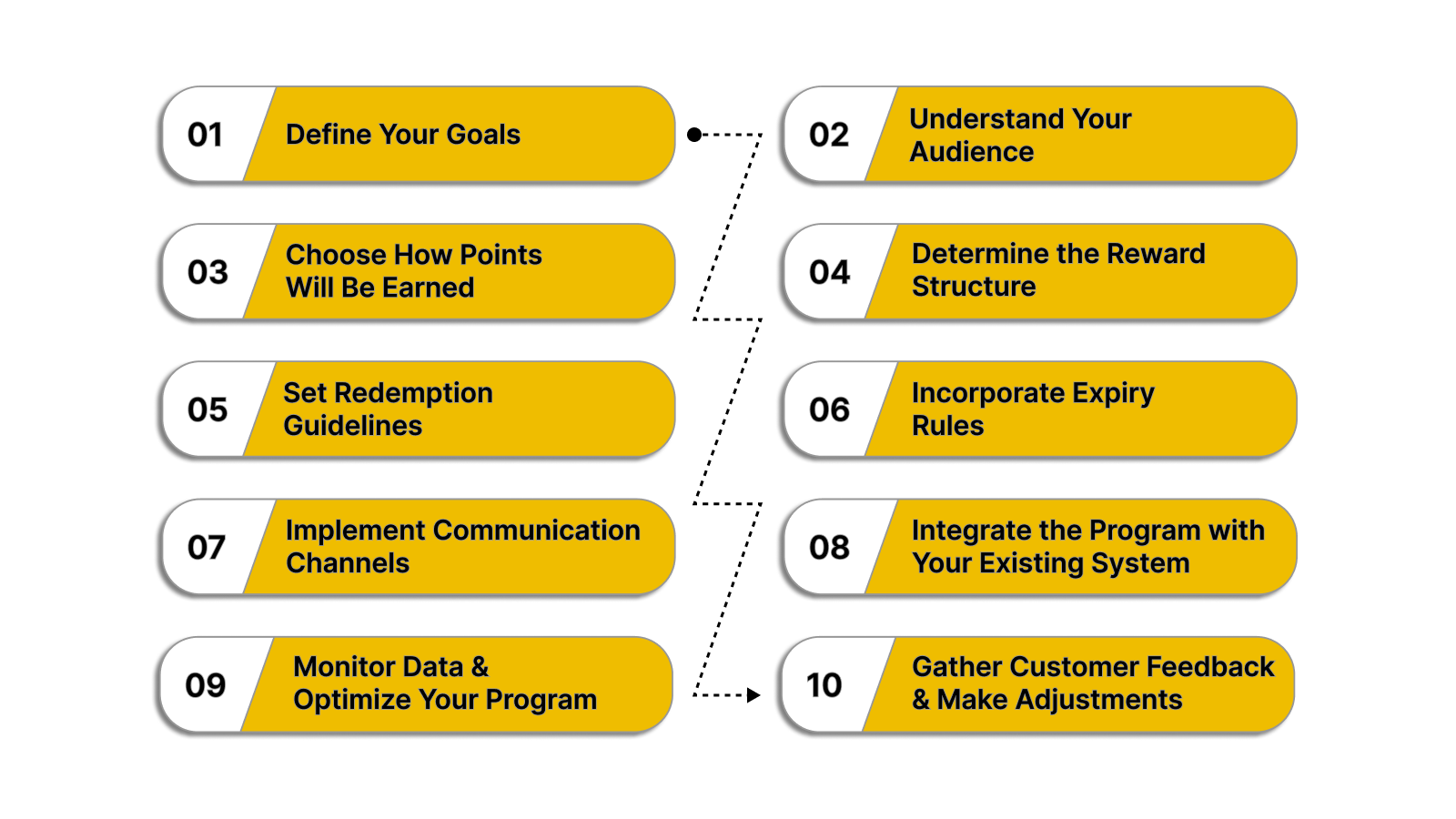
What's the secret to a reward program that actually drives sales? Most importantly, what successful brands are doing that you’re yet to apply in your start-up? To find out, here’s a 10-step guide to creating a rewards point system:
Step 1: Define Your Goals
Start by asking what you want your reward program to do. Do you want more repeat purchases? Higher average order values? More referrals or social shares?
Do you want to reward customer loyalty or encourage first‑time buyers to return?
Having concrete goals helps you design the rest of the system around measurable outcomes (repeat purchase rate, lifetime value, referrals, etc.).
Step 2: Understand Your Audience
Next, understand who you’re targeting. What behaviors matter most? Are they frequent buyers, occasional shoppers, or first‑timers?
What rewards will motivate them: Discounts, free products, early access, perks?
For customer-facing brands (beauty, fashion, wellness, home décor), find what resonates: Is it discount, exclusivity, or status (VIP)? For team/employee‑recognition systems, think about what kinds of rewards motivate performance and morale.
Step 3: Choose How Points Will Be Earned
This is where you specify which actions earn points: Purchases, referrals, reviews, social engagement, signups, repeat orders, maybe even community actions.
Nector’s Loyalty Program allows customization of earning and redemption rules: You can customize how customers earn points, and you can configure loyalty settings such as coin expiry, checkout redemption, etc.
For example, customers who reach "Gold" status can earn more points per purchase or receive bonus points for every referral.
Step 4: Determine the Reward Structure
Once earning paths are defined, decide how much value each point carries. For example: 1 point per $1 spent, or 100 points = $5 discount (or equivalent value), depending on margins and your business model.
The key is to make the reward desirable but sustainable so you don’t erode profitability.
Step 5: Set Redemption Guidelines
Instead of a flat “points = reward” model, you can build tiers (e.g., Silver, Gold, Platinum) depending on accumulated points or spending.
Tiers create a sense of progress and exclusivity. As customers climb tiers, they can get better perks.
For example, early access, larger discounts, exclusive rewards, etc. That encourages continued engagement and loyalty.
Step 6: Incorporate Expiry Rules (Optional)
Clarity matters. Make it easy for people to understand how to earn points and how to redeem them. Avoid overly complex rules.
Ideally, participants should know: “What action gives how many points,” “How many points needed for which reward,” and “Is there a time limit or expiry.”
Simple rules reduce friction and make the program more user‑friendly.
Step 7: Implement Communication Channels
A loyalty program should be easy and intuitive to engage with, from earning points to redeeming rewards.
Nector’s automated email and in-app notifications ensure that your audience is always aware of their point status, new rewards, and program updates. You can set up automated reminders to remind users about upcoming rewards or the expiration of points.

This enhances engagement by keeping your audience constantly informed. Communicate clearly to show point balance, progress, and available rewards. Make redemption straightforward and visible.
Step 8: Integrate the Program with Your Existing System
If you’re an e-commerce business, make sure your loyalty program integrates with your existing platform (e.g., Shopify, WooCommerce). If you’re implementing an employee program, ensure it aligns with your HR or performance management tools.
Smooth integration helps organize operations and ensures all points are tracked correctly.
Step 9: Monitor Data and Optimize Your Program
Once you launch, watch what happens. Track metrics: How many users earn points? How many redeem? What’s the average order value of loyal customers vs. non‑members?
Referral rates? Repeat frequency? Once your team figures this out, your developers can build custom loyalty experiences and integrate them into your current systems and applications.
Nector helps here with its analytics dashboard, which gives insights into engagement, redemption patterns, and overall program performance. They can use this data to spot weak spots (low redemption, inactive users), or to tune earning rates or reward values.
Step 10: Gather Customer Feedback and Make Adjustments
A static program gets stale. To keep loyalty going, personalize offers for your best customers, special discounts, birthday bonuses, exclusive early access, etc.
Segment loyal users based on their behavior (high spenders, frequent buyers, reviewers, referrers), and customize rewards or communications. That builds deeper relationships and maximizes lifetime value.
What if your reward system could do more than just give out points? What if it became a genuine engine for loyalty? The brands that thrive are those that prioritize simplicity and personalization.
So, how can you weave these powerful principles into your own strategy to create a program that customers love and that practically runs itself?
Also Read: How to Create the Best WooCommerce Loyalty Program
4 Best Practices for Implementing a Reward Point System With Nector
You've designed the perfect reward point system; now it's time to bring it to life. How to implement to determine your brand’s success without a miss.
Follow these proven best practices with Nector to ensure your program launches smoothly:
1. Keep It Simple
Don’t overcomplicate the point system with too many rules or reward options. A straightforward system ensures ease of understanding and participation, which ultimately leads to higher engagement.
A leading skincare brand used Nector's VIP Tiers and Birthday Rewards to create a compelling loyalty experience. The result was a powerful referral engine, driving 74.6% of all Nector orders through customer advocacy.
2. Offer Immediate and Long-Term Rewards
Balancing short-term and long-term rewards encourages continued interaction with your program. Small, instant rewards (such as a discount on the next purchase) keep customers motivated, while milestone rewards (like free shipping after 10 purchases) build long-term loyalty.
With Nector, Harisson Bags achieved a 28% boost in program signups and a 16x return on investment, proving that loyalty directly drives long-term rewards, like revenue.
3. Flexibility
Allowing users to choose how they redeem their points increases engagement. It can be choosing among a product, a discount, or exclusive content. This gives your customers options and helps them to select what they value most.
Nector’s flexible loyalty program has helped clothing brands and has seen an increase in coin redemption by 18%.
4. Measure & Adjust
Regularly assess the program’s performance and make necessary adjustments. Use data to identify what’s working and what’s not, and fine-tune your approach accordingly.
With Nector’s detailed analytics, brands can track key metrics such as customer interactions, loyalty points, and redemption patterns. So, you can make it easy to adjust strategies and keep the program aligned with business goals.
To make sure your loyalty program runs smoothly, Nector offers an easy-to-use platform to implement these best practices with minimal hassle. Login with us and see the impact of a personalized reward system on your business.
Your Guide to the Employee Rewards Budget
To be both effective and financially sustainable, an employee reward program requires a carefully calibrated budget. This ensures funds are allocated efficiently across recognition categories, maximizing impact and engagement.
So, let’s outline a budget to determine your total investment:
- Annual Budget = (Employees × Monthly Allowance × 12) + (Employees × Birthday Bonus) + (Employees × Anniversary Bonus) + (Special Recognition Fund)
- Monthly Allowance: Regular points each employee can distribute monthly.
- Small companies (10-50 employees): $20 to $30 per employee
- Medium companies (51-200 employees): $15 to $25 per employee
- Large companies (201+ employees): $10 to $20 per employee
- Birthday Bonus: Annual celebration points for each employee.
- Typical range: $25 to $75 per employee
- Tip: Should feel special but remain budget-friendly; adjust according to company culture.
- Anniversary Bonus: Work anniversary recognition points.
- First year: $50 to $100
- Subsequent years: $75 to $150
- Long tenure (5+ years): $200 to $500
- Special Recognition Fund: A buffer for exceptional achievements.
- Recommended range: 15% to 25% of the total regular budget.
Example Formula:
- Total Annual Budget = $50,000
- Allocated to Employees = $30,000
- Points Budget per Employee = 1,000 points = $100
- Cap per Reward Redemption = 500 points per employee per quarter
Example Breakdown:
- Small company (10-50 employees):
- Monthly Allowance: 10 employees × $20 × 12 months = $2,400
- Birthday Bonus: 10 employees × $50 = $500
- Anniversary Bonus: 10 employees × $75 = $750
- Special Recognition Fund: 15% of $2,400 = $360
- Total Budget: $2,400 + $500 + $750 + $360 = $4,010
This formula helps you ensure that the rewards are sustainable and evenly allocated. This makes it easier to track and scale your employee recognition program as your company grows.
Also Read: 10+ Loyalty Program Gamification Ideas and Strategies
Final Thoughts
Building a successful reward point system requires careful planning and execution, but the results can be substantial. If you create a system that rewards customers or employees, you’re eventually setting the foundation for long-term success.
So, still thinking about how to create a point system for rewards? Remember, simplicity, personalization, flexibility, and ongoing adjustments are key elements that make a reward system truly impactful. Measuring success along the way ensures that your program remains relevant and continues to deliver results.
Start implementing these steps today with Nector and book a free demo with us now!
FAQs
How do I decide how many points to give per purchase or action?
The number of points awarded should be based on your business’s goals. For instance, if you want to encourage larger purchases, assign more points per dollar spent. For actions like referrals, set an incentive that aligns with customer acquisition goals.
How often should I review the performance of my reward system?
You should monitor your reward system at least quarterly to evaluate its impact. This gives you time to assess engagement, redemption rates, and overall customer or employee satisfaction. Make adjustments as needed to keep it fresh and relevant.
Can a reward point system work for businesses of all sizes?
Yes, a reward point system can work for any size business. For smaller businesses, simpler systems with fewer reward tiers may be more appropriate. On the other hand, larger businesses might benefit from more complex structures and automation tools.
How do I make sure my reward system isn’t too complicated for customers or employees?
Keep the rules simple and transparent. Make sure the earning and redemption processes are easy to understand. Offering clear communication and providing reminders or FAQs helps ensure your audience isn’t overwhelmed by the system.
What should I do if the program isn't driving the engagement I expected?
If engagement is low, first check whether the rewards are valuable enough and if the process is user-friendly. Look at the data to see if there are particular areas where users are dropping off.
Based on this, adjust your strategy; it could be offering more instant rewards or perhaps making the reward tiers more attractive.

Related Blogs


Start Building Customer Retention That Lasts