
.avif)
.avif)
Most e-commerce brands put their energy into getting the first purchase. The second one is where things usually break.
Industry benchmarks show that the average repeat customer rate in e-commerce falls between 15–30%, which means most customers buy once and never return.
For founder-led and early growth Shopify stores, this gap shows up fast. Ads and discounts drive initial orders, but after checkout, there is little structure to bring customers back. There’s no clear incentive to return and no system designed to turn that first order into an ongoing relationship.
Repeat buyers are created through intention, not reminders.
In this guide, we’ll cover everything you need to know about repeat buyers, what they are, why they’re important, and what turns one-time customers into repeat buyers. We’ll also highlight strategies for influencing repeat buying.
At a glance:
- Repeat buyers drive profitable growth. Returning customers convert faster, spend more over time, and reduce dependence on paid acquisition, making growth more predictable and efficient.
- The second purchase is the real inflection point. Most retention gains come from shortening the gap between the first and second order through timely nudges, visible incentives, and reduced friction.
- Repeat buying is driven by progress. Customers return when they can see momentum toward rewards, credits, or benefits they’ve already earned, not when they’re repeatedly pushed discounts.
- Post-purchase experience determines repeat behavior. Clear communication, trust reinforcement, delivery reliability, and social proof immediately after the first order lowers hesitation and makes the next purchase feel low-risk.
- Scalable repeat buyer strategies are system-led. Loyalty programs, behavior-based post-purchase flows, referrals, and reviews work best when they’re automated, visible, and measured against repeat purchase metrics—not one-off wins.
What Is a Repeat Buyer?
A repeat buyer is a customer who returns to make another purchase after their first order. In e-commerce, this usually means a customer who places a second, third, or ongoing order within a defined time period, such as 30, 60, or 90 days.
Repeat buyers behave differently from first-time customers. They convert faster, spend more over time, and are less dependent on discounts or ads to make a purchase decision.
Once trust is established through the first order, the barrier to buying again is significantly lower.
For most Shopify stores, repeat buyers are also more predictable. Their purchases are often driven by replenishment cycles, brand affinity, or incentives like loyalty rewards and store credits. That makes repeat buying less about persuasion and more about timing and relevance.
This is why improving your repeat buyer rate is one of the most reliable ways to grow revenue without increasing acquisition spend.
Why Repeat Buyers Matter More Than First-Time Orders
Repeat buyers are a signal of whether your business is built to grow efficiently. When customers return, revenue compounds from the same customer base instead of restarting the acquisition cycle with every order. This efficiency is often the difference between short-term spikes and sustainable growth.
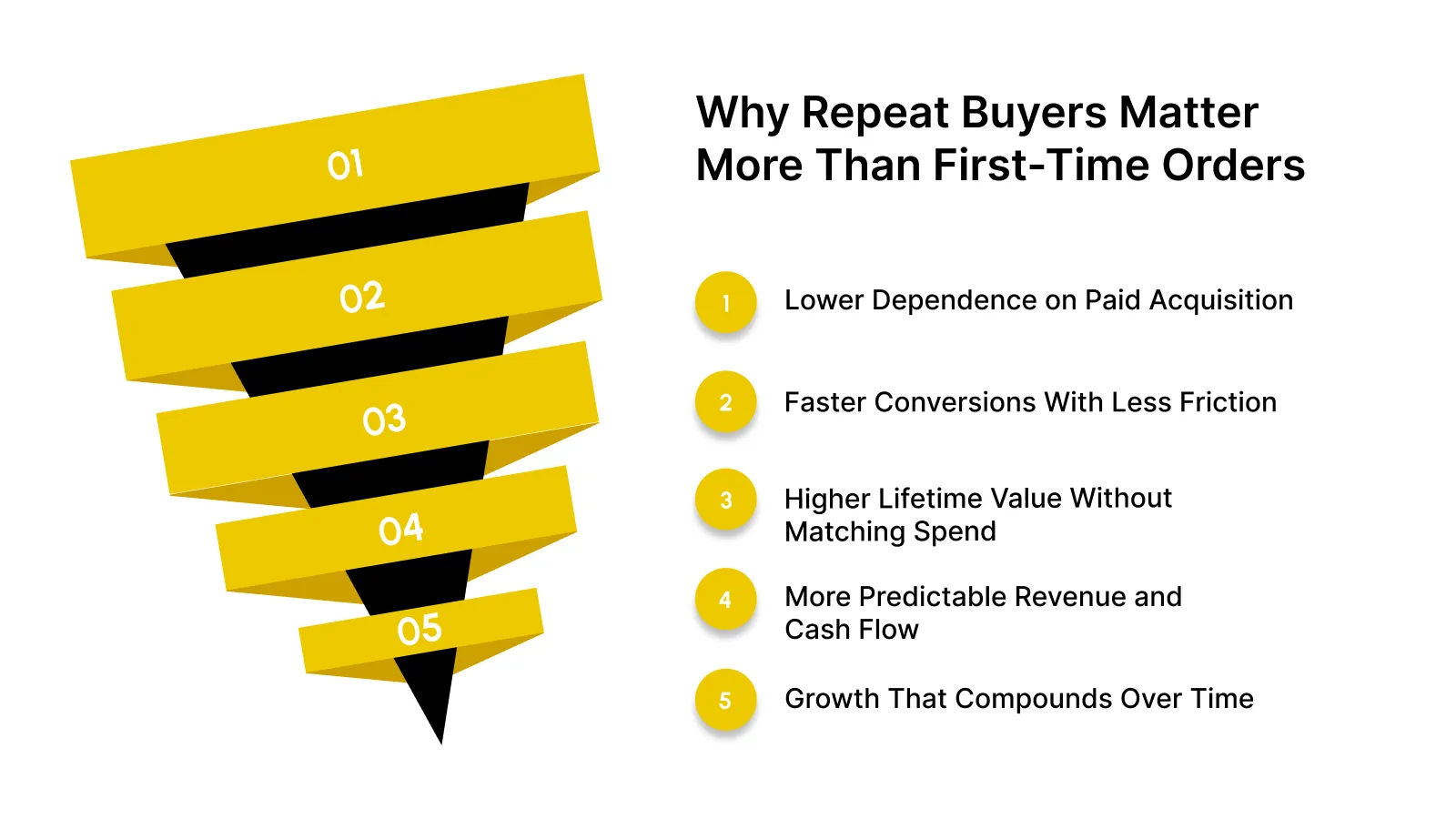
Here’s how repeat buyers directly impact your business.
1. Lower Dependence on Paid Acquisition
Repeat buyers reduce how often revenue is tied to ads and promotions. When returning customers place orders organically, you are not forced to increase ad spend every time you want to grow. This becomes increasingly important as acquisition costs rise and paid channels become less predictable.
2. Faster Conversions With Less Friction
Once a customer has purchased, trust is already established. Repeat buyers typically convert faster because they understand your product, pricing, and delivery experience. This shortens the decision cycle and reduces the need for aggressive incentives to close a sale.
3. Higher Lifetime Value Without Matching Spend
Each additional purchase increases customer lifetime value without requiring a new acquisition cost. Over time, this improves overall unit economics and makes growth more profitable, especially for categories that depend on repeat consumption.
4. More Predictable Revenue and Cash Flow
Returning customers create consistency in demand. This predictability helps with inventory planning, cash flow management, and forecasting, which are often major pain points for small and mid-sized e-commerce teams.
5. Growth That Compounds Over Time
Every repeat purchase strengthens the relationship between the customer and your brand. When supported by the right systems, repeat buying compounds naturally, turning one-time buyers into long-term revenue contributors.
Nector helps brands give customers a reason to come back, using loyalty rewards, referrals, and post-purchase nudges that turn first orders into repeat habits. If repeat buyers matter to your growth, this is where the work actually starts.

What Actually Turns a One-Time Buyer Into a Repeat Buyer
Repeat buying is rarely driven by a single message or promotion. Customers return when there is a clear pull to come back, created by a combination of motivation, timing, and trust. Brands that rely only on reminders or discounts usually see short-term spikes, not sustained repeat behavior.
Below are the core levers that consistently influence whether a customer places a second and third order.
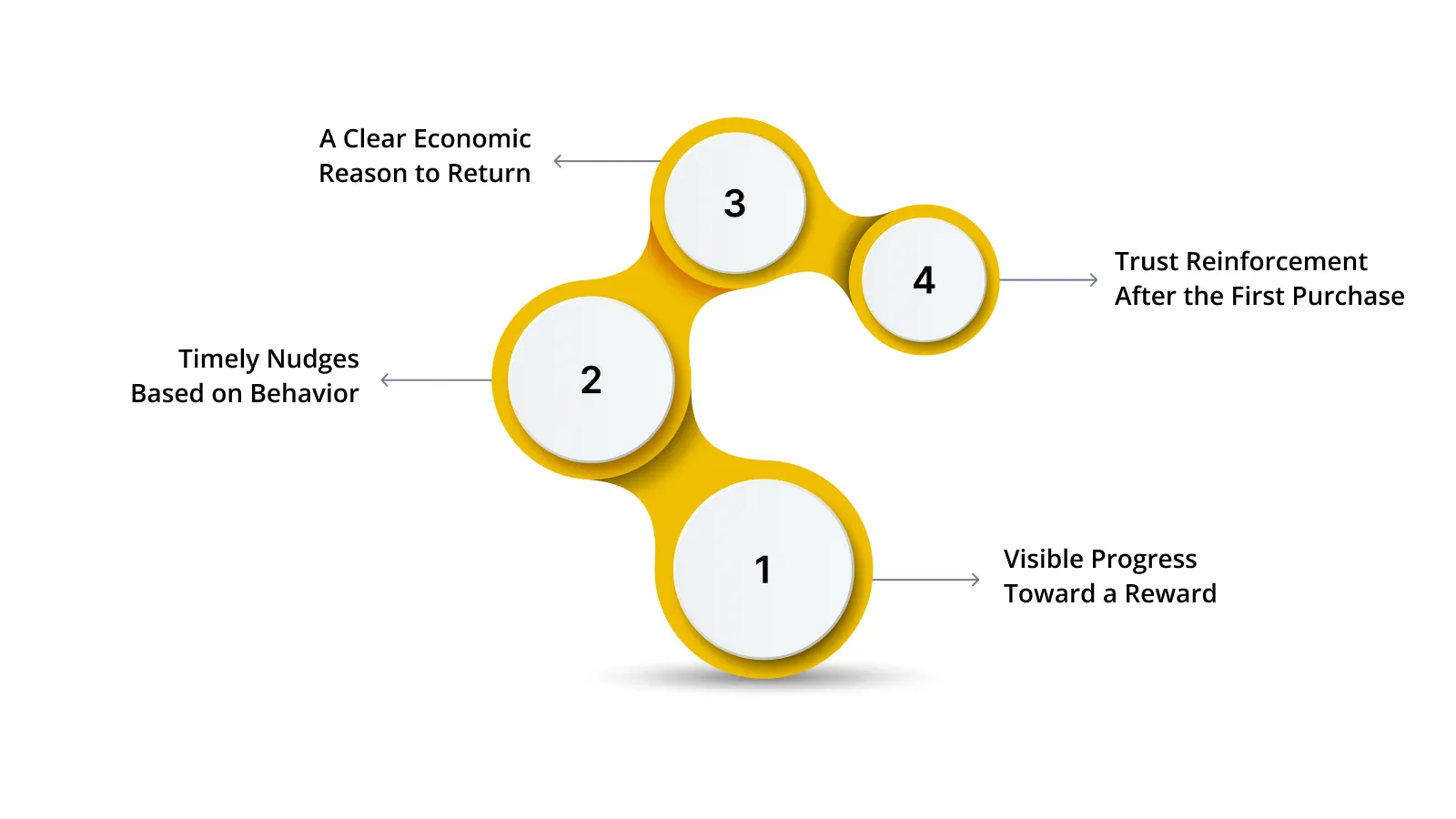
1. Visible Progress Toward a Reward
Customers are more likely to return when they can see that they are working toward something. Progress creates momentum. Points balances, tier milestones, or “you’re close to your next reward” indicators give customers a reason to re-engage rather than postpone their next purchase.
When progress is visible, repeat buying feels like completion, not persuasion.
2. Timely Nudges Based on Behavior
Timing matters more than frequency. The most effective nudges are triggered by customer behavior, not calendar schedules. Reminders that arrive after product delivery, near replenishment windows, or when a reward is close to unlocking feel relevant instead of promotional.
This approach respects the customer’s buying cycle and increases the likelihood of a natural return.
3. A Clear Economic Reason to Return
Repeat buyers need a tangible benefit waiting for them. Store credits, points, or earned rewards work better than blanket discounts because they feel owned, not offered. Customers are more motivated to return to use something they have already earned than to respond to another promotion.
This shift changes repeat purchases from price-driven decisions to value-driven ones.
4. Trust Reinforcement After the First Purchase
The period after the first order is critical. Customers are still deciding whether they trust the brand enough to buy again. Clear communication, delivery confirmation, and social proof from reviews all reduce hesitation.
When trust is reinforced early, the second purchase becomes a lower-risk decision.
Also read: 10 Best Practices for Boosting Customer Loyalty and Repeat Purchases
Repeat Buyer Strategies That Scale for E-commerce Teams
Once you understand what drives repeat buying, the focus shifts to execution. The goal is not to run more campaigns, but to build systems that consistently bring customers back with minimal manual effort.
The strategies below are designed for founder-led and growing e-commerce teams that need repeatable results, not one-off wins.
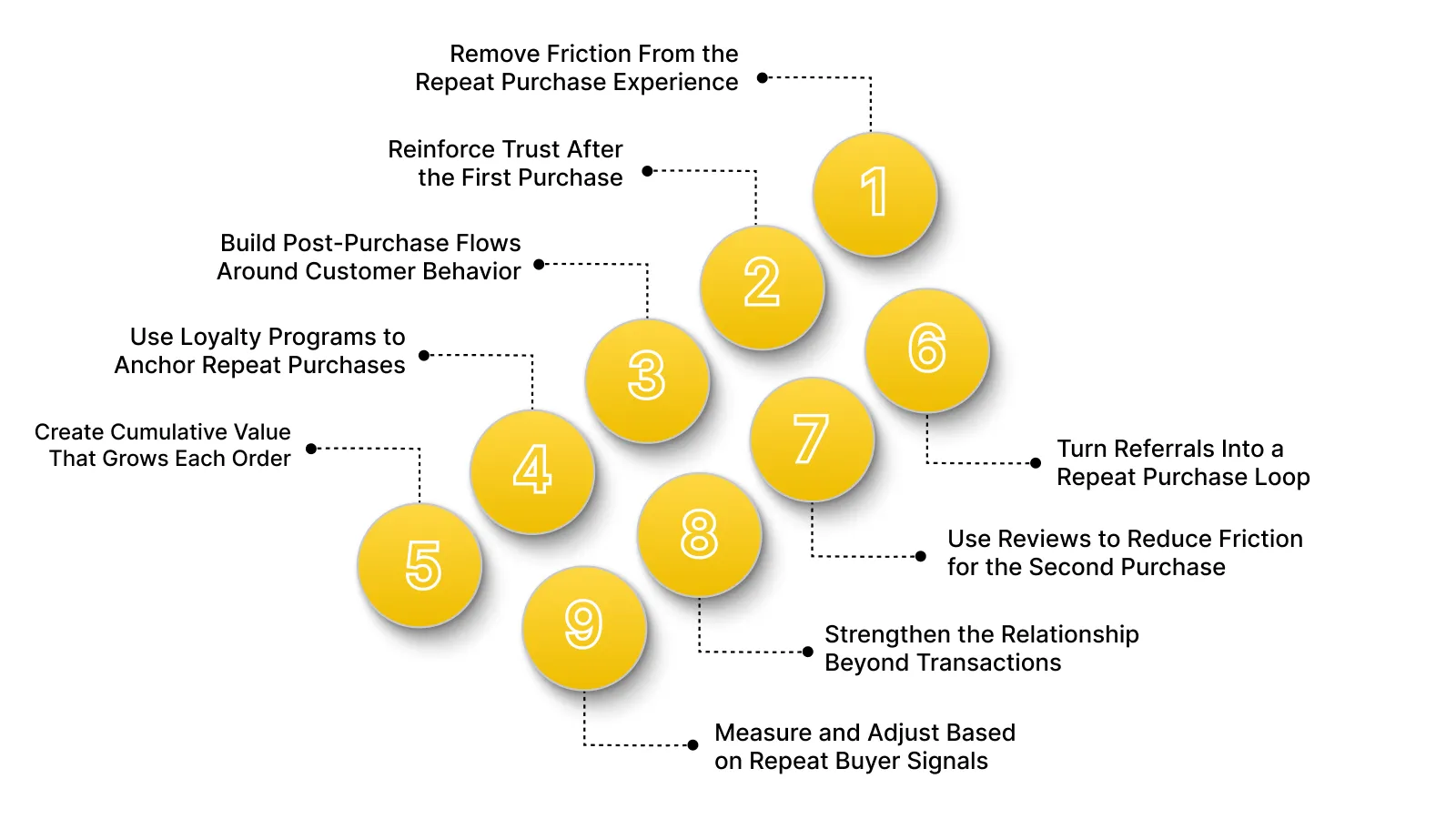
1. Remove Friction From the Repeat Purchase Experience
Repeat buyers expect the buying process to get easier over time. Once trust is established, friction becomes the biggest blocker to return purchases.
This means:
- Fast, familiar checkout: Reduce steps and avoid forcing customers to re-enter information they’ve already shared.
- Multiple payment options: Let customers pay the way they’re already comfortable to remove hesitation at checkout.
- Flexible returns: Lower perceived risk by making it easy for customers to change their minds.
- Reliable delivery: Consistent and timely delivery builds confidence in buying again.
Result: Lower drop-off during repeat purchases and shorter decision cycles for returning customers.
2. Reinforce Trust After the First Purchase
The first post-purchase experience shapes whether a customer feels confident buying again.
Trust-building signals include:
- Clear post-purchase communication: Set expectations around delivery and support.
- Visible customer reviews: Reinforce trust through social proof from other buyers.
- Consistent experience end-to-end: Ensure the experience matches what was promised at checkout.
Result: Reduced hesitation around second purchases, especially in quality- or fit-sensitive categories.
3. Build Post-Purchase Flows Around Customer Behavior
Repeat buyers are created after checkout. Post-purchase flows work best when they respond to customer actions and timing signals, not incentives or broadcast calendars.
Effective triggers include:
- Delivery-based nudges: Reinforce the purchase experience and introduce rewards once the product has arrived.
- Replenishment-based reminders: Time follow-ups around expected usage cycles for consumable products.
- Milestone notifications: Alert customers when they are close to unlocking a reward or benefit.
Result: Customers return at moments when buying again feels natural, increasing second-purchase conversion without increasing message volume.
4. Use Loyalty Programs to Anchor Repeat Purchases
A well-designed loyalty program gives customers a reason to return that isn’t tied to constant discounting. The most effective programs reward purchasing behavior, especially the second and third orders, rather than just signups.
Focus on:
- Points for every purchase: Reinforces that every order contributes toward a tangible reward.
- Bonus points for the second order: Accelerates the jump from first-time buyer to repeat buyer within a defined window.
- Visible progress toward redeemable rewards: Shows customers how close they are to unlocking value, reducing hesitation to buy again.
- Tiered benefits for continued engagement: Encourages long-term repeat behavior by increasing rewards as customers stay active.
Result: Repeat purchases are driven by momentum. Customers return to complete progress they can already see, rather than responding to one-off promotions or reminders.
Also read: Successful Loyalty Program Examples and Benefits for 2025
5. Create Cumulative Value That Grows With Each Order
Repeat buyers are motivated by value that builds over time, not one-off incentives. When each purchase improves what a customer can unlock next, returning feels logical rather than promotional.
Effective approaches include:
- Accumulating rewards: Each purchase contributes toward a meaningful future benefit instead of resetting after redemption.
- Frequency-based benefits: Customers unlock better outcomes as they buy more often, reinforcing habitual purchasing.
- Progress-based reward scaling: Rewards increase in usefulness or relevance as customers continue purchasing.
- Access-linked progression: Continued purchasing unlocks non-monetary benefits such as priority access or limited experiences, reinforcing long-term commitment.
Result: Customers return because every purchase strengthens future value, combining economic rewards with a sense of progression and exclusivity.
6. Turn Referrals Into a Repeat Purchase Loop
Referrals are often treated only as an acquisition channel, but they also play a strong role in retention. When customers earn referral rewards, they come back to redeem them.
What works best:
- In-store redeemable rewards: Referral incentives that can only be used in your store drive return visits.
- Two-sided incentives: Rewarding both referrer and referee improves participation and referral quality.
- Post-purchase referral prompts: Asking for referrals after a positive experience increases share intent.
Result: Referral rewards pull customers back into the store, turning advocacy into repeat purchasing behavior.
7. Use Reviews to Reduce Friction for the Second Purchase
Many customers hesitate before placing a second order, especially in categories where quality or fit matters. Reviews reduce uncertainty at this stage.
Strong review practices include:
- Post-delivery review requests: Collect feedback after customers have experienced the product.
- Points-based review rewards: Incentivize reviews without training customers to wait for discounts.
- High-visibility review placement: Surface reviews where repeat purchase decisions happen.
Result: Trust builds faster, hesitation drops, and customers feel confident returning for their next purchase.
8. Strengthen the Relationship Beyond Transactions
Repeat buyers are more loyal when the relationship feels intentional rather than purely transactional.
This can include:
- Occasion-based recognition: Acknowledge birthdays or customer milestones.
- Personalized recognition: Acknowledge loyal customers in ways that feel human, not transactional.
- Consistent brand values: Reinforce what your brand stands for across touchpoints.
Result: Stronger emotional loyalty alongside increased purchase frequency.
9. Measure and Adjust Based on Repeat Buyer Signals
Repeat buyer strategies only work when performance is tracked and refined. The goal is to monitor retention quality, not vanity engagement.
Key signals to track:
- Time between first and second purchase: Shows how quickly customers return.
- Repeat purchase rate by cohort: Highlights which segments are retaining best.
- Loyalty redemption rate: Indicates whether rewards are motivating enough to be used.
- Revenue from returning customers: Measures how much growth is driven by repeat buyers.
Result: Retention becomes measurable and predictable, turning repeat buying into a controllable growth lever rather than an outcome you hope for.
Strategy only matters if it changes behavior. The next step is measuring whether your repeat buyer efforts are actually working.
How to Know If Your Repeat Buyer Strategy Is Working
Repeat buyer strategies should change customer behavior, not just campaign activity. The metrics below help you understand whether customers are returning more often, sooner, and in a way that reduces reliance on acquisition.
If your repeat buyer ratio and short-term repeat rates are improving, your retention foundation is working. If revenue from repeat buyers grows alongside those metrics, you’re compounding value from the same customer base.
When numbers stall, the issue is usually timing, visibility of rewards, or unclear value progression.
How Nector Helps Turn First-Time Customers Into Repeat Buyers
Nector is an all-in-one loyalty platform built to help e-commerce brands increase repeat purchases without relying on constant discounts or manual follow-ups. It brings loyalty, referrals, reviews, and retention analytics into a single system so repeat buying becomes part of the customer journey, not a separate campaign.
Key Features
- Customizable loyalty programs: Create point-based systems tailored to your business with flexible rules for how and when customers earn rewards.
- Tiered reward levels: Segment customers into loyalty tiers and define exclusive benefits for each level to motivate ongoing engagement.
- Referral program support: Incentivize customers to refer new buyers with rewards that are redeemable in-store, driving both acquisition and repeat purchases.
- Review collection and management: Encourage and display customer reviews (including text, images, or video) to strengthen social proof and reduce friction for repeat purchases.
- Coin expiry and reward control: Set expiry dates and conditions for points, or delay reward issuance based on order status, ensuring more meaningful engagement and reduced abuse.
- Advanced integrations: Connect easily with Shopify, Klaviyo, Omnisend, Judge.me, and other platforms to sync loyalty, marketing, and purchase data across your stack.
- Analytics and dashboard: Get insight into program performance, redemption behavior, and repeat purchase trends to refine your retention strategies.
Repeat buyers are created through clear incentives, timely engagement, and systems that work together. When those pieces are in place, retention becomes predictable instead of reactive. Sign up now to see Nector in action.
Wrapping Up
Once you understand what drives repeat buying, improving it becomes far more manageable. Clear metrics show where customers stay engaged and where they drop off, and even small gains in repeat behavior can have a meaningful impact on revenue.
The real progress happens when those insights translate into smoother experiences, clearer value progression, and easier reasons for customers to return.
Nector brings all of this together through a loyalty platform built to support repeat purchases, referrals, and reviews across the customer journey.
Book a demo to see how Nector can help you grow repeat buyers.
FAQs
What is a repeat buyer?
A repeat buyer is a customer who makes more than one purchase from the same brand over time. In e-commerce, this usually refers to customers who return after their first order to place a second, third, or ongoing purchase, contributing to higher lifetime value and more predictable revenue.
What is a repeat customer called?
A repeat customer is often referred to as a returning customer or loyal customer. In analytics and retention reporting, they’re typically classified as customers who have completed two or more purchases within a defined period.
What does “repeat purchase” mean?
A repeat purchase is any subsequent order made by a customer after their initial purchase. Brands often track repeat purchases within specific time windows, such as 30, 60, or 90 days, to understand how quickly customers return and how effective their retention strategies are.
Why are repeat buyers important for e-commerce businesses?
Repeat buyers drive more efficient growth because they convert faster, cost less to retain than acquiring new customers, and contribute more to long-term revenue. They also make demand more predictable, helping brands improve cash flow planning and reduce reliance on paid acquisition over time.

Related Blogs

%201.webp)
%201.webp)

Start Building Customer Retention That Lasts