

.avif)
.avif)
In a crowded restaurant industry, keeping customers coming back is key to long-term success. Restaurant customer loyalty becomes a crucial element for building sustainable revenue streams in 2026. Research says that promotional deals are a primary driver of consumer behavior. In fact, 80% of customers use discounts like “Buy One, Get One” offers and real-time specials. In addition, happy customers often share their experiences, acting as powerful brand loyalty for restaurants. In this blog, you’ll get six proven tips that can turn occasional diners into regulars.
Key Takeaways
- 80% of customers are influenced by promotional deals like "Buy One, Get One" offers and real-time specials.
- Loyal customers are more likely to spread positive word-of-mouth, acting as brand advocates.
- Consumer behavior is increasingly value-driven, with the average American participating in one to five loyalty programs in 2026 and beyond.
- A focus on retention strategies reduces the need for constant customer acquisition, which can be expensive.
Why Loyalty & Retention Matter for Restaurants in 2026?
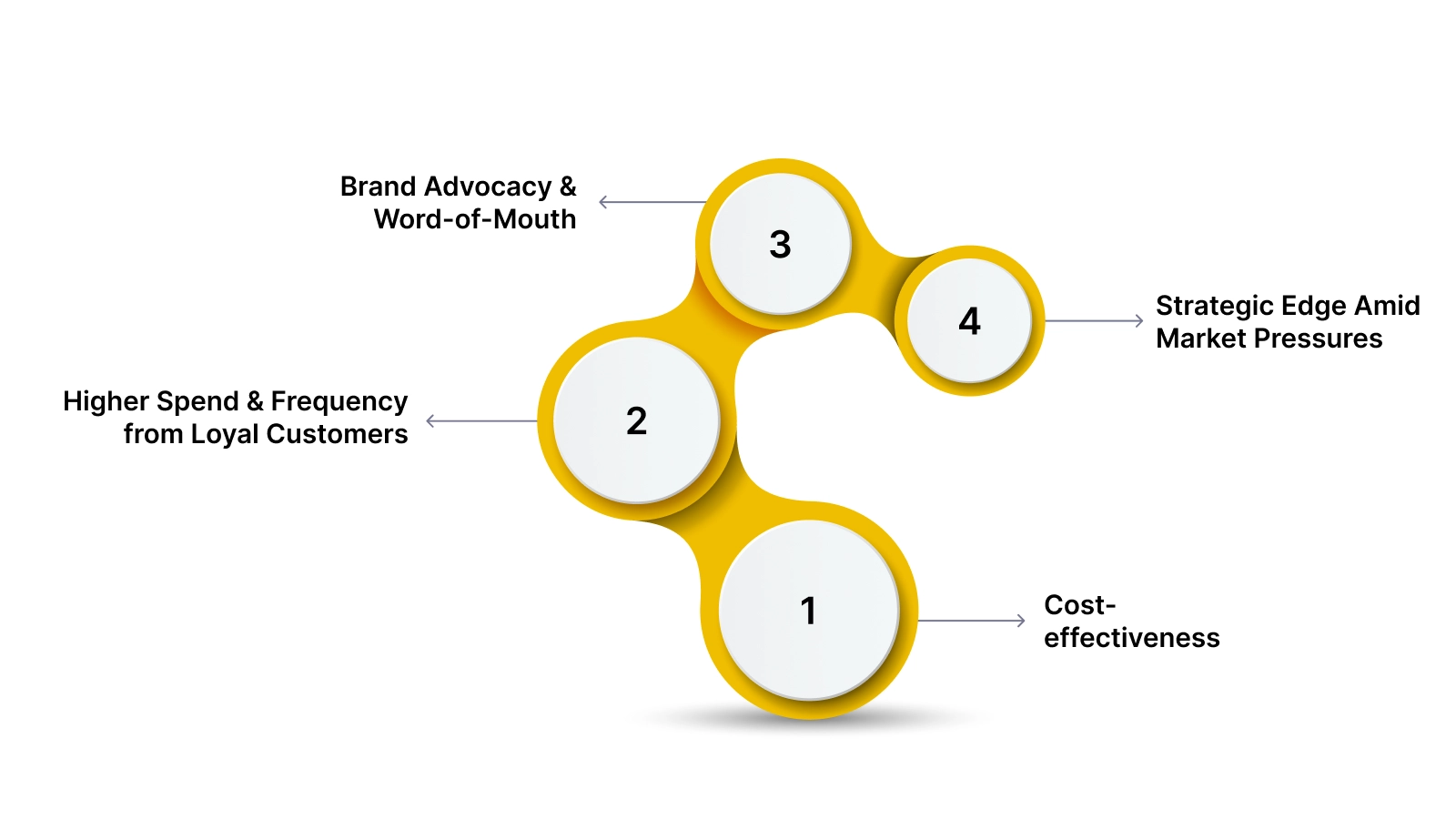
Chasing new customers is expensive and inefficient. The real profit engine lies in keeping the ones you already have. As consumer behavior solidifies around value-driven deals and membership perks, a strategic focus on loyalty and retention is no longer a "nice-to-have" marketing tactic. It has become the core component of a future-proof business model.
Here are the other reasons why it’s important:
- Cost-effectiveness: A well-structured loyalty program can drastically reduce the need for constant customer acquisition, shifting focus to nurturing relationships with your current clientele.
- Higher Spend & Frequency from Loyal Customers: Loyalty members visit restaurants more frequently and spend more per visit than non-members.
- Brand Advocacy & Word-of-Mouth: Spreading positive word of mouth that attracts new customers without paid advertising. Loyalty programs create emotional bonds with customers, turning them from mere diners to advocates who engage with your brand.
- Strategic Advantage Amidst Market Pressures: As consumer habits and economic pressures shift, restaurants need a strong advantage. Mainly, it strengthens your position in the industry.
We know loyalty fuels growth. But what separates a good program from a great one?
Also Read: Customer Loyalty Programs and Their Benefits
Top 6 Tips for Boosting Restaurant Customer Loyalty
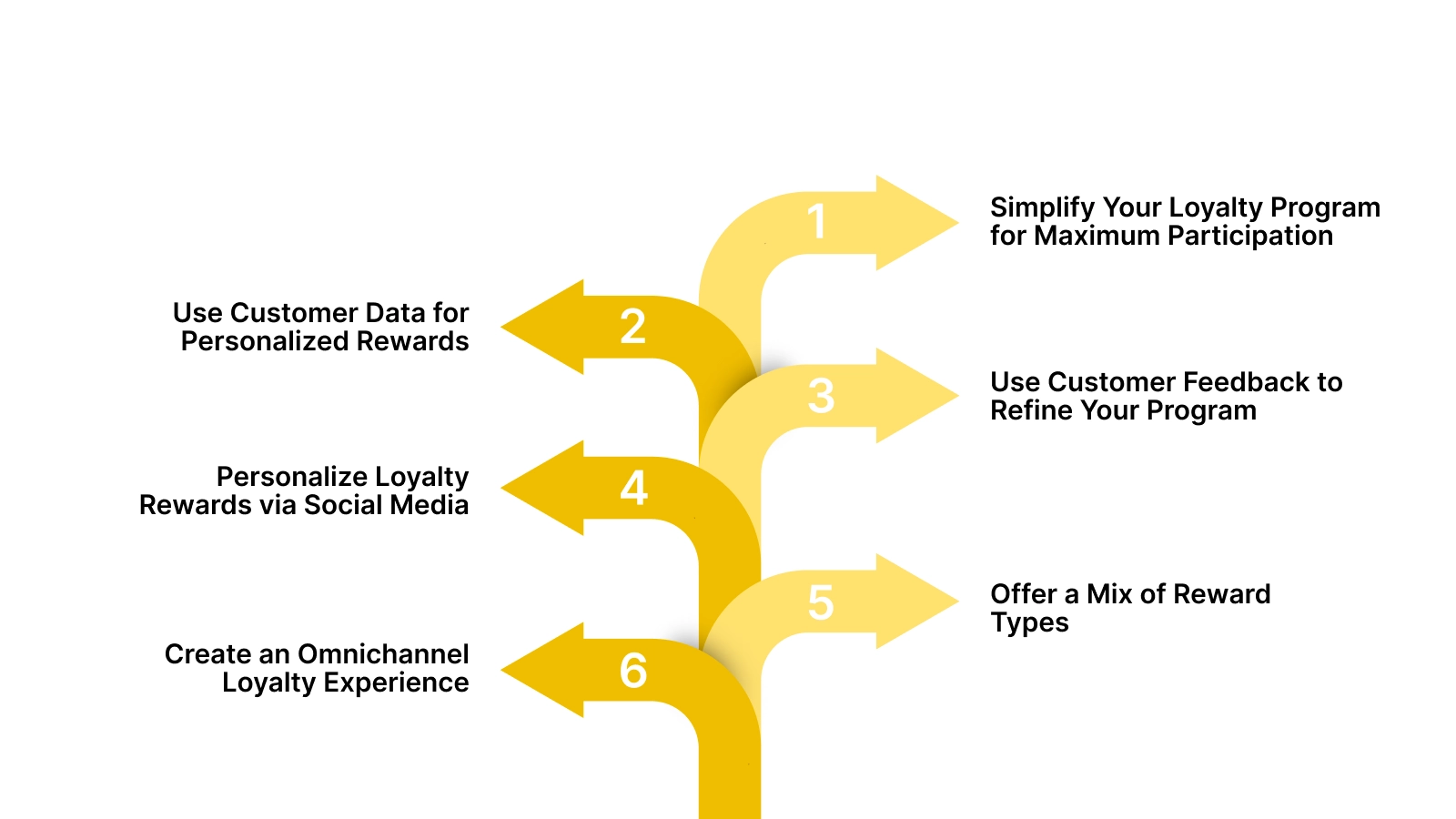
Your chefs pour their heart into every dish, but what keeps customers coming back for more? It’s the experience beyond the plate.
Forget the old punch card. Explore our six best practices to build a modern program that genuinely resonates and drives repeat business:
1. Simplify Your Loyalty Program for Maximum Participation
Keeping your loyalty program simple and easy to use is critical for customer engagement. Complicated point systems or convoluted reward structures can deter participation. The best loyalty programs are those with clear, straightforward reward structures that customers can easily understand and engage with.
For instance, a point-based program with clear thresholds like "earn 100 points and get a free appetizer" is easy to follow and rewards customers quickly. Simplifying your program removes barriers that could prevent customers from joining or redeeming their rewards.
2. Use Customer Data for Personalized Rewards
Personalization is key when it comes to engaging loyal customers. For the average American, belonging to a handful of loyalty programs, anywhere from one to five, has become the norm.
So, you can use data from past purchases, preferences, and customer interactions to offer personalized rewards. For example, like birthday discounts, special menu items, or exclusive offers.
Nector, for example, allows brands to create customized loyalty rewards. With us, you can launch an on‑brand loyalty experience in hours and customize every element, from points to VIP tiers. Nector’s Loyalty Program features help you with “Flexible reward rules,” “Tiered loyalty programs,” and “Customizable reward settings” as its core features.
This approach lets your brand customize rewards based on customer actions and preferences.

3. Use Customer Feedback to Refine Your Program
Listening to your customers is essential in maintaining a strong loyalty program. Actively seeking out and analyzing feedback, you can fine-tune your strategies to better serve your customers.
Nector makes it easy to incorporate this feedback into your loyalty experience, allowing you to improve your rewards system for long-term engagement. Our Referral Program helps you lower Customer Acquisition Costs (CAC) by using the power of referrals.
Instead of spending heavily on ads, you can acquire new customers at a fraction of the cost from your existing customer base. Plus, we include built-in fraud protection to prevent fake referrals, ensuring that new customers are genuine and engaged.
4. Personalize Loyalty Rewards via Social Media
Social media offers a powerful way to personalize your loyalty program and engage with customers. Offering rewards for social actions, like sharing a post, tagging your restaurant, or checking in, you expand your reach to new potential customers.
Personalizing rewards via social media helps strengthen the emotional bond between your customers and your brand, increasing loyalty over time.
5. Offer a Mix of Reward Types
To appeal to a wider range of customers, it’s essential to provide a variety of reward types. Customers are more likely to stay loyal if they can choose from several rewards that suit their preferences.
You can offer everything from free menu items to discounts, exclusive offers, and event invitations. The key is flexibility; let your customers decide how they want to redeem their points.
6. Create an Omnichannel Loyalty Experience
Today’s customers interact with brands across multiple channels, from in-store visits to mobile apps and online ordering. Your loyalty program should be integrated across all touchpoints to ensure a better experience.
A unified, omnichannel approach ensures that customers can earn and redeem rewards at every stage of their journey with your brand.
While these tips provide the base for building loyalty, the right technology is the engine that powers it. To truly automate personalization and deepen engagement, restaurants are turning to key innovations.
What are those?
Also Read: Why Loyalty Programs Are Key to Scaling Your Shopify DTC Store in 2025
How to Use Technology to Enhance Restaurant Customer Loyalty?
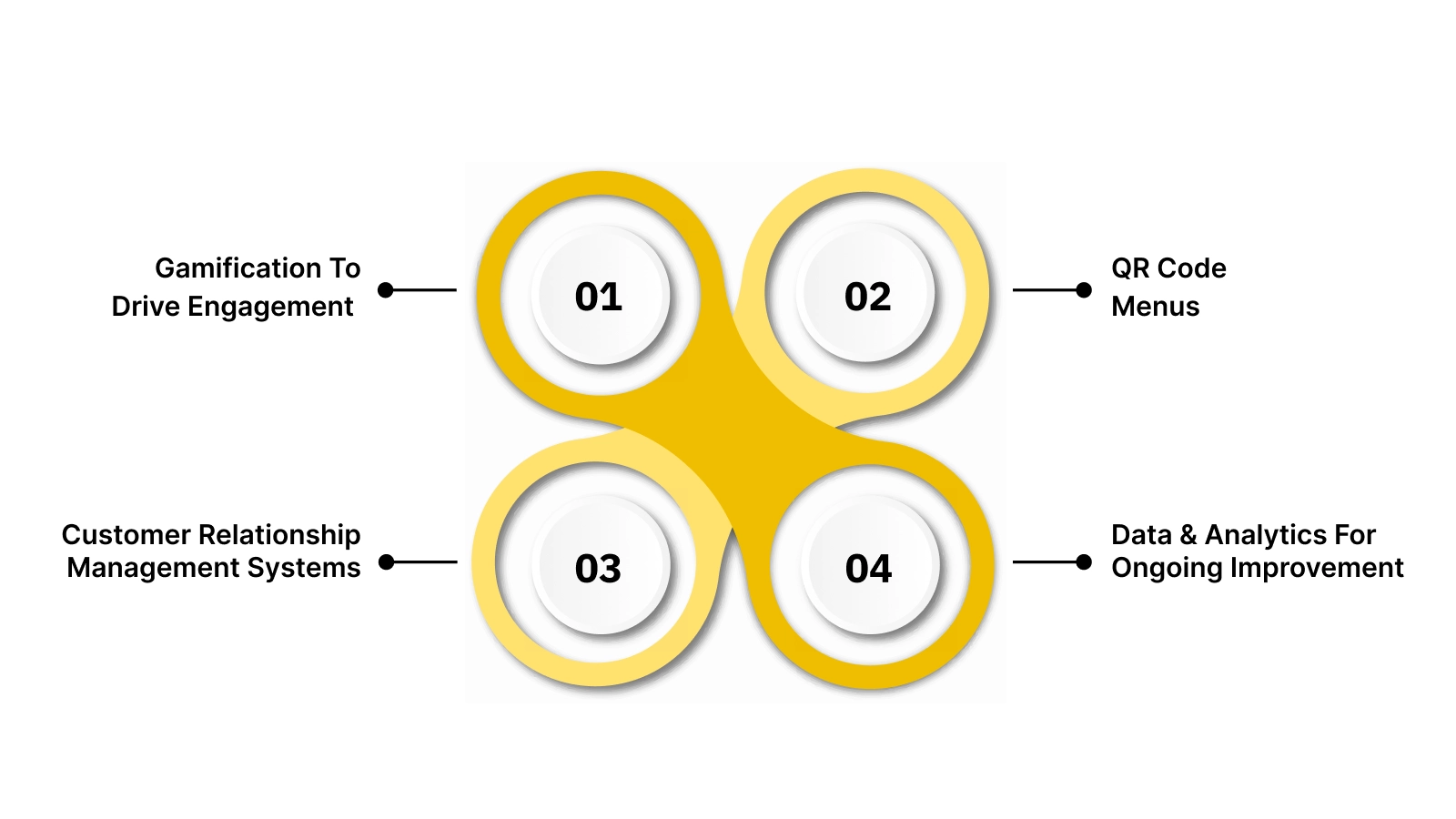
Successful restaurant industries are embracing new technologies to stay competitive. To list your brand in the top restaurant list, provide customers with personalized experiences. Below are key technologies that restaurants use in 2026:
1. Gamification to Drive Engagement
Gamification is one of the most effective ways to boost customer interaction and loyalty. Add game-like elements such as badges, progress bars, and challenges, so restaurants can keep customers engaged and motivated to return.
2. QR Code Menus
The shift to contactless dining, accelerated by the pandemic, has made QR code menus a common technology in restaurants. Customers can scan a QR code at their table to view the menu, place orders, and even pay without ever needing to interact with a server. This reduces physical contact while also enhancing customer convenience.
3. Customer Relationship Management (CRM) Systems
CRM systems are essential tools for building deeper connections with customers. Tracking customer behaviors, preferences, and visit history, CRM systems allow restaurants to send targeted promotions customized to each individual.
Nector’s integration with CRM systems like Kapture allows loyalty programs to tap into customer data to deliver personalized rewards.
For example, if a customer frequently orders a particular dish, you can offer them a discount on their next order or a free item as a reward.
4. Data and Analytics for Continuous Improvement
One of the key advantages of using technology in loyalty programs is the ability to track and analyze customer data. For example, you should see which rewards are most popular, identify trends in customer preferences, and adjust your offers accordingly.
Using this data-driven approach ensures that your loyalty program remains relevant and effective, leading to higher revenue.
But what’s the key to making these technologies work for your restaurant? The answer lies in integrating these tools into a cohesive loyalty program.
How Nector Supports Loyalty Programs and What’s Proven So Far?
Nector supports multi-touch triggers such as reward purchases, referrals, reviews, social engagement, or other customer actions (not just purchases). You get automation, real‑time tracking of points, automated emails/notifications, and seamless checkout redemption.
Because the experience is white‑labeled and easy to integrate, even small teams can manage a loyalty program without a dedicated retention staff. Here’s what you get from Nector’s Loyalty Program:
- Frictionless Redemption: Apply points seamlessly at checkout.
- Branded Hub: A dedicated page to track and manage rewards.
- Automated VIP Tiers: Grant exclusive benefits automatically.
- Urgency & Action: Use expiring points and campaign bonuses to drive engagement.
- Smart Prompts: Display earnable points on product and checkout pages.
- Convert Visitors: Track anonymous users for personalized retargeting.
- Revenue Retention: Issue refunds as store credit to secure future sales.
Real Results from Brands Using Nector
Businesses across various sectors have seen significant improvements in customer retention and overall revenue after integrating Nector’s loyalty platform. Below, we’ll explore real-world examples of how brands have increased their bottom line with us:
- A brand saw a 37.82% in orders coming from loyalty members, after deploying our loyalty system.
- Another case (an organic‑food brand) recorded a 31% repeat purchase rate and +16.5% revenue driven by Nector. This attributes growth to personalized rewards, gamified incentives, and repeat‑customer focus rather than discount-only tactics.
- A health‑nutrition brand using Nector reported a 13.2% increase in AOV, over 21% loyalty‑program participation after collaborating with us.
A restaurant could reward dine-in visits, food orders, referrals, reviews, and social shares using Nector’s flexible reward rules. Automated workflows remove manual overhead, which is useful for restaurants that may not have large marketing teams.
Tired of managing disconnected loyalty tools? Nector provides a fully integrated solution that syncs points, referrals, and reviews on one platform, complete with ready-made integrations. Start your free 7-day trial today.
Also Read: Tips And Best Practices For Customer Loyalty Programs
Wrapping Up
Ultimately, the most powerful asset your restaurant has is your community of loyal customers. Modern technology is the bridge to building restaurant customer loyalty. It allows you to recognize a returning guest, reward their patronage personally, and make every interaction feel special.
This is about creating a sense of belonging. Focus on that connection, so you build a brand that people choose, meal after meal. From VIP tier management to integrations with CRM systems, Nector offers the tools you need to build long-term customer relationships.
Book a demo to see how it can make loyalty easy for your store.
Frequently asked questions
Why is customer loyalty important for restaurants?
Customer loyalty in the restaurant industry directly impacts revenue. Loyal customers are more likely to return, spend more, and recommend your restaurant to others. Loyalty programs can turn first-time diners into regulars and brand advocates, which is crucial for long-term success.
What are the benefits of using gamification in loyalty programs?
Gamification makes loyalty programs more engaging and fun. Add elements like badges, challenges, and progress tracking, and customers feel more motivated to participate and stay loyal to your brand.
How can a restaurant use CRM systems to improve loyalty?
CRM systems allow restaurants to collect and analyze customer data to send personalized offers and promotions. Understand customer preferences and behavior, so your restaurants can create more targeted and effective loyalty campaigns.
Can loyalty programs be integrated with online ordering and in-store experiences?
Yes, modern loyalty programs are designed to work across all customer touchpoints, including online orders, takeout, and dine-in experiences. This ensures a loyalty experience for customers, no matter how they interact with your brand.
How can a restaurant encourage customers to redeem their loyalty points?
To motivate customers to redeem their points, offer rewards that are valuable and relevant to them. Additionally, setting expiration dates on points and creating time-limited campaigns can add urgency and increase redemption rates.


.webp)