





.avif)
.avif)
eCommerce businesses have always faced a growing challenge. This is not new in 2026. In fact, 18% of U.S. online shoppers abandon their orders due to a "too long or complicated checkout process. The number may seem benign, but from a marketer's perspective, any number could be concerning, as it’s part of revenue generation. So, brands need to focus on every stage of the eCommerce conversion funnel.
In this blog, we'll break down the different stages of the funnel and explore practical strategies to optimize each stage for higher conversion rates. If you want to increase customer retention, engagement, and revenue, the right funnel strategy can make all the difference.
Quick Glance
- 36% of consumers report they haven't received incentives to leave a review in the past year.
- 53.57% of total orders coming from loyalty members were achieved by a healthcare brand using Nector’s rewards and referrals.
- 320% of orders driven by referral programs are possible by building effective customer loyalty through incentives.
- Complicated checkouts cause 18% of U.S. cart abandonment. Simplifying this step is essential for increasing conversions.
What is an eCommerce Conversion Funnel?
An eCommerce conversion funnel is a conceptual map of the customer journey. It helps marketers and store owners visualize how customers move through different stages and even post-purchase engagement.
Customers may visit multiple touchpoints, bounce between stages, or revisit the funnel before making a final decision. For example, a potential customer may first see your product via an ad, then browse your site, and add items to their cart.
But what if they abandon the purchase before completing it? They might later return, driven by a targeted email reminder or retargeting ad. This non-linear nature of the funnel means that understanding and tracking every touchpoint is critical.
So, how do you make sure you track each one of those? The answer could be found in understanding eCommerce strategies for different marketing funnel stages.
Also Read: 7 Proven Strategies to Skyrocket Sales for Your Direct-to-Consumer Ecommerce Brand
5 Typical eCommerce Funnel Stages
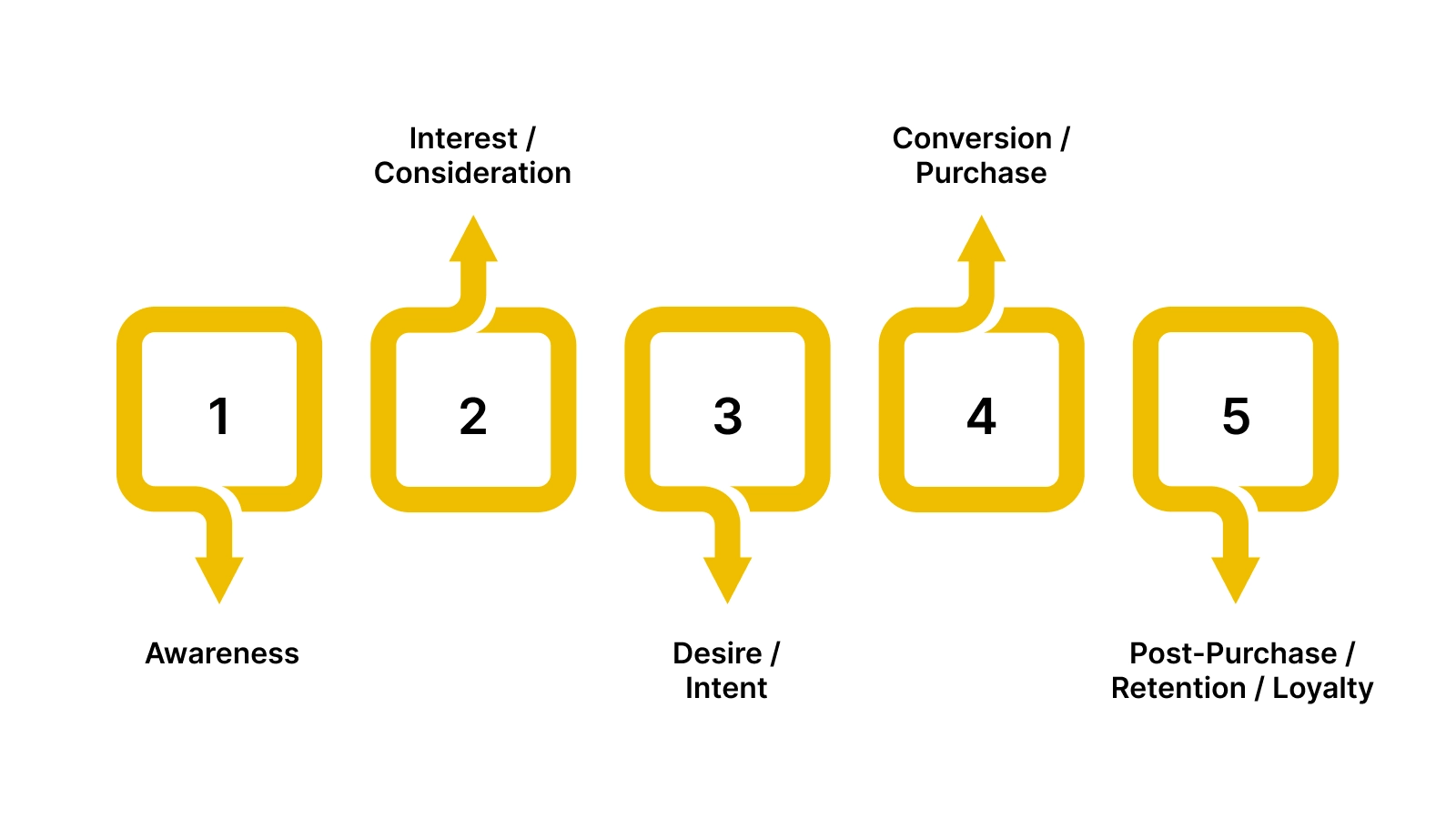
The eCommerce conversion funnel is typically broken down into three, four, or five stages, depending on the framework used. The most common and comprehensive version includes the following stages: Awareness, Interest/Consideration, Desire/Intent, Conversion/Purchase, and Post-purchase/Retention.
Being a marketer, you need to understand each of these stages in detail to drive higher conversions and boost customer loyalty.
1. Awareness (Top-of-Funnel / ToFu / Upper Funnel)
The awareness stage marks the beginning of your customer’s journey. It’s when potential customers first discover your brand or product. At this stage, they may not yet have a clear need for your product, but they are learning about your business for the first time.
Key Goal: Your primary goal here is to reach as many relevant people as possible and grab their attention.
How to Drive Awareness:
- Paid Ads: Display or social ads can help increase visibility. Ads that are targeted based on interests, behaviors, and demographics will ensure you reach a relevant audience.
- SEO: Appearing in relevant organic searches requires a website that is strategically optimized for search engines. This ensures the right audience sees your products.
- Social Media & Referrals: Organic social media content and influencer partnerships help extend brand awareness by using others’ followers. Referrals and word-of-mouth are also key ways to drive awareness.
2. Interest / Consideration (Mid-Funnel / MoFu)
At this stage, a potential customer starts assessing if your offerings meet their desires or address their challenges.
Key Goal: At this stage, your goal is to nurture interest and demonstrate the value of your product in meeting their specific needs.
How to Engage During This Stage:
- Product Pages & Content: Visitors will browse product details, specifications, and images. Make sure that your product pages are compelling and informative, highlighting key benefits and features.
- Comparison Content: Providing comparison guides or blogs that compare your product to competitors can help guide visitors toward making an informed decision.
- Retargeting Ads: Visitors who leave your site can be re-engaged through retargeting campaigns to remind them of what they were interested in.
Nector helps you build Personalized Loyalty Programs that encourage engagement right from the moment a customer visits your site. Our automated, personalized emails, such as reminders, post-purchase confirmations, and follow-ups, help sustain customer relationships.
Our strategic timing is designed to drive repeat sales, reward redemptions, and customer referrals.
3. Desire / Intent (Part of Mid-Funnel)
In some frameworks, a “Desire” or “Intent” stage is added as an intermediary phase. Here, potential customers are actively convinced of the need for a product and are emotionally motivated to buy. This stage typically marks a shift from logical evaluation to an emotional response.
Key Goal: At this stage, you want to create a sense of urgency and solidify the desire to make a purchase.
How to Stir Desire:
- Personalized Offers: Offering time-limited discounts, free trials, or exclusive access can move customers closer to deciding they need the product.
- Urgency & Scarcity: Limited-time offers, low stock alerts, or countdown timers are effective tactics to create urgency.
- Product-Specific Messaging: Personalized messaging, such as highlighting features that address the customer’s needs, nudges them toward purchase.
4. Conversion / Purchase (Bottom-of-Funnel / BoFu)
At the conversion stage, the customer is ready to make the purchase. This is the final step in the funnel where they add the product to the cart, proceed to checkout, and complete the transaction.
Key Goal: Your main goal here is to minimize friction and ensure a smooth checkout process.
How to Improve Conversion:
- Simplified Checkout: Ensure the checkout process is quick, simple, and secure. The number of steps should be lower to avoid unnecessary form fields.
- Incentives: For customers to complete the purchase, offering discounts, free shipping, or exclusive deals can be powerful motivators.
- Trust Signals: Display security badges, offer clear return policies, and provide transparent pricing to increase customer confidence.
- Cart Abandonment Follow-Ups: Sending emails to remind customers of abandoned carts or offering an additional incentive can encourage conversions.
Also Read: How to Increase Customer Loyalty and Recover Lost Sales
5. Post-Purchase / Retention / Loyalty (After Funnel / Customer Stage)
After the purchase, the funnel doesn’t end. In fact, the post-purchase stage is crucial for retaining customers and encouraging repeat purchases. The goal is to keep customers engaged and loyal, turning them into repeat buyers and brand advocates.
Key Goal: At this stage, you aim to provide an exceptional experience, turning a one-time buyer into a lifelong customer.
How to Build Retention:
- Loyalty Programs: Create a reward system where customers earn points for purchases, referrals, and social media engagement. This encourages them to return to your store to redeem rewards.
- Referral Incentives: 36% of consumers reported not receiving any incentives from businesses to leave a review in the past year. So, your business can bridge the gap by offering discounts or rewards for referring friends or family.
- Personalized Follow-ups: Send thank-you emails, post-purchase surveys, or personalized product recommendations to maintain the connection.

Nector integrates with review platforms like Judge.me, Google Reviews enables you to incentivize your customers to leave valuable feedback. Once a customer completes a transaction, an automated email or SMS is triggered.
Then, it politely asks them to share feedback on the product they purchased. This ensures that review collection is timely, without any manual effort from your team.
Once you’ve successfully nurtured your customers through the post-purchase stages, it’s important to assess how well your strategies are working. How to do that? Knowing how to measure their effectiveness is required in this case.
Read Also: 7 Reasons Online Customer Reviews Drive Trust & Sales (+ How to Run a Review Program)
How to Track the eCommerce Conversion Funnel Stages?
You know that customers are buying, but do you know why they aren't buying more? The secret doesn't lie in your final sales number, but in the silent, invisible stages that lead to it.
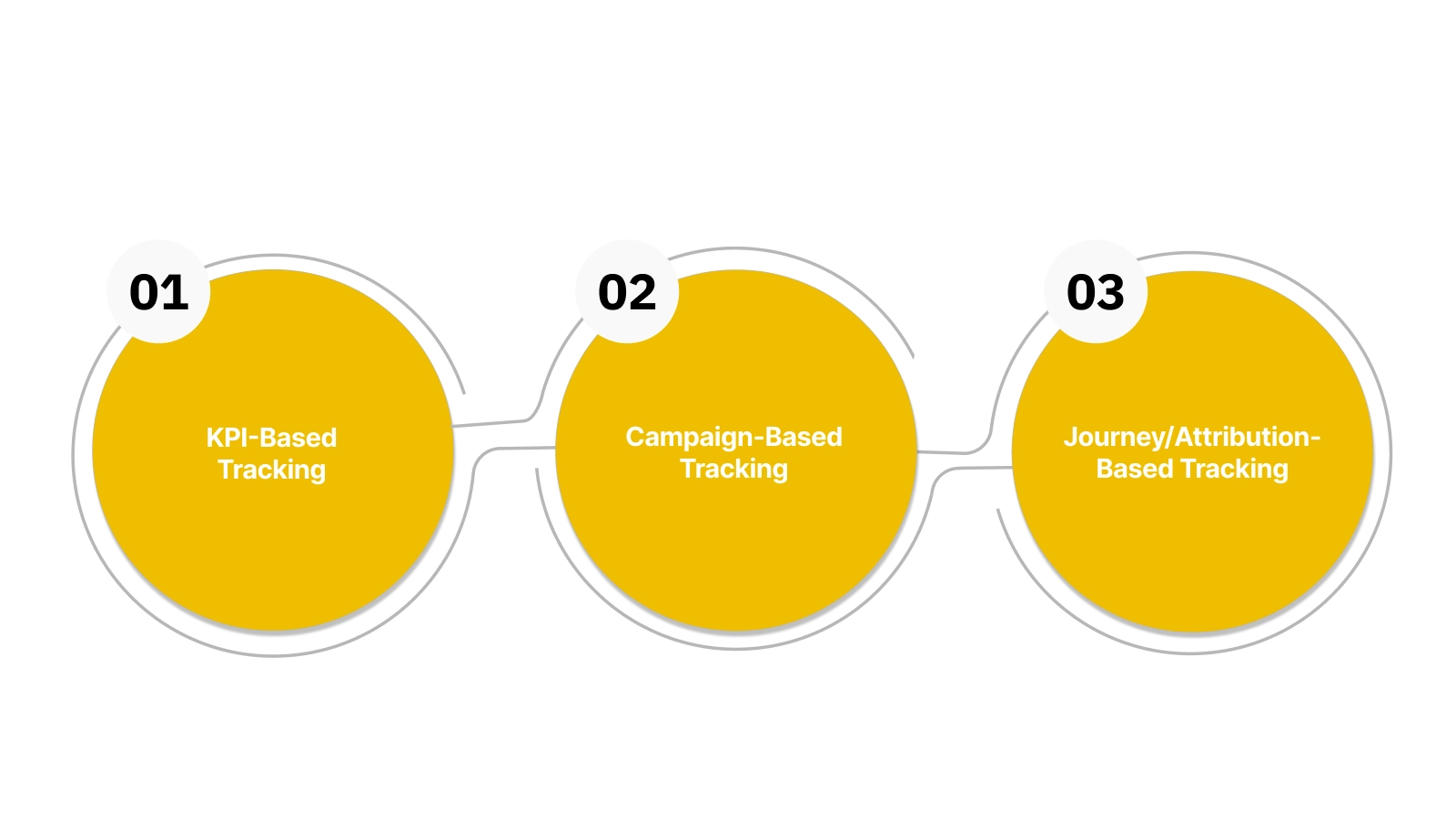
So, the path to track your revenue via KPI-based tracking, campaign-based tracking, or journey/attribution-based tracking. Each provides valuable insights into customer behavior and funnel efficiency.
1. KPI-Based Tracking
Key Performance Indicators (KPIs) are specific metrics that allow you to assess the success of each stage of the funnel. These indicators help you understand whether you're meeting your goals at each step and where adjustments are needed.
- Newsletter Sign-ups: A strong signal that visitors are considering your brand more seriously.
- Abandoned Cart Recovery: The rate at which you recover abandoned carts through emails or retargeting.
- Customer Lifetime Value (CLV): The total revenue a customer generates over the course of their relationship with your brand.
- Churn Rate: The percentage of customers who stop buying from your brand over a specific period.
2. Campaign-Based Tracking
Campaign-based tracking focuses on evaluating the effectiveness of specific marketing campaigns based on their alignment with different funnel stages. Each campaign can be tagged to a particular stage, allowing you to assess its performance and impact.
- Ad Click-Through Rate (CTR): Measures how many people click on your ads.
- Cost Per Acquisition (CPA): How much you’re spending to acquire each new customer through paid channels.
- Engagement Metrics: Shares, comments, and likes for content posted on social media.
- Retargeting Success Rate: The conversion rate of customers who are retargeted after viewing your product pages.
- Referral Program Engagement: The number of customers actively sharing referral links and redeeming rewards.
3. Journey/Attribution-Based Tracking
Attribution tracking takes a broader view of the customer journey, tracking every touchpoint a customer interacts with along their path to purchase. This type of tracking helps you understand the full scope of interactions that contribute to conversions.
- Multi-Touch Attribution: This model attributes a percentage of the final sale value to each touchpoint in the customer’s journey (e.g., ad exposure, website visit, email click, etc.).
- Cross-Channel Attribution: Measures the impact of various channels (social media, email, paid ads) across the customer’s journey to purchase.
- Path Analysis: Shows the exact path customers take from first awareness to conversion, helping you identify common touchpoints.
With the right tracking in place, you can improve your marketing Return on Investment (ROI) and build a funnel that attracts new customers.
Read Also: Common Customer Loyalty Mistakes to Avoid for E-commerce Success
How Nector Speeds Up Funnel Tracking?
With tools for automating loyalty programs, referrals, and reviews, Nector ensures you’re capturing valuable customer data to improve conversions.
- Referral Program: Encourage new customer acquisition via incentivized referrals.
- Loyalty Programs: Reward customers for taking action like signing up, browsing, or engaging with your brand.
- Reward Programs: This program incentivizes customers with loyalty points for submitting reviews and offers bonus points for photo or video reviews.
Here’s Our Proven Results:
- For one brand, Nector drove a 28.43% repeat purchase rate using our loyalty and referral program.
- Another client saw 320% of all orders come from the referral program and Product Detail Page (PDP) integration members.
- Another leading brand achieved an 82.79% AOV uplift from loyal customers and 200x+ ROI through Nector’s rewards and referrals program.
Ready to drive higher retention rates? With Nector's powerful programs, you can convert one-time buyers into lifelong advocates. Start your free trial with Nector now.
The Bottom Line
The eCommerce conversion funnel is a vital framework for understanding how customers move from discovery to purchase and beyond. Optimizing each stage of this funnel with tools like Nector, you can build long-term customer loyalty.
We turn browsers into buyers, and buyers into lifelong fans. Our strategies are designed to optimize the entire customer experience, generating quick wins and sustainable revenue.
Ready to boost your eCommerce funnel? Book a Free Demo with Nector, so we can help you turn one-time buyers into lifelong advocates!
Frequently asked questions
What is the eCommerce conversion funnel?
The eCommerce conversion funnel models the entire customer path. It begins with the first point of contact and continues through the final purchase. To build loyalty, the funnel also includes crucial post-purchase stages aimed at driving retention.
Why is it important to track each stage of the funnel?
Tracking each stage of the funnel helps businesses in many ways. For example, identifying where customers drop off, optimizing engagement at key moments, and refining strategies for conversion, retention, and loyalty.
How can I reduce cart abandonment in the conversion stage?
To reduce cart abandonment, optimize the checkout process by simplifying forms, offering discounts, and using abandoned-cart recovery strategies such as email reminders.
What role do reviews play in the consideration and conversion stages?
Customer reviews act as social proof, helping potential buyers trust your brand and products. This highlights positive reviews, and offering incentives for feedback can increase conversions during the consideration stage.
.webp)