

.avif)
.avif)
In e-commerce, retaining customers and encouraging repeat purchases is often more valuable than constantly acquiring new ones. However, many brands fail to meet this potential because they treat all customers the same. Thus, understanding customer behavior becomes extremely important to making the most of repeat business. Take, for example, over 95% of customers prefer free standard shipping over faster, paid options.
Meanwhile, more than 80% are willing to wait 4-7 days for delivery, as long as it’s free. These little yet important insights reveal that offering value and convenience can drive loyalty. In this blog, we’ll explore how segmentation allows you to target the right customers with the right offers, helping you increase repeat purchases and build lasting customer relationships.
Key Takeaways
- Segmentation allows brands to target customers with personalized offers based on their behaviors, preferences, and demographics, increasing repeat purchases.
- By using advanced segmentation strategies like behavioral, psychographic, and RFM analysis, e-commerce businesses can have stronger customer relationships.
- Customer segmentation requires ongoing testing and optimization to stay aligned with changing customer needs and behaviors.
- Effective segmentation improves customer retention by focusing on existing customers rather than solely acquiring new ones.
- Automation tools like Nector simplify the segmentation process, making it easier for brands to offer tailored rewards and drive customer loyalty.
What is Customer Segmentation?
Customer segmentation is the process of dividing a customer base into distinct groups based on shared characteristics. These characteristics can be based on demographics, behavior, preferences, or purchasing history. The goal is to tailor marketing efforts to each group, ensuring personalized experiences that drive customer retention and loyalty.
In e-commerce, segmentation is key to creating more meaningful and targeted interactions. By using data to understand your customers’ needs and preferences, you can offer them tailored incentives and products, improving the likelihood of repeat purchases.
Instead of a one-size-fits-all approach, segmentation allows brands to focus on what matters most to their customers. This ensures that the right message reaches the right person at the right time.
Why Segmentation is Essential for Boosting Repeat Purchases?
Repeat purchases are important for long-term e-commerce growth. To ensure customers keep returning, businesses must understand their needs and preferences through segmentation. This personalized approach increases the chances of turning one-time buyers into loyal, repeat customers. Let’s break down how segmentation drives this success:
- Repeat purchases drive growth: Consistent returns ensure a steady revenue stream.
- Segmentation creates value: Tailor incentives based on customer behavior.
- Personalization promotes loyalty: Moving away from mass marketing strengthens emotional connections.
By implementing segmentation, businesses can boost repeat customer visits and sustain growth.
The Impact of Repeat Purchases on E-Commerce Growth
Repeat customers, especially satisfied ones, are more valuable than new ones. They require less support and cost less to maintain. In fact, studies show that satisfied customers are 20-30% more likely to stay loyal than dissatisfied ones. Additionally, they tend to spend more time and often refer new customers, further driving growth.
For e-commerce businesses, increasing repeat purchases can be a game-changer. It leads to higher customer lifetime value (CLV), a more predictable revenue stream, and lower customer acquisition costs. By focusing on segmentation, businesses can boost the frequency and size of repeat purchases, which drives sustainable growth.
Additionally, adapting advanced customer segmentation strategies can further help your business grow.

6 Advanced Customer Segmentation Strategies for Repeat Purchases
.webp)
To drive repeat purchases, e-commerce brands need to move beyond basic segmentation. By using advanced customer data, brands can create personalized offers that resonate with individual preferences and behaviors. Here are six advanced customer segmentation strategies for you to help further:
1. Demographic Segmentation
Demographic segmentation categorizes customers based on attributes like age, gender, income, and location. This data helps brands target the right audience for their products.
For example, an e-commerce store selling casual clothing could offer discounts on trendy items to young adults or provide premium bundles to affluent customers. These tailored offers increase the likelihood of repeat purchases.
2. Behavioral Segmentation
Behavioral segmentation focuses on customer actions like purchase history, website interactions, and response to previous marketing. For instance, a customer who frequently buys tech gadgets can be targeted with offers for related accessories or new releases.
This segmentation ensures customers receive timely, relevant offers, building loyalty and boosting repeat purchases by staying aligned with their interests.
3. Psychographic Segmentation
Psychographic segmentation looks at customer values, interests, and lifestyle. By understanding these deeper motivations, brands can create meaningful connections. For example, a fitness brand can target customers based on their health goals, offering personalized discounts on products that align with their progress, whether for weight loss or muscle gain.
This approach drives engagement and repeat business by resonating with customers' personal goals.
4. RFM
RFM analysis predicts repeat purchases by analyzing three factors: recency, frequency, and monetary value. By identifying customers who frequently buy, have recently made a purchase, and spend the most, businesses can offer loyalty rewards or exclusive discounts.
This data-driven strategy allows brands to target the right customers with timely promotions, increasing the likelihood of repeat engagement.
Also Read: Repeat Customer Discount Programs: A Complete Guide
5. Product/Category Preferences
This strategy segments customers by their product or category preferences. For instance, if a customer often purchases skincare products, they can be targeted with personalized offers for complementary items like serums or moisturizers.
By focusing on previous interests and affinities, brands can provide more relevant recommendations, which encourages repeat purchases and deeper customer loyalty.
6. Predictive Segmentation Using AI
Predictive segmentation uses AI to analyze past purchase behavior, browsing history, and external factors like seasonality. AI can forecast when a customer will need specific products again, such as predicting that someone who bought winter clothing last season will need a new jacket.
This proactive approach ensures timely, relevant offers, driving repeat purchases by anticipating customer needs before they arise.
These segmentation strategies help drive repeat purchases, but the real power lies in their implementation. In the next section, we’ll discuss how to effectively apply customer segmentation to maximize repeat purchases and business growth.
How to Implement Customer Segmentation for Increased Repeat Purchases?
Implementing segmentation is about understanding your customers and using that insight to drive personalized, impactful marketing efforts. Here are the steps to implement segmentation effectively.
1. Understanding Your Customer Base
To start, you need a solid understanding of your customer base. This involves gathering and analyzing data from various touchpoints, such as purchase history, website behavior, and social media interactions. The goal is to have a comprehensive view of your customers’ behaviors, preferences, and buying patterns.
2. Setting Clear Segmentation Objectives
Once you understand your customer base, the next step is to set clear segmentation objectives. These could include increasing repeat purchases, improving customer lifetime value, or targeting a specific segment for cross-selling or upselling opportunities. Having clear objectives will help you focus your efforts and track progress.
3. Tools & Technologies for Automating Segmentation
Using tools and technologies like CRM software, AI-powered platforms, and segmentation tools will automate the process and save time. Tools like Nector offer features that help you segment customers based on various criteria, making it easier to implement targeted campaigns that drive repeat purchases.
4. Integrating Segmentation into Your Marketing Strategy
Once you have segmented your customers, integrate these segments into your broader marketing strategy. Create personalized email campaigns, product recommendations, and loyalty programs tailored to each segment. The more relevant the content, the higher the chances of increasing repeat purchases.
However, note that implementing segmentation is just the beginning. The next step is measuring its success. In the following section, we’ll explore how to track the effectiveness of segmentation and adjust strategies for maximum impact.
Measuring the Success of Segmentation
To ensure your segmentation efforts are driving repeat purchases, you need to measure the success of your strategies. Here’s how to do that effectively.
Key Metrics to Track Repeat Purchases
To measure success, focus on Customer Lifetime Value, which shows how much a customer will spend over time. Track Repeat Purchase Rate (RPR) to see how often customers buy again. Average Order Value (AOV) helps measure the typical spend per purchase. These metrics show whether your segmentation is driving more repeat purchases.
Tools for Analyzing the Effectiveness of Segmentation
Use Google Analytics and Shopify Insights to monitor customer behavior. These tools let you see which segments are engaging with your offers. You can track how often they buy, what they’re buying, and how long it takes for them to return. This data helps refine your segmentation efforts.
Adjusting Strategies for Maximum Impact
Customer needs change, so your segmentation must adapt. Regularly check your data to identify new trends and test different segments. Make changes to your offers, messages, and campaigns based on what works best. Constantly improving your strategy ensures you keep driving repeat purchases and stay relevant to your customers.
By tracking key metrics and adjusting your segmentation strategy, you can continuously improve repeat purchases. In the next section, we’ll explore best practices to optimize your segmentation efforts and ensure long-term success.
Also Read: How Smart Brands Are Redefining Loyalty to Drive Retention (2026 edition)
Proven Customer Segmentation Strategies That Drive Repeat Purchases

Successful customer segmentation isn’t just about setting it up once and forgetting it. These best practices will help you optimize your segmentation efforts and drive repeat purchases.
1. Tap into Data for Accurate Segmentation
To build effective customer segments, focus on identifying the right characteristics that influence purchasing decisions. Use data beyond just behaviors; consider aspects like preferences, interests, and engagement history. This approach allows you to create segments that are not only targeted but also adaptable, ensuring your messaging stays relevant and resonates with your customers over time.
By doing so, you can optimize your marketing efforts, driving better engagement and more repeat purchases.
2. Test and Validate Segmentation
Customer behaviors and preferences change, so your segmentation needs regular testing. Continuously analyze your segments to see if they’re still aligned with current trends.
By testing and validating your segments, you can refine your strategy, ensuring that your campaigns remain effective and your customer base stays engaged, leading to higher repeat purchases.
3. Ensure Seamless Integration Across Channels
Your segmentation strategy should work consistently across all touchpoints, including website, email, social media, and beyond. A seamless experience across channels ensures that customers receive personalized messages wherever they engage with your brand.
Consistency across all platforms helps strengthen customer loyalty, making them more likely to return and make repeat purchases.
4. Customer-Centric Campaigns Over Product-Centric
While understanding product preferences is important, focusing on the customer’s lifestyle and needs is even more important. Create campaigns that highlight how your products solve customer problems or fit into their daily lives.
This customer-first approach builds stronger emotional connections and increases the likelihood of repeat business, as customers feel understood and valued.
By following these best practices, you can optimize your segmentation strategy for better repeat purchases. Now, in the next section, we'll highlight common mistakes to avoid, ensuring your efforts stay on track and deliver maximum impact.
Customer Segmentation Pitfalls That Hurt Repeat Purchases
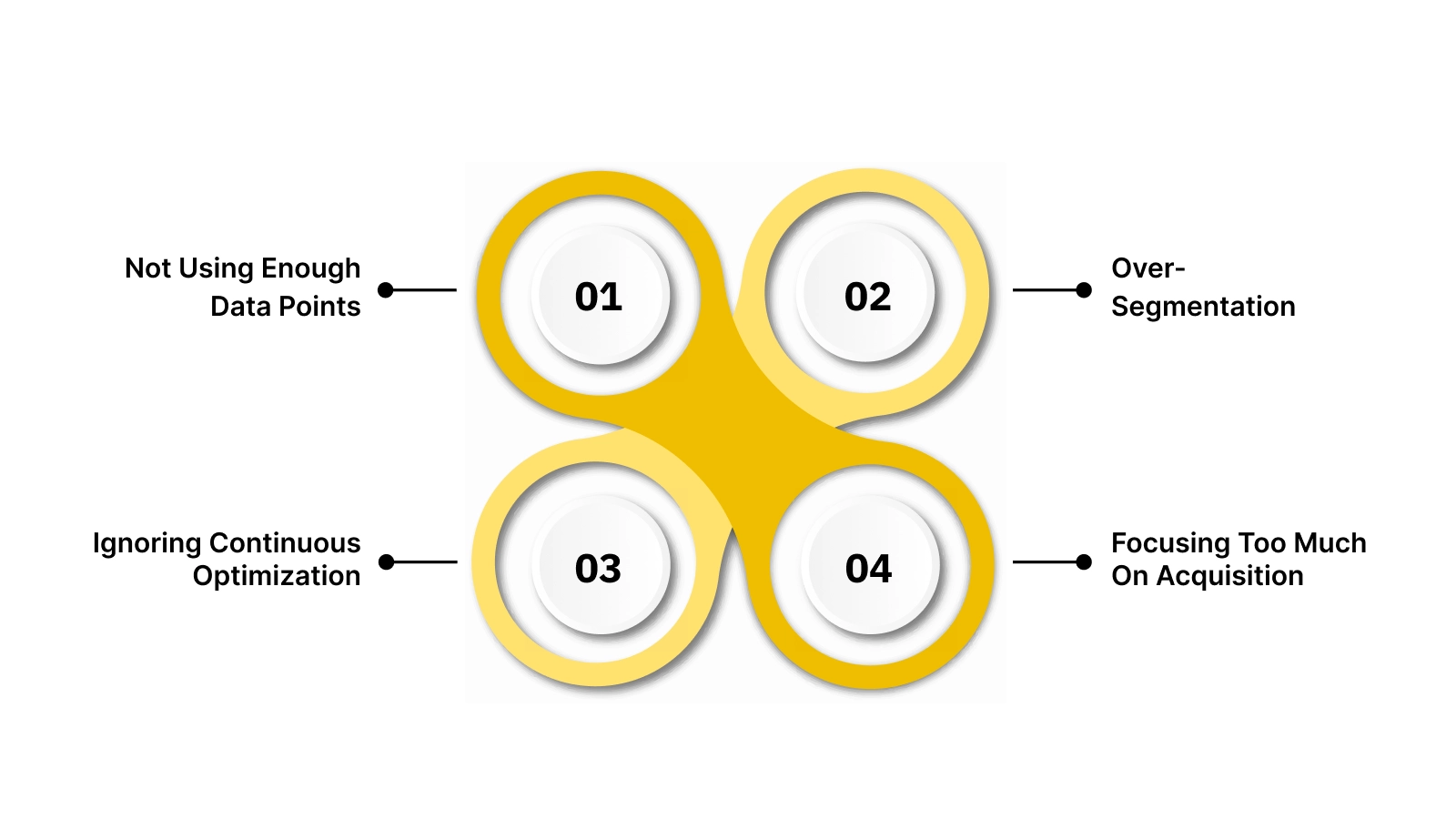
To get the most out of segmentation, be mindful of these common errors that could undermine your efforts:
- Not using enough data points: Relying only on demographics limits segmentation. Use behavioral and psychographic data to improve targeting and drive repeat purchases.
- Over-segmentation: Too many segments dilute focus. Keep your segments manageable to track performance, allocate resources efficiently, and maintain consistent messaging.
- Ignoring continuous optimization: Segmentation is dynamic. Regularly refine segments and test new ones based on growing customer behaviors to stay relevant and improve results.
- Focusing too much on acquisition: Retention should be prioritized over acquisition. Repeat customers bring higher lifetime value, reducing acquisition costs and improving long-term profitability.
By avoiding these mistakes, you can refine your segmentation strategy for better results. Next, we’ll explore how Nector can help you implement and optimize your segmentation efforts effectively.
How Nector Supports Personalized Loyalty Experiences
Nector is an AI-powered platform designed to help e-commerce brands build and manage personalized loyalty programs effortlessly. By automating customer segmentation and reward distribution, Nector ensures that your marketing efforts are always targeted and relevant.
Key Features of Nector:
- AI-Powered Personalization: Tailor loyalty rewards based on customer behavior, purchase history, and preferences to boost repeat purchases.
- Seamless Integrations: Easily integrates with popular e-commerce platforms like Shopify, simplifying the setup and management of loyalty programs.
- Scalable Solutions: Whether you’re a startup or a growing enterprise, Nector adapts to your needs, helping you scale your loyalty efforts.
- Actionable Insights: Track customer activity and measure the success of your loyalty programs with detailed analytics and reporting.
With Nector, e-commerce brands can automate and optimize their segmentation efforts, driving customer retention and increasing profitability.
Also Read: Tips And Best Practices For Customer Loyalty Programs
Wrapping Up
Segmentation is a needed requirement for increasing repeat purchases in e-commerce. By understanding your customers and personalizing their experience, you can build strong relationships that keep them coming back. It also helps you target the right people with the right offers, leading to better customer retention and long-term growth.
Nector makes segmentation simple. It helps you automate and personalize loyalty programs, track customer behavior, and deliver tailored rewards, all in one easy-to-use platform. Whether you’re a small business or a growing brand, Nector ensures your efforts lead to more repeat customers.
Ready to boost your repeat purchases? Start your free trial with Nector and see how segmentation can grow your business today.
Frequently asked questions
How will you encourage repeat purchases?
Encouraging repeat purchases involves personalizing customer experiences, offering relevant product recommendations, using loyalty rewards, and sending timely offers or discounts based on customer behavior and preferences. Building strong relationships through consistent engagement helps increase customer loyalty and repeat purchases.
How does market segmentation lead to increases in customer retention?
Market segmentation tailors marketing efforts to distinct customer groups, ensuring relevance. By offering personalized experiences, promotions, and products based on segment-specific behaviors and needs, brands create deeper connections, improving customer satisfaction and boosting retention rates.
Which strategy is most effective for gaining repeat orders from customers?
The most effective strategy is to use personalized loyalty programs that reward repeat purchases. Additionally, using data-driven insights to offer tailored product recommendations, discounts, and timely reminders keeps customers engaged, increasing the likelihood of repeat orders.
How does precise customer segmentation directly improve the return on marketing spend for the companies you work with?
Precise segmentation ensures that marketing efforts are targeted at the right audience, minimizing wasted spend. By focusing on high-value segments, companies deliver more relevant offers, increasing conversion rates and maximizing the return on every marketing dollar spent.
How does audience segmentation affect the design of personalized shopping experiences?
Audience segmentation allows brands to customize the shopping experience for different customer groups. By understanding customer preferences, behaviors, and demographics, businesses can offer tailored product recommendations, relevant content, and personalized offers, improving the overall shopping experience and driving repeat purchases.


%201.webp)