






.avif)
.avif)
Most DTC brands in the US spend the bulk of their budget bringing in customers who never come back. The first order arrives, the thank-you email goes out, and then silence. No structured follow-up, no reward for returning, no reason for the customer to choose you over a competitor the next time they need what you sell. For founder-led Shopify stores running lean teams, this is not a strategy gap. It is a systems gap.
The challenge is that most guides on customer retention software point you toward enterprise CRM tools built for B2B sales teams managing accounts, not Shopify founders managing repeat purchases. When retention runs on manual emails, gut instinct, and whatever your team has time for between everything else, the gap between what customers need to stay engaged and what your store actually delivers grows wider with every order. This guide covers seven proven customer retention software tools selected specifically for e-commerce and DTC brands, what each one does, who it is best for, and how to build a retention stack your team can actually run without adding headcount.
Key Takeaways
- Customer retention software for e-commerce is not one tool. It covers loyalty programs, referral systems, review collection, email automation, and customer support, each addressing a different reason customers stop buying after their first order.
- According to Bain and Company research cited in Harvard Business Review, a 5% increase in customer retention can boost profits by 25% to 95%. The right software makes that improvement achievable without proportional increases in headcount or ad spend.
- The most common retention software mistake is buying a tool for the wrong gap. Map where customers are leaving in your funnel before opening any vendor page, not after you have already committed a budget.
- For DTC and Shopify brands, the highest-leverage retention software automates repeat purchase behavior without requiring a dedicated team to manage it daily. Automation depth matters more than feature count for lean teams.
- A platform combining loyalty, referrals, and reviews in one place reduces tool fragmentation and helps centralize customer engagement data across these retention programs.
What Is Customer Retention Software for E-Commerce?
Customer retention software is any tool that helps an e-commerce business reduce churn, increase repeat purchase rate, and grow customer lifetime value. For DTC brands, this is a category of categories. There is no single platform that solves the entire problem, because customers stop buying for different reasons at different points in their lifecycle.
A Shopify founder who loses customers after the first order has a different gap than one who loses them at month four. The first needs a loyalty program and post-purchase engagement. The second may need a support tool or a win-back flow. The software you choose should match the specific gap in your retention funnel, not the most popular tool in the category.
Why E-Commerce Retention Software Is Different From Enterprise CRM
Enterprise CRM tools are built around sales pipelines, account managers, and renewal conversations. They track deals, not transactions. For a founder-led DTC brand on Shopify, that framework does not apply. Your customers make repeat purchase decisions without a sales rep involved.
When a DTC brand installs a CRM built for enterprise sales teams, they typically end up with a tool that tracks contacts but cannot trigger a loyalty reward, request a product review, or identify which customers are approaching churn based on purchase frequency. The mismatch between tool design and business model is one of the most common reasons retention software fails to move the numbers. For a complete comparison of which loyalty and retention software platforms are actually built for e-commerce rather than enterprise sales teams, the guide on the best customer loyalty software platforms for e-commerce in 2026 covers each option with feature depth and pricing context.
The Five Categories of Retention Software Every Shopify Brand Should Know
Before evaluating any specific tool, understand which category addresses your biggest gap:
- Loyalty and rewards platforms: Reward customers for purchases, reviews, and referrals. Drive repeat purchase behavior by giving customers a financial reason to return.
- Referral systems: Turn existing customers into an acquisition channel. Reduces CAC while bringing in new buyers who arrive with built-in trust.
- Review collection tools: Automate post-purchase review requests and incentivize text, photo, or video reviews. Builds social proof that improves conversion for new visitors.
- Email and SMS automation: Trigger behavior-based communication between purchases. Covers post-purchase flows, win-back sequences, and loyalty milestone emails.
- Customer support software: Reduce churn caused by slow or unresolved post-purchase problems. Critical for protecting loyalty program engagement.
Understanding which category fits your gap matters more than picking the most popular tool. If you want a broader view of how these categories fit into an end-to-end retention system, the guide on building an effective customer retention management system covers the full strategic framework before you start evaluating individual tools.
What to Look for Before Choosing Customer Retention Software
Choosing the wrong retention software is expensive in two ways. You pay for features your team cannot use, and you miss the retention improvement you needed. Here are four criteria that determine whether a tool actually works for your store.
Native Shopify or WooCommerce Integration
Confirm whether the tool connects natively or through a Zapier workaround. Non-native integrations create data delays that undermine personalization. When a customer redeems points and your email platform does not know for 24 hours, the follow-up email looks disconnected. Before committing, ask whether loyalty events sync in real time.
Setup Time and Ongoing Management
A tool requiring daily management is not practical for a team of one to five people. Ask vendors three things: how long to go live, how many weekly manual actions are needed, and what happens when a loyalty event fires incorrectly. You want a tool you set up once and review monthly.
Automation Depth
Good automation means the right message reaches the right customer without manual triggering. A post-delivery review request that fires seven days after delivery, a tier upgrade email that fires within an hour, an expiry reminder 30 days before lapse: these automations move repeat purchase rate without adding to your team's workload.
Pricing That Scales With Order Volume
Calculate the cost at your current monthly order volume and at double that volume before committing. Some platforms charge separately for referral tracking or review collection that come included in others. Flat monthly fees tied to order volume are more predictable than percentage-of-revenue models.
7 Proven Customer Retention Software Tools for E-Commerce in 2026
Not every retention tool is built for DTC brands. These seven are selected specifically for e-commerce teams that need practical software without enterprise complexity.
Confirm current pricing and plan limits at each official website before purchasing.
1. Nector (Loyalty, Referrals, and Reviews)

Best for: Founder-led DTC brands on Shopify or WooCommerce wanting loyalty, referral, and review programs from one platform.
Nector connects points-based loyalty, referral programs, and review collection into one system. Loyalty events like tier upgrades, coin expiry, and referral completions trigger automated emails in your existing email platform without manual action.
Key features: Customizable earning rules for purchases, reviews, referrals, signups, and birthdays. VIP tiers with automatic upgrades. Dual-sided referral program with WhatsApp and email sharing and fraud detection. Review collection with text, image, and video support and Google Reviews sync. Checkout point redemption. Delayed reward tied to order status. Real-time analytics dashboard.
Pricing:
Nector offers flexible pricing plans for growing e-commerce brands, including free and paid plans based on monthly order volume and feature requirements. For the latest pricing, features, and order limits, visit Nector’s official pricing page.
Limitation: Built for Shopify and WooCommerce e-commerce. Not suitable for B2B, SaaS, or primarily offline retail.
2. Klaviyo (Email and SMS Automation)
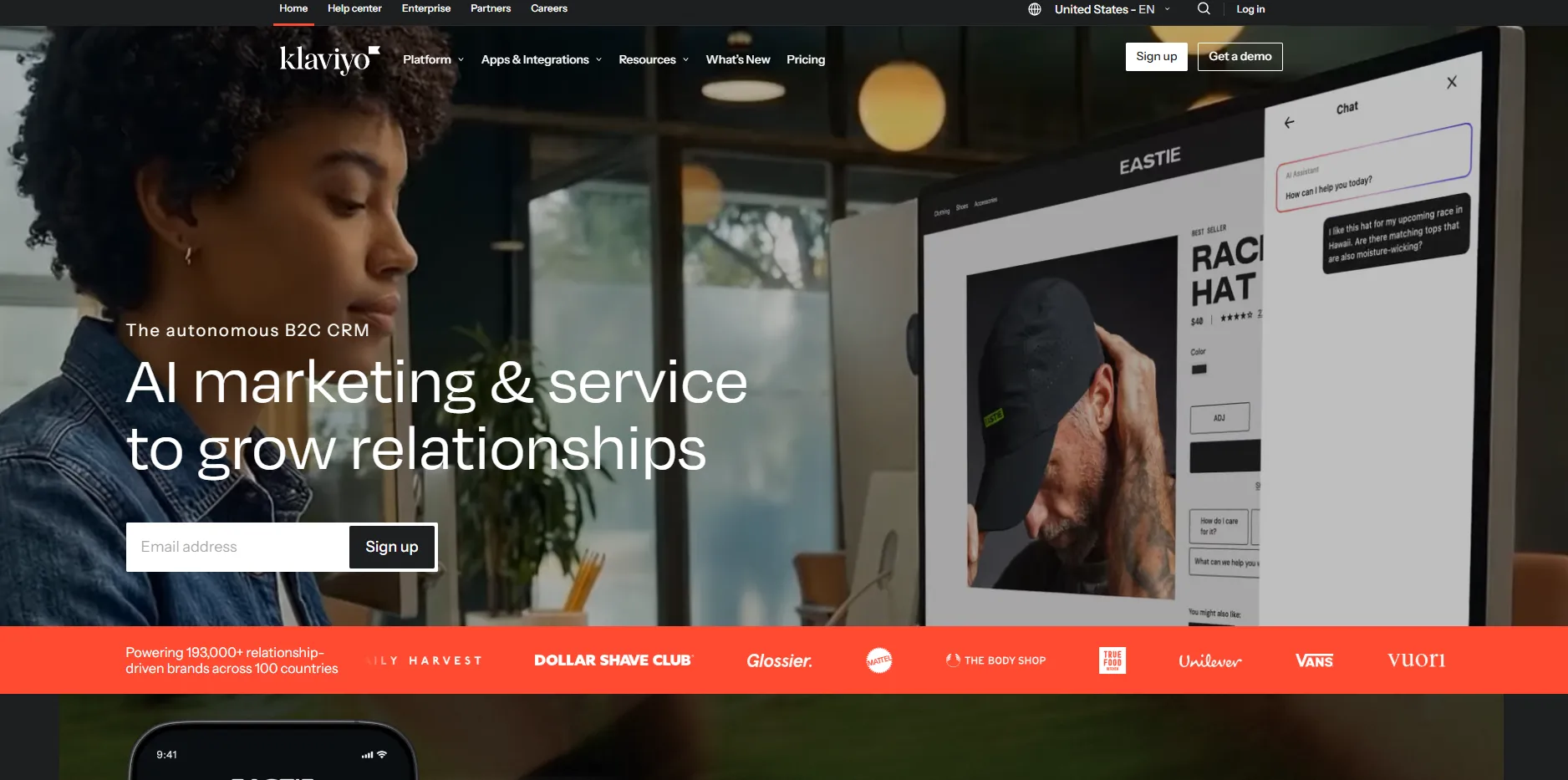
Best for: E-commerce brands needing automated lifecycle communication between purchases.
Klaviyo handles behavior-triggered flows including post-purchase sequences, win-back campaigns, and loyalty milestone emails. When connected to a loyalty platform, it receives loyalty events and triggers personalized emails without manual scheduling.
Pricing: Free for up to 250 active profiles. Paid plans from approximately $45 per month. Verify at klaviyo.com.
Limitation: Requires a content and segmentation strategy to perform. Installing without building flows produces no retention improvement.
3. Gorgias (Customer Support)
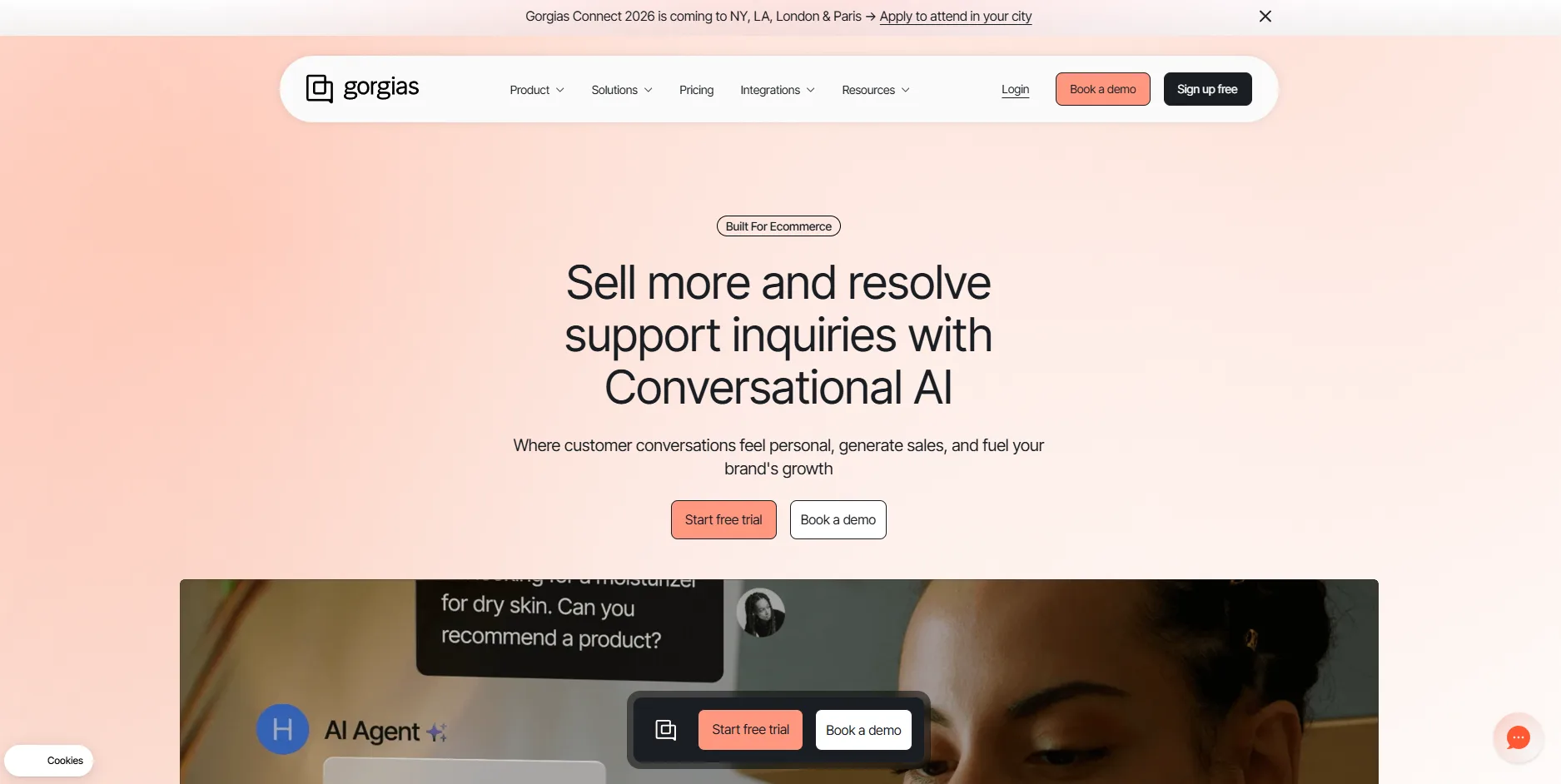
Best for: Shopify brands where churn is driven by slow post-purchase support.
Gorgias is native to Shopify. Agents see full order history and loyalty points in one view, enabling resolution with relevant offers rather than generic responses.
Pricing: Starter plan from approximately $10 per month, covering up to 50 support tickets per month. Volume-based plans apply as ticket count grows. Verify current pricing and plan limits at gorgias.com.
Limitation: Reactive only. Reduces churn from service failures but does not proactively drive repeat purchases.
4. Yotpo (Reviews and Loyalty)
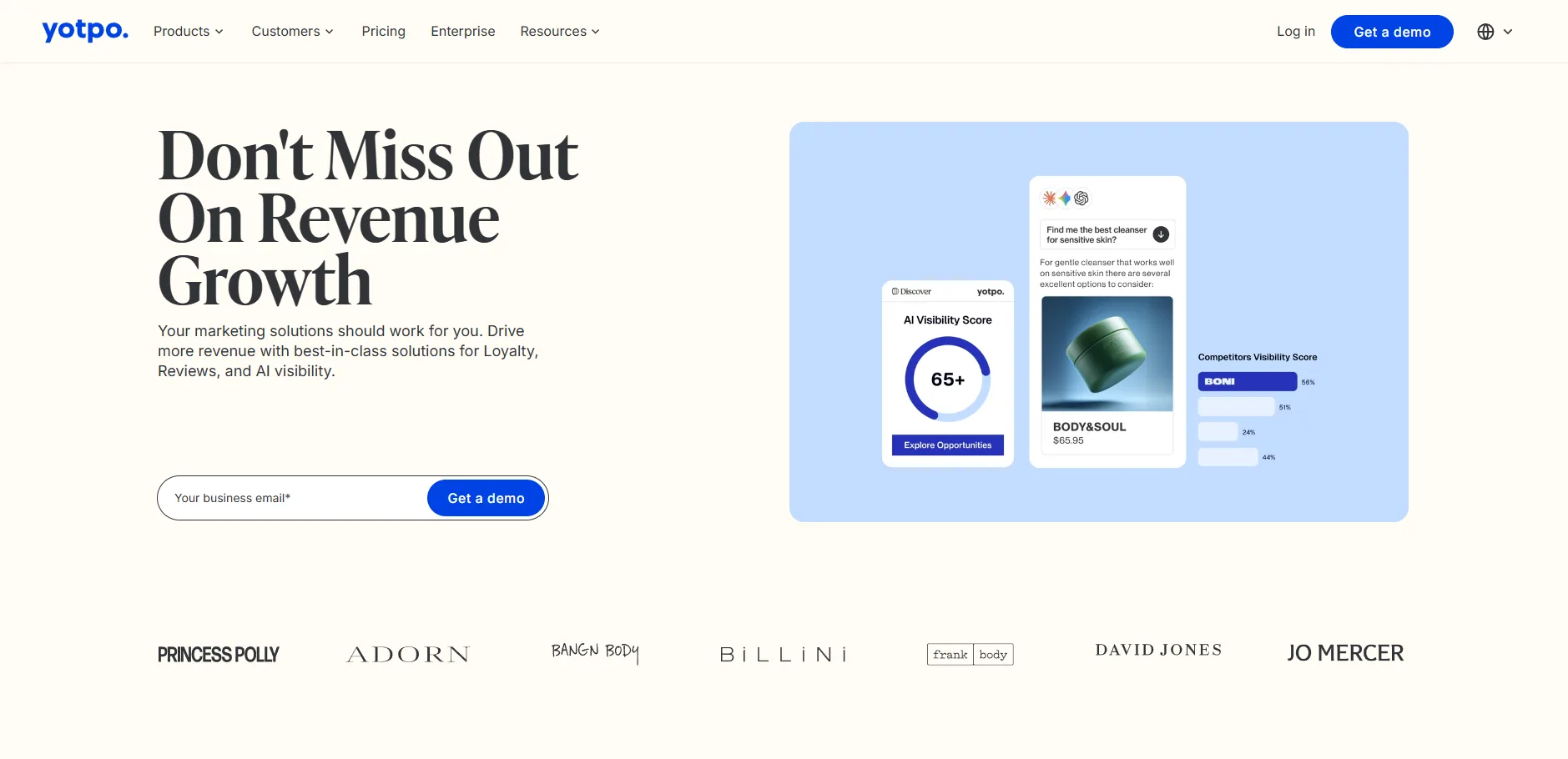
Best for: Mid-to-large e-commerce brands needing reviews and loyalty at higher order volumes.
Yotpo combines review collection, loyalty programs, referrals, and SMS in one platform for brands that have outgrown simpler tools.
Pricing: Custom. Contact yotpo.com directly.
Limitation: Enterprise pricing makes it harder to justify for stores under 2,000 monthly orders.
5. Smile.io (Entry-Level Loyalty)
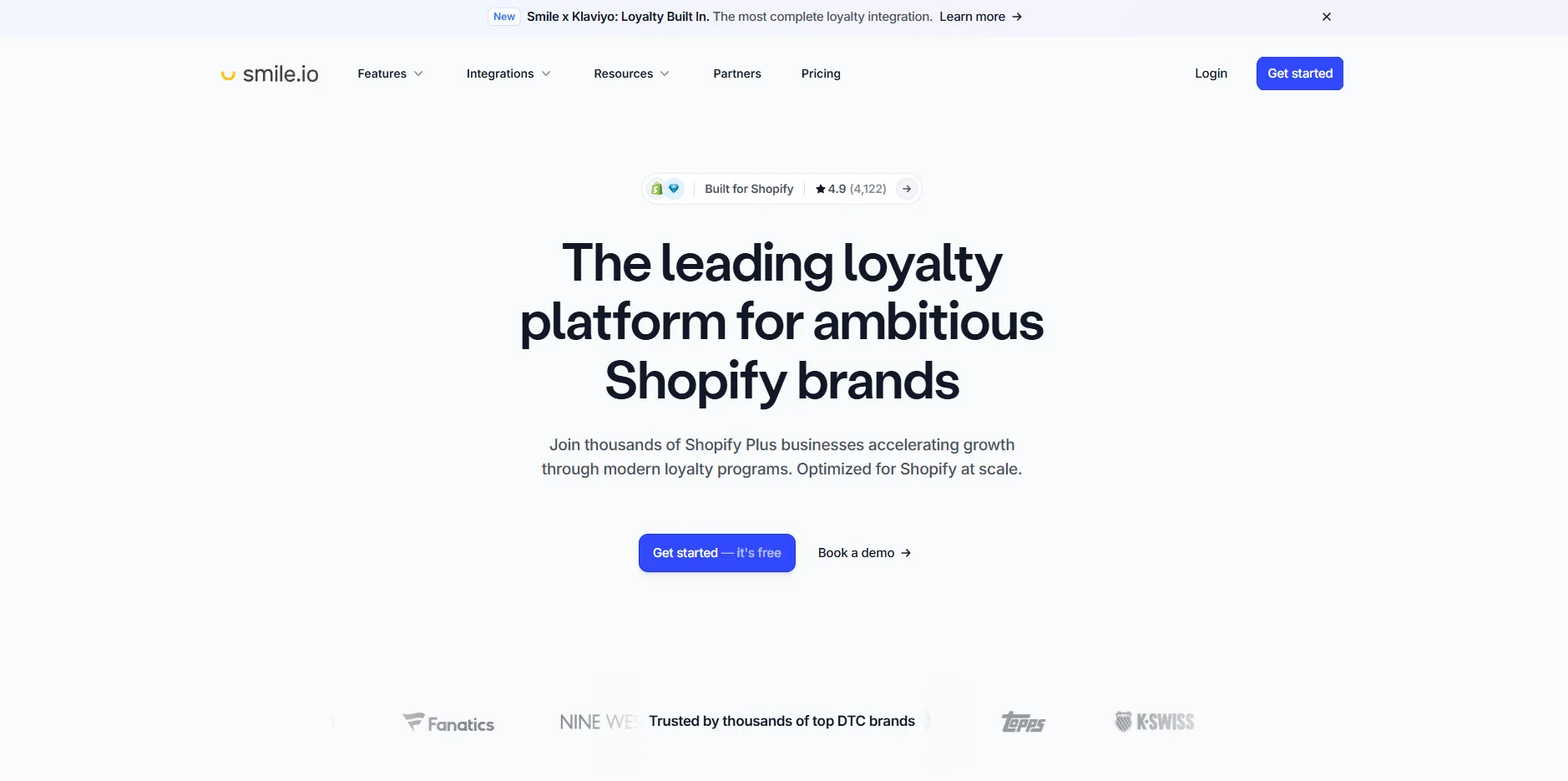
Best for: Small Shopify stores launching a basic points program for the first time.
Smile provides a clean, fast-to-configure points and referral program that can be live within an hour without developer support.
Pricing: Free plan available. Paid plans from approximately $49 per month. Verify at smile.io.
Limitation: No review collection. Analytics are less granular than platforms for higher order volumes.
6. Okendo (Review Collection)
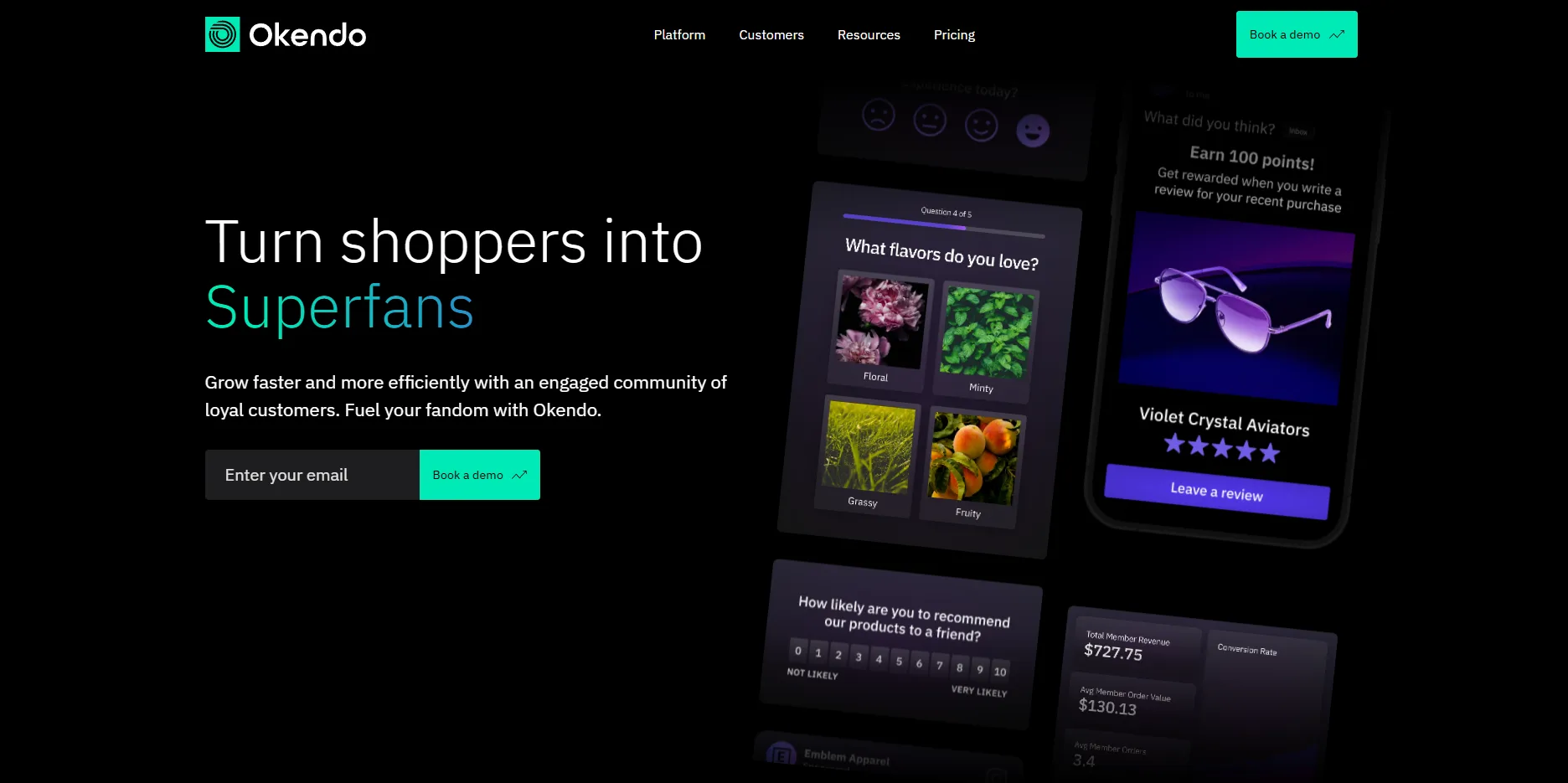
Best for: DTC brands wanting photo and video reviews connected to their marketing stack.
Okendo specializes in visual and attribute-based reviews. Customers upload photos and videos alongside written reviews with custom attributes like fit or skin type.
Pricing: Plans from approximately $19 per month. Verify at okendo.io.
Limitation: Reviews only. Connect to a loyalty platform to create a points incentive for review submissions.
7. Postscript (SMS Retention)

Best for: Shopify brands with an SMS list needing a dedicated re-engagement channel beyond email.
Postscript handles behavior-triggered SMS flows for re-engagement and win-backs. SMS typically reaches customers within minutes, improving response rates for lapsed customer campaigns.
Pricing: Usage-based pricing. Costs vary by SMS volume and subscriber list size. Verify at postscript.io.
Limitation: SMS only. Needs email automation and a loyalty platform to form a complete retention stack.
If you want loyalty, referrals, and reviews running from one platform rather than managing three separate tools, Nector's free plan covers up to 300 orders per month with no upfront cost. Start free or book a demo to see how it fits your stack.
How to Build a Customer Retention Software Stack for a Lean DTC Team
This five-step sequence is designed for founder-led brands with teams of one to five people who need a functional retention stack without a dedicated retention manager.
Step 1: Start with your loyalty and rewards platform.
Launch with three earning actions: purchase, account signup, and product review. Add a checkout redemption widget and one automated email showing new members their balance.
Step 2: Connect your email platform.
Tier upgrades, points milestones, and expiry reminders should fire automatically from day one. Without these three flows, your loyalty program is invisible between purchases.
Step 3: Add review collection with a points incentive.
Set up a post-delivery review request firing seven days after confirmed delivery. Offer points for photo and video reviews. Do not trigger before delivery is confirmed.
Step 4: Launch a referral program.
Add dual-sided rewards connected to your loyalty platform. Enable WhatsApp and email sharing. Set a minimum spend on the referee's first order to filter genuine buyers.
Step 5: Add customer support tooling.
Once loyalty, reviews, and referrals are running, close the reactive gap with support software. Poor support causes churn even among active loyalty program members.
Running these five steps in sequence gives you a functional retention stack without overwhelming your team. For a deeper framework that maps retention programs to specific customer lifecycle stages and shows how to track performance at each stage, the guide on building a practical customer retention management system covers the planning layer behind the tooling decisions.
5 Mistakes E-Commerce Brands Make When Choosing Retention Software
Retention software fails more often because of how it was chosen than because of what the software can or cannot do. These five mistakes show up consistently in DTC brands that invest in retention tools and still see no measurable improvement in repeat purchase rate. Identifying them before you buy saves both budget and time.
Mistake 1: Buying before identifying where customers leave.
Fix: Pull Shopify cohort data first. Map the drop-off point before opening any vendor page.
Mistake 2: Choosing tools without native Shopify integration.
Fix: Confirm native integration before committing. Ask whether loyalty events and order status sync in real time.
Mistake 3: Paying for enterprise features a small team cannot use.
Fix: Match features to team size. If nobody reviews dashboards daily, spend the budget on automation instead.
Mistake 4: Running loyalty, referrals, and reviews as three disconnected tools.
Fix: Consolidate into one platform where all three share a customer data model. Reduces overhead and produces a cohesive customer experience.
Mistake 5: Measuring success by signups instead of repeat purchase rate.
Fix: Track repeat purchase rate among members versus non-members, redemption rate, and referral completion rate monthly. Tracking the right metrics is what separates programs that improve from those that stagnate. For a complete breakdown of which retention metrics matter most and how to calculate each one, the guide on 10 customer retention metrics every e-commerce brand should track covers each formula with worked examples from real stores.
How Nector Fits Into Your E-Commerce Retention Software Stack
Most DTC brands use separate tools to manage loyalty, referrals, and reviews. For lean teams, switching between platforms can create extra work and disconnected data as order volume grows. Nector brings these core retention programs into one platform built for Shopify and WooCommerce.
- Low repeat purchase rate: points-based loyalty with customizable earning and redemption rules
- No referral system: dual-sided referrals with trackable links and fraud detection
- Weak review collection: automated review requests with incentives and Google Reviews sync
- Lack of personalization: segment-based rewards and analytics for loyalty behavior
- Manual retention workflows: automated tier upgrades, rewards, and reminders
The brands that build the strongest retention results treat loyalty as infrastructure rather than a one-time campaign. To see what drives genuine long-term customer loyalty beyond points programs and how leading DTC brands structure that infrastructure, the research-backed guide on what actually causes customer loyalty covers the principles behind the programs that retain customers at scale.
Conclusion
Choosing the right customer retention software comes down to one thing: knowing where your customers are leaving, then matching the right tool to that gap. This guide covered seven proven tools across five retention categories, a five-step stack-building sequence for lean teams, five common buying mistakes, and a practical evaluation framework based on order volume, team size, and integration requirements. The goal is not the most tools. It is the right ones, connected and running with minimal manual effort from your team.
Nector brings loyalty, referrals, and reviews into one platform built for Shopify and WooCommerce, so founder-led DTC brands do not have to manage three separate vendors to cover the basics of retention. Start with a free plan, go live in under 30 minutes, and let loyalty, referral, and review automations run between purchases while you focus on growth.
If your repeat purchase rate is not where it needs to be, the gap is usually a missing system, not a missing product. Nector helps founder-led DTC brands automate loyalty, referrals, and reviews from one platform without adding headcount. Start your free plan today.
Frequently asked questions
What is customer retention software?
Customer retention software helps e-commerce businesses reduce churn, increase repeat purchases, and grow customer lifetime value. For DTC brands, the most relevant categories are loyalty programs, referral systems, review collection, email automation, and customer support.
What is the best customer retention software for Shopify?
The best software depends on your biggest retention gap. For repeat purchases, a loyalty platform is the highest-leverage starting point. For re-engagement between orders, email and SMS automation handles the communication layer. Most Shopify brands need both working together.
How much does customer retention software cost?
Prices range from free to several hundred dollars monthly depending on the tool and order volume. Nector starts free for up to 300 orders per month. Most platforms scale with order volume so check both current and projected usage.
Can a small DTC team manage retention software without a dedicated manager?
Yes, if the software is built for automation. Look for tools that trigger loyalty events, email flows, and referral rewards automatically. Platforms built for lean teams handle the operational layer so your team focuses on strategy, not execution.
What retention metrics should I track after launching retention software?
Track repeat purchase rate, customer lifetime value, redemption rate, referral completion rate, and churn rate monthly. These five metrics show whether your software is reducing churn and increasing revenue from existing customers rather than just increasing signups.
.webp)